


Table of Contents
- The Moment Singapore Stopped Me in My Tracks
- Where Is Singapore Located?
- How To Get To Singapore from India
- Getting Around Singapore
- Where To Stay in Singapore
- Top Things To Do in Singapore
- Practical Travel Tips
- Best Time To Visit Singapore
- 6-Day Singapore Itinerary
- Budget Breakdown
- Final Honest Verdict
- SEO Tags
- Image Placement Guide
- Pinterest Pin Strategy
1. The Moment Singapore Stopped Me in My Tracks
It was 11 PM and I was standing in the middle of a hawker centre in Chinatown, surrounded by the sound of woks clanging, the smell of char kway teow drifting through thick warm air, and an elderly man in a white vest quietly ladling fish soup into a bowl like he’d done it ten thousand times before. Nobody was rushing. Nobody was trying to sell me anything. And yet somehow I was in one of the most expensive, most efficient, most relentlessly modern cities in Asia.
That contradiction — the gleaming supertrees of Gardens by the Bay rising above centuries-old temple rooftops, the spotless MRT trains running alongside fragrant hawker streets — is what makes Singapore genuinely different from every other Asian megacity. It doesn’t choose between old and new. It holds both, tightly, without apology.
I’d been warned Singapore was sterile. Too clean, too controlled, too expensive for a real travel experience. Six days later I left with a full memory card, a few extra kilograms from the food, and a list of things I hadn’t had time to do. This Singapore travel guide 2026 is everything I wish someone had given me before I landed.
2. Where Is Singapore Located?
Singapore is a city-state island nation sitting at the southern tip of the Malay Peninsula, separated from Malaysia by the Johor Strait to the north and from Indonesia’s Riau Islands by the Singapore Strait to the south. It covers just 733 square kilometers — smaller than Delhi’s urban area — yet functions as one of the world’s most important financial, trade, and travel hubs. Despite its size, it punches extraordinarily hard in every category: food, architecture, culture, and connectivity.
Its position makes it a natural gateway to Southeast Asia. Fly into Singapore and you’re within 2–3 hours of Bali, Bangkok, Kuala Lumpur, and Ho Chi Minh City, which is why many travelers use it as a base or combine it with a broader regional trip.
3. How To Get To Singapore from India

By Air (Primary Option) Singapore’s Changi Airport — consistently ranked the world’s best airport — is connected to virtually every major Indian city. Direct flights operate from Delhi, Mumbai, Chennai, Bengaluru, Hyderabad, Kolkata, and Kochi. IndiGo, Air India, Singapore Airlines, and Scoot all operate this route.
Flight duration and approximate costs:
- Delhi to Singapore: 5.5–6 hours | ₹14,000–₹35,000 return
- Mumbai to Singapore: 5 hours | ₹12,000–₹32,000 return
- Chennai to Singapore: 4 hours | ₹10,000–₹28,000 return
- Bengaluru to Singapore: 4.5 hours | ₹11,000–₹30,000 return
Book 60–90 days ahead for the best fares. Budget carriers like Scoot and IndiGo are significantly cheaper but add luggage fees separately.
By Sea (from Malaysia) If you’re combining Singapore with a Malaysia trip — which I’d strongly recommend — you can arrive by ferry from Batam or Bintan (Indonesia) or by bus and train from Kuala Lumpur across the Johor–Singapore Causeway. The KL to Singapore express bus takes about 5–6 hours and costs SGD 25–40 (approximately ₹1,500–₹2,500).
Visa: Indian passport holders require a visa to enter Singapore. Apply online through the Singapore Immigration & Checkpoints Authority (ICA) website. Processing takes 3–5 working days and costs SGD 30 (approximately ₹1,800). Many travelers report quick approvals for straightforward leisure applications.
4. Getting Around Singapore

Singapore has one of the best public transport systems in the world, and I say that without exaggeration. Getting around as a first-timer is genuinely easy — even without mobile data.
MRT (Mass Rapid Transit) The MRT covers virtually every major attraction in the city. Trains run from approximately 5:30 AM to midnight, are air-conditioned, clean, punctual, and clearly signposted in English. A single journey costs SGD 0.92–2.50 (₹55–₹150) depending on distance.
EZ-Link Card Get one at Changi Airport upon arrival (SGD 12, including SGD 7 stored value). Use it for MRT, buses, and some taxis. It’s the single most useful thing you can buy in Singapore on day one.
Bus The bus network is extensive and covers areas the MRT doesn’t reach, including some parts of Sentosa and the Eastern coast. Google Maps works perfectly for planning bus routes.
Grab (Ride-Hailing) Grab is the dominant ride-hailing app across Southeast Asia. SGD 8–20 (₹480–₹1,200) for most intra-city trips. Useful for late nights or when carrying luggage between neighborhoods.
Taxis Available everywhere, metered, and honest — but noticeably pricier than Grab. Standard flag-down fare starts at SGD 3.90.
Walking Many of Singapore’s best neighborhoods — Chinatown, Little India, Kampong Glam, Tiong Bahru — are best explored entirely on foot. The city is walkable, well-shaded with covered walkways, and pedestrian-friendly in a way most Asian cities are not.
Difficulty for First-Timers: Very low. Singapore is arguably the easiest city in Asia to navigate independently.
5. Where To Stay in Singapore

Best Areas to Base Yourself:
- Bugis / Arab Street: Central, culturally vibrant, great food access, good MRT connections
- Chinatown: Budget-friendly, full of character, close to Clarke Quay
- Orchard Road: Upscale, shopping-centric, ideal for luxury travelers
- Marina Bay: For the iconic views and proximity to Gardens by the Bay and the waterfront
Budget (SGD 40–90 / ₹2,400–₹5,400 per night)
- Footprints Hostel, Chinatown — Clean dorms and private rooms, excellent communal vibe, walking distance to Maxwell Food Centre
- The Pod Boutique Capsule Hotel, Beach Road — Sleek capsule-style rooms, surprisingly private, great central location
Mid-Range (SGD 120–250 / ₹7,200–₹15,000 per night)
- Hotel Mono, Chinatown — Striking black-and-white interiors, brilliantly designed rooms, steps from MRT
- Naumi Hotel, Clarke Quay — Boutique luxury feel at mid-range prices, rooftop pool, excellent service
- Porcelain Hotel, Chinatown — Heritage shophouse design, rooftop terrace, warm and well-located
Luxury (SGD 350+ / ₹21,000+ per night)
- Marina Bay Sands — The most iconic hotel in Singapore. Infinity pool on the 57th floor, three towers, casino, celebrity restaurants. Worth one night if your budget allows. The skyline view from that pool is impossible to describe adequately.
- Capella Singapore, Sentosa — Colonial architecture meets tropical luxury. The quietest, most refined option in the city.
If you want the whole Singapore and Malaysia experience packaged together, the Singapore–Malaysia Escape 5N6D by Tripyverse covers accommodation, transfers, and key experiences across both destinations — a solid option if you don’t want to plan every detail yourself.
6. Top Things To Do in Singapore
Gardens by the Bay — Where the Future Meets the Jungle

Nothing prepares you for Gardens by the Bay at night. The Supertrees — vertical gardens standing 25–50 meters tall — pulse with light during the nightly Garden Rhapsody sound-and-light show (7:45 PM and 8:45 PM, free from the outdoor plaza). They look like something from a science fiction film, and yet they’re real, and they’re surrounded by actual tropical plants and the warm Singapore night air.
During the day, the two cooled conservatories are worth every cent of the entry fee. The Flower Dome recreates Mediterranean and semi-arid climates in a single glass dome — cacti the size of trees, 1,000-year-old olive trees, and seasonal flower displays that change four times a year. The Cloud Forest is even more dramatic: a 35-meter indoor mountain shrouded in mist, covered entirely in living moss and ferns, with a secret garden walkway at the top.
Getting there: Bayfront MRT (Circle and Downtown Line), 5-minute walk. Outdoor gardens are free. Conservatories cost SGD 28 (₹1,680) for combined entry.
Insider tip: Book conservatory tickets online in advance — queues on weekends can be 45 minutes long.
Marina Bay Sands Skypark — The View That Defines Singapore

Even if you’re not staying at Marina Bay Sands, you can access the SkyPark Observation Deck on the 57th floor for SGD 32 (₹1,920). The 360-degree view of Singapore’s skyline — the financial district glittering to the north, Sentosa and the sea to the south, the green lung of the botanical gardens to the west — is the single best urban panorama in Southeast Asia.
The infinity pool is reserved for hotel guests only. Don’t try to sneak in — security is thorough and the embarrassment isn’t worth it.
Insider tip: Go at dusk. Arrive 30 minutes before sunset and stay through the blue hour. The light shifts from gold to purple to electric blue, and the city lights up below you incrementally. It’s one of those moments you’ll reference for years.
Chinatown — Street Food, Temples & the Real Singapore

Chinatown is where Singapore exhales. The colonial-era shophouses painted in terracotta, jade, and mustard yellow line streets that smell of incense and roasting duck simultaneously. The Sri Mariamman Temple — Singapore’s oldest Hindu temple, founded in 1827 — sits surreally at the edge of Chinatown, its towering gopuram covered in hundreds of painted deities, completely at home among the Chinese lanterns and Buddhist shrines nearby.
Maxwell Food Centre is the hawker centre you must not miss. Tian Tian Hainanese Chicken Rice has had queues since before it was famous — arrive before 11:30 AM or after 2 PM. The chicken is poached to silk, the rice cooked in chicken stock with ginger, the chili sauce sharp and bright. It costs SGD 5. It is, genuinely, one of the best things I’ve ever eaten.
Spend at least half a day here. Walk Pagoda Street, visit the Chinatown Heritage Centre (SGD 15), and end the evening at one of the rooftop bars on Club Street.
Little India — Color, Chaos & the Best Biryani Outside India

Little India is an assault on the senses in the best possible way. Serangoon Road is lined with flower garland sellers, sari shops, gold jewelry stores, and temples that spill music onto the street during evening prayers. The smell shifts from jasmine to cardamom to incense within half a block.
Mustafa Centre — the legendary 24-hour department store — is worth an hour of your time just for the experience. Six floors of everything from electronics to spices to sarees, open at 3 AM if you need it. Prices on Indian goods are often cheaper here than in India itself.
For food: Komala Vilas on Serangoon Road has been serving South Indian vegetarian meals since 1947. The thali — served on a banana leaf with rasam, sambar, three curries, rice, and papad — costs SGD 8 (₹480) and is exceptional.
Sri Veeramakaliamman Temple on Serangoon Road is the spiritual heart of Little India — visit at dusk when the priests are conducting evening puja and the temple bells fill the street.
Kampong Glam — Arab Quarter, Street Art & Haji Lane

Kampong Glam is Singapore’s Muslim quarter, centered around the golden-domed Sultan Mosque (Singapore’s largest mosque, open to non-Muslim visitors outside prayer times) and the intoxicating narrow alley of Haji Lane. The mosque is striking enough from outside — massive, confident, surrounded by the aroma of Arabic perfume shops and shisha cafes — but the real joy of Kampong Glam is the street art and boutiques that fill its lanes.
Haji Lane is pastel-colored, Instagram-dense, and genuinely charming despite its fame. Independent clothing boutiques, vintage stores, and specialty coffee shops line both sides of the narrow street. Come in the morning for quieter photos and stay for brunch.
Try the murtabak at Victory Restaurant on Arab Street — a stuffed pan-fried flatbread filled with mutton and egg, crisp at the edges, soft inside, served with a thin curry dipping sauce. SGD 8–12 depending on filling. Absolutely worth it.
Sentosa Island — Beach, Adventure & Universal Studios
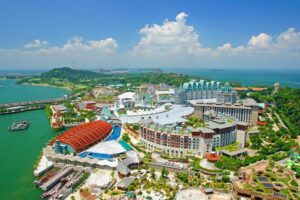
Sentosa is Singapore’s pleasure island — a self-contained resort destination connected to the mainland by cable car, monorail, and a boardwalk. It’s home to Universal Studios Singapore, Adventure Cove Waterpark, Palawan Beach, and a collection of high-end resorts.
Universal Studios is genuinely excellent — well-maintained, not overcrowded on weekday mornings, and the Battlestar Galactica roller coasters are legitimately thrilling. Tickets cost SGD 83 (₹4,980) for adults. Budget a full day.
The beaches (Palawan, Siloso, Tanjong) are pleasant but not spectacular — the water is warm but visibility is limited. Don’t come expecting Bali or the Maldives. Come expecting a clean, well-organized beach with great food stalls and good people-watching.
Honest warning: Sentosa can feel artificially sanitized. It’s a theme park island, not a cultural experience. Keep expectations calibrated accordingly.
Singapore Botanic Gardens & Orchid Garden — UNESCO Heritage & Morning Calm
The Singapore Botanic Gardens are a 165-year-old UNESCO World Heritage Site and one of the most beautiful green spaces in Asia. Free entry (except the National Orchid Garden at SGD 15). Go in the early morning — before 9 AM — when the light filters through the rain trees and the gardens are nearly empty. The Symphony Lake at the center hosts free outdoor concerts on some weekends.
The National Orchid Garden houses over 1,000 species and 2,000 hybrids of orchids — more orchid varieties in one place than anywhere else on earth. Several orchids are named after visiting heads of state, including one named after Princess Diana.
Hawker Food — The Entire Reason to Visit Singapore

Singapore’s hawker culture is UNESCO-listed, and for good reason. These open-air food centres are the great democratizers of the city — everyone eats here, from construction workers to bankers to tourists. The food is outstanding, the prices are shockingly low, and the variety is encyclopedic.
Must-try dishes across Singapore’s hawker centres:
Chicken Rice — The national dish. Silky poached chicken on fragrant ginger rice with dark soy and chili. SGD 4–6.
Laksa — A coconut milk-based noodle soup with prawns, fishcake, and tofu puffs, spiked with chili paste. Rich, complex, addictive. The version at 328 Katong Laksa is the benchmark. SGD 6–8.
Char Kway Teow — Flat rice noodles wok-fried over high heat with egg, bean sprouts, Chinese sausage, and dark soy. The smokiness (called wok hei) is everything. SGD 4–7.
Chili Crab — Singapore’s most famous dish. Mud crab in a semi-thick tomato and egg gravy with a chili-ginger base. Not particularly spicy, intensely satisfying. Expensive (SGD 60–100 per crab at most restaurants) but a must-do once. Try it at Jumbo Seafood at Clarke Quay.
Kaya Toast & Soft-Boiled Eggs — The classic Singapore breakfast. Kaya (coconut jam) on charcoal-toasted bread with cold butter, accompanied by soft-boiled eggs seasoned with dark soy and white pepper. SGD 4–6 at Ya Kun Kaya Toast. It sounds simple. It’s perfect.
7. Practical Travel Tips
Cash vs. Card: Singapore is highly card-friendly. Most hawker centres now accept PayNow QR codes and NETS card payments, though some older stalls are cash-only. Carry SGD 50–100 in cash at all times for hawker centres and smaller shops. ATMs are everywhere and charge low fees.
SIM Card: Pick up a tourist SIM at Changi Airport upon arrival. Singtel, Starhub, and M1 all offer 7-day tourist plans with 100GB data for SGD 15–20 (₹900–₹1,200). Alternatively, buy a data eSIM before you travel through Airalo or Holafly.
Safety: Singapore is one of the safest cities in the world. Violent crime is rare. Solo female travelers report feeling extremely safe at all hours. The famous strict laws (no littering, no chewing gum, no jaywalking) are real but rarely a problem for tourists behaving normally. Don’t bring chewing gum. Don’t jaywalk on main roads. Both are enforced.
Useful Apps: Google Maps (excellent for MRT and bus routing), Grab (taxis and food delivery), MyTransport.SG (official bus timings), Klook (attraction tickets often cheaper than at the door).
GST Refund: Singapore charges 9% GST on most purchases. As a tourist, you can claim a refund on purchases over SGD 100 at the airport before departure via the Tourist Refund Scheme. Worth doing if you’re shopping.
Tipping: Not customary and not expected. Most restaurants add a 10% service charge automatically. Additional tipping is entirely optional.
8. Best Time To Visit Singapore
Singapore sits just 1 degree north of the equator, so it is hot and humid year-round — 26–33°C at all times. There’s no true “dry season,” but some months are wetter than others.
December–February: The northeast monsoon brings heavier rain, particularly in December and January. Cooler evenings (relatively — around 24–26°C at night). Chinese New Year falls in January or February and transforms Chinatown into a spectacular festival of lanterns and lion dances. Best cultural experience window.
March–May: Transitional months with less rain than December. Comfortable weather, no major festivals, slightly lower hotel prices. Best overall weather window.
June–August: Hotter and drier. School holiday season in Singapore means more crowds at Sentosa and Universal Studios. The Great Singapore Sale runs June–July with significant retail discounts. Best for shopping.
September–November: The southwest monsoon returns with afternoon thunderstorms — heavy, short, and usually done within an hour. Prices are lower and crowds thinner than peak season. Best for budget travelers.
Months to approach cautiously: December over Christmas and New Year is Singapore’s peak season — prices for accommodation spike dramatically and popular restaurants are booked weeks in advance. Book everything well ahead if you must travel then.
9. 6-Day Singapore Itinerary
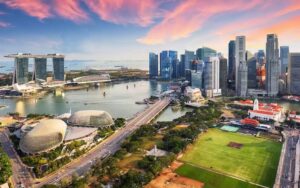
Day 1 — Arrive, Chinatown & Evening at Marina Bay Land at Changi Airport, collect EZ-Link card, check in. Afternoon exploration of Chinatown — Maxwell Food Centre for chicken rice lunch, Chinatown Heritage Centre, Sri Mariamman Temple. Evening walk along Marina Bay waterfront, free outdoor view of the Supertrees at Gardens by the Bay. Dinner at a Clarke Quay riverside restaurant. Estimated daily spend: SGD 80–150 (₹4,800–₹9,000)
Day 2 — Gardens by the Bay & Marina Bay Sands Skypark Morning: Gardens by the Bay conservatories (book ahead). Afternoon: Marina Bay Sands SkyPark at dusk. Evening: Rooftop bar at Ce La Vi (on top of MBS) for cocktails with the city view. Estimated daily spend: SGD 100–180 (₹6,000–₹10,800)
Day 3 — Little India & Kampong Glam Morning: Little India — Sri Veeramakaliamman Temple, Mustafa Centre, banana leaf lunch at Komala Vilas. Afternoon: Walk to Kampong Glam — Sultan Mosque, Haji Lane boutiques, Arab Street. Evening: Murtabak dinner and shisha if you fancy it. Estimated daily spend: SGD 60–100 (₹3,600–₹6,000)
Day 4 — Sentosa Island Full day at Sentosa — Universal Studios or Adventure Cove Waterpark (pick one), beach time at Palawan, cable car back to mainland at sunset. Dinner at VivoCity mall food court. Estimated daily spend: SGD 120–200 (₹7,200–₹12,000)
Day 5 — Singapore Botanic Gardens, Orchard & Katong Morning: Singapore Botanic Gardens and National Orchid Garden. Lunch on Orchard Road. Afternoon: Drive or MRT to Katong — Peranakan shophouses, 328 Katong Laksa, Joo Chiat antique shops. Evening: Night Safari at Mandai Wildlife Reserve (book ahead, SGD 55). Estimated daily spend: SGD 100–180 (₹6,000–₹10,800)
Day 6 — Tiong Bahru, Chili Crab & Departure Morning: Tiong Bahru neighbourhood — Singapore’s hippest enclave, art deco public housing, independent bookshops, and the best kaya toast at Tong Hoe. Late afternoon: Chili Crab dinner at Jumbo Seafood or Long Beach before heading to the airport. Estimated daily spend: SGD 80–160 (₹4,800–₹9,600)
10. Budget Breakdown

| Expense Category | Budget Traveler | Mid-Range | Luxury |
| Accommodation (per night) | SGD 40–70 (₹2,400–₹4,200) | SGD 150–250 (₹9,000–₹15,000) | SGD 400+ (₹24,000+) |
| Food (per day) | SGD 20–35 (₹1,200–₹2,100) | SGD 60–100 (₹3,600–₹6,000) | SGD 150+ (₹9,000+) |
| Transport (per day) | SGD 5–10 (₹300–₹600) | SGD 15–30 (₹900–₹1,800) | SGD 40+ (₹2,400+) |
| Attractions (per day) | SGD 10–20 (₹600–₹1,200) | SGD 40–70 (₹2,400–₹4,200) | SGD 100+ (₹6,000+) |
| Return Flight from India | ₹12,000–₹18,000 | ₹20,000–₹30,000 | ₹45,000+ |
| Visa | SGD 30 (₹1,800) | SGD 30 (₹1,800) | SGD 30 (₹1,800) |
| 6-Day Total (excl. flights) | ₹35,000–₹55,000 | ₹90,000–₹1,40,000 | ₹2,50,000+ |
Where to Save: Eat almost exclusively at hawker centres (phenomenal food, fraction of restaurant prices), use the MRT instead of Grab for all daytime travel, book attractions through Klook instead of at the door (10–20% savings consistently), stay in Chinatown or Bugis instead of Orchard or Marina Bay.
Where to Splurge: One night at Marina Bay Sands for the infinity pool experience, the Chili Crab dinner at a proper seafood restaurant, and the Cloud Forest conservatory at Gardens by the Bay — these are worth every dollar and genuinely cannot be replicated elsewhere.
11. Final Honest Verdict
What genuinely impressed me most about Singapore was the food. Not the skyline, not the Supertrees, not the immaculate streets — the food. The depth and variety available for under SGD 10 at any given hawker centre is staggering. Hainanese chicken rice, laksa, roti prata, nasi lemak, dim sum, murtabak — all extraordinary, all absurdly affordable, all made by people who have been perfecting one dish for decades.
The honest drawback: Singapore is expensive the moment you step outside hawker centres and public transport. Hotel prices are high by Asian standards. Cocktails cost SGD 20–28 (₹1,200–₹1,700) each. Attractions add up fast. A mid-range trip to Singapore costs roughly what a luxury trip to Bali or Kerala would cost — worth knowing before you go.
The other mild criticism: Singapore can occasionally feel like a city that has been polished so smooth it has lost some friction. The spontaneity you find in Bangkok or Hanoi — the slightly chaotic beauty of a city that hasn’t been planned to perfection — is largely absent here. Some travelers love that. Others miss it.
Perfect for: First-time international travelers from India (easy visa, safe, English-speaking, efficient), foodies of any budget, couples who want a mix of romance and adventure, families with children (extremely child-friendly infrastructure), and anyone who wants Southeast Asia without navigating chaos.
Who might want to reconsider: Ultra-budget backpackers (the Southeast Asian money goes much further elsewhere), travelers seeking raw cultural immersion or off-the-beaten-track experiences, and anyone who finds highly planned, orderly environments stifling.
Go for the hawker centres. Stay for everything else. Singapore earns its reputation.