

📋 TABLE OF CONTENTS
- The City That Refuses to Let You Stay Indifferent
- Where Is Varanasi?
- How To Get To Varanasi
- Getting Around Varanasi
- Where To Stay in Varanasi
- 15 Hidden Ghats, Street Food & Spiritual Experiences
- Practical Travel Tips
- Best Time To Visit Varanasi
- 3-Day Itinerary for Varanasi
- Budget Breakdown
- Final Honest Verdict
- 🕯️ The City That Refuses to Let You Stay Indifferent
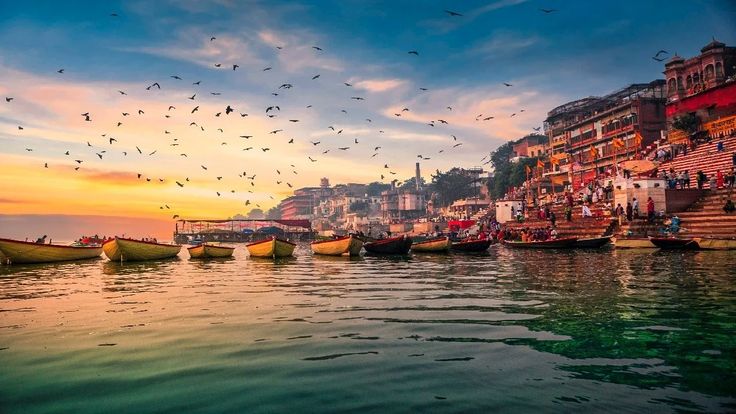
It was 4:30 in the morning and I was in a narrow wooden boat on the Ganga, and I was not prepared for what I was looking at.
The ghats — those long stone stairways that descend to the river from the ancient city — were already alive. Priests stood waist-deep in black water, their foreheads marked with tilak, arms raised to a sky that was still fully dark. Diyas burned in clusters along the steps, sending orange light shivering across the surface. The sound was extraordinary: bells, conch shells, Sanskrit chanting, and underneath it all, just the quiet lap of the river. And above the ghats, rising in vertical layers of stone and wood, was Varanasi itself — three thousand years old, arguably the oldest continuously inhabited city on earth, completely impossible to summarise.
I have travelled to places that are beautiful, places that are interesting, places that are complicated. Varanasi is all three simultaneously, and it is also something else — a city so concentrated in spiritual intensity, so dense in history and ritual and raw life and death, that it reaches you in a way that very few places do.
If you’re planning a visit in 2026 and want to go beyond Dasaswamedh Ghat and back, keep reading.
- 📍 Where Is Varanasi?
Varanasi — also known as Kashi or Banaras — sits on the western bank of the Ganga in Uttar Pradesh, roughly 320 km southeast of Lucknow and 800 km southeast of Delhi. It lies at the confluence of two smaller rivers (the Varuna and the Assi, which give the city its name), and its position on a crescent-shaped bend of the Ganga means the sunrise over the river from the ghats is always on the opposite bank — an unbroken horizon of flat land and rising light, which is part of what makes the dawn boat ride so visually perfect. Despite being one of India’s most-visited cities, it remains genuinely resistant to being fully understood by a first-time visitor, which is exactly why you should go.
- ✈️ How To Get To Varanasi
By Air: Lal Bahadur Shastri International Airport (VNS) is about 25 km from the city. IndiGo, Air India, and SpiceJet operate regular direct flights from Delhi (1.5 hours, ₹2,500–6,000), Mumbai (2 hours, ₹3,500–8,000), and Bangalore (2.5 hours, ₹4,000–9,000). From the airport, prepaid taxis cost ₹500–700 to the ghats area.
By Train: Varanasi Junction (BSB) and Pt. Deen Dayal Upadhyaya Junction (MGS, 18 km away) both connect to major Indian cities. From Delhi, the Kashi Vishwanath Express and Vibhuti Express take 11–13 hours (₹400–1,200 in sleeper/AC). From Mumbai, the Mahanagri Express takes around 26–28 hours. Varanasi Cantt (BCY) is closer to the ghats if you’re coming on shorter routes.
By Road: Varanasi is well connected by NH19 from Delhi (about 13–15 hours by car) and NH31 from Lucknow (about 4.5–5 hours). Volvo buses from Lucknow cost ₹600–900. I’d recommend the overnight train from Delhi over any road option — it drops you in the city at a reasonable hour and you arrive rested.
| Mode | Cost (from Delhi) | Time |
| Flight + taxi | ₹3,000–6,500 | ~2.5 hours total |
| Overnight train (Sleeper) | ₹400–700 | 11–13 hours |
| Overnight train (3AC) | ₹900–1,400 | 11–13 hours |
| Volvo bus | ₹800–1,200 | 13–16 hours |
- 🚗 Getting Around Varanasi
Varanasi divides into two functional zones: the ghats area (where you’ll spend most of your time) and the broader city (Godowlia market, BHU, Sarnath, etc.).
Within the ghats zone: Walk. Seriously — the lanes (called gallis) of the old city are too narrow for any motorised vehicle. Navigating them on foot, getting deliberately lost in the labyrinth of temples, silk shops, and chai stalls is the actual experience. Most of the ghats are connected by stone walkways along the river, and you can walk from Assi Ghat to Raj Ghat in about 90 minutes.
Cycle rickshaws: ₹50–100 for shorter distances within the old city. Useful for reaching the ghats from your guesthouse if it’s a bit further back.
Auto-rickshaws: ₹100–200 for most inter-neighbourhood routes. ₹300–500 to reach Sarnath (10 km).
Boats: Essential. A rowing boat from any major ghat runs ₹200–400/hour for a private hire, or ₹50–100 per person shared. For the sunrise boat ride, negotiate the night before with a boatman at your nearest ghat — agree on a fixed rate, typically ₹250–350 per person for a 45-minute sunrise ride.
Ola/Uber: Available for routes to the airport, Sarnath, and BHU. Less useful in the old city.
First-timer difficulty: Moderate. The gallis are genuinely disorienting (Google Maps sometimes gives up inside them), but getting lost is part of it. Download an offline map of the old city before you go.
- 🏨 Where To Stay in Varanasi
Best area: Anywhere within walking distance of the main ghat stretch — particularly the neighbourhoods backing onto Assi Ghat (more relaxed, café culture), Dashashwamedh Ghat (central but loud), or the lanes between Manikarnika and Mir Ghat (most atmospheric, not for everyone).
Budget (₹500–1,500/night)
Stops Hostel (Assi Ghat area): One of Varanasi’s best hostels — clean dorms from ₹600, friendly staff, good roof terrace. The social atmosphere here is excellent for solo travellers looking for company to share a boat ride.
Shanti Guest House (near Assi Ghat): A classic Varanasi guesthouse experience — simple rooms, rooftop with river glimpses, excellent value at ₹800–1,200 for a double. Book ahead in peak season.
Mid-Range (₹2,500–6,000/night)
Suryauday Haveli (Shivala Ghat): A beautifully restored heritage haveli right on the ghats. Rooms are atmospheric without being overpriced — from ₹3,500/night. The rooftop breakfast with the river below is genuinely special.
Brijrama Palace (Darbhanga Ghat): A 250-year-old palace converted into a boutique hotel. Rooms from ₹5,000, river-facing rooms significantly more. The location is exceptional and the architecture is extraordinary.
Luxury (₹12,000+/night)
Taj Ganges (Nadesar area): Set in 40 acres of gardens, about 4 km from the ghats. Pool, excellent spa, the full Taj experience. From ₹12,000/night. If you want a quiet, refined base to retreat to after the intensity of the old city, this is it.
- 🕌 15 Hidden Ghats, Street Food & Spiritual Experiences
- Dasaswamedh Ghat Aarti — The Main Event

Every evening without exception, the Ganga Aarti at Dasaswamedh Ghat is performed by a coordinated group of young priests in an elaborately choreographed ceremony involving massive fire lamps, conch shells, incense, and synchronized chanting. It draws enormous crowds. It is also one of the most extraordinary things I’ve seen in India.
The honest warning: if you want to watch from the ghat steps, arrive an hour early. If you want a better view with less jostling, hire a boat for ₹250–350 per person and watch from the river — you get the full spectacle reflected on the water, and you can actually see and breathe.
Insider tip: Arrive at 5:30 PM for the 6:30–7:00 PM ceremony (timing varies slightly by season). The pre-aarti atmosphere — priests preparing, flower sellers doing brisk business, the whole ghat community assembling — is almost as good as the ceremony itself.
- Manikarnika Ghat — Where Time Feels Different
This is Varanasi’s main cremation ghat, and it operates 24 hours a day, every day, without interruption. Pyres burn constantly. Families carry their dead in cloth through the gallis. Smoke rises in thin columns over the river.
I’m telling you about it not to be morbid, but because visiting Manikarnika — respectfully, quietly, from a slight distance — is one of those travel experiences that recalibrates something in you. The Doms who tend the pyres have done so for generations. The sacred wood is stacked in elaborate piles. Life and death are happening side by side in the most matter-of-fact, ancient way.
Honest warning: Photography is strictly prohibited. Do not take photos, do not reach for your phone. This is a sincere religious and family ritual, not a spectacle. Approach with complete respect.
- Assi Ghat at Sunrise — The Quieter Alternative
Assi Ghat, at the southern end of the ghat chain, has its own morning ceremony — quieter, more intimate, and far less crowded than Dasaswamedh. A small stage, a single priest, a steady stream of bathers, sadhus doing their own rituals along the steps. Sitting here at 5:30 AM with a ₹15 cup of chai from the stall at the top of the steps, watching the sky change colour over the flat opposite bank, is one of Varanasi’s best free experiences.
- Chet Singh Ghat, Shivala Ghat, Kedar Ghat — The Hidden Ones
Most visitors cluster between Dasaswamedh and Manikarnika. Walk south past Assi Ghat, or navigate the long ghat walkway past the main clusters, and you find yourself in quieter territory. Chet Singh Ghat has a beautiful fort ruin at its top. Shivala has an ornate maharaja’s palace. Kedar has a South Indian temple that feels architecturally completely different from everything around it. These ghats see perhaps one-tenth of the tourist traffic of the main cluster, and they’re where Varanasi feels like a city that exists for its own residents rather than for visitors.
- Kashi Vishwanath Temple Complex

The most sacred Shiva temple in India, rebuilt and expanded with a gleaming golden corridor in 2021–22. The new complex is architecturally impressive — a massive open courtyard connecting multiple temples, clad in stone, with views toward the Ganga. The inner sanctum is small, intense, and requires passing through airport-style security.
The old gallis surrounding the temple — impossibly narrow lanes of flower sellers, silver shops, and crumbling shrines — are the experience that stays with you. Leave 2–3 hours and let yourself get lost in them.
- Sarnath — Where Buddhism Began

Seven kilometres from Varanasi, in a park of manicured lawns and ancient ruins, is where Siddhartha Gautama — the Buddha — gave his first sermon after attaining enlightenment. The Dhamek Stupa, a massive cylindrical stone structure dating to 500 CE, still stands. The Sarnath Museum houses some of the finest Buddhist sculpture in India, including the original Lion Capital of Ashoka (the same motif on the Indian national emblem).
It’s a half-day from Varanasi by auto (₹300–400 return), and it feels completely different from the intensity of the city — quiet, scholarly, beautiful. Don’t skip it.
- Banarasi Thandai — The Drink You Need to Try
Before you visit Varanasi, someone will tell you about bhang lassi. That’s a longer conversation. The drink you should absolutely try regardless of any other choices is regular Banarasi thandai: a thick, cold blend of milk, sugar, almonds, fennel, rose petals, and a mix of spices that’s been chilled and is served in a clay cup you smash afterwards (it’s a whole thing). It tastes like a cold, fragrant milkshake that somehow carries five different flavours at once.
Find it at the thandai stalls on the Dasaswamedh Ghat road. ₹50–80 for a glass.
- Kachori Sabzi at a Street Stall — Varanasi’s Breakfast

The classic Varanasi breakfast that every local knows: crispy, puffy kachoris — deep-fried pastry shells — served with a heavily spiced, somewhat dry potato-and-pea sabzi, and a green chutney that is sharper than it looks. Eat it standing at a street stall because that’s the correct way. The stalls appear everywhere near the ghats between 7–10 AM and sell out fast. Total cost: ₹40–60 for a plate.
- Banarasi Paan — Varanasi’s Edible Signature
The betel leaf stuffed with an extraordinarily complex mix of sweet condiments — gulkand (rose preserve), coconut, fennel, flavoured tobacco or non-tobacco versions — folded into a neat triangle and handed to you by a paanwala who makes this look like origami. Pop it in your mouth all at once, let the flavours explode, try not to look as surprised as you feel. ₹30–100 depending on the variety.
- Banarasi Silk Shopping at Chowk Market
Varanasi produces some of the world’s finest handwoven silk — the real Banarasi sarees and fabric, woven on traditional looms in home workshops around the city. The Chowk area and the lanes around Vishwanath Gali are full of silk shops. Important warning: the counterfeit Banarasi silk market is enormous. Only buy from registered Government Silk Weaving Centres or shops with a Silk Mark certification. If the price seems too good for genuine handwoven silk, it probably isn’t genuine.
- Dawn Boat Ride on the Ganga

Non-negotiable. ₹250–350 per person in a shared wooden rowing boat, booked the evening before from your nearest boatman. You leave in darkness, and over the next 45 minutes, Varanasi wakes up in front of you. Bathers descend to the ghats. Priests begin their rituals. The sky turns amber, then gold. The pyres at Manikarnika glow orange in the pre-dawn dark. The sounds come layer by layer.
I’ve done boat rides on the Backwaters of Kerala (also wonderful — the Kerala Travel Guide 2026 is worth reading if you’re planning that trip too), on the Andaman coast, on rivers across India. The Varanasi dawn boat ride is categorically different. It’s the single best ₹300 I’ve spent anywhere.
- Bharat Mata Temple
About 1.5 km from the main ghats, this unusual temple has no deity. Instead, it houses a massive marble relief map of undivided India — the subcontinent carved in stone at scale. Built in 1936 with Mahatma Gandhi’s blessing, it’s a nationalist monument that takes the form of a temple, and the strangeness and sincerity of that idea stays with you. Free entry. Worth the short auto ride.
- Evening Walk through the Gallis
Late afternoon, after the heat breaks: wander into the gallis behind Vishwanath temple with no particular destination. These lanes are mediaeval in their narrowness — sometimes less than a metre wide — and completely alive. A silk weaver’s workshop. A temple of solid silver. A chai stall wedged into a space the size of a large cupboard. A goat. A dog. A sadhu who may or may not want his photo taken. A flower seller whose marigold garlands make the whole galli smell golden.
This is Varanasi’s truest self, and no guided tour can replicate the experience of just wandering alone through it.
- Ramnagar Fort and Museum

Across the river from the main ghats, accessible by boat (cross from any of the main ghats, ₹50–100) or by road bridge, Ramnagar Fort is a 17th-century sandstone fortress that was the home of the Maharaja of Benares. The onsite museum has a genuinely strange and fascinating collection: vintage cars, howdahs (elephant seats), medieval astronomical instruments, ceremonial weapons, and royal costumes. ₹150 entry. Budget 1.5–2 hours.
- Bhelpuri and Chaat at Chowk
If Varanasi’s street food scene had a second pillar alongside kachori-sabzi, it would be chaat — and the Chowk area does it best. Tamatar chaat (a Varanasi speciality, sour tomato-based), aloo tikki, and bhelpuri all sold from carts that have been in the same families for generations. ₹40–80 per item. Go at 5 PM when the stalls are freshest and the pre-aarti crowd is building.
- 💡 Practical Travel Tips

Cash is essential. The gallis, the boat rides, the street food, most guesthouses — everything in the old city works on cash. ATMs are available near Godowlia Chowk and Dasaswamedh Road. Carry ₹2,000–3,000 at all times.
SIM and internet: Jio and Airtel both work in Varanasi proper. Coverage in the deepest gallis can be spotty. Download an offline map before you arrive — Google Maps sometimes loses its bearings in the narrow lanes.
Safety: Varanasi is generally safe for tourists. Solo female travellers visit regularly; the main ghats and tourist areas are well-trafficked. The most common issue is persistent touts near the main ghats — a firm, polite “no thank you” is all you need. Don’t follow strangers who offer to “show you a better way” or “special deals on silk.”
Bhang awareness: If you choose to consume bhang (cannabis-infused products, legally available in Varanasi at government shops), be extremely cautious about dosage. I’ve met multiple travellers who had very unpleasant experiences because street sellers gave them far stronger doses than expected. This is a genuine safety concern, not moralising.
Dress code: Near temples and ghats, covered shoulders and knees are expected. Carry a light scarf for flexibility.
- 📅 Best Time To Visit Varanasi
| Month | Weather | Crowds | Notes |
| Oct–Nov | Perfect (20–28°C) | Medium | Post-monsoon, lush and clear |
| Dec–Feb | Cool to cold (8–20°C) | Medium | Dev Deepawali in Nov is spectacular |
| March | Warming up (22–30°C) | Medium-High | Holi in Varanasi is extraordinary |
| April–June | Hot (32–45°C) | High | Very hot, avoid unless heat-tolerant |
| July–Sept | Monsoon, humid | Low | Ghats can flood, some paths closed |
Best months overall: October–November and February–March. Dev Deepawali in November (when the ghats are lit with 100,000+ earthen lamps) is arguably the most visually stunning event in India.
Avoid: May and June. Temperatures regularly hit 42–45°C. The old city, with its stone lanes that absorb and radiate heat, becomes genuinely uncomfortable.
- ⏳ 3-Day Varanasi Itinerary
Day 1: Arrival + Ghat Initiation
- Arrive by afternoon. Check in, freshen up.
- 4:30 PM: Walk to the ghat nearest your guesthouse. Find a spot and just sit for a while. Don’t plan anything. Let the city arrive.
- 5:30 PM: Head toward Dasaswamedh Ghat for the Aarti setup. Find a boat if you can (arrange from the ghat steps, ₹250–300 pp).
- 6:30–7:15 PM: Ganga Aarti — from the boat.
- 8:00 PM: Dinner at a rooftop restaurant near Assi Ghat. Dal, rice, sabzi: ₹200–300.
- Night: Walk back along the ghats in the dark. The river looks completely different at night.
- Daily spend: ₹1,500–2,500 (incl. accommodation ₹700–1,000)
Day 2: Temples, Gallis & Street Food Deep Dive
- 5:00 AM: Pre-booked dawn boat ride (₹300 per person). Non-negotiable.
- 7:00 AM: Kachori-sabzi breakfast at a ghat stall. ₹50.
- 9:00 AM: Kashi Vishwanath Temple complex — allow 2 hours including the surrounding gallis.
- 11:30 AM: Manikarnika Ghat — walk past respectfully, observe from a distance.
- 1:00 PM: Thandai at a Dasaswamedh Road stall. Thali lunch nearby. ₹200–250.
- 3:00 PM: Rest (the afternoon heat is real, even in good months).
- 5:00 PM: Chaat crawl through Chowk market. Budget ₹150–200.
- 7:00 PM: Evening walk through the gallis with no fixed destination.
- Daily spend: ₹1,200–2,000
Day 3: Sarnath + Ramnagar Fort + Farewell Paan
- 8:00 AM: Auto to Sarnath (₹300–400 return, negotiate to wait). Dhamek Stupa, Sarnath Museum.
- 12:00 PM: Return to Varanasi, lunch.
- 2:00 PM: Boat across the river to Ramnagar Fort and Museum (entry ₹150).
- 4:30 PM: Return by boat, walk back to Assi Ghat.
- 5:30 PM: Assi Ghat morning-style — quieter evening version. Chai. Sunset.
- 7:00 PM: Banarasi paan — your edible farewell to the city. ₹40–80.
- Daily spend: ₹1,200–2,000
For travellers extending into Uttarakhand, the spiritual journey pairs beautifully with a visit to Rishikesh — check out the full Rishikesh travel guide for how to combine both on one trip.
- 💰 Budget Breakdown
| Category | Budget | Mid-Range | Luxury |
| Accommodation (3 nights) | ₹1,800–3,000 | ₹7,500–15,000 | ₹36,000–60,000 |
| Food (3 days) | ₹900–1,500 | ₹2,100–4,500 | ₹6,000–12,000 |
| Transport (to + local) | ₹800–1,500 | ₹2,000–4,000 | ₹5,000–10,000 |
| Boat rides (3 sessions) | ₹600–900 | ₹900–1,500 | ₹2,000–4,000 |
| Sarnath + Ramnagar | ₹600–800 | ₹800–1,200 | ₹2,000–3,000 |
| Entry fees / temples | ₹150–300 | ₹300–500 | ₹500–1,000 |
| Shopping / souvenirs | ₹500–1,000 | ₹2,000–5,000 | ₹10,000+ |
| Misc (chai, paan, thandai) | ₹300–500 | ₹500–800 | ₹1,000–2,000 |
| Total 3-Day Trip | ₹5,650–9,500 | ₹16,100–32,500 | ₹62,500–1,02,000 |
Where to save: Hostels near Assi Ghat, ghat-side dhaba thalis, shared boats, walking everywhere in the old city.
Where to splurge: A river-facing room at Brijrama Palace for one night (the sunrise view from the window is worth it), and genuine Banarasi silk if you know what to look for.
If you’re planning a broader Uttar Pradesh spiritual journey — Varanasi, Ayodhya, Mathura, Prayagraj — the Uttar Pradesh Spiritual package by Tripyverse is worth looking at for the convenience of having logistics sorted, especially for first-timers.

- 🤔 Final Honest Verdict
What genuinely impressed me most about Varanasi was how completely uninterested it is in being palatable for tourists. It doesn’t soften itself. The cremation fires burn whether you’re there or not. The gallis stay narrow and maze-like and occasionally overwhelming. The river is sacred and dirty and beautiful and in constant use. The city operates entirely on its own terms — ancient, noisy, fragrant, occasionally chaotic — and it is precisely this quality that makes it unlike anywhere else in India, and possibly anywhere else on earth.
The honest drawback: Varanasi is not a clean or comfortable city in the conventional sense. The main ghats, especially near Dasaswamedh, can feel aggressively touristy — touts, boat hawkers, and aggressive shop owners are a constant presence. The river quality, despite some improvement from the Namami Gange project, remains a concern. Some travellers find the intensity of Manikarnika Ghat genuinely distressing rather than profound. These are real things, not minor inconveniences.
Perfect for: Anyone interested in India’s spiritual and cultural depth, solo travellers comfortable with sensory intensity, history and temple enthusiasts, photographers, and those doing the classical northern India circuit (Delhi–Agra–Varanasi is for good reason one of the world’s great travel routes).
Might not suit: Travellers who need order and cleanliness, those with limited mobility (the ghats involve significant stairs and uneven stone), and anyone visiting in May–June without a very high heat tolerance.
Varanasi doesn’t ask whether you’re ready for it. Go anyway.