

Table of Contents
- The Moment That Hooked Me on Ladakh
- Where Is Leh Ladakh Located?
- How To Get To Leh Ladakh
- Getting Around Leh
- Where To Stay in Leh
- Top Monasteries, Cultural Experiences & Foods in Ladakh
- Practical Travel Tips
- Best Time To Visit Ladakh
- Suggested Itinerary – 7 Days in Leh Ladakh
- Budget Breakdown
- Final Honest Verdict
1. The Moment That Hooked Me on Ladakh
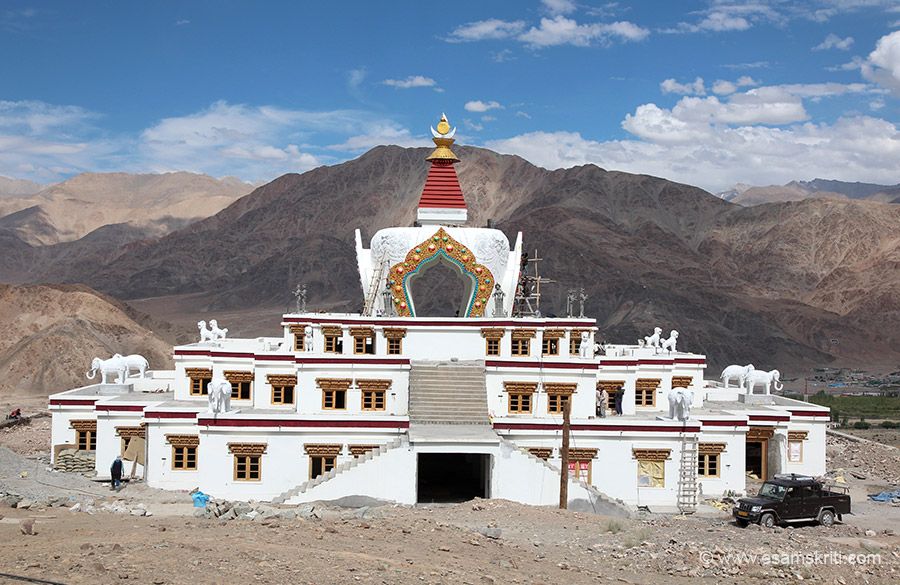
I didn’t plan to stop at Thiksey Monastery that morning. We were just driving past, headaches still lingering from the altitude, our jeep kicking up pale dust on the road toward Hemis. But then I saw it — a cluster of white and ochre structures stacked up a rocky hill like something out of a fever dream, prayer flags snapping in the thin cold air, and a monk in crimson robes walking deliberately along a narrow ledge, completely unbothered by the thousand-foot drop behind him.
I made our driver pull over.
Leh Ladakh does that to you. It catches you off guard, again and again — with the silence of its valleys, the shocking clarity of its sky, the warmth of a cup of butter tea handed to you by a smiling old woman outside a gompa. This is a place that doesn’t beg for your attention. It simply exists, ancient and unhurried, at the top of the world. And if you come with even a little openness, it will wreck you in the best possible way.
If you’ve been wondering whether Ladakh is just another overrated Himalayan destination — let me walk you through what I found, honestly, without the Instagram gloss.
2. Where Is Leh Ladakh Located?
Leh is the capital of the Union Territory of Ladakh in northern India, situated at an altitude of around 3,500 meters (11,400 feet) above sea level. It sits in the Indus Valley, flanked by the Karakoram and Himalayan mountain ranges, sharing borders with Pakistan to the west and China to the east. It’s roughly 434 km from Srinagar and about 490 km from Manali — both routes being legendary mountain drives in their own right. If you’ve read about the hidden gems in Kashmir and felt the itch to go further north and higher up, Leh is exactly where that road leads.
3. How To Get To Leh Ladakh

By Air (Fastest Option) Kushok Bakula Rimpochhe Airport in Leh is connected to Delhi, Mumbai, Srinagar, and Jammu. IndiGo and Air India operate regular flights. A Delhi–Leh flight takes about 1.5 hours and costs anywhere from ₹4,500 to ₹12,000 depending on how far in advance you book. This is the easiest and safest option for those concerned about altitude acclimatization — flying in means you need at least two full rest days before doing anything strenuous.
By Road from Manali (The Classic Route) The Manali–Leh Highway (NH3) covers approximately 490 km through some of the most jaw-dropping mountain terrain on earth. The drive takes two days, with most travelers breaking overnight at Jispa or Sarchu. You’ll cross passes like Baralacha La and Tanglang La. This route is open roughly from mid-June to mid-October. You can take a shared Jeep (₹2,000–₹2,500), a Himachal Road Transport Corporation (HRTC) bus (₹900–₹1,200), or hire a private cab (₹10,000–₹15,000 for the full route). If you’re road-tripping from Manali, budget a full two days and pack warm layers regardless of the season.
By Road from Srinagar (The Scenic Route) The Srinagar–Leh Highway (NH1) runs 434 km, passing through Kargil and taking about two days. It’s generally open from May to October. JKSRTC buses run this route at budget prices, while shared cabs and private taxis are also available. The landscape is dramatically different from the Manali route — more arid, more Buddhist, more remote.
There is no direct train to Leh. The nearest major railhead is Jammu Tawi, about 700 km away.
4. Getting Around Leh
Leh town itself is walkable for the most part — the main bazaar, Leh Palace, and several monasteries within the valley are accessible on foot if you’re acclimatized. But for most monastery circuits and day trips, you’ll need wheels.
Rented Motorcycles & Scooters: The most popular option. Royal Enfields can be rented for ₹1,200–₹1,800/day. Activas and scooters run around ₹700–₹900/day. This is ideal for solo travelers and those wanting full flexibility.
Shared Jeeps & Taxis: For routes to Nubra Valley, Pangong Lake, and Tso Moriri, you either hire a private jeep (₹6,000–₹12,000 per trip) or join a shared jeep group (₹1,500–₹2,500 per person). Arranging shared taxis is easy — just ask at your guesthouse.
Local Buses: JKSRTC operates infrequent local buses to some villages and monasteries. Very cheap (₹30–₹100) but unreliable for time-sensitive travel.
Apps: Ola and Uber do not operate in Leh. Stick to local taxi unions or ask your accommodation to arrange trusted drivers.
For first-timers, I’d suggest spending the first two days on foot or in a hired cab and renting a bike only once you’ve got your altitude legs under you.
5. Where To Stay in Leh
Best Areas: The old town near Leh Palace and the main bazaar are ideal for first-timers. Fort Road has plenty of mid-range options. Changspa Lane is quieter, more garden-y, and popular with backpackers.
Budget (Under ₹1,500/night)
- The Zen Ladakh Guesthouse — Clean rooms, warm hosts, rooftop with mountain views. Breakfast often included.
- Pangong Residency — Basic but reliable, popular with bikers. Good communal vibe.
Mid-Range (₹2,000–₹5,000/night)
- Hotel Lchang Nang Retreat — Beautifully designed rooms with Ladakhi woodwork. Central location, lovely courtyard.
- Kanglachen Guesthouse — Friendly family-run place with outstanding home-cooked meals. I’d go back just for the breakfast.
Luxury (₹8,000+/night)
- The Grand Dragon Ladakh — The finest hotel in the region. Heated rooms, spa, stunning views, and exceptional Ladakhi-meets-global menu. If you’re splurging anywhere, make it here.
For a complete trip with monastery circuits, Nubra, and Pangong already planned, check out the Leh Escape package by Tripyverse — it handles accommodation, transfers, and permits so you can focus entirely on the experience.
6. Top Monasteries, Cultural Experiences & Foods in Ladakh
Thiksey Monastery — The Tibetan Potala of Ladakh

Thiksey is the one that stopped me on that dusty morning drive, and it’ll probably stop you too. Perched dramatically on a hilltop 19 km southeast of Leh, it’s one of the largest and most visually arresting gompas in all of Ladakh. Inside, you’ll find a 15-meter Maitreya (future Buddha) statue whose golden crown nearly touches the ceiling — it’s installed across two floors and utterly commanding. The monastery belongs to the Gelug sect of Tibetan Buddhism.
Arrive before 6:30 AM if you want to witness the morning prayers — monks chanting in the main hall, brass butter lamps flickering, the smell of juniper incense thick in the cold air. It’s one of those moments that renders language inadequate.
Getting there: Auto-rickshaw from Leh (₹300–₹400 one way) or taxi. Combine it with Hemis on the same day to make the most of the drive.
Insider tip: The rooftop view of the Indus Valley at sunrise is genuinely one of the top five views in India. Don’t skip it by arriving late.
Hemis Monastery — Ancient, Wealthy & Mysterious

Hemis is the wealthiest and most famous monastery in Ladakh, located 45 km southeast of Leh. It belongs to the Drukpa Lineage sect and is believed to have been founded in the 11th century, though the current structure dates to 1672. The monastery houses an extraordinary collection of thangkas, gold statues, and ancient manuscripts.
If you visit in June or July, the Hemis Festival transforms the courtyard into a spectacle of masked Cham dances, vivid costumes, and traditional music — it’s one of the most dramatic festivals in the Himalayas. The two-day festival follows the Tibetan lunar calendar, so check dates before planning.
The museum inside is worth the entry fee — exhibits of ancient Buddhist art, jewelry, and relics collected over centuries. Allow 2–3 hours for a proper visit.
Diskit Monastery & The Giant Maitreya Statue — Nubra Valley’s Crown Jewel
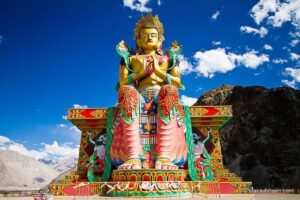
If you’re heading to Nubra Valley via Khardung La, don’t make the mistake of racing past Diskit Monastery. Perched above the Shyok River, with the cold desert dunes of Hunder visible in the distance, Diskit is home to a 32-meter Maitreya Buddha statue that gazes protectively toward the Pakistan border.
The contrast here is surreal — snow peaks, sand dunes, camels, and a colossal golden Buddha. It doesn’t look real. Walk around the monastery complex and spend time in the prayer hall where hand-painted murals line every wall in intricate detail.
Pangong Lake — More Than Just a Photo Stop

Yes, every travel blog shows that photo. But Pangong Tso is genuinely transcendent in person. The lake stretches 134 km across the India-China border, and the colors shift throughout the day — grey at dawn, turquoise by midday, deep cobalt at dusk. Get full details and scenic route options in this dedicated Pangong Lake guide.
Camp overnight if you can. Waking up to that lake with no one else around — just the wind off the mountains and the sound of water — is the kind of silence most people never get to experience.
Leh Palace & the Old Town — History Underfoot

Leh Palace, built in the 17th century by King Sengge Namgyal, overlooks the main bazaar like a nine-story sentinel. Modeled after the Potala Palace in Lhasa, it’s now partially in ruins but still inhabited by the Archaeological Survey of India and partially open to visitors. The views from the rooftop — across the valley to the Stok Kangri range — are reason enough to make the climb.
Below the palace, wander the narrow alleyways of Old Leh. You’ll find small temples, local homes with intricate carved wooden balconies, women in traditional Ladakhi perak headdresses, and a pace of life that exists entirely outside modern urgency.
Ladakhi Food — The Real Cultural Immersion

Food in Ladakh is its own education, and most travelers underestimate it. The cuisine reflects the high-altitude, harsh-climate reality — warming, filling, nutritious, and largely unlike anything you’d find elsewhere in India.
Thukpa is the meal I ate most often — a hearty noodle soup with vegetables or meat, ginger-scented and deeply comforting after a cold day. Every restaurant in Leh serves it, but the best I had was at a tiny home kitchen near Changspa Lane where the broth was simmered for hours.

Butter Tea (Po Cha) is an acquired taste — made with black tea, yak butter, and salt. It tastes nothing like what you’d expect from something called tea. It’s savory, fatty, and oddly nourishing. Drink it when a local offers it to you. It would be rude not to, and honestly, it grows on you.

Skyu is a traditional Ladakhi pasta dish — hand-rolled thumb-pressed wheat pieces cooked in a vegetable stew. Rustic, warming, and almost impossible to find in tourist restaurants. Ask your guesthouse host if they can make it, or look for home-dining experiences.
Momos in Ladakh come stuffed with local vegetables, cheese, or meat. The cheese-and-spinach variety is exceptional.
Chhang is the local barley beer, mildly alcoholic and consumed widely at festivals and social gatherings. If someone offers you a bowl at a monastery festival, accept graciously.
For a deeper dive into the flavors of this region, the Kashmiri food guide covers the broader culinary landscape across northern India beautifully.
The Indus Valley Cultural Experience — Villages & Homestays

Some of the best moments in Ladakh happen not at a famous monastery but in the villages threaded along the Indus. Places like Alchi, Saspol, Basgo, and Likir are home to ancient cave paintings, centuries-old temples, and families who have lived in the same stone houses for generations.
Alchi Monastery is particularly underrated — its 10th century murals are among the finest examples of early Buddhist art in the entire Himalayan region. I spent three hours in that small, unassuming complex and barely scratched the surface.
A homestay in any of these villages — arranged through your guesthouse or a local travel operator — will give you an evening of home-cooked food, conversation around a bukhari (wood stove), and a perspective on Ladakhi life that no hotel can replicate.
For everything you need to know about navigating your first days in Leh, including acclimatization advice and day one logistics, this Leh Day 1 guide is essential reading.
7. Practical Travel Tips
Cash is King: ATMs in Leh are limited and frequently out of cash during peak season. Carry sufficient cash from Delhi or Chandigarh. There are a few ATMs on the main bazaar road, but queues can be long and machines run out regularly.
SIM Cards: Airtel and BSNL are the only networks that work reliably in Ladakh. Get a local SIM before you fly in or pick one up in Leh town. Connectivity is sparse beyond the main highway and non-existent in most remote valleys.
Permits: Inner Line Permits (ILP) are required for certain areas including Nubra Valley, Pangong, and Tso Moriri. These can be arranged online through the Ladakh Tourism portal or through any local travel agent in Leh (₹400–₹700 per person). Your accommodation can usually arrange these quickly.
Altitude Acclimatization: This is not negotiable. Plan for two full rest days in Leh when you arrive, regardless of how fit you are. Drink water constantly, avoid alcohol for the first 48 hours, and don’t exert yourself. Diamox (acetazolamide) is available at local pharmacies and can help with symptoms — consult a doctor before taking it.
Medical Facilities: The SNM Hospital in Leh handles altitude-related emergencies. For serious issues, evacuation to Delhi may be necessary. Travel insurance with emergency evacuation cover is strongly recommended.
Apps: Maps.me works offline and is excellent for navigating Ladakh’s mountain roads. Book accommodations through direct calls rather than apps for better rates and flexibility.
8. Best Time To Visit Ladakh

May–June (Pre-Peak): Weather is unpredictable, some high passes may still be closed, but crowds are minimal and prices are lower. The landscape is starkly beautiful — brown and snowcapped before summer green arrives.
July–August (Peak Season): The most popular time. Weather is warm and pleasant (15–25°C in the day, dropping to 5–10°C at night). All routes are open. Hemis Festival falls in this window. Downside: it’s crowded, expensive, and accommodation books out fast. Reserve everything at least 2–3 months ahead.
September–October (Post-Peak, My Favorite): The crowds thin out, prices drop, and the light turns golden and extraordinary for photography. The landscape shifts to russet and amber. Cold fronts start arriving by late October, and Manali–Leh highway can close early.
November–April (Winter): Ladakh becomes isolated, temperatures plunge to -20°C or lower, and most guesthouses shut. The frozen Chadar Trek on the Zanskar River runs in January–February and draws a small but determined crowd. This is for experienced cold-weather travelers only.
9. Suggested Itinerary — 7 Days in Leh Ladakh
Day 1 — Arrive & Acclimatize Arrive in Leh, check in, rest. Short easy walk around the main bazaar in the late afternoon. Dinner at a local Ladakhi restaurant — try thukpa. No altitude exertion. Budget: ₹2,500–₹4,000.
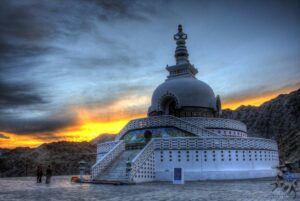
Day 2 — Leh Palace, Old Town & Shanti Stupa Morning: Leh Palace and Old Leh exploration on foot. Afternoon: Shanti Stupa at golden hour (stunning views, easy 15-minute walk). Evening: sit in a rooftop café with apple cider and mountain views. Budget: ₹2,000–₹3,500.
Day 3 — Indus Valley Monastery Circuit Thiksey, Hemis, Stakna, and Matho monasteries in a hired jeep. Full day trip, 8–10 hours. Pack lunch or eat at the dhaba near Hemis. Budget: ₹3,500–₹5,500 (jeep shared or solo).
Day 4 — Alchi, Likir & Basgo (Hidden Monasteries) Drive west along the Indus. Alchi’s ancient murals, Likir’s collection of Buddhist art, Basgo’s crumbling palace. Lunch at a village home if possible. Return by sunset. Budget: ₹3,000–₹4,500.

Day 5 — Khardung La & Nubra Valley Cross the world’s highest motorable road. Afternoon in Diskit — monastery and the Maitreya statue. Evening at Hunder sand dunes. Overnight stay in Nubra Valley. Budget: ₹4,000–₹7,000 (including accommodation).
Day 6 — Pangong Lake Drive from Nubra to Pangong via Shyok Valley road (scenic alternative to the main route). Arrive afternoon, watch the colors shift. Overnight camping at the lake edge is an experience worth every rupee. Budget: ₹4,000–₹8,000.
Day 7 — Return to Leh, Departure Morning at the lake. Drive back to Leh for afternoon flight or begin road journey. Budget: ₹2,000–₹3,000.
10. Budget Breakdown
| Expense Category | Budget Traveler | Mid-Range | Luxury |
| Accommodation (per night) | ₹700–₹1,500 | ₹2,500–₹5,000 | ₹8,000–₹20,000 |
| Food (per day) | ₹400–₹700 | ₹1,000–₹1,800 | ₹2,500+ |
| Local Transport (per day) | ₹300–₹700 | ₹1,500–₹3,000 | ₹5,000+ |
| Monastery Entry Fees | ₹100–₹200/day | ₹100–₹200/day | ₹100–₹200/day |
| Permits (ILP, total trip) | ₹500–₹700 | ₹500–₹700 | ₹500–₹700 |
| Flight (Delhi–Leh return) | ₹9,000–₹15,000 | ₹15,000–₹25,000 | ₹25,000+ |
| Daily Total (excl. flights) | ₹1,500–₹3,100 | ₹5,100–₹10,000 | ₹16,000+ |
Where to Save: Cook some meals at your guesthouse, use shared jeeps for day trips, book flights 60+ days in advance, travel in September for lower prices.
Where to Splurge: One night camping at Pangong (worth every rupee), a good acclimatization hotel for the first two nights, a knowledgeable local guide for the monastery circuit.
11. Final Honest Verdict
Ladakh is one of the genuinely transformative destinations left in India. What impressed me most wasn’t any single monastery or lake — it was the cumulative effect of the place. The altitude strips away distraction. The landscapes are so vast they reset something in your brain. The culture is ancient and living simultaneously. Monks still chant the same prayers that monks chanted here a thousand years ago.
But I’ll be honest about the drawbacks too: Ladakh in July and August is no longer a secret. Pangong Lake on a summer weekend can feel like a parking lot. Leh town is increasingly commercialized, and some of the “authentic” restaurants have lost the plot. The roads are brutal and long — real travel days here are exhausting.
Altitude sickness is also real and not to be taken lightly. I watched two perfectly healthy people in our group spend an entire day bedridden after pushing too hard too soon.
This trip is perfect for: Travelers who value depth over breadth, anyone drawn to Buddhist culture and philosophy, photographers, solo adventurers, couples looking for something genuinely different, and Indians who want a world-class travel experience without leaving the country.
Who might struggle: Anyone unwilling to slow down for acclimatization, travelers with respiratory issues, people expecting 24/7 connectivity, or those who get frustrated by infrastructure limitations.
Go once. Go slowly. Let it work on you.
And if you want the planning done for you — accommodation, permits, monastery circuits, and Nubra–Pangong routing all sorted — the Leh Escape package from Tripyverse is a solid starting point. It’s designed for travelers who want the experience without the logistical headache.