


Table of Contents
- Wait — Singapore on a Budget? Really?
- Why Singapore Is Actually Doable on a Budget
- How To Get To Singapore Cheap from India
- Getting Around Singapore Without Burning Money
- Where To Stay in Singapore on a Budget
- Free & Cheap Things To Do in Singapore
- What To Eat in Singapore Without Spending Much
- Practical Money-Saving Tips
- Best Time To Visit for the Lowest Prices
- 4-Day Budget Itinerary – Day by Day
- Complete ₹50,000 Budget Breakdown
- Honest Final Verdict
- SEO Tags
- Image Placement Guide & All Image Links
- Pinterest Pin Strategy
1. Wait — Singapore on a Budget? Really?
Everyone told me not to do it. “Singapore is expensive,” my colleague said, scrolling through Booking.com hotel prices and wincing. “You’ll blow ₹1 lakh minimum,” said another friend who had gone on a corporate trip and stayed at Marina Bay Sands. “Just go to Bangkok instead.”
I went anyway. And I came back having spent ₹47,200 total — flights included — for four nights and five days. I ate extraordinarily well. I saw everything I wanted to see. I did not sleep in a place that felt sketchy. I did not survive on instant noodles.
Here’s what nobody tells you about Singapore: the city has a dual economy. There’s the Singapore of rooftop bars and celebrity chef restaurants and SGD 40 cocktails — and then there’s the Singapore of hawker centres, MRT trains, public gardens, and free light shows. Both exist in the same square kilometer. The trick is knowing which one you’re visiting.
This is the complete Singapore budget travel guide for Indians in 2026 — built on actual numbers, actual experience, and zero padding. If you’re trying to do Singapore under ₹50,000, keep reading. It’s entirely possible, and I’ll show you exactly how.
2. Why Singapore Is Actually Doable on a Budget
The case for Singapore as a budget destination rests on three pillars that most people miss entirely.
First, the food is world-class and shockingly cheap if you eat where locals eat. A full meal at a hawker centre — Singapore’s UNESCO-listed open-air food courts — costs SGD 3.50 to SGD 6 (₹210–₹360). That’s less than a meal at a mid-range restaurant in Bangalore. Second, the public transport system is so comprehensive and cheap that you genuinely don’t need taxis for anything. Third, a huge number of Singapore’s best experiences are completely free — the Gardens by the Bay outdoor area, the Chinatown and Little India neighborhoods, the nightly Supertrees light show, the Botanic Gardens, the Marina Bay waterfront.
The expensive version of Singapore is real. But it’s entirely optional.
Compared to a mid-range trip to Bali, a budget Singapore trip requires more planning but rewards you with better infrastructure, safer streets, and frankly better food. And compared to a domestic trip to Ladakh — which has its own significant permit, transport, and gear costs — Singapore can be surprisingly competitive on total outlay if you’re smart about it.
3. How To Get To Singapore Cheap from India

Flights are your biggest variable, and where you save the most matters enormously. Here’s the honest breakdown.
Budget Airlines to Book First:
- Scoot (Tiger Air’s parent): Often the cheapest direct route from Chennai, Bengaluru, and sometimes Delhi. Fares as low as ₹7,000–₹9,000 one way if booked 60–90 days ahead.
- IndiGo: Competitive on Delhi–Singapore, Mumbai–Singapore, and Hyderabad–Singapore. One-way fares from ₹8,000 during non-peak windows.
- AirAsia (via Kuala Lumpur): Slightly longer routing but fares sometimes as low as ₹6,000 one way from major metros. Good option if you don’t mind a 2-hour layover in KL.
Cities and Approximate Return Fares (Budget Airlines, Booked Early):
- Chennai → Singapore: ₹14,000–₹18,000 return
- Bengaluru → Singapore: ₹15,000–₹20,000 return
- Delhi → Singapore: ₹16,000–₹22,000 return
- Mumbai → Singapore: ₹15,000–₹21,000 return
- Hyderabad → Singapore: ₹14,000–₹19,000 return
- Kochi → Singapore: ₹13,000–₹17,000 return
Key tips for cheapest fares: Book 60–90 days ahead. Travel Tuesday to Thursday — weekend fares are consistently 20–30% higher. Avoid December, June, and Indian school holiday windows. Use Google Flights’ price tracker and set alerts for your route. Check baggage fees before confirming — budget airlines charge ₹2,000–₹4,000 extra for checked baggage, so pack carry-on only if you can.
Visa Cost: SGD 30 (approximately ₹1,800). Apply online via ICA Singapore website. Processing typically takes 3–5 working days. Budget this in from the start.
4. Getting Around Singapore Without Burning Money
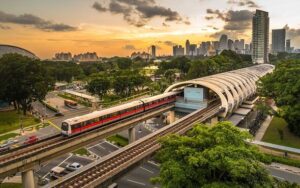
This is where Singapore genuinely shines for the budget traveler. The MRT and bus network is so comprehensive, so reliable, and so cheap that I took a Grab exactly once in four days — and that was only because I was running late for my flight.
EZ-Link Card (Your Most Important Purchase) Buy one at Changi Airport the moment you land. It costs SGD 12 (₹720), including SGD 7 of stored credit. Top it up at any MRT station or 7-Eleven. Use it for MRT trains, all buses, and even some convenience stores.
MRT Costs:
- Most journeys within central Singapore: SGD 0.92–SGD 1.80 (₹55–₹108)
- Cross-island journey (maximum): SGD 2.50 (₹150)
- A full day of transport on MRT and buses: SGD 5–8 (₹300–₹480)
Budget Transport Rules: Never take Grab for journeys under 3 km — just walk or take the MRT. Avoid taxis entirely; they cost 3–4x the MRT for the same route. Use Google Maps for real-time MRT and bus routing — it’s perfectly accurate in Singapore. Walk whenever possible: Chinatown to Marina Bay is a flat, pleasant 20-minute walk. Little India to Kampong Glam is 15 minutes on foot.
Airport Transfer: Take the MRT from Changi Airport to your accommodation. East–West Line to City Hall or Outram Park covers most central areas. Costs SGD 1.80–2.50 (₹108–₹150). Taxi to the same areas costs SGD 25–35 (₹1,500–₹2,100). This one decision alone saves you ₹1,400 right on day one.
5. Where To Stay in Singapore on a Budget

Budget accommodation in Singapore is genuinely decent — better than most Asian cities at the same price point. The key is knowing which neighborhoods to target.
Best Budget Neighborhoods:
- Chinatown: Most budget-friendly, excellent food access, short walk to MRT
- Bugis / Arab Street: Slightly pricier but culturally rich and very central
- Little India: Extremely affordable, great food, MRT-connected
Budget Options (SGD 35–80 / ₹2,100–₹4,800 per night):
Footprints Hostel, Chinatown — Clean, well-maintained, social atmosphere. Dorm beds from SGD 35 (₹2,100). Private rooms available. Walking distance to Maxwell Food Centre, Sri Mariamman Temple, and MRT. The staff here genuinely help you plan your days — a useful bonus when you’re watching every dollar.
The Pod Boutique Capsule Hotel, Beach Road — Capsule-style rooms that offer surprising privacy. SGD 55–75 per night (₹3,300–₹4,500). Central location near Bugis MRT. Compact but clever design — blackout curtains, personal socket, reading light in each pod.
Wink Hostel, Chinatown — Another well-reviewed capsule option, immaculately clean. Dorm beds from SGD 40 (₹2,400). Popular with solo Asian travelers and digital nomads.
Dream Lodge, Little India — Family-run, genuinely warm hospitality. Budget private rooms from SGD 60 (₹3,600). Breakfast sometimes included. The neighborhood noise from Little India street life is either charming or annoying depending on your tolerance for it — be honest with yourself.
Money-saving tip on accommodation: Book directly with the property or through Agoda (often cheaper than Booking.com for Asian properties). Avoid peak December dates. A 4-night stay in a budget private room in Chinatown will run you approximately ₹10,000–₹14,000 total — a manageable slice of your ₹50,000 budget.
6. Free & Cheap Things To Do in Singapore
This is the section that makes the budget trip possible. Singapore has an extraordinary number of genuinely excellent free experiences, and most travelers don’t realize it because travel content focuses on the paid highlights.
Gardens by the Bay Outdoor Area — Free

The outdoor sections of Gardens by the Bay — the Supertree Grove, the Heritage Gardens, the Golden Garden — are completely free to enter at any time. The nightly Garden Rhapsody sound-and-light show happens at 7:45 PM and 8:45 PM every day, free, from the Supertree Grove plaza. Watching those 16-story vertical gardens pulse and glow to orchestral music on a warm Singapore night is one of the most spectacular things I’ve experienced in any city, anywhere — and it costs nothing.
The paid conservatories (Cloud Forest and Flower Dome) are genuinely excellent but not essential. If your budget is tight, skip them and spend that SGD 28 on three incredible hawker meals instead.
Getting there: Bayfront MRT (Circle/Downtown Line). 5-minute walk.
Marina Bay Waterfront Walk — Free

The 3.5 km waterfront promenade around Marina Bay — from the Merlion Park past the ArtScience Museum, under the Helix Bridge, past Marina Bay Sands — is one of the most beautiful urban walks in the world. Do it at night when the buildings are lit and the water reflects the skyline. Budget ₹0 and 90 minutes.
The Merlion statue is touristy but worth 15 minutes. Sunrise here is also exceptional and almost completely uncrowded.
Chinatown & Sri Mariamman Temple — Free to Walk, SGD 0

Spend half a day wandering Chinatown’s shophouse streets — Pagoda Street, Temple Street, Trengganu Street — without spending a rupee. The Sri Mariamman Temple (Singapore’s oldest Hindu temple) charges no entry fee. The Chinatown Heritage Centre costs SGD 15 if you want context, but the streets themselves are a free open-air museum of Peranakan culture, Chinese clan history, and colonial architecture.
Little India & Serangoon Road — Free

Little India is completely free to explore and enormously rich in sensory experience — jasmine garlands, sari shops, temple incense, the sound of Tamil film music from storefronts. Sri Veeramakaliamman Temple on Serangoon Road is free to enter outside prayer times. Visit at dusk for the evening puja.
Kampong Glam & Haji Lane — Free
The Sultan Mosque is free to visit for non-Muslims outside prayer times. Haji Lane’s street art and boutiques cost nothing to walk through. Budget a morning here, eat a SGD 5 murtabak, and call it a nearly-free cultural half day.
Singapore Botanic Gardens — Free (Orchid Garden SGD 15)
A UNESCO World Heritage Site with 165 years of history, open to the public for free. Go at 7 AM before the heat builds and walk the Symphony Lake loop. The National Orchid Garden costs SGD 15 — worth it if orchids interest you, skippable if budget is the priority.
Jewel Changi Airport — Free to Explore

This is the secret budget attraction most travelers miss. The Jewel — Changi Airport’s incredible forest-themed retail and entertainment complex — is free to enter. The HSBC Rain Vortex (the world’s tallest indoor waterfall, 40 meters, inside an airport) is free to watch. The Canopy Park costs SGD 6 entry with additional charges for specific attractions. Even without paying, just walking through Jewel’s terraced forest levels is a genuine experience.
Sentosa Beaches — Free Entry
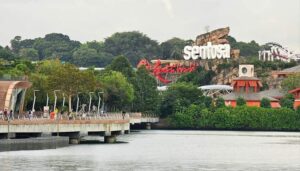
Palawan, Siloso, and Tanjong beaches on Sentosa are free to access (the Sentosa Island entry fee was removed permanently). Bring your own food and drink from a 7-Eleven on the mainland to avoid paying inflated resort prices. The beach itself is pleasant — warm water, clean sand, reasonable facilities. Not Maldives, but free.
Honest warning: Universal Studios (SGD 83) is excellent but takes a huge bite out of a ₹50,000 budget. If you’re strict on budget, skip it this trip and plan a return visit when you can allocate more.
7. What To Eat in Singapore Without Spending Much

Hawker centres are the entire food strategy for a budget Singapore trip. I need you to understand that eating at hawker centres is not a compromise — it is the correct and superior way to eat in Singapore. The food is fresher, more authentic, and more interesting than most mid-range restaurants. It is how locals eat, every day, at every meal.
Best Budget Hawker Centres:
Maxwell Food Centre, Chinatown — This is the one. Tian Tian Hainanese Chicken Rice here is worth queuing 20 minutes for. Arrive before 11:30 AM. SGD 5–6 per plate. Also try the Zhen Zhen Porridge stall for a SGD 3 breakfast congee.
Lau Pa Sat, Raffles Place — Open 24 hours, central location near the financial district, excellent variety. Satay street on the side opens in the evening — SGD 0.80 per stick, minimum order 10. Sit at an outdoor table with a cold Tiger Beer (SGD 8–10 from nearby 7-Eleven, much cheaper than at the stall).
Old Airport Road Food Centre, Kallang — Slightly out of the tourist zone, which means lower prices and more local atmosphere. One of the best char kway teow in the city is here. SGD 4–5 for a plate that would cost SGD 14 at a restaurant.

Tekka Centre, Little India — Ground floor is a wet market, upper floor is a hawker centre with outstanding South Indian and Malay food. Banana leaf rice for SGD 5. Roti prata for SGD 1.50. The best budget breakfast in Little India.
Daily Hawker Budget:
- Breakfast: SGD 3–5 (kaya toast + eggs + coffee, or roti prata + teh tarik)
- Lunch: SGD 4–7 (chicken rice, laksa, or char kway teow)
- Dinner: SGD 5–8 (nasi lemak, murtabak, or satay + rice)
- Total daily food spend: SGD 12–20 (₹720–₹1,200)
This is the key insight of Singapore budget travel: you can eat extraordinarily well for ₹1,000–₹1,200 per day if you commit to hawker centres. Don’t feel like you’re roughing it. Feel like you’re doing it right.
For a comprehensive look at how this trip fits into a broader Southeast Asia plan, the Singapore–Malaysia Escape package by Tripyverse covers both countries in 5 nights and 6 days — a well-structured option if you want more than just Singapore within a similar overall budget.
8. Practical Money-Saving Tips
Get an EZ-Link card at the airport, not a tourist pass. The Singapore Tourist Pass (SGD 22/day for unlimited rides) sounds convenient but is rarely cost-effective — you’d need 12+ MRT journeys per day to break even. The regular EZ-Link card with pay-per-use is almost always cheaper.
Buy attraction tickets on Klook before you travel. Gardens by the Bay conservatories, Night Safari, and Sentosa attractions are consistently 15–25% cheaper on Klook than at the door. I saved approximately SGD 25 across my trip on ticket purchases alone.
Eat breakfast at 7-Eleven or Cheers. A ready-made sandwich or onigiri costs SGD 1.50–2.50 (₹90–₹150). Pair it with a SGD 1 coffee from the Nanyang Old Master vending machines found in MRT stations and you’ve had breakfast for ₹200. Use this for mornings when you’re moving early.
Bring a reusable water bottle. Singapore tap water is completely safe to drink — one of only a handful of Asian cities where this is true. Buying bottled water at SGD 2 per bottle adds up. Fill up at any MRT station or mall water point.
Use Airalo for data. A 1GB/day Singapore eSIM for 7 days costs approximately ₹700 through Airalo — significantly cheaper than buying a tourist SIM at the airport. Buy and activate it before you fly.
Avoid the hotel minibar, in-room dining, and airport food. All three are dramatically overpriced. The Jewel Changi Airport has a food court with reasonable prices if you’re hungry on arrival — far better than anything airside.
Card vs. Cash: Most places accept cards including hawker centres (via NETS QR). Carry SGD 50–80 in cash for smaller stalls and emergencies. Use your Indian debit or credit card via UPI-compatible QR at select merchants. Niyo Global or Scapia credit cards offer zero forex markup — use one of these instead of converting rupees to SGD at airport counters, which typically charge 3–5% commission.
9. Best Time To Visit for the Lowest Prices
March–May (Sweet Spot for Budget Travelers) Transitional weather — less rain than the monsoon months, no major festivals driving hotel prices up. Accommodation is 20–30% cheaper than December–January peak. This is when you’ll find the best combination of decent weather, manageable crowds, and lower flight fares.
September–October (Second Best Window) The southwest monsoon brings afternoon showers — typically heavy for 1–2 hours and then done. Morning and evening are usually clear. Hotels are at their lowest prices of the year. Flight fares dip. Hawker centres are gloriously empty compared to peak season.
June–August (Acceptable, Slightly Pricier) Drier weather but Singapore school holidays and the Great Singapore Sale bring more domestic tourists. Hotel prices creep up 15–20%. Still manageable — just book further ahead.
December–January (Avoid for Budget) Christmas, New Year, and Chinese New Year (if it falls early) create the most expensive accommodation window of the year. Hotel prices can double or triple. If you must go in December, book accommodation 3–4 months ahead and expect to pay 40–60% more than the prices in this guide.
10. 4-Day Budget Itinerary
Day 1 — Arrive, Chinatown & Free Marina Bay Night Walk Land at Changi, MRT to accommodation in Chinatown (SGD 2). Check in, freshen up. Lunch at Maxwell Food Centre — chicken rice SGD 5. Walk Chinatown streets, visit Sri Mariamman Temple. Early evening at Marina Bay waterfront — free walk, Merlion, Helix Bridge. Stay for the 7:45 PM Supertrees light show at Gardens by the Bay — free. Daily spend estimate: SGD 40–60 (₹2,400–₹3,600)
Day 2 — Little India, Kampong Glam & Botanic Gardens Breakfast at Tekka Centre — roti prata SGD 3. Walk Little India, Sri Veeramakaliamman Temple, Mustafa Centre browse. Lunch: banana leaf rice SGD 5. MRT to Botanic Gardens — 2 hours exploring the free grounds. Late afternoon to Kampong Glam — Sultan Mosque, Haji Lane walk. Dinner: murtabak on Arab Street SGD 8. Daily spend estimate: SGD 35–55 (₹2,100–₹3,300)
Day 3 — Sentosa & Beach Day Pack snacks from 7-Eleven before leaving. MRT to HarbourFront, walk across Sentosa Boardwalk (free). Palawan Beach — free. Bring your own lunch or eat at the food stall near the beach (SGD 6–8). Afternoon: walk around Sentosa, VivoCity mall for air conditioning and window shopping. Dinner: Old Airport Road hawker centre for char kway teow SGD 5. Daily spend estimate: SGD 30–50 (₹1,800–₹3,000)
Day 4 — Jewel Changi, Last Hawker Meal & Depart Morning: Any remaining neighbourhoods or repeat favourite hawker visit. Afternoon: MRT to Changi Airport early — explore Jewel for free, watch the Rain Vortex, final Singapore coffee at the food court. Depart. Daily spend estimate: SGD 20–35 (₹1,200–₹2,100)
11. Complete ₹50,000 Budget Breakdown

| Expense Category | Budget Amount | Notes |
| Return Flights (from South India) | ₹15,000–₹18,000 | Scoot / IndiGo, booked 60–90 days ahead |
| Singapore Visa | ₹1,800 | SGD 30, non-negotiable |
| Accommodation (4 nights) | ₹9,000–₹12,000 | Budget hostel/capsule, Chinatown area |
| Food (5 days) | ₹5,500–₹7,000 | Hawker centres 90% of meals |
| Local Transport (MRT/Bus) | ₹1,800–₹2,500 | EZ-Link card, no taxis |
| Attractions (Klook-booked) | ₹3,000–₹5,000 | Selective paid experiences only |
| Data eSIM | ₹700 | Airalo, 1GB/day for 5 days |
| Shopping & Miscellaneous | ₹2,000–₹3,000 | Restraint required |
| Total | ₹38,800–₹50,000 | Comfortably within target |
Where to save the most: Flights (book early, fly mid-week), accommodation (hostel dorm vs private room saves ₹3,000–₹4,000), food (hawker vs restaurant saves ₹1,500–₹2,500 per day).

Where it’s worth spending: One paid attraction that matters to you (Gardens conservatories or Night Safari — pick one), the EZ-Link card, a Klook-discounted ticket for your chosen paid experience.
What blows the budget: Grab taxis every day (+₹3,000–₹5,000), restaurant meals instead of hawker (+₹5,000–₹8,000 over 5 days), December travel dates (+₹8,000–₹15,000 on accommodation alone), impulse shopping on Orchard Road.
For a fully planned Singapore and Malaysia combo at a structured price, check out the Singapore–Malaysia Escape 5N6D by Tripyverse. If you want more detail on what a full 6-day Singapore itinerary looks like beyond pure budget planning, our Singapore 6-day itinerary guide covers every experience in detail.

12. Final Honest Verdict
The biggest thing that impressed me was how much Singapore gives you for free. The Supertrees light show, Marina Bay waterfront, Little India streets, Chinatown temples, Botanic Gardens — all free, all extraordinary, all experiences that would cost significant money in any European city.
The honest drawback: ₹50,000 leaves very little room for error. One impulsive Grab ride instead of the MRT here, one restaurant meal instead of a hawker there, one slightly inflated accommodation booking — and the budget creeps over the line. You have to be intentional. If you’re someone who finds budget-watching stressful on holiday, allocate ₹60,000–₹65,000 and give yourself breathing room.
The other reality: Singapore is not the cheapest destination in Southeast Asia. For the same ₹50,000, you could have a more indulgent mid-range trip to Kerala or a genuinely luxurious few days in Bali. Singapore requires budget discipline that those destinations don’t.
Perfect for: First-time international travelers from India wanting a safe, English-speaking, infrastructure-excellent introduction to overseas travel. Solo travelers. Vegetarians who eat South Indian food (Little India hawker centres are exceptional). Anyone who wants to prove to themselves that Southeast Asia’s most expensive city is beatable on a real budget.
Who should add more budget: Couples who want romantic dinners, shoppers, anyone whose bucket list includes Marina Bay Sands infinity pool or Universal Studios.
₹50,000 and Singapore. It works. I’ve done it. Now you know exactly how.