

📋 Table of Contents
- Why Rajasthani Food in Jaipur Will Ruin You for Other Regional Cuisines
- Understanding Jaipur’s Food Geography
- How To Get To Jaipur
- Getting Around Jaipur’s Food Streets
- Where To Stay for Best Food Access
- 15 Rajasthani Dishes You Must Try in Jaipur
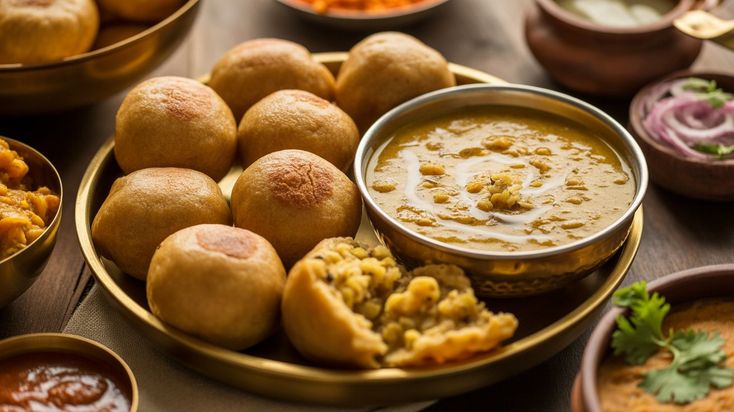
- 1. Dal Baati Churma — The Soul of Rajasthan
- 2. Pyaaz Kachori — The Morning Essential
- 3. Laal Maas — The Fire Curry
- 4. Ker Sangri — The Desert Vegetable
- 5. Gatte Ki Sabzi — The Chickpea Flour Curry
- 6. Bajre Ki Roti — The Millet Bread
- 7. Mirchi Bada — The Chilli Fritter
- 8. Mawa Kachori — The Sweet Stuffed Pastry
- 9. Ghevar — The Festival Sweet
- 10. Rajasthani Kadhi — The Yogurt Curry
- 11. Panchkuta — The Five Desert Ingredients
- 12. Besan Chakki — The Gram Flour Sweet
- 13. Rajasthani Lassi — The Thick Saffron Version
- 14. Kalakand — The Milk Fudge
- 15. Chai at Dawn — Jaipur’s Morning Ritual
- Best Food Streets and Restaurants in Jaipur
- Practical Food Tips for Jaipur
- Best Time To Visit for Food Experiences
- 3-Day Jaipur Food Itinerary
- Budget Breakdown
- Final Verdict — Honest Assessment
Why Rajasthani Food in Jaipur Will Ruin You for Other Regional Cuisines {#why-rajasthani-food}

I sat down at a dhaba in Jaipur’s old city expecting a standard dal and roti. What arrived was a meal that took forty-five minutes to eat — not because it was excessive, but because every component required individual attention.
The baati — wheat flour balls baked in a tandoor, then dipped in a bowl of clarified butter — arrived crackling at the surface and yielding inside, with a faint smoke note from the wood fire. The dal alongside it was not the thin lentil soup I’d had everywhere else in India — it was deep amber, slow-cooked with ghee and whole spices until the lentils had dissolved into something more complex and more satisfying than any description covers. The churma — a sweet crumble of coarsely ground wheat, sugar, and ghee — arrived in a small bowl alongside, meant to be alternated with the dal and baati in specific combinations the dhaba owner’s son explained with the patience of someone who had explained this sequence to confused visitors many times before.
I had been in Rajasthan for two days and already understood that every other regional Indian cuisine I had previously considered superior was going to require complete reassessment.
Rajasthani food is the product of cooking in one of India’s harshest climates — a desert landscape with extreme temperature variations, scarce water, and limited fresh vegetables — that produced cooking techniques and flavour combinations of extraordinary sophistication precisely because they had to. This guide covers the fifteen dishes that make the argument most completely.
Understanding Jaipur’s Food Geography {#food-geography}
Jaipur’s best food exists in a specific geographic and social pattern that rewards visitors who understand it before arriving.
The old city bazaar zone — Johari Bazaar, Bapu Bazaar, the streets around Hawa Mahal — contains Jaipur’s most concentrated and historically significant food culture. The sweet shops here have been operating for generations. The kachori vendors have perfected recipes across decades. The chai stalls exist at a density that suggests the old city runs entirely on sweet milky tea, which is not far from the truth.
Ramganj and the residential old city — slightly removed from the main tourist corridor — is where the most authentic dhaba cooking exists. The restaurants here serve local workers and residents rather than tourists, which means portions are generous, prices are honest, and the food is cooked for people who would notice immediately if quality slipped.
MI Road and the newer commercial areas have the more tourist-facing restaurants — Laxmi Misthan Bhandar (LMB) being the most famous — where quality is high but prices reflect the location premium.
Understanding this geography means knowing to walk one street back from the tourist-facing restaurants for the same food at 40–60% of the price.
How To Get To Jaipur {#how-to-get}
Jaipur International Airport (JAI) receives direct flights from Delhi (45 minutes), Mumbai (1.5 hours), Bangalore, and other major Indian cities. IndiGo and SpiceJet offer budget fares from ₹2,000–₹4,000 one way booked 6–8 weeks ahead.
By train, the Delhi-Jaipur Shatabdi Express (4.5 hours, ₹600–₹800 Chair Car) is the most practical and reliable option. RSRTC Volvo buses from Delhi’s Sarai Kale Khan terminal cost ₹500–₹600 for the 5–6 hour journey.
For travelers combining Jaipur’s food culture with the broader Golden Triangle circuit — Delhi and Agra alongside Jaipur — the Tripyverse Golden Triangle Package covers all three cities with transfers and accommodation arranged seamlessly.
For the complete Jaipur picture beyond food — the forts, palaces, and complete heritage circuit — our Jaipur Travel Guide 2026: 9 Royal Places to Visit covers every major attraction in full depth.
Getting Around Jaipur’s Food Streets {#getting-around}
Walking — the best food navigation tool: The old city food zone — Johari Bazaar, Bapu Bazaar, Hawa Mahal area — is entirely walkable and best experienced on foot. The density of food options in a concentrated 2-kilometre radius means walking produces the most serendipitous food discoveries. Follow smells. Turn toward crowds. Stop whenever something looks interesting.
Auto-rickshaws for specific destinations: For Rawat Mishthan Bhandar (south of the old city), LMB on MI Road, and the residential dhaba zone of Ramganj — autos are practical. Short trips cost ₹40–₹100 negotiated. Never accept the first price.
Uber/Ola for transparent pricing: Both operate across Jaipur. Useful for comparing against auto prices and for reaching Chokhi Dhani (20 km from city center) for the evening cultural food experience.
Difficulty: Very low for food exploration. The old city food concentration means most of the best eating in Jaipur is accessible within a 20-minute walk of the Hawa Mahal area.
Where To Stay for Best Food Access {#where-to-stay}
Stay in the old city or within 1 kilometre of Hawa Mahal for immediate access to Jaipur’s best food streets. This puts you walking distance from the morning kachori vendors, the sweet shops, the bazaar chai stalls, and the dhaba zone of Ramganj.
Budget Tier — ₹500–₹1,500 per night:
Hotel Pearl Palace — The owner and staff give genuinely honest food recommendations without commission motivation. The rooftop restaurant serves decent Rajasthani food at fair prices. From ₹800.
Zostel Jaipur — The hostel’s social atmosphere makes it easy to connect with other travelers who’ve already found the best food spots. Staff food recommendations are consistently good. From ₹450 (dorm).
Dera Rawatsar — Haveli guesthouse in the old city. The courtyard breakfast includes local sweet items that contextualize what you’ll be eating across the trip. From ₹900.
Mid-Range Tier — ₹3,000–₹8,000 per night:
Alsisar Haveli — The in-house restaurant serves a good Rajasthani thali that functions as a useful benchmark for comparing the dhaba versions you’ll eat elsewhere. ₹4,000–₹6,000.
Luxury Tier — ₹15,000+:
Rambagh Palace (Taj) — The Suvarna Mahal restaurant here serves the finest premium Rajasthani food in Jaipur — a useful benchmark for the cuisine’s elevated form alongside the dhaba experience.
15 Rajasthani Dishes You Must Try in Jaipur {#dishes}
- Dal Baati Churma — The Soul of Rajasthan {#dal-baati}

Dal baati churma is Rajasthan’s defining dish — the one preparation that most completely expresses the state’s cooking philosophy and most permanently alters the palate of anyone who tries it seriously.
The three components arrive together but are eaten in specific combinations. The baati — hard wheat flour balls baked in a clay oven or wood fire, then broken open and submerged in a bowl of melted clarified butter — has a crackling exterior from the baking heat and a dense, satisfying interior that absorbs the ghee differently from any other bread. The dal — slow-cooked lentils with ghee, whole spices, and occasionally the desert-adapted ingredients that distinguish Rajasthani dal from versions elsewhere — is deep and complex in a way that thin restaurant lentil soup will never approximate. The churma — coarsely ground wheat mixed with ghee and sugar or jaggery into a sweet, textured crumble — is meant to be eaten between dal and baati bites, the sweetness creating a contrast that makes each subsequent savoury bite more interesting.
The specific sequence matters and is worth understanding before eating: baati dipped in dal, a bite of churma, baati in dal again, repeat. The owner’s son at the dhaba where I first ate this properly drew me a diagram on a napkin. I still have it.
Where to eat the best dal baati churma in Jaipur:
Laxmi Misthan Bhandar (LMB), Johari Bazaar — The most famous Rajasthani restaurant in Jaipur. The dal baati churma here (₹280–₹350) is genuine, generous, and serves as the definitive tourist introduction to the dish. The air conditioning is a bonus on hot days.
Chokhi Dhani, 20 km from city — An evening cultural village experience where dal baati churma is served on the ground at low tables, accompanied by folk musicians and puppeteers, for ₹900–₹1,200 per person including entry. The atmosphere adds significant value to what is already genuinely good food.
Any residential dhaba in Ramganj — The best version I’ve eaten was at a nameless dhaba on a Ramganj backstreet where the thali cost ₹130 and included unlimited refills of dal. The baati was made in a tandoor visible from the eating area. The churma was made fresh that morning.
Price range: ₹130–₹350 depending on establishment.
- Pyaaz Kachori — The Morning Essential {#pyaaz-kachori}

Pyaaz kachori is Jaipur’s defining breakfast — a deep-fried pastry filled with a spiced onion mixture, served with green coriander chutney and tamarind sauce, eaten hot from the fryer at a street stall between 7 and 10 AM when the best batches are available.
The exterior — made from maida flour fried until golden and blistered — has a specific quality of crunch that different vendors achieve through slightly different frying temperatures, oil freshness, and dough thickness. The interior filling — caramelized onions with kalonji seeds, dried mango powder, red chilli, and coriander — is simultaneously sweet, sour, spicy, and savoury in the particular balance that Rajasthani cooking achieves across its entire tradition.
The moment of biting through the crust into the filling — the steam releasing, the smell of fried onion and spice, the chutneys mixing with the filling — is one of those specific food experiences that becomes a permanent sensory memory.
Where to eat the best pyaaz kachori in Jaipur:
Rawat Mishthan Bhandar, Station Road — The most famous kachori vendor in Jaipur and the one that has defined the benchmark for this dish across the city. The queue at 8 AM on a weekday morning tells you everything you need to know. ₹25–₹30 per kachori.
LMB, Johari Bazaar — The sit-down version is excellent and comes with better chutney variety. ₹45–₹60 per piece.
Any old city sweet shop with a queue of local workers — The heuristic for finding good kachori in Jaipur: locate a sweet shop with local workers eating standing up at 8 AM. This indicates fresh batches and correct pricing.
Price range: ₹20–₹60 per kachori.
- Laal Maas — The Fire Curry {#laal-maas}
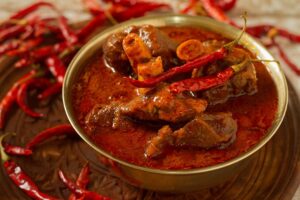
Laal maas is Rajasthan’s most celebrated non-vegetarian dish — a lamb curry of extraordinary heat and depth, made with mathania dried red chillies (a Rajasthani variety with a distinctive fruity heat profile different from any other Indian chilli), ghee, yogurt, and whole spices, slow-cooked until the lamb falls from the bone in a gravy that is deep red, thick, and intensely aromatic.
The mathania chilli is the irreplaceable ingredient — the curry’s heat is not the immediate sharp heat of most Indian curries but a building, sustained warmth that arrives gradually and stays for an impressive duration. The ghee base rounds the heat without eliminating it. The yogurt addition prevents the gravy from becoming one-dimensional.
Laal maas was historically a hunting camp dish — made by Rajput nobles during hunting expeditions with wild game, strong spices, and large quantities of ghee. The modern restaurant versions are somewhat tamed from the historical original, but the best Jaipur versions still retain enough heat to be genuinely challenging for mild-spice palates.
Where to eat the best laal maas in Jaipur:
Handi Restaurant, Jaipur — The most consistently recommended laal maas in the city. Made in traditional clay pots (handis) that contribute a mineral earthiness to the gravy. ₹380–₹500 per portion.
Suvarna Mahal, Rambagh Palace — The premium version. ₹800–₹1,200 but the quality is categorically different from dhaba versions — this is laal maas made with fresh mathania chillies and aged ghee. Worth the once-in-a-trip splurge.
Price range: ₹280–₹1,200 depending on restaurant tier.
- Ker Sangri — The Desert Vegetable {#ker-sangri}
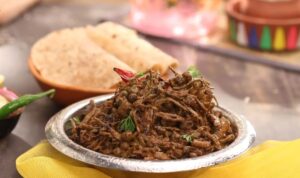
Ker sangri is Rajasthan’s most distinctive vegetarian preparation — a combination of ker berries (small caper-like desert berries) and sangri beans (dried pods from the khejri tree, the state tree of Rajasthan) cooked with dried spices, curd, and minimal water into a dry preparation that has a deeply savoury, slightly tangy, slightly smoky flavour profile unlike anything in any other Indian regional cuisine.
Both ker and sangri are desert ingredients — they exist because the Thar Desert landscape demanded cooking with what was available and durable, and the techniques developed to make these ingredients delicious are centuries old. The dried form of both ingredients means ker sangri can be cooked during water scarcity and stored without refrigeration — practical origins that produced genuinely extraordinary food.
For food-curious travelers, ker sangri is the most intellectually interesting dish on this list — it requires explanation and context before the first bite, and produces genuine surprise at how flavourful ingredients with such utilitarian origins can be.
Where to eat ker sangri: At any traditional Rajasthani thali restaurant that takes its menu seriously. LMB includes it in their thali. The best versions I’ve eaten were at small old-city dhabas where it arrived as one of seven or eight preparations without being specifically ordered.
Price range: Included in thali (₹150–₹350).
- Gatte Ki Sabzi — The Chickpea Flour Curry {#gatte}
Gatte are small cylinders of spiced chickpea flour dough — steamed until firm, then cut into pieces and cooked in a yogurt-based curry that is slightly sour, warmly spiced, and deeply satisfying. The gatte themselves have a dense, slightly chewy texture that absorbs the curry gravy without dissolving — each piece retaining its shape while becoming progressively more flavourful as it sits in the sauce.
For Indian travelers already familiar with besan (chickpea flour) cooking, gatte ki sabzi will feel like encountering a completely different application of a familiar ingredient. The texture of steamed then sautéed besan is entirely different from the fried pakoda form, and the yogurt curry surrounding it is specifically Rajasthani in its spice combination — heavier on cumin, coriander, and dried mango powder than comparable curries from other states.
Where to eat: Included in virtually every traditional Rajasthani thali. Also available as a standalone dish at dhaba restaurants. ₹80–₹150 standalone, included in thali.
- Bajre Ki Roti — The Millet Bread {#bajre-roti}
Bajre ki roti is the traditional Rajasthani flatbread — made from pearl millet (bajra) flour rather than wheat, giving it a darker grey-brown colour, a slightly nutty and earthy flavour, and a coarser texture than wheat rotis. It is traditionally eaten with dal, raw onion, and a large quantity of white butter (makhan) that is applied directly to the hot bread and melted in before eating.
The combination of bajre ki roti and dal with white butter is one of the most simple and most satisfying food experiences in Jaipur — the nuttiness of the millet, the richness of the butter, and the savoury dal together produce something that is simultaneously rustic and deeply delicious.
Where to eat: At traditional Rajasthani dhabas that serve village-style food. Less commonly available at tourist-facing restaurants — ask specifically for bajre ki roti rather than assuming it will be on the menu.
- Mirchi Bada — The Chilli Fritter {#mirchi-bada}

Mirchi bada is a large green chilli (typically the Rajasthani mirchi variety — thicker and longer than standard green chillies) stuffed with a spiced potato mixture, coated in chickpea flour batter, and deep fried until golden and blistered. The combination of the chilli’s heat, the cooling effect of the potato filling, and the crunch of the batter exterior produces a complex textural and flavour experience in a single street food item.
For spice-tolerant eaters, mirchi bada is one of the finest street food experiences in Rajasthan. The chilli heat is real but moderated by the filling and batter. For mild-spice palates, a small bite from the end to assess the heat level before committing is the sensible approach.
Where to eat: Street food vendors in the old city bazaar area, particularly around Hawa Mahal. ₹15–₹25 per piece at street stalls. Rawat Mishthan Bhandar serves an excellent version alongside their kachori.
- Mawa Kachori — The Sweet Stuffed Pastry {#mawa-kachori}
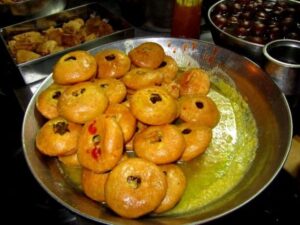
Mawa kachori is the sweet counterpart to the savoury pyaaz kachori — a fried pastry shell filled with a mixture of mawa (reduced solidified milk), dry fruits (cashews, almonds, raisins), and sugar, soaked in sugar syrup after frying until the entire thing glistens and the pastry has absorbed the syrup into something between a fried sweet and a syrup-soaked dessert.
The first bite of mawa kachori produces genuine surprise at how sweet and rich a fried pastry can be — the mawa filling is dense with dairy richness, the dry fruits provide texture, and the syrup soaking makes the whole thing dangerously moreish despite its obvious caloric implications. This is festival food and celebration food — not everyday eating, but genuinely extraordinary eating when the occasion calls for it.
Where to eat the best mawa kachori:
Rawat Mishthan Bhandar — The definitive mawa kachori in Jaipur. ₹50–₹70 per piece. The queue during festival season extends into the street.
LMB Johari Bazaar — Excellent version with particularly generous dry fruit filling. ₹60–₹80.
- Ghevar — The Festival Sweet {#ghevar}

Ghevar is Rajasthan’s most distinctive dessert — a disc-shaped sweet made from batter poured in a ring pattern into hot ghee, creating a porous, crystalline structure that is then soaked in sugar syrup and topped with either rabri (thickened sweetened milk) or mawa and dry fruits. The result is a sweet of extraordinary textural complexity — simultaneously crispy from the fried structure, soft from the syrup soaking, and rich from the rabri topping.
Ghevar is traditionally a festival sweet — most associated with Teej and Raksha Bandhan — but available year-round in Jaipur’s sweet shops. The best versions are made fresh and eaten the same day; the crystalline fried structure begins to soften after 24 hours and loses its textural contrast.
Where to eat: LMB Johari Bazaar makes what many Jaipur regulars consider the finest commercially available ghevar in the city. ₹80–₹200 depending on size and topping. Most old-city sweet shops make a creditable version — look for shops where ghevar is being made fresh rather than displayed from a previous day’s batch.
- Rajasthani Kadhi — The Yogurt Curry {#kadhi}
Rajasthani kadhi is the state’s version of the yogurt-and-chickpea-flour curry found across northern India — but distinctly Rajasthani in its heavier spice application and the addition of specific aromatics including dried red chillies, curry leaves, and a tempering of ghee with whole mustard seeds that gives the surface a glistening finish.
The Rajasthani version is thicker and more robustly flavoured than Punjabi kadhi, with a more pronounced sourness from the yogurt base and a spice depth that makes it more intensely savoury than sweet variations elsewhere. Eaten with bajre ki roti or plain rice, it is one of the most complete single-dish meals the Rajasthani kitchen produces.
Where to eat: Traditional thali restaurants across the old city. Available as a standalone dish at dhabas serving village-style food. ₹80–₹150 standalone.
- Panchkuta — The Five Desert Ingredients {#panchkuta}
Panchkuta is a preparation of five specific desert ingredients — ker berries, sangri beans, dried mango (amchur), dried seeds (kumatia), and dried flowers (kachri) — cooked together with minimal water in a dry preparation that is the most specifically Rajasthani of any dish on this list.
All five ingredients are products of the Thar Desert’s sparse ecology — drought-resistant plants that provide flavour and nutrition in a landscape where conventional vegetables are scarce. The combination of the five produces a dish of extraordinary flavour depth that takes multiple minutes and multiple bites to fully understand. The tartness of the ker berries, the earthiness of the sangri, the sourness of the amchur, the mild bitterness of the kumatia, and the subtle floral note of the kachri combine into something that is completely unified while remaining analytically complex.
Where to eat: Available at traditional Rajasthani thali restaurants that take their regional food seriously. Not commonly found at tourist-facing restaurants — worth asking specifically whether it is on the day’s menu. LMB occasionally includes it in their traditional thali.
- Besan Chakki — The Gram Flour Sweet {#besan-chakki}
Besan chakki is a firm sweet made from chickpea flour (besan) roasted in ghee until the raw flour smell disappears and a deep nutty aroma develops, then mixed with sugar and set into a firm, dense block that is cut into squares. The texture is somewhere between a firm fudge and a crumbly barfi — dense enough to hold its shape, soft enough to dissolve on the tongue, and nutty enough from the ghee-roasting to be simultaneously satisfying as a sweet and interesting as a flavour experience.
Where to eat: Old city sweet shops throughout the bazaar area. ₹40–₹80 per 100 grams. Buy fresh — besan chakki made the same day has a significantly better texture than day-old pieces.
- Rajasthani Lassi — The Thick Saffron Version {#lassi}

The Rajasthani lassi is thicker, richer, and more complexly flavoured than the lassi served elsewhere in India — made from full-fat curd that is churned minimally to retain density rather than being thinned with water or milk, then flavoured with saffron, cardamom, and sometimes rose water, served in tall brass or clay glasses that keep it cold longer than any plastic cup manages.
The saffron version — deep golden, fragrant, with threads of saffron visible throughout — is the one worth specifically seeking. The combination of dairy richness, saffron’s floral warmth, and cardamom’s cooling quality is one of the finest beverage experiences in India.
Where to eat the best Rajasthani lassi:
MI Road Lassiwala, MI Road — A Jaipur institution since 1944. The lassi here (₹60–₹80) is made from curd churned that morning and served in disposable clay glasses. The saffron version sells out first. Queue to the left of the main counter.
LMB Johari Bazaar — The served version is good and comfortable. ₹80–₹100.
- Kalakand — The Milk Fudge {#kalakand}
Kalakand is a milk-based sweet — whole milk reduced over long heat until it solidifies into a dense, grainy-textured fudge, then set into blocks and dusted with cardamom and pistachios. The Jaipur version is considered among the finest in Rajasthan — the specific quality of the milk, the slow-reduction technique, and the particular cardamom proportion producing a sweet that is rich without being cloying and textured without being dry.
Where to eat: LMB Johari Bazaar makes Jaipur’s most famous kalakand. Natraj Mithai Wala near the old city is equally praised by local residents. ₹50–₹100 per 100 grams.
- Chai at Dawn — Jaipur’s Morning Ritual {#chai}

The last entry on this list is not a specific preparation but a specific experience: chai from a Jaipur street stall at dawn, drunk standing at the counter, watching the old city wake up.
Jaipur’s street chai is made from full-fat milk, loose-leaf tea, and enough sugar to be genuinely sweet — boiled together in a small pot until the colour is deep amber and the smell is strong enough to navigate by. It costs ₹15–₹25 per glass. It is served in small glasses that are too hot to hold comfortably for the first two minutes. It is the correct way to begin a Jaipur morning without exception.
The specific experience of standing at a Jaipur chai stall at 6:30 AM — when the light is just beginning to come over the Aravalli ridge, the first auto-rickshaws are navigating the empty old city lanes, and the sweet shops are beginning to fry the morning’s first kachori batches — is the purest encounter with the city’s daily food culture available. It costs ₹15. It is worth building an alarm around.
Best Food Streets and Restaurants in Jaipur {#where-to-eat}

Johari Bazaar — The Historic Food Corridor: The main commercial street of the old city houses LMB (Laxmi Misthan Bhandar) — open since 1954, serving the full range of Rajasthani sweets and meals. Also along this street: multiple kachori vendors, sweet shops of varying vintage, and the chai stalls that operate from street carts at intervals of approximately 40 metres.
Rawat Mishthan Bhandar, Station Road: The most famous single food address in Jaipur for traditional sweets and savoury snacks. Pyaaz kachori, mirchi bada, mawa kachori, and a range of Rajasthani sweets. Open from 6 AM. The morning queue is the quality indicator.

Chokhi Dhani, NH8 (20 km from city): An evening cultural village experience where Rajasthani food is served at low tables on the ground, accompanied by folk music, puppet shows, and cultural performances. ₹900–₹1,200 per person including entry and dinner. The food is genuinely good — not a tourism compromise — and the atmosphere adds significant value.
MI Road Lassiwala: The definitive Jaipur lassi experience since 1944. Open from approximately 8 AM until sold out. Go early for the full range of flavours.
Bapu Bazaar Food Lane: The lane running parallel to Bapu Bazaar has a concentration of small dhaba-style restaurants serving Rajasthani thalis at genuinely local prices (₹100–₹180 for full thali). Walk the full length before choosing — the restaurant with the most local customers at any given time is the one to enter.
Practical Food Tips for Jaipur {#practical-tips}
Cash for street food: The old city’s best food experiences — kachori vendors, chai stalls, sweet shops, street mirchi bada sellers — run entirely on cash. Keep ₹500–₹1,000 in small denomination notes (₹50, ₹100) for daily food transactions. Large notes cause change problems at street vendors.
UPI at restaurants: LMB, Chokhi Dhani, and most sit-down restaurants accept UPI and cards. Street vendors typically do not.
Food safety: Jaipur’s food hygiene at established sweet shops and dhabas is generally good. Standard precautions: eat freshly made food, avoid items displayed without cover for extended periods, and drink from sealed bottles or boiled chai rather than raw water at street stalls.
Vegetarian vs non-vegetarian zones: The old city sweet shops and kachori vendors are almost entirely vegetarian. Laal maas and meat dishes are primarily available at specific non-vegetarian restaurants (Handi, Suvarna Mahal) rather than general dhabas. Jaipur’s vegetarian food is so complete that the city functions excellently for non-meat eaters — the fifteen dishes in this guide include twelve vegetarian preparations.
Spice tolerance: Rajasthani food is genuinely spicy by regional standards. Mirchi bada, laal maas, and many dal preparations use Rajasthani dried red chillies at levels that significantly exceed the average. If your spice tolerance is low, indicate “kam mirch” (less chilli) when ordering at restaurants — most will accommodate. At street food stalls, the food is made to the standard recipe and adjustments are less practical.
The commission restaurant system: Some auto drivers and hotel staff receive commissions for directing tourists to specific restaurants. The restaurants on commission circuits are generally overpriced relative to quality. Ask your guesthouse for specific food recommendations by name — the most knowledgeable guesthouse owners in Jaipur (Hotel Pearl Palace being the most frequently cited example) give honest recommendations without commission motivation.
The budget-conscious food approach that works in Jaipur — dhabas over tourist restaurants, walking over taking autos to food zones — applies equally well to food travel anywhere. For budget food strategies in a completely different food culture, our Jaipur Budget Trip Under ₹4000 covers the complete cost picture including food in full detail.
Best Time To Visit for Food Experiences {#best-time}
October to February — Peak Food Season: The most comfortable eating weather — temperatures between 12–25°C mean both outdoor street food and indoor restaurant meals are enjoyable. The festival season from October through January includes Diwali sweet-making (the best time for ghevar, besan chakki, and special festival preparations), Makar Sankranti tilgul sweet tradition in January, and the general festivity that produces the widest range of seasonal Rajasthani sweets.
August to September — Festival Sweet Season: Teej (August) and Raksha Bandhan (August) are the specific festivals for ghevar — the sweet is made in enormous quantities and the quality from established shops during festival season surpasses any other period. Chokhi Dhani has special festival programming during these months.
March to June — Heat Eating: The summer heat (reaching 45°C in May–June) significantly changes the food experience. Lassi consumption increases dramatically and the cold lassi season is genuinely its own experience. Outdoor eating before 9 AM and after 7 PM is comfortable; midday food stops are best indoors. The food quality doesn’t change seasonally — only the comfort of outdoor eating.
My food recommendation: October or November for the widest festival sweet range combined with the most comfortable eating weather and the clearest morning light for the 6:30 AM chai-and-kachori experience that is the best single Jaipur food moment available.
3-Day Jaipur Food Itinerary {#itinerary}

Day 1 — Morning Markets + Sweet Shops
6:30 AM: Chai from the first open street stall near Hawa Mahal (₹20). Watch the old city wake up.
7:30 AM: Rawat Mishthan Bhandar — pyaaz kachori (₹30) and mirchi bada (₹20). The morning queue confirms quality.
9 AM: Johari Bazaar sweet shop walk — sample kalakand (₹30) and besan chakki (₹25) from at least two different shops.
1 PM: Thali lunch at a Bapu Bazaar lane dhaba — full Rajasthani thali including dal baati churma, gatte ki sabzi, ker sangri, kadhi (₹150–₹180).
4 PM: MI Road Lassiwala — saffron lassi in clay glass (₹60).
8 PM: LMB Johari Bazaar for mawa kachori and ghevar as evening sweet (₹100–₹150).
Food spend: ₹430–₹500
Day 2 — Dhaba Deep Dive + Chokhi Dhani
6:30 AM: Chai and bajre ki roti breakfast arranged through guesthouse or found at a Ramganj residential dhaba (₹50–₹80).
9 AM: Amber Fort visit (fort experience, not food — but the roadside dhabas on the approach serve excellent kachori and chai for ₹40 total).
1 PM: Dhaba lunch in Ramganj area — ask guesthouse staff for specific address. Full thali with laal maas if non-vegetarian (₹180–₹350 depending on whether meat dishes included).
4 PM: Old city sweet shop exploration — mawa kachori comparison between two shops.
7 PM: Chokhi Dhani evening experience — Rajasthani dinner in cultural village setting (₹900–₹1,200 including entry).
Food spend: ₹1,200–₹1,700 (Chokhi Dhani drives the total)
Day 3 — Hidden Food Spots + Departure
6:30 AM: Dawn chai ritual. Walk the old city for the last morning.
8 AM: LMB breakfast — full Rajasthani breakfast including kachori, jalebi, and chai (₹150).
11 AM: Panchkuta and besan chakki from an old-city sweet shop as a late morning food stop (₹60).
1 PM: Final thali at a residential dhaba — the last dal baati churma of the trip (₹150).
3 PM: Departure.
Food spend: ₹360–₹420
Budget Breakdown {#budget}
| Food Style | Daily Budget | What You Eat |
| Full Street Food | ₹200–₹350 | Chai, kachori, dhaba thali, lassi, sweet shop samples |
| Mix Street + Restaurant | ₹400–₹700 | Add LMB thali or handi laal maas one meal |
| One Splurge Daily | ₹800–₹1,500 | Add Chokhi Dhani evening or Suvarna Mahal laal maas |
| Full Foodie Experience | ₹1,500–₹3,000 | Premium restaurant + cultural dinner + full sweet sampling |
The Jaipur food reality: The ₹200–₹350 daily budget delivers genuinely extraordinary eating — the dal baati churma at a dhaba for ₹150 is not a compromise version of the ₹350 LMB version. The food is the same dish prepared by people who have been making it their entire working lives. The difference is air conditioning and the comfort of a chair versus a plastic stool. Both are valid choices. The food quality at the honest Rajasthani dhaba is frequently superior to the tourist-facing restaurant on the next street.

Final Verdict — Honest Assessment of Rajasthani Food in Jaipur {#verdict}
Rajasthani food is among the three or four finest regional Indian cuisines by any serious culinary standard — and Jaipur is where it exists in its most concentrated, most authentic, and most accessible form. The combination of extraordinary food culture across every price point, the historical depth of dishes that developed in genuinely challenging conditions to produce genuinely sophisticated results, and the specific experience of eating pyaaz kachori at a street stall at 7:30 AM while the old city wakes up around you — all of this produces a food experience that stands alongside the finest regional food travel available in India.
One honest drawback worth naming: Jaipur’s tourist-facing restaurant ecosystem consistently overcharges for the same food available at one-third the price one street back. The Johari Bazaar restaurants with English menus, rooftop views, and air conditioning serve good food at unjustifiable premiums. This is a minor friction that thirty seconds of walking resolves — but first-time visitors who don’t know to walk one street back will consistently overpay for food that the neighborhood behind the tourist corridor delivers better for less.
Rajasthani food in Jaipur is perfect for: Indian food travelers who take regional cuisine seriously, vegetarians who want the most complete regional vegetarian food tradition in India, budget travelers who understand that the ₹150 thali is the correct eating decision, spice-tolerant travelers who want to encounter heat that is built around flavour complexity rather than raw chilli quantity, and anyone who has underestimated what desert cooking can produce when centuries of necessity produces genuine culinary art.
For the complete Jaipur travel picture beyond food — the forts, palaces, and heritage circuit — our Jaipur Travel Guide 2026: 9 Royal Places to Visit covers every major attraction in full depth. And for the hidden food spots and back-street dhabas beyond the tourist food corridor, our Hidden Places in Jaipur 2026: Beyond the Palaces covers the residential neighbourhoods where the most authentic Rajasthani eating happens.
The food-curious traveler who discovers Rajasthani food in Jaipur will want to explore other extraordinary regional food traditions. Our Kerala Food Guide 2026: Traditional Dishes You Must Try applies the same depth of coverage to India’s most complex southern cuisine — the contrast between Rajasthani desert cooking and Kerala’s coastal coconut tradition tells the complete story of Indian regional food diversity across two meals.
Planning the full Golden Triangle circuit? The Tripyverse Golden Triangle Package covers Delhi, Agra, and Jaipur with transfers and accommodation arranged — leaving your Jaipur time entirely free for the kachori, the lassi, and the dal baati churma that deserve your full attention.
For the Himalayan food counterpart to Rajasthan’s desert cuisine, our Manali Budget Trip Under ₹7000 covers Himachal’s mountain food tradition — the siddu, the dham, and the specific comfort of hot food at altitude that complements the spice-forward warmth of Rajasthani cooking in a completely different register.