


📋 Table of Contents
- Why Jaipur’s Hidden Side Will Change How You See the City
- Where Hidden Jaipur Lives
- How To Get To Jaipur
- Getting Around Hidden Jaipur
- Where To Stay For Hidden Jaipur Exploration
- 10 Hidden Places in Jaipur Beyond the Palaces
- 1. Panna Meena Ka Kund — The Geometric Stepwell Nobody Visits
- 2. Chand Baori, Abhaneri — The Stepwell That Defies Comprehension
- 3. Galtaji Temple — The Sacred Monkey Gorge
- 4. Sisodia Rani Garden — The Forgotten Royal Garden
- 5. Kanak Vrindavan — The Temple Garden in the Valley
- 6. Jaipur’s Forgotten Havelis — The Painted Houses of Ramganj
- 7. Ghat Ki Guni — The Ancient Trade Route Pass
- 8. Amber Village — Behind the Fort Nobody Explores
- 9. Nahargarh Biological Park — Wildlife Hidden in Plain Sight
- 10. Jaipur’s Textile Printing Villages — Block Print at the Source
- Practical Travel Tips for Hidden Jaipur
- Best Time To Visit Hidden Jaipur
- 4-Day Hidden Jaipur Itinerary
- Budget Breakdown
- Final Verdict — Honest Assessment
Why Jaipur’s Hidden Side Will Change How You See the City {#why-hidden-jaipur}
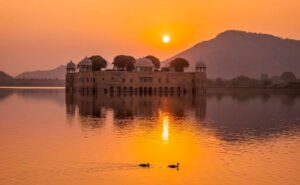
Everyone goes to Amber Fort. Everyone photographs Hawa Mahal. Everyone walks through City Palace, buys block-print fabric from Johari Bazaar, and leaves satisfied that they have seen Jaipur.
I was everyone, on my first visit.
On my second visit, I took a wrong turn trying to find a recommended dhaba, and ended up on a lane I couldn’t name, in a neighbourhood I couldn’t locate on my map, standing in front of a stepwell I had never heard of. The Panna Meena Ka Kund — a 16th-century stepwell five minutes’ walk from the famous Amber Fort — was completely empty at 7:30 AM. Its zigzagging stairways descended in a geometric pattern of extraordinary precision, the early morning shadow lines creating diagonal patterns across the pale yellow sandstone. A single pigeon sat at the water level 15 metres below. The sound of Amber Fort’s tourist queue — already forming 400 metres away — was completely inaudible.
I spent forty minutes there. I was the only person the entire time.
That is the Jaipur most visitors miss — and it exists in ten distinct locations that this guide will take you to specifically. The Pink City has a hidden layer that is more intimate, more atmospheric, and in some cases more architecturally extraordinary than the palaces it surrounds. This guide is entirely that layer.
Where Hidden Jaipur Lives {#where-hidden}
Hidden Jaipur concentrates across three geographic zones that standard tourist itineraries consistently bypass. The immediate periphery of Amber Fort — where village life, hidden stepwells, and ancient trade routes exist within 2 kilometres of the most visited fort in Rajasthan yet receive almost no tourist footfall. The eastern hills and gorges of the Aravalli range — where ancient temples, royal gardens, and sacred sites were built specifically for their remoteness from the city center. And the working residential neighbourhoods of the old city — Ramganj, Sanganer, and the textile printing villages — where the crafts that define Jaipur’s global reputation are practiced daily in conditions that no shopping mall or tourist bazaar can approximate.
Understanding this geographic spread is the first step toward finding the Jaipur that exists alongside and beneath the famous one.
How To Get To Jaipur {#how-to-get}
Jaipur International Airport (JAI) receives direct flights from Delhi (45 minutes), Mumbai (1.5 hours), Bangalore, and other major Indian cities. Budget fares on IndiGo and SpiceJet start at ₹2,000–₹4,000 one way booked 6–8 weeks ahead.
By train, the Delhi-Jaipur Shatabdi Express (4.5 hours, ₹600–₹800 Chair Car) is the most practical option from the north. RSRTC Volvo buses from Delhi’s Sarai Kale Khan terminal cost ₹500–₹600 and take 5–6 hours.
For travelers combining Jaipur’s hidden gems with the broader Golden Triangle circuit — Delhi, Agra, and Jaipur — the Tripyverse Golden Triangle Package covers all three cities with transfers and accommodation arranged, making the logistics of reaching each destination seamless.
For the complete Jaipur heritage experience beyond the hidden places — the forts, palaces, and mainstream attractions — our Jaipur Travel Guide 2026: 9 Royal Places to Visit covers every major site in full depth.
Getting Around Hidden Jaipur {#getting-around}
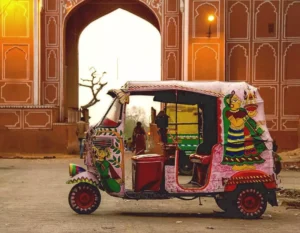
Auto-rickshaws with local knowledge: The most valuable transport tool for hidden Jaipur. A driver who knows the city well will often know Panna Meena Ka Kund, Galtaji, and Sisodia Rani Garden without needing Google Maps. Ask at your guesthouse to recommend a reliable driver — this relationship produces dramatically better hidden-site access than app-based taxis. Half-day auto hire: ₹300–₹400. Full day: ₹600–₹800.
Scooter rental: ₹300–₹500 per day. Ideal for the Amber village exploration, Kanak Vrindavan, and Ghat Ki Guni pass — all best experienced at a pace that no shared taxi allows. The Aravalli hill roads are scenic and manageable with basic riding experience.
Uber/Ola: Available across Jaipur with transparent pricing. Use for benchmark pricing when negotiating with auto drivers — knowing a journey costs ₹120 on Uber gives you a solid negotiation anchor with auto drivers.
Walking: The old city hidden havelis of Ramganj are best explored entirely on foot — the lanes are too narrow for vehicles in places and the density of details on the building facades rewards slow, attentive walking.
Difficulty level: Moderate. Google Maps reliably finds Panna Meena Ka Kund, Sisodia Rani Garden, and Galtaji. Amber village and the textile printing villages benefit from a local driver who knows the specific lanes.
Where To Stay For Hidden Jaipur Exploration {#where-to-stay}
Base yourself in the old city for maximum access to hidden Jaipur’s eastern zone — Panna Meena Ka Kund (15 minutes by auto), Galtaji (20 minutes), Amber village (25 minutes), and Kanak Vrindavan (20 minutes) all cluster in the eastern Aravalli area reachable quickly from old city accommodation.
Budget Tier — ₹500–₹1,500 per night:
Hotel Pearl Palace — Rooftop restaurant with Nahargarh views, consistently recommended for its genuinely helpful staff who can direct you to hidden sites without commission motivation. From ₹800.
Zostel Jaipur — Old city location, social hostel culture, staff with genuine local knowledge. Dorm beds from ₹450, private from ₹1,100.
Dera Rawatsar — Heritage haveli in the old city with courtyard atmosphere. The experience of staying in an actual haveli contextualizes the Ramganj painted haveli exploration perfectly. From ₹900.
Mid-Range Tier — ₹3,000–₹8,000 per night:
Alsisar Haveli — 1892 restored haveli, rooftop pool, painted courtyard. Walking distance from the bazaar zone. ₹4,000–₹6,000.
Khas Bagh — Boutique property 12 km from the city near the Amber area — ideal positioning for the eastern hidden zone, with Aravalli views and a garden that feels genuinely removed from the tourist circuit. ₹5,000–₹8,000.
Luxury Tier — ₹15,000+:
Rambagh Palace (Taj) — The benchmark for Jaipur luxury. The gardens alone are worth the upgrade.
10 Hidden Places in Jaipur Beyond the Palaces {#hidden-places}
- Panna Meena Ka Kund — The Geometric Stepwell Nobody Visits {#panna-meena}
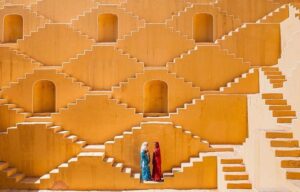
Panna Meena Ka Kund is a 16th-century stepwell 400 metres from Amber Fort’s main entrance — visible on Google Maps, accessible in five minutes on foot, and visited by perhaps 2% of the people who spend two hours at Amber the same morning. This ratio represents one of the great unforced errors in Indian tourist itinerary planning.
The stepwell descends in a checkerboard pattern of zigzagging staircases — each step and landing precisely placed to create a geometric visual that produces, when photographed from the rim, one of the finest architectural images in Rajasthan. The pattern shifts depending on where you stand — from the north rim it looks one way, from the south rim entirely another, and from the bottom (accessible via the staircases) the geometry of the walls rising above you is something that no amount of description adequately prepares you for.
The sandstone is pale yellow at the upper levels, darkening toward amber and then deep ochre as it descends toward the water. The shadow lines in early morning create diagonal patterns across the steps that move visibly as you watch. I have spent three separate mornings here across my Jaipur visits and taken photographs that I consider among the finest I have from anywhere in India.
Getting there: 5-minute walk from Amber Fort main gate. Entry: free. Open sunrise to sunset.
Best timing: 7–9 AM for the best light and zero other visitors. By 10 AM the first tour groups from Amber arrive and the solitude evaporates.
Honest note: There is no signage directing visitors to Panna Meena Ka Kund from Amber Fort. This is both the reason it remains undiscovered and a slight navigational challenge — use Google Maps from the Amber Fort gate.
- Chand Baori, Abhaneri — The Stepwell That Defies Comprehension {#chand-baori}

Chand Baori is not technically in Jaipur — it’s 95 kilometres away in Dausa district — but it belongs in this guide because it is the most extraordinary thing within reasonable day trip distance of the Pink City, it is visited by a fraction of Jaipur’s tourist volume, and every traveler who has seen both Amber Fort and Chand Baori in the same day ranks the stepwell as the more genuinely astonishing experience.
Built in the 9th century, Chand Baori is 13 storeys deep with 3,500 narrow steps arranged in perfect bilateral symmetry — each side a mirror image of the other, the steps narrowing as they descend toward the dark water 20 metres below. The visual effect from the rim is genuinely difficult for the brain to process as real — the geometric precision looks designed by a computer rather than built by human hands using 9th-century tools.
The stepwell featured in The Dark Knight Rises and The Fall — two productions that recognized immediately that this geometry looked like a place that shouldn’t exist. Standing at the rim, you understand the directors’ response completely.
Getting there: 95 km from Jaipur — hire a full-day driver (₹2,500–₹3,500) and combine with Fatehpur Sikri en route to or from Agra if you’re doing the Golden Triangle circuit.
Entry: ₹50 for Indians.
Honest note: The surrounding village has very limited facilities. Carry food and water for the day trip. The stepwell is fenced and can only be viewed from the rim — you cannot descend to the water. This doesn’t diminish the experience at all.
- Galtaji Temple — The Sacred Monkey Gorge {#galtaji}

Galtaji is a complex of Hindu temples built into a natural gorge in the Aravalli hills, 10 kilometres east of Jaipur — a functioning pilgrimage site where natural springs feed a series of sacred pools surrounded by temple pavilions, hundreds of resident rhesus macaques, and an atmosphere of genuine religious activity that bears almost no resemblance to the sanitized heritage tourism experience of the main palace circuit.
The approach to Galtaji — a narrow road through the Aravalli foothills — passes a massive monkey population before you even reach the temple. By the time you reach the main gorge, you have understood that the macaques are as much residents of this site as the priests. They move through the temple architecture with the proprietorial ease of species that arrived before the buildings.
The sacred pools at different levels of the gorge are used for ritual bathing by Hindu pilgrims — particularly significant during dawn and festival periods. The sound of the pools and the temple bells and the monkey population creates an atmosphere that is completely distinctive and nowhere else reproducible in Jaipur.
Getting there: Auto from old city (₹150–₹200 return, negotiate). Entry: free.
Best timing: Dawn on a weekday for the most atmospheric and least crowded experience. The dawn light in the gorge — filtering through the Aravalli ridge above — is extraordinary for photography.
Honest note: Carry nothing edible and secure all valuables — the macaques are experienced at extracting items from bags, pockets, and hands. This is not a minor warning.
- Sisodia Rani Garden — The Forgotten Royal Garden {#sisodia-rani}
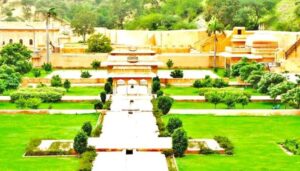
Sisodia Rani Garden was built in 1728 by Maharaja Sawai Jai Singh II for his second queen — a multi-terraced garden of fountains, painted pavilions, and murals depicting the love story of Krishna and Radha, built 8 kilometres from the old city in the Aravalli foothills. It receives perhaps 5% of the visitors that its exact contemporary, the City Palace, handles on any given day.
The garden’s murals — painted directly onto the pavilion walls and still largely intact — depict hunting scenes, court life, and the Krishna-Radha narrative in the vivid colours and flat perspective of Rajput miniature painting tradition. Walking through the garden’s terraced levels while the murals unfold across the walls around you is one of the most immersive encounters with Rajput art available outside a museum — and it happens in an outdoor garden setting where the birds, the Aravalli hills visible above, and the fountain sounds create an atmosphere that no museum can replicate.
Getting there: 8 km from old city. Uber (₹120–₹160) or auto (₹150–₹200 negotiated). Entry: ₹50 for Indians.
Best timing: Morning for the best light on the murals — afternoon creates glare on the painted surfaces that diminishes photography quality.
Honest note: The garden can feel slightly worn in sections — some fountains are non-functional and the grounds maintenance varies. This does not diminish the mural quality or the overall atmosphere.
- Kanak Vrindavan — The Temple Garden in the Valley {#kanak-vrindavan}
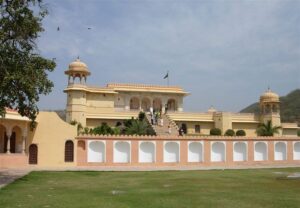
Kanak Vrindavan sits in a valley between the Aravalli hills directly below Nahargarh Fort — a Krishna temple and garden complex that combines active religious activity with garden aesthetics in a setting so naturally sheltered and quiet that the noise of the city 4 kilometres away is completely absent.
The temple garden is frequented by local devotees rather than tourists — the flower offerings, the incense, and the particular quality of devotional activity in a genuinely active temple rather than a heritage-preservation site creates an atmosphere entirely different from the more famous Jaipur religious sites. The valley setting — the Aravalli ridge rising on three sides, the garden creating a green foreground — produces a visual composition that photographers discover with genuine surprise every time.
The ghats (steps descending to a sacred water tank) are particularly beautiful in the morning when the light enters the valley from the east — the reflections in the tank, the temple architecture above, and the Aravalli hills behind create a layered landscape that is one of Jaipur’s finest photography compositions.
Getting there: 4 km from old city. Auto (₹80–₹120). Entry: free.
- Jaipur’s Forgotten Havelis — The Painted Houses of Ramganj {#ramganj}
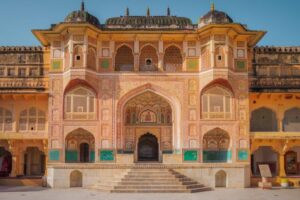
Ramganj is a residential neighbourhood in the old city that contains some of Jaipur’s finest haveli architecture — merchant family homes built in the 18th and 19th centuries with elaborate painted facades, carved stone jharokha windows, and interior courtyards that open through ornate doorways onto lanes barely wide enough for two people to pass.
Most of these havelis are privately owned and inhabited — they are not museums, not heritage hotels, not tourist attractions. They are simply the homes of families who have lived in them for generations, their extraordinary painted exteriors the background of daily life rather than a curated cultural experience.
Walking the Ramganj lanes in the early morning — when the residents are going about their day, the chai stalls are operating, the light is falling across the painted facades — produces a more authentic encounter with Rajput merchant culture than any palace visit manages. The havelis here were built by the same craftspeople who built the palaces, using the same techniques, at the same period. They simply haven’t been enclosed behind entry fees.
Getting there: Walking distance from Hawa Mahal and City Palace. No auto required.
Honest note: Respect the private nature of the residences — photograph facades, not interiors or residents without permission.
- Ghat Ki Guni — The Ancient Trade Route Pass {#ghat-ki-guni}

Ghat Ki Guni is a narrow pass through the Aravalli hills at the eastern edge of Jaipur — an ancient trade route that connected the pre-city settlements of the Jaipur region to the plains beyond and was used by merchants, armies, and pilgrims for centuries before the modern road network made it irrelevant.
The pass itself is now a road, but the ancient stone retaining walls, the carved inscriptions on the cliff faces, and the view back toward the old city from the top of the pass produce a combination that is historically rich and visually extraordinary. The scale of the rock cutting — the pass is clearly carved wider at multiple points by centuries of use — makes the pre-modern engineering achievement palpable.
Several smaller temples and shrines are built into the cliff faces on either side of the pass — active places of worship where the incense and flower offerings suggest daily devotional activity rather than historic preservation.
Getting there: Auto from old city (₹100–₹150). The pass is on the road toward Galtaji — combine both in a single morning.
- Amber Village — Behind the Fort Nobody Explores {#amber-village}
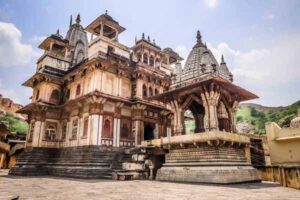
The town of Amber — the historical capital of the Kachawa rulers before Jaipur was founded in 1727 — exists directly adjacent to Amber Fort but receives almost no tourist attention beyond the fort complex itself. The old Amber town contains ancient temples, the Jagat Shiromani Temple (1599) with extraordinary carved stone work, narrow bazaar lanes that have operated continuously for five centuries, and a general atmosphere of a living historical settlement that the preservation effort at the fort has inadvertently frozen in a different way.
Jagat Shiromani Temple is among the finest examples of Rajput temple architecture in Rajasthan — the carved stone screens (jali), the decorated shikhara tower, and the idols of Krishna and Mirabai inside are genuinely extraordinary. Entry is free for Hindus and non-Hindus alike at most visiting times.
Getting there: The temple is a 10-minute walk from Amber Fort’s main gate — turn left out of the fort complex rather than right toward the tourist auto stand.
Best timing: Early morning when the temple is active with devotional activity and the bazaar lane is coming to life.
- Nahargarh Biological Park — Wildlife Hidden in Plain Sight {#bio-park}

Nahargarh Biological Park sits within the Nahargarh Fort complex — a wildlife facility housing Bengal tigers, Asiatic lions, leopards, hyenas, bears, and multiple deer species in enclosures that are significantly more naturalistic than the typical urban zoo. Entry costs ₹100 for Indians and is included in the Nahargarh Fort complex ticket.
Most visitors to Nahargarh come for the sunset view and leave without entering the biological park — which means the park typically has fewer visitors than its animal collection would suggest it deserves. The tigers here can be observed at a closer range than most Indian national parks make possible, and the enclosures allow genuine behavioural observation rather than the distant glimpsing that characterises most wildlife tourism.
Getting there: Within Nahargarh Fort complex — entry covered by the ₹50 fort ticket plus ₹100 separate park entry.
Best timing: Morning (9–11 AM) when the animals are most active. Afternoon heat makes most carnivores inactive.
Honest note: This is a wildlife facility, not a national park. The conservation ethics of captive wildlife deserve consideration. The facility is maintained at a higher standard than most comparable Indian institutions.
- Jaipur’s Textile Printing Villages — Block Print at the Source {#textile-villages}

Sanganer, 16 kilometres south of Jaipur, is the village where Jaipur’s famous block-print fabric tradition actually lives — where the printing families have been producing hand block-printed textiles using natural dyes and carved wooden blocks for generations, and where the gap between the “Jaipur block-print” sold at tourist bazaars and the actual craft practice is most visible and most instructive.
Walking through Sanganer’s printing workshops — where fabrics are spread across the ground for drying, blocks are arranged in elaborate pattern sequences, and the smell of natural dyes (indigo, madder, pomegranate rind) fills the workshop lanes — produces an understanding of the craft that no market stall transaction can provide.
Several printing families welcome visitors directly — ask at your guesthouse for an introduction to a Sanganer printing family rather than booking through a tourist operator. The experience of watching a master printer work, understanding the block-pattern logic, and buying fabric directly from the producer at appropriate prices is one of the most genuinely educational and commercially satisfying experiences available in the Jaipur region.
Getting there: 16 km from Jaipur old city. Auto or Uber (₹200–₹300). Alternatively Bagru village (28 km west) for the resist-print tradition using different techniques and natural dyes.
Practical Travel Tips for Hidden Jaipur {#practical-tips}
Cash for hidden sites: Entry fees at smaller sites like Sisodia Rani Garden and biological park are cash-only. Market transactions in Sanganer’s printing workshops are cash-based. Carry ₹1,000–₹2,000 in small denominations for a day of hidden Jaipur exploration.
The commission system at Amber Fort: Every auto driver at Amber Fort has a relationship with specific shops, gem dealers, and carpet merchants. When leaving Amber Fort, any driver who suggests a “quick stop” or “factory visit” is working a commission circuit. Declining firmly and politely is the correct response. Pre-arrange your driver through accommodation rather than hiring at the fort gate.
Photography permissions: Sisodia Rani Garden, Kanak Vrindavan, and Galtaji Temple all permit photography. The Ramganj haveli lanes are private residential streets — photograph the architecture but not residents without explicit permission. The Sanganer printing workshops require asking the owner — most will enthusiastically agree and use the opportunity to demonstrate their best work.
SIM and connectivity: Jio has excellent coverage across all hidden Jaipur sites including the Aravalli hill areas. Download Google Maps offline for Jaipur before heading to the more remote eastern Aravalli sites.
Safety: All hidden sites in this guide are safe for solo travelers and families. Galtaji requires the standard monkey-management precautions (no food visible, bags secured). The Ramganj lanes are residential and well-populated — standard urban awareness applies.
Best resource for discovering more: Ask your guesthouse owner. The owners of Hotel Pearl Palace and Dera Rawatsar specifically have deep local knowledge and genuine enthusiasm for directing visitors to non-commission sites. This relationship produces better hidden-site recommendations than any published guide.
The hidden-site discovery approach that works in Jaipur applies universally — from Hidden Places in Bali 2026: Secret Spots for Peaceful Travel to Hidden Places in Kerala 2026: Secret Gems to Hidden Places in Dubai 2026: Beyond the Burj Khalifa — the willingness to look slightly past the obvious consistently produces the most extraordinary travel experiences.
Best Time To Visit Hidden Jaipur {#best-time}
October to February — Ideal for All Hidden Sites: The combination of comfortable temperatures (12–25°C), clear desert light, and the particular golden quality that Rajasthan’s sandstone takes on in winter morning sun makes this the optimal window for every site in this guide. October and November are the sweet spot — peak conditions without December-January pricing.
March — Holi and Transition: The hidden sites are less affected by Holi festival crowd surges than the mainstream attractions. Sisodia Rani Garden and Kanak Vrindavan are particularly beautiful in the late-February-March window when the garden plantings are in full colour.
April to June — Heat Management Required: All outdoor hidden sites become uncomfortable between 10 AM and 5 PM. However, Panna Meena Ka Kund, the Ramganj haveli lanes, and Sanganer’s printing workshops are manageable before 9 AM and after 5 PM. The biological park is best in this window’s morning hours when animals are active before the heat.
July to September — Monsoon Beauty: The Aravalli hills turn green and Galtaji’s sacred pools fill to capacity. The gorge and valley sites — Kanak Vrindavan, Ghat Ki Guni, Sisodia Rani Garden — are at their most lush and visually extraordinary. The Sanganer printing workshops operate through monsoon with natural dye adjustments for the humid conditions.
4-Day Hidden Jaipur Itinerary {#itinerary}
Day 1 — Eastern Aravalli Hidden Zone
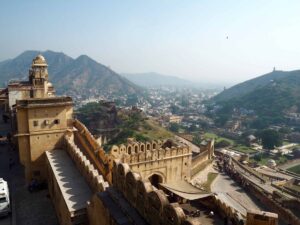
6:30 AM: Auto to Amber Fort area. 5-minute walk to Panna Meena Ka Kund. 45 minutes of solitary early morning exploration and photography.
7:30 AM: Walk to Amber village and Jagat Shiromani Temple. Morning devotional activity visible. 1 hour.
9 AM: Amber Fort opens — enter for the main fort experience (₹550). Sheesh Mahal, Ganesh Pol, rampart walk. 2.5 hours.
12 PM: Dhaba lunch near Amber Fort road (₹130).
2 PM: Return to old city. Rest during peak heat.
4:30 PM: Auto to Kanak Vrindavan valley. Sacred tank afternoon light, temple activity. Free entry.
6 PM: Return to city.
Daily spend: ₹900–₹1,400 (excluding accommodation)
Day 2 — Sacred Sites and Hidden Gardens
6 AM: Auto to Galtaji Temple. Dawn in the gorge — monkeys, pilgrims, sacred pools, temple bells. Free entry. 1.5 hours.
8 AM: Return for breakfast at old city dhaba (₹80).
10 AM: Auto to Sisodia Rani Garden (₹50 entry). Full garden exploration — murals, terraces, Aravalli views. 1.5 hours.
12 PM: Auto to Nahargarh Fort (₹50 entry). Biological park (₹100). Tiger and leopard observation. 1.5 hours.
2 PM: Lunch at Padao restaurant inside Nahargarh with the city view (₹200–₹300).
4:30 PM: Stay for Nahargarh sunset. Return to city by 7 PM.
Daily spend: ₹700–₹1,000 (excluding accommodation)
Day 3 — Old City Hidden Walk + Textiles
7 AM: Ramganj haveli lanes walk — painted facades, morning bazaar activity, chai from street stall (₹20). 2 hours on foot.
9:30 AM: Ghat Ki Guni pass — auto (₹100). Ancient trade route, carved inscriptions, cliff temples. 1 hour.
11 AM: Albert Hall Museum (₹150). Egyptian mummy, miniature paintings. 1.5 hours.
1 PM: Old city thali lunch (₹150).
3 PM: Auto to Sanganer (₹200). Block-print workshop visit arranged through guesthouse. 2 hours.
6 PM: Return to Jaipur. Street food dinner — pyaaz kachori, chai (₹60).
Daily spend: ₹800–₹1,100 (excluding accommodation)
Day 4 — Abhaneri Day Trip + Departure
7 AM: Hired driver to Abhaneri — Chand Baori stepwell (2 hours, 95 km). Arrive 9 AM for best light.
9–11 AM: Chand Baori exploration. The geometric descent. ₹50 entry.
12 PM: Village lunch near stepwell (limited options — carry snacks).
2 PM: Return to Jaipur (2 hours). Station or airport for departure.
Daily spend: ₹2,700–₹3,500 including driver
Budget Breakdown {#budget}
| Expense | Budget Option | Mid-Range | Notes |
| Accommodation — 3 nights | ₹1,500–₹2,400 | ₹9,000–₹18,000 | Hostel dorm vs haveli |
| Transport — 4 days | ₹1,500–₹2,500 | ₹4,000–₹6,000 | Auto + Day 4 driver |
| Entry Fees — all sites | ₹750–₹900 | ₹750–₹900 | Same regardless of budget |
| Food — 4 days | ₹800–₹1,200 | ₹2,000–₹4,000 | Dhaba vs restaurant |
| Abhaneri Driver (Day 4) | ₹2,500–₹3,000 | ₹3,000–₹3,500 | Non-negotiable |
| Miscellaneous | ₹300–₹500 | ₹500–₹1,000 | |
| Total | ₹7,350–₹10,500 | ₹19,250–₹33,400 |
Where to save: Hostel over guesthouse, early morning auto negotiation, dhaba meals over tourist restaurants, combining sites in single auto hire days.
Where to splurge: The Abhaneri full-day driver is the one unavoidable cost on this itinerary — there is no budget alternative for reaching Chand Baori comfortably, and the stepwell is worth every rupee of the ₹2,500–₹3,000 hire.
For the budget-specific breakdown of doing mainstream Jaipur affordably, our Jaipur Budget Trip Under ₹4000: Complete Guide 2026 covers every cost-saving decision in full detail.

Final Verdict — Honest Assessment of Hidden Jaipur {#verdict}
Hidden Jaipur is the thing that transforms a good Pink City trip into an extraordinary one that stays with you permanently. The palaces are magnificent — Amber Fort is genuinely one of the finest fort complexes in Asia. But visiting only the palaces produces an experience of Jaipur’s surface rather than its substance.
Panna Meena Ka Kund in early morning solitude, Galtaji at dawn with the monkeys and the pilgrims, Sisodia Rani Garden’s murals in the quiet eastern hills, Chand Baori’s geometry that the brain struggles to accept as real — these experiences sit alongside rather than instead of the mainstream heritage circuit, and together they produce a picture of Jaipur’s depth that the mainstream circuit alone never quite achieves.
One honest drawback worth naming: Hidden Jaipur requires more planning, more transport negotiation, and more comfort with navigating off the tourist infrastructure than the palace circuit. Several of these sites have no English signage, no dedicated tourist facilities, and no crowd of other visitors to make the “am I in the right place?” uncertainty comfortable. That uncertainty is usually resolved within five minutes of arrival — and the sites are invariably worth it.
Hidden Jaipur is perfect for: Repeat visitors who’ve done the palace circuit and want the next layer, photographers who’ve seen every Amber Fort photograph online and want something genuinely original, travelers who find living heritage more interesting than preserved heritage, and anyone who believes that the best travel experiences are the ones that require a little more effort to reach.
The curiosity that finds hidden Jaipur works equally well anywhere you travel. Our guides to Hidden Places in Bali 2026 and Hidden Places in Kerala 2026 apply the same approach to two of India’s most compelling contrasting destinations. And if you’re extending internationally — Hidden Places in Dubai 2026: Beyond the Burj Khalifa proves that the hidden city exists even within the world’s most aggressively marketed destination.
For the Himalayan complement to Jaipur’s desert hidden gems — our Manali Budget Trip Under ₹7000 covers the mountain version of budget travel done correctly. And for the complete Golden Triangle experience with Jaipur’s hidden gems built into a broader circuit, the Tripyverse Golden Triangle Package covers Delhi, Agra, and Jaipur seamlessly — leaving you free to spend your Jaipur time finding stepwells rather than managing logistics.