


📋 Table of Contents
- The Day I Explored Jaipur’s Greatest Fort for ₹550
- Where Is Jaipur
- How To Get To Jaipur Cheaply
- Getting Around Jaipur on a Budget
- Where To Stay in Jaipur for Under ₹800
- Free and Cheap Things To Do in Jaipur
- 1. Amber Fort — World-Class Heritage for ₹550
- 2. Hawa Mahal — Photograph It Free From the Street
- 3. Nahargarh Fort — Best Sunset View for ₹50
- 4. Jaigarh Fort — The World’s Largest Cannon for ₹135
- 5. Jantar Mantar — UNESCO Wonder in the Combo Ticket
- 6. Albert Hall Museum — Jaipur’s Hidden Gem for ₹150
- 7. Galtaji Temple — Completely Free and Extraordinary
- 8. Old City Bazaar Walk — Free and Spectacular
- 9. Panna Meena Ka Kund — Hidden Stepwell Free Entry
- 10. Jal Mahal — Stunning View for Zero Rupees
- Budget Food Guide — Eat Royally for ₹200 a Day
- Practical Budget Travel Tips
- Best Time To Visit for Budget Travelers
- 3-Day Jaipur Budget Itinerary
- Complete Budget Breakdown
- Final Verdict — Honest Assessment
The Day I Explored Jaipur’s Greatest Fort for ₹550 {#hook}

I arrived in Jaipur with ₹4,200 in my account — three days’ worth of travel money that I’d calculated down to the last auto-rickshaw fare. My friends had told me Jaipur was expensive. “The forts alone will break you,” someone said. “The hotels near the old city are overpriced.” Another friend suggested Jaipur wasn’t worth doing on a tight budget at all.
I spent three days there. I visited six forts and monuments, ate Rajasthani dal baati churma twice, slept in a haveli-style guesthouse with a rooftop view of Nahargarh Fort, watched the sunset from the best viewpoint in Rajasthan, and came home with ₹340 left over.
Here is what my friends got wrong: Jaipur’s headline attractions are extraordinarily affordable by any rational measure. Amber Fort — one of the finest fort complexes in Asia — costs ₹550 to enter. Nahargarh Fort’s famous sunset viewpoint costs ₹50. The Galtaji Temple, which is genuinely one of the most atmospheric religious sites in Rajasthan, costs nothing. The old city bazaar walk costs nothing. Jal Mahal’s lake view costs nothing.
The Pink City is not expensive. It just requires knowing where the money actually needs to go — and where it emphatically doesn’t. This guide covers every rupee.
Where Is Jaipur {#where-jaipur}
Jaipur sits in Rajasthan — India’s largest state by area — approximately 270 kilometres southwest of Delhi and 240 kilometres northwest of Agra. It anchors one corner of the Golden Triangle tourist circuit alongside Delhi and Agra, making it one of India’s most logistically convenient destinations for both domestic and international travelers.
The city was founded in 1727 as one of India’s first planned cities — wide central avenues, a precise grid layout, and the distinctive terracotta-pink buildings of the old city that have given Jaipur its nickname and its most immediately recognizable visual identity. Despite being one of India’s most visited destinations, Jaipur remains genuinely affordable for budget travelers who know the specific decisions that determine whether a Jaipur trip costs ₹4,000 or ₹12,000 for the same three days.
How To Get To Jaipur Cheaply {#how-to-get}
By Train — The Budget Champion:

The Delhi-Jaipur train route is one of India’s most serviced rail corridors — over 15 trains daily in each direction. The Shatabdi Express from New Delhi Junction takes 4.5 hours and costs ₹600–₹800 in Chair Car (2S). The Intercity Express costs ₹160–₹250 in sleeper class and takes 5–5.5 hours. For overnight travel from Mumbai or other distant cities, sleeper class on the Rajdhani or express trains runs ₹500–₹900 — eliminating one night’s accommodation cost entirely.
Book through IRCTC app (free, reliable, often has Tatkal quota even when regular tickets show waitlist). Book at least 2–3 weeks ahead for the best availability and prices.
By Bus — Even Cheaper:
RSRTC (Rajasthan State Road Transport) operates Volvo buses from Delhi’s Sarai Kale Khan terminal to Jaipur for ₹500–₹600 one way. Journey time: 5–6 hours. Comfortable, reliable, and significantly cheaper than private taxis or flights. Book at rsrtc.rajasthan.gov.in or at the terminal.
By Flight — For When Deals Appear:
Jaipur International Airport (JAI) receives direct flights from Mumbai (1.5 hours), Delhi (45 minutes), and Bangalore. Budget fares on IndiGo or SpiceJet occasionally drop to ₹1,500–₹2,500 one way when booked 6–8 weeks ahead and during sales. For budget travel, the train almost always wins — but watch for flight sales if your departure city is Mumbai or Bangalore.
From Agra: RSRTC buses from Agra to Jaipur cost ₹250–₹350 and take 4 hours via NH21. If you’re doing the Golden Triangle, the Tripyverse Golden Triangle Package covers all three cities with transfers included — worth comparing against individual booking costs if you want the full circuit arranged.
Getting Around Jaipur on a Budget {#getting-around}
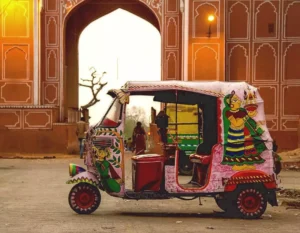
Auto-rickshaws — Your Primary Tool: The most practical and affordable way to navigate Jaipur. Always negotiate before getting in. Standard rates:
- Short trips in old city: ₹40–₹80
- Old city to Amber Fort (14 km): ₹150–₹200
- Old city to Nahargarh Fort: ₹100–₹150
- Full day auto hire (8 hours): ₹600–₹800
Ola/Uber — For Transparent Pricing: Both operate across Jaipur. A city Uber typically costs ₹60–₹150 for in-city journeys. From the station or airport to the old city accommodation: ₹100–₹180. For journeys where you don’t want to negotiate, Uber’s fixed pricing eliminates the uncertainty.
Jaipur Metro — For Specific Routes: Single journey: ₹9–₹23. Limited coverage but useful for Chandpole and MI Road corridor. Significantly cheaper than auto for the routes it covers.
Walking — Underrated and Free: The old city cluster — Hawa Mahal, City Palace, Jantar Mantar, Johari Bazaar — is walkable in a concentrated 2-kilometre radius. Walking this area is not just free — it’s the superior experience. You notice details from the pavement that disappear through an auto window.
Difficulty for first-timers: Low. Google Maps works reliably across all of Jaipur. The auto negotiation system is straightforward once you’ve done it once — establish the price before boarding, don’t pay more than the agreed amount.
Where To Stay in Jaipur for Under ₹800 {#where-to-stay}

The budget accommodation rule for Jaipur: Stay in the old city (Pink City area) or within 2 kilometres of Hawa Mahal. This puts you walking distance from the major attractions and eliminates the daily transport costs that inflate Jaipur budgets significantly when staying in peripheral areas.
Budget Tier — ₹400–₹1,200 per night:
Hotel Pearl Palace — The most consistently recommended budget hotel in Jaipur by independent travelers. Rooftop restaurant with Nahargarh Fort views, genuinely helpful staff, clean rooms with AC from ₹800. The owner gives excellent honest fort-visiting advice and doesn’t push commissions. Book direct for the best rates.
Zostel Jaipur — Jaipur’s best hostel. Rooftop social space, old city location, knowledgeable staff. Dorm beds from ₹450, private rooms from ₹1,100. If you’re comfortable with dorm accommodation, this is the finest budget base in the city.
Dera Rawatsar — A heritage haveli converted to a guesthouse in the old city. Character, a courtyard for morning chai, and rooms from ₹700–₹1,200. The haveli atmosphere makes it feel significantly more expensive than it is.
Backpacker Panda Jaipur — Clean hostel with social common areas, AC dorms from ₹400, private rooms from ₹900. Walking distance from Hawa Mahal.
Mid-Range Tier — ₹2,500–₹6,000 per night: Alsisar Haveli — Restored 1892 haveli with painted courtyard and rooftop pool. ₹4,000–₹6,000. Worth the upgrade for one or two nights if the budget allows.
Luxury Tier — ₹15,000+: Rambagh Palace (Taj) — The former Maharaja’s residence. For the full royal experience when budget is genuinely not a constraint.
Free and Cheap Things To Do in Jaipur {#things-to-do}
- Amber Fort — World-Class Heritage for ₹550 {#amber-fort}
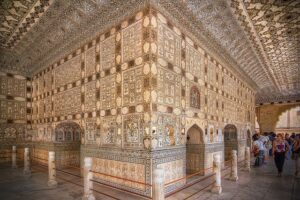
Let me be direct: Amber Fort is worth ₹550 in a way that very few attractions anywhere in India are worth their entry fee. This is not a compromised budget experience — it is one of the finest fort complexes in Asia at a price that is objectively extraordinary for what it delivers.
The Sheesh Mahal (Mirror Palace) — a chamber whose ceiling and walls are covered in hundreds of thousands of tiny mirror fragments that fill the room with reflected light from a single candle — would command a premium entry fee at any museum in Europe. The Ganesh Pol gate, painted with extraordinary detail across every centimetre of its surface, took years to complete and looks like it. The view across Maota Lake from the upper ramparts produces photography that no budget can improve.
Budget tip: Arrive at 8 AM when the gates open. The first hour — before the tour buses arrive — produces a completely different experience and significantly better photographs. The Amber Fort light-and-sound show in the evening (₹200–₹295) is the best value evening cultural experience in Rajasthan and worth adding to the budget.
Getting there: Auto from old city (₹150–₹200 negotiated). Uber (₹120–₹160 transparent price). Entry: ₹550 for Indians.
- Hawa Mahal — Photograph It Free From the Street {#hawa-mahal}
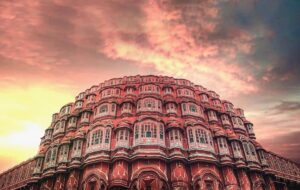
This is the most important budget tip in this entire guide: you do not need to pay to experience Hawa Mahal.
The Palace of Winds faces east — its 953-window honeycomb facade catches morning light between 7–10 AM in a way that produces the most beautiful architectural photography in Jaipur. The view from the street in front of the building is the correct view — this is the angle the palace was designed to be seen from. You can spend 45 minutes photographing Hawa Mahal from the street, from the rooftop cafés across the road (order a chai for ₹30 and use the rooftop), and from various angles along the adjacent lane, and spend exactly ₹30.
Entry fee: ₹200 for Indians. This gets you inside the building — which is interesting but not essential for the full Hawa Mahal experience. Budget decision: if your trip is 3 days and ₹4,000 is the ceiling, the street view + rooftop café chai is the correct choice and sacrifices nothing of real significance.
Getting there: Walking distance from City Palace. The old city bazaar walk naturally passes the Hawa Mahal facade.
- Nahargarh Fort — Best Sunset View for ₹50 {#nahargarh}

Nahargarh Fort on the Aravalli ridge above the city offers the most celebrated and most photographed view in Rajasthan — the entire Pink City visible below, Amber Fort on the distant hillside, the city extending to the horizon, all of it turning gold and amber as the sun drops behind the hills. Entry costs ₹50.
The ₹50 entry fee at Nahargarh is the single best-value experience in Jaipur. The sunset from these ramparts — available for fifty rupees — competes directly with experiences that five-star hotels charge thousands to approximate from their rooftop bars. Arrive by 4 PM, claim a position on the ramparts facing west, and stay until the light is completely gone.
Budget food tip: The Padao restaurant inside the fort has cold drinks and snacks with the best view in Rajasthan. The prices reflect the view rather than the quality of the food — budget ₹100–₹150 for a cold drink and accept this as the most scenic ₹100 you’ll spend in Jaipur.
Getting there: Auto from old city (₹100–₹150). The road up is steep — negotiate a return fare with the driver rather than trying to find a new auto at the top.
- Jaigarh Fort — The World’s Largest Cannon for ₹135 {#jaigarh}
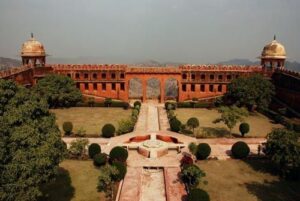
Jaigarh Fort connects to Amber and sits higher on the same ridge — combination day with Amber saves both time and transport cost. The Jaivana cannon here is the world’s largest wheeled cannon at 6.15 metres, fired once in history in a test shot that landed 35 kilometres away. The cannon alone is worth the detour from Amber.
The fort also offers the finest elevated view of Amber Fort available anywhere — looking down at Amber’s amber sandstone ramparts from Jaigarh’s higher position produces the most dramatic fort photography in Rajasthan. Most budget travelers skip Jaigarh to save ₹135. This is the one skipping decision in Jaipur that I’d genuinely argue against.
Entry: ₹135 for Indians. Same-day Amber Fort ticket includes a discount — always ask at the Jaigarh ticket counter.
- Jantar Mantar — UNESCO Wonder in the Combo Ticket {#jantar-mantar}

Jantar Mantar — a UNESCO World Heritage Site containing the world’s largest stone sundial — is included in the City Palace combo ticket (₹500 for Indians). If you plan to visit City Palace, you get Jantar Mantar effectively for free as part of the combination.
The Samrat Yantra sundial measures time to an accuracy of two seconds and is 27 metres high. Standing beside it and watching the shadow move visibly is one of those experiences that makes historical scientific achievement feel genuinely astonishing. The audio guide (included in the combo ticket) is worth using here specifically — without context, the 19 astronomical instruments look like impressive stone structures without a clear function.
Budget decision: Buy the City Palace + Jantar Mantar combo ticket (₹500) and get two UNESCO-adjacent sites for one combined price. If budget is extremely tight, Jantar Mantar alone costs ₹200.
- Albert Hall Museum — Jaipur’s Hidden Gem for ₹150 {#albert-hall}

Albert Hall Museum is Rajasthan’s oldest museum and one of its most overlooked attractions — a stunning 1887 Indo-Saracenic building housing Rajasthani miniature paintings, royal carpets, decorative arts, and an Egyptian mummy that is consistently the most surprising element of any Jaipur visit.
Most budget travelers walk past Albert Hall entirely. The entry fee is ₹150 for Indians — genuinely one of the best ₹150 spends in Jaipur. The building’s architecture illuminated at night (exterior viewing is free) is exceptional photography even without entering.
Getting there: Ram Niwas Garden adjacent to Albert Hall is free and one of Jaipur’s finest green spaces. Combine both in one afternoon — museum entry (₹150) plus free garden time.
- Galtaji Temple — Completely Free and Extraordinary {#galtaji}
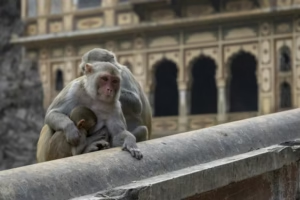
Galtaji is a complex of Hindu temples in a natural gorge 10 kilometres east of Jaipur — a functioning pilgrimage site with sacred pools (kunds), temple pavilions, and hundreds of resident rhesus macaques. Entry is completely free.
For budget travelers, Galtaji is the finest free experience in Jaipur by a significant margin. The atmosphere — incense, temple bells, pilgrims bathing in the sacred pools at dawn, monkeys moving through the trees above — is authentically Rajasthani in a way that the more famous fort sites, which are primarily architectural achievements, cannot replicate.
Getting there: Auto from the city (₹150–₹200 return, negotiate). Honest note: Carry nothing edible — the monkeys are aggressive with food and will take it. Visit on a weekday morning for the most peaceful experience.
- Old City Bazaar Walk — Free and Spectacular {#bazaar-walk}

The Jaipur old city bazaar walk — from Hawa Mahal through Johari Bazaar to the City Palace area — is one of India’s finest free urban experiences and costs exactly ₹0.
The bazaar streets are dense with silver jewellery workshops where craftspeople work in doorways, block-print fabric shops where the printing blocks are visible in action, chai wallahs operating from tiny carts, camel-decorated trucks navigating impossible-seeming gaps between buildings, and the particular sensory richness of a living Indian market city that has been continuously operating for three centuries.
Walk slowly. Look up at the haveli facades. Follow smells. Stop for chai (₹20–₹30 per glass). Buy nothing unless you’ve negotiated seriously — opening prices in the tourist bazaar are 200–300% of the correct price.
- Panna Meena Ka Kund — Hidden Stepwell Free Entry {#panna-meena}
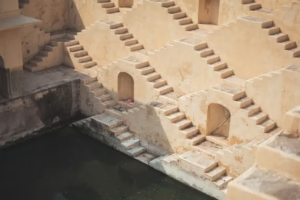
Panna Meena Ka Kund is a 16th-century stepwell near Amber Fort — geometrically extraordinary, beautifully preserved, and almost entirely overlooked by Jaipur’s tourist infrastructure. Entry is free.
The stepwell’s zigzagging stairways descend in a checkerboard pattern that produces extraordinary photography — particularly in the early morning when the shadows from the steps create geometric patterns across the pale yellow stone. I visited at 7:30 AM and had the entire structure to myself for forty-five minutes.
Getting there: 5-minute walk from Amber Fort. Combine with Amber in the same morning.
- Jal Mahal — Stunning View for Zero Rupees {#jal-mahal}

Jal Mahal — the Water Palace in Man Sagar Lake — is not accessible to visitors (the restoration is ongoing), but the view from the lakeside road is genuinely one of Jaipur’s finest visual experiences and costs absolutely nothing. The five-storey palace appearing to float on the lake with the Aravalli hills behind it produces photographs that look staged in their perfection.
The lakeside is a pleasant 20-minute walk or a ₹60 auto ride from the old city. Sunset from the Jal Mahal lakeside (the palace faces west) is worth the trip specifically.
Budget Food Guide — Eat Royally for ₹200 a Day {#food-guide}

Jaipur’s food is genuinely extraordinary and genuinely affordable — the two things most Rajasthani dhaba and thali restaurants manage simultaneously in a way that tourist-facing restaurants in the old city charge three times the price to approximate.
The Rajasthani Thali — ₹120–₹180: Dal baati churma (wheat balls baked in ghee, dal, and a sweet churma crumble), gatte ki sabzi (chickpea flour dumplings in yogurt gravy), ker sangri (desert beans and capers), papad, chutney, and typically unlimited refills of dal and sabzi. This is Rajasthan’s definitive meal and one of India’s finest regional food traditions — available for ₹120–₹180 at any non-tourist-facing restaurant in the old city.
Where to eat the best budget thali: Laxmi Misthan Bhandar (LMB), Johari Bazaar — A Jaipur institution since 1954. The full Rajasthani thali here costs ₹200–₹250 and is worth every rupee as your one slightly elevated meal.

Rawat Mishthan Bhandar — Famous for pyaaz kachori (onion-stuffed fried pastry, ₹25 per piece) and mirchi bada. The morning queue of local office workers tells you everything you need to know about the quality.
Any dhaba on the road to Amber Fort — The roadside dhabas serving truck drivers on the Amber Fort approach road offer the most generous portions of dal baati churma for the lowest prices available in Jaipur.
Street food budget:
- Pyaaz kachori: ₹20–₹30
- Chai: ₹15–₹25
- Lassi: ₹40–₹60 (Lassiwala on MI Road is the famous one — worth the ₹60 for the thick saffron-topped version)
- Ghevar (Rajasthani sweet): ₹30–₹60 per piece
Daily food budget target: ₹200–₹300 covers breakfast, lunch, dinner, and two teas at Jaipur’s best local restaurants without any compromise in quality.
Practical Budget Travel Tips {#practical-tips}
Cash is essential: The old city bazaar, auto-rickshaws, street food, dhaba restaurants, and most budget guesthouses run on cash. UPI (Google Pay, PhonePe) is accepted at most fort entry gates and an increasing number of restaurants. Keep ₹500–₹1,000 in small denomination notes (₹50, ₹100) for daily transactions — large notes cause change problems at street food stalls and autos.
Photography fees: Several ASI sites charge a separate camera fee (₹50–₹200) at the gate. Always ask at the ticket counter — it avoids confiscation at security inside. Smartphone photography is typically free at most sites.
The gem shop commission system: Jaipur’s most financially dangerous situation for budget travelers is the auto-rickshaw driver who “helpfully” takes you to a gem shop, carpet shop, or textile store in exchange for a referral commission. The shops themselves charge inflated prices, the commission is built into what you pay, and the entire detour can consume 2–3 hours of your trip. Decline all unsolicited shopping suggestions from auto drivers with polite firmness.
Bargaining is mandatory and expected: In all bazaars, start at 30–40% of the quoted price and expect to settle at 50–60%. Never accept the first price for anything from a street vendor or market stall.
SIM card: Jio has the best coverage across Rajasthan including in the Aravalli hill areas around Nahargarh and Galtaji. An existing Jio SIM works perfectly throughout Jaipur.
Useful apps: IRCTC (train booking), Ola/Uber (transparent auto pricing for negotiation benchmarks), Zomato (restaurant discovery with local reviews), Google Maps offline (download Jaipur before travel).
For broader budget travel strategies that apply equally well to other Indian destinations, our guide to Bali Travel Tips 2026: Everything You Must Know covers the same budget-smart approach for Southeast Asia — same principles, different currency.
Best Time To Visit for Budget Travelers {#best-time}
October to February — Peak Season (Best Conditions): Temperatures between 12–25°C, clear blue skies, the sharp desert light that makes Jaipur fort photography extraordinary. October and November are the sweet spot — good weather without December-January peak hotel pricing. January brings the Jaipur Literature Festival (city-wide energy, accommodation harder to find at budget prices — book 4–6 weeks ahead).
March — Holi Festival: Jaipur’s Holi is extraordinary but not a budget-friendly moment — accommodation prices spike and the city is at maximum visitor capacity. If Holi is the specific reason for your visit, budget an additional ₹500–₹800 per day for the accommodation premium.
April to June — Budget Window: Temperatures reach 42–45°C — genuinely challenging for outdoor fort exploration between 10 AM and 5 PM. However, hotel prices drop 30–40% from peak, the forts are significantly less crowded, and the early morning fort experience (6–9 AM at Amber, Panna Meena, Galtaji) is still comfortable. Viable for budget travelers who structure the day around the heat.
July to September — Monsoon Budget Window: Rajasthan’s monsoon is lighter than the coastal states but real — occasional heavy rain, the Aravalli hills turning green, Maota Lake below Amber Fort filling to its photogenic maximum. Prices drop significantly. The green monsoon Jaipur is genuinely beautiful and significantly less photographed than the golden dry season version.
My budget recommendation: October, November, or April for the best combination of conditions, value, and manageable crowds. April specifically offers the sweet spot of post-peak pricing with still-comfortable early morning temperatures.
3-Day Jaipur Budget Itinerary {#itinerary}
Day 1 — Old City + Free Experiences
6:30 AM: Walk from guesthouse to Hawa Mahal (free if walking distance). Morning light on the facade — the best photography window of the day. Chai from a street stall opposite (₹20).
7:30 AM: Johari Bazaar walk before the shops open — the early morning bazaar atmosphere is the most authentic version.
8:30 AM: Breakfast at Rawat Mishthan Bhandar — pyaaz kachori and chai (₹60).
10 AM: City Palace + Jantar Mantar combo ticket (₹500). Audio guide included — use it at Jantar Mantar specifically. 3 hours minimum.
1:30 PM: Thali lunch at a dhaba near City Palace (₹150).
3:30 PM: Albert Hall Museum (₹150) + Ram Niwas Garden (free).
6 PM: Albert Hall exterior photography as the illumination begins (free).
7:30 PM: Dinner at LMB Johari Bazaar (₹220).
Day 1 total spend: ₹1,100 (including ₹600 accommodation)
Day 2 — Fort Day
7 AM: Auto to Amber Fort (₹170 negotiated). Arrive at gate opening — before the tour buses.
7:30 AM–10 AM: Full Amber Fort exploration — Sheesh Mahal, Ganesh Pol, Diwan-e-Khas, rampart views.
10:15 AM: Walk 5 minutes to Panna Meena Ka Kund stepwell (free). Best photography of the morning.
11 AM: Auto to Jaigarh Fort (₹80). Jaivana cannon, Amber Fort view from above. 1 hour.
12:30 PM: Road dhaba lunch near the fort approach (₹130).
2 PM: Return to old city. Nap during peak heat.
4 PM: Auto to Nahargarh Fort (₹120). Entry ₹50. Rampart sunset position claimed by 4:30 PM.
6:30 PM: Watch the Pink City go from gold to amber to deep rose. Cold drink at Padao (₹100).
8 PM: Return to old city by auto (₹120). Street food dinner — kachori, mirchi bada, chai (₹100).
Day 2 total spend: ₹1,470 (including ₹600 accommodation)
Day 3 — Hidden Jaipur + Departure
6 AM: Auto to Galtaji Temple (₹150 return negotiated). Dawn at the sacred pools — monks, pilgrims, monkeys. Free entry. 1.5 hours.
8 AM: Return to old city. Breakfast at Rawat or street chai and kachori (₹50).
9:30 AM: Jal Mahal lakeside — free, 20 minutes viewing and photography.
10:30 AM: Old city bazaar final walk. Budget ₹200 for one block-print memento (negotiate firmly).
12 PM: Lassi at Lassiwala MI Road (₹60). Final Rajasthani thali lunch (₹170).
2 PM: Station or airport by auto/Uber for departure.
Day 3 total spend: ₹830 (no accommodation)
Complete Budget Breakdown {#budget}
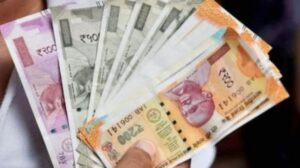
| Expense Category | 3-Day Budget | Notes |
| Train Delhi–Jaipur–Delhi | ₹320–₹500 | Sleeper/2S class both ways |
| Accommodation (2 nights × ₹600) | ₹1,200 | Budget hostel/guesthouse |
| Fort Entry Fees (all sites) | ₹835 | Amber + City Palace combo + Nahargarh + Jaigarh + Albert Hall |
| Food (3 days × ₹250) | ₹750 | Thalis, street food, chai |
| Local Transport (autos, 3 days) | ₹650 | All fort routes negotiated |
| Miscellaneous | ₹200 | Snacks, emergency chai |
| Total | ₹3,955–₹4,135 | Under ₹4,000 achievable |
The ₹4,000 is real — here’s how:
The math works when you make three specific decisions: take the train rather than bus for reliability with similar cost, stay in a hostel dorm (₹450–₹500 per night rather than ₹700–₹800 private room), and eat exclusively at dhabas and street stalls rather than old-city tourist restaurants. Each decision individually saves ₹200–₹400. Together they bring the 3-day total under ₹4,000 without sacrificing a single significant experience.
Where to save:
- Hawa Mahal street view over ₹200 entry (saves ₹200)
- Hostel dorm over private budget room (saves ₹200–₹400)
- Street food breakfast over guesthouse breakfast (saves ₹80–₹100/day)
- Auto negotiation rather than accepting first price (saves ₹200–₹400 across the trip)
Where to splurge even on a budget:
- Amber Fort entry (₹550) — non-negotiable, worth every rupee
- Amber Fort evening light-and-sound show (₹200) — optional but genuinely excellent
- LMB thali (₹220) for one elevated meal

Final Verdict — Honest Assessment {#verdict}
Jaipur under ₹4,000 is not a compromised version of Jaipur. It is Jaipur — the same Amber Fort, the same sunset from Nahargarh, the same dal baati churma, the same atmospheric Galtaji Temple dawn — experienced with the specific practical knowledge that separates the traveler who spends ₹3,800 and sees everything from the traveler who spends ₹9,000 and sees the same things.
The Pink City’s attractions are priced accessibly by any rational standard. The challenge is not the entry fees — it’s the ecosystem of commission touts, overpriced tourist restaurants, and unnecessary premium upgrades that steadily inflates the budget of any visitor who hasn’t done thirty minutes of research before arriving. That research is what this guide represents.
One honest drawback worth naming: The ₹4,000 budget requires discipline specifically at food. Jaipur’s old city tourist restaurants — rooftop views, English menus, Instagram-friendly presentations — charge ₹300–₹600 for meals that the dhaba around the corner serves for ₹120. The food quality at the dhaba is equal or better. The discipline of walking past the rooftop restaurant is the single hardest part of a Jaipur budget trip for most people.
This budget itinerary is perfect for: Solo travelers on a tight schedule and tighter budget, students doing their first solo Indian trip, anyone who assumed Jaipur was too expensive and has been putting it off, and every traveler who wants to prove that extraordinary heritage travel in India doesn’t require an extraordinary budget.
You might want more budget if: You’re traveling as a couple (accommodation per-person drops significantly but transport costs stay similar), you want to add Abhaneri Stepwell day trip (adds ₹2,500–₹3,000 for the driver hire), or you want one night at a heritage haveli rather than a hostel.
Planning the full Jaipur experience beyond the budget constraints? Our Jaipur Travel Guide 2026: 9 Royal Places to Visit covers every attraction in complete depth with photography tips, architectural context, and the insider knowledge that makes each fort visit extraordinary rather than merely competent.
The budget mindset that works in Jaipur applies universally — whether you’re navigating Rajasthani dhabas or Balinese warungs. Our Bali Travel Tips 2026: Everything You Must Know applies the same budget-smart framework to Southeast Asia. And if food-forward budget travel motivates you, our Kerala Food Guide 2026: Traditional Dishes You Must Try proves that the finest regional cuisine in India — Kerala’s — is also among the most affordable when you know where to eat it.
For travelers combining Jaipur with the full Golden Triangle circuit — Delhi, Agra, and Jaipur — the Tripyverse Golden Triangle Package covers all three cities with transfers, accommodation, and guided fort visits in one booking. Worth calculating against the individual costs if you’re planning all three destinations.
And for the Himalayan counterpart to Jaipur’s desert fort landscape, our Best Food in Manali 2026: 7 Local Dishes You Must Try completes the India picture — because the budget traveler who navigates Jaipur’s dhabas brilliantly will find Manali’s local food scene equally rewarding and equally affordable.
For the mountain north — our Manali Travel Guide — 7 Best Places + Hidden Gems (2026) and Secret Places in Manali — 7 Hidden Gems You Must Visit in 2026 complete the India budget travel picture — from Rajasthan’s golden forts to Himachal’s snow-covered passes.