


📋 Table of Contents
- Why Jaipur Hits Differently Than Every Other Indian City
- Where Is Jaipur Located
- How To Get To Jaipur
- Getting Around Jaipur
- Where To Stay in Jaipur
- 9 Royal Places You Must Visit
- 1. Amber Fort — The Golden Crown of Jaipur
- 2. City Palace — Living Royalty in the Heart of the Pink City
- 3. Hawa Mahal — The Palace of Winds
- 4. Nahargarh Fort — Sunset Above the Pink City
- 5. Jaigarh Fort — The Cannon on the Hill
- 6. Jantar Mantar — The Astronomical Wonder
- 7. Albert Hall Museum — Jaipur’s Forgotten Treasure
- 8. Galtaji Temple — The Monkey Temple Nobody Visits
- 9. Abhaneri Stepwell — The Hidden Geometric Marvel
- Practical Travel Tips
- Best Time To Visit Jaipur
- 5-Day Jaipur Itinerary
- Budget Breakdown
- Final Verdict — Honest Opinion
Why Jaipur Hits Differently Than Every Other Indian City {#why-jaipur}

I have stood inside a lot of Indian forts. Some are magnificent. Some are exhausting. Some are both. But nothing prepared me for the first time I climbed Amber Fort at 7 AM on a January morning — before the tour buses arrived, before the crowd noise replaced the birdsong, before the selfie sticks appeared in every sightline.
The fort was glowing. Literally glowing — the golden-amber sandstone catching the early morning light in a way that made the entire structure look like it was lit from within. The Maota Lake below it was perfectly still. A single elephant was making its way up the ramp far below. The ramparts stretched across the Aravalli hills in both directions like something a civilization had built specifically to make you feel the appropriate scale of your own smallness.
I sat on a stone ledge for thirty minutes and did nothing except look. That was Jaipur’s opening move.
The Pink City is one of India’s most visited destinations — and one of its most consistently underestimated. Most tourists spend two days, hit the big four, buy some block-print fabric, and leave satisfied. The traveler who spends five days, arrives early at every fort, ventures to the stepwell outside the city, and eats where the locals eat discovers something categorically different: a living royal city that has been continuously inhabited, continuously grand, and continuously surprising for over three centuries.
This guide covers all nine places that make Jaipur extraordinary. Let’s start at the beginning.
Where Is Jaipur Located {#where-jaipur}
Jaipur sits in the western Indian state of Rajasthan — the Land of Kings — approximately 270 kilometres southwest of Delhi and 240 kilometres northwest of Agra. It forms one corner of India’s famous Golden Triangle tourist circuit alongside Delhi and Agra, making it one of the most logistically convenient major destinations in the country for both domestic and international travelers.
The city was founded in 1727 by Maharaja Sawai Jai Singh II — one of the first planned cities in Indian history, built on a precise grid layout with wide central avenues and distinct commercial and residential zones that remain largely intact today. The distinctive terracotta-pink colour of the old city walls and buildings, applied for the visit of Prince Albert in 1876 and maintained by municipal order since, gives Jaipur its most recognizable visual identity.
Despite being one of India’s most visited cities, Jaipur still manages to surprise — particularly in its outer areas, its dawn fort experience, and the village landscape immediately surrounding the city that most tourists never reach.
How To Get To Jaipur {#how-to-get}
By Air: Jaipur International Airport (JAI) — Sanganer Airport — receives direct flights from Mumbai (1.5 hours), Delhi (45 minutes), Bangalore (2 hours), Hyderabad, Chennai, and Kolkata. IndiGo, SpiceJet, Air India, and Vistara all operate this route with return fares ranging from ₹3,000–₹8,000 depending on booking timing.
By Train: The most popular and often most practical option from Delhi. The Shatabdi Express from New Delhi to Jaipur takes approximately 4.5 hours and costs ₹600–₹800 in Chair Car. The Rajdhani Express overnight option from other major cities is worth considering for longer distances. Jaipur Junction is the main railway station — centrally located and well-connected to the city by auto and cab.
By Road: Delhi to Jaipur via NH48 is a 5–6 hour drive (270 km) that is comfortable and scenic through the Rajasthan landscape. Rajasthan State Road Transport Corporation (RSRTC) operates reliable Volvo buses from Delhi’s Sarai Kale Khan terminal at ₹500–₹700 per seat. Private taxis cost ₹3,500–₹5,000 for the full Delhi-Jaipur journey.
From Agra: The Agra-Jaipur stretch (240 km via NH21) takes approximately 4 hours by road — most Golden Triangle travelers cover this section between the two cities in a single comfortable driving day, often stopping at Fatehpur Sikri and Abhaneri Stepwell en route.
For travelers who want the complete Golden Triangle experience — Delhi, Agra, and Jaipur — arranged in one seamless itinerary with accommodation, transfers, guided fort visits, and all logistics handled, the Tripyverse Golden Triangle Package covers the entire circuit comprehensively.
Getting Around Jaipur {#getting-around}
Auto-rickshaws: The most authentic and practical way to navigate the old city (Pink City area). Negotiate the price before getting in — typical short trips cost ₹50–₹150. Meter autos are available but rare; most operate on negotiated rates.
Ola and Uber: Both operate extensively across Jaipur and provide transparent pricing. Essential for longer journeys — airport to hotel, hotel to Amber Fort (14 km from the city center), and trips to Abhaneri. A Jaipur city Uber typically costs ₹80–₹200 for in-city journeys.
Cycle rickshaws: Available in the old city’s bazaar areas — Johari Bazaar, Bapu Bazaar, and the area around Hawa Mahal. Slow, atmospheric, and the correct pace for exploring the market streets.
Rented scooter: Available from ₹300–₹500 per day. Excellent for reaching Nahargarh Fort (the road up the Aravalli hills is steep but manageable), Galtaji Temple, and Jaigarh Fort independently. Requires confidence with Indian traffic.
Jaipur Metro: Operational and expanding — currently covers a limited route through the city but useful for specific journeys in the Mansarovar and Chandpole corridor. Single journey fare ₹9–₹23.
Difficulty level for first-time visitors: Low to moderate. Jaipur’s main attractions cluster in two zones — the old city (City Palace, Hawa Mahal, Jantar Mantar, Albert Hall) and the Amber-Nahargarh-Jaigarh fort complex 14 km north. Understanding this two-zone geography makes planning straightforward.
Where To Stay in Jaipur {#where-to-stay}
Best area to base yourself: The old city (Pink City) or the C-Scheme/MI Road area — both put you within 20 minutes of all major attractions and within walking distance of the best food and market streets.
Budget Tier — ₹800–₹2,500 per night:
Zostel Jaipur — One of the best-run hostels in Rajasthan. Rooftop social space, excellent location in the old city, knowledgeable staff who give genuinely useful fort-visiting advice. Dorm beds from ₹500, private rooms from ₹1,200.
Hotel Pearl Palace — Consistently praised by budget travelers for its rooftop restaurant with fort views, genuinely helpful owner, and clean rooms at honest prices. ₹800–₹1,800 per night. Book ahead — it fills constantly.
Dera Rawatsar — A heritage haveli converted into a budget guesthouse in the old city. Character, history, and a courtyard that makes morning chai feel like a film set. ₹1,200–₹2,200 per night.
Mid-Range Tier — ₹3,000–₹8,000 per night:
Alsisar Haveli — A beautifully restored 1892 haveli with painted courtyard, rooftop pool, and heritage architecture that feels genuinely lived-in rather than museum-like. ₹4,000–₹7,000.
Samode Haveli — 475-year-old haveli in the old city with remarkable painted murals, a rooftop restaurant, and one of the finest heritage hotel experiences in Rajasthan at mid-range pricing. ₹5,000–₹9,000.
Luxury Tier — ₹15,000+ per night:
Rambagh Palace (Taj) — The former residence of the Maharaja of Jaipur. 47 acres of Mughal gardens, heritage suites, and a level of architectural grandeur that makes even the breakfast feel like a ceremonial occasion.
Jai Mahal Palace (Taj) — 18th-century palace with heritage suites, Indo-Saracenic architecture, and a garden that produces the finest afternoon tea setting in Rajasthan.
9 Royal Places You Must Visit in Jaipur {#royal-places}
- Amber Fort — The Golden Crown of Jaipur {#amber-fort}

Amber Fort is the single most extraordinary fort complex in Rajasthan — and I say that having visited six of them. Built in 1592 by Raja Man Singh I and expanded across the following century, the fort sits at 1,100 feet above Maota Lake on a ridge of the Aravalli hills, its amber sandstone walls winding across the hillside in a configuration that looks simultaneously defensive and purely beautiful.
The Sheesh Mahal (Mirror Palace) inside the fort is its most famous interior — a chamber whose ceiling and walls are covered in hundreds of thousands of tiny mirror fragments arranged in floral and geometric patterns that, when lit by a single candle, fill the entire room with reflected light. The effect in person is completely unlike any photograph suggests. I stood in the doorway for several minutes unable to enter, trying to process what I was seeing.
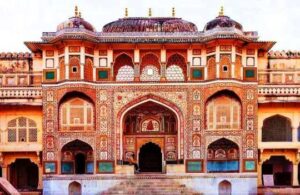
The Ganesh Pol gate — the main ceremonial entrance to the private royal apartments — is painted with such extraordinary detail across every centimetre of its surface that spending twenty minutes simply looking at the gateway produces a complete picture of Rajput artistic tradition.
Getting there: 14 km from Jaipur city centre — Uber (₹150–₹200) or auto (₹200–₹300 negotiated). Entry: ₹550 for Indians, ₹550 for foreigners (with audio guide). Elephant rides have been discontinued following animal welfare concerns.
Best timing: Arrive at gate opening (8 AM) on weekdays. The fort in the first hour — before the tour groups arrive — is a completely different experience from the 11 AM version.
Insider tip: The light-and-sound show at Amber Fort (₹200–₹295, evening) tells the fort’s story across its illuminated exterior and is one of Rajasthan’s finest evening experiences. Book tickets online in advance.
Honest note: The climb from the main gate to the upper courtyard involves significant steps. The jeep shuttle (₹50 per person) covers the steepest section if needed.
- City Palace — Living Royalty in the Heart of the Pink City {#city-palace}

City Palace is still partially inhabited by the royal family of Jaipur — and this is the fact that most visitors don’t fully register until they’re standing in the courtyard and notice that certain wings have very much a private-residence quality rather than a museum quality. The current scion of the Jaipur royal family, Padmanabh Singh, continues to use sections of the palace for personal residence, making City Palace one of the few royal palaces in India where actual royalty still lives on the premises.
The Mubarak Mahal (Welcome Palace) houses a textile museum with royal court costumes including a saffron-coloured garment belonging to Madho Singh I that required 250 metres of fabric to construct — a detail that makes the scale of Rajput royal life suddenly concrete. The Diwan-e-Khas (Hall of Private Audience) contains two enormous silver urns — each holding 4,000 litres of Ganges water — that Madho Singh II had commissioned in 1902 for carrying holy water to England for his coronation visit. At the time of manufacture, they were the largest silver objects in the world.
Entry: ₹500 for Indians (includes Jantar Mantar — visit both in one ticket). Museum opens at 9:30 AM. The royal apartments visible from the courtyard are not accessible to visitors.
Insider tip: The rooftop Mubarak Mahal café serves excellent chai and has a view across the old city rooftops to Nahargarh Fort on the hill above — one of Jaipur’s finest free photography moments.
- Hawa Mahal — The Palace of Winds {#hawa-mahal}

Hawa Mahal is Jaipur’s most photographed building and one of India’s most immediately recognizable architectural images — a five-storey honeycomb facade of 953 small windows (jharokhas) built in 1799 to allow royal women to observe street life while remaining unseen from below. The coral-pink sandstone facade is only one room deep in most sections — the building is essentially an elaborate screen rather than a palace in the conventional sense.
Most visitors photograph Hawa Mahal from the street outside (the correct angle — the facade faces east and catches morning light beautifully between 7–10 AM) and don’t enter. Entering costs ₹200 for Indians and produces a completely different experience: the view from the upper windows back across the old city — the bazaars below, Amber Fort on the distant hillside, the old city’s terracotta rooftops extending in every direction — is one of Jaipur’s finest views and is accessed by almost nobody.
Best photography timing: Stand on the rooftop café across the street (several restaurants offer rooftop access for the price of a chai) at 8 AM for the morning light on the honeycomb facade.
Getting there: Walking distance from City Palace and Jantar Mantar — all three can be covered in a single old-city morning.
- Nahargarh Fort — Sunset Above the Pink City {#nahargarh}

Nahargarh (“abode of tigers”) sits on the Aravalli ridge above the city — accessible by a steep winding road that takes 20 minutes by auto or scooter from the old city below. The fort itself is partially ruined and partially preserved, but the reason everyone makes the climb is the view: from Nahargarh’s ramparts and the famous Padao restaurant terrace, the entire Pink City spreads below in a panoramic view that includes Amber Fort, Jaigarh Fort, and the city extending to the horizon.
The sunset from Nahargarh is Jaipur’s most celebrated and most photographed experience — the entire city going from gold to amber to deep rose as the sun drops behind the Aravalli hills. I arrived at 4:30 PM on a clear October day and watched the light change for two hours without wanting to leave.
The Nahargarh Biological Park within the fort complex (₹100 for Indians) is genuinely worth an additional hour — the tigers, leopards, and bears are maintained in naturalistic enclosures that represent a significant step up from the typical urban zoo experience.
Entry: ₹50 for Indians. The fort itself closes at 5:30 PM — arrive by 4 PM for the full sunset experience.
Insider tip: The Padao restaurant inside the fort serves cold drinks and snacks with the best view in Rajasthan. The prices reflect the view (not the food quality) — budget accordingly.
- Jaigarh Fort — The Cannon on the Hill {#jaigarh}

Jaigarh connects to Amber Fort via an underground passage and sits higher on the same Aravalli ridge — making it the most logistically straightforward of the Jaipur fort triple (Amber + Jaigarh + Nahargarh) to combine into a single day. It was built primarily as a military fort and arsenal rather than a royal residence, and its character reflects this — less ornate than Amber, more austere, more genuinely fortress-like.
Jaigarh’s primary claim to fame is the Jaivana cannon — cast in 1720, it is the world’s largest wheeled cannon, measuring 6.15 metres in length and requiring four elephants to move. It was fired only once in its history — a test shot that landed 35 kilometres away near Chaksu village where a small pond still exists at the landing site.
The fort also offers the finest elevated view of Amber Fort available anywhere — looking down at the amber sandstone ramparts from Jaigarh’s higher position produces the most dramatic fort photography in Rajasthan.
Entry: ₹135 for Indians. The same-day Amber Fort ticket includes a discount. Honest note: Jaigarh is often skipped in favor of Amber — don’t skip it. The cannon alone justifies the ₹135.
- Jantar Mantar — The Astronomical Wonder {#jantar-mantar}

Jantar Mantar is a UNESCO World Heritage Site and one of the most unusual structures in India — a collection of 19 architectural astronomical instruments built by Maharaja Sawai Jai Singh II between 1724 and 1735, designed to observe and record celestial positions with unprecedented accuracy before the telescope era.
The Samrat Yantra — a 27-metre-high sundial that can measure time to an accuracy of two seconds — is the largest stone sundial in the world. Standing beside it and watching the shadow move visibly as you look is one of those experiences that makes historical scientific achievement feel genuinely astonishing rather than merely impressive.
For most visitors, Jantar Mantar falls into the category of “I went, I looked, I didn’t fully understand what I was seeing.” This is the correct first response — it requires a guide or audio guide to decode what each instrument actually does. The audio guide (included in the ₹500 City Palace combo ticket) is genuinely excellent here.
Getting there: Walking distance from City Palace. Entry included in the City Palace combo ticket (₹500 for Indians) — always buy the combo.
- Albert Hall Museum — Jaipur’s Most Overlooked Treasure {#albert-hall}

Albert Hall Museum is Rajasthan’s oldest museum and one of the finest Indo-Saracenic buildings in India — an 1887 structure that looks more like a Venetian palace than a Rajasthani administrative building, housing a collection of Rajasthani miniature paintings, carpets, natural history specimens, decorative arts, and an Egyptian mummy that is consistently the most surprising element of any Jaipur visit.
Most tourists walk past Albert Hall on their way to more marketed attractions. This is a consistent mistake. The building’s architecture alone — particularly at night when it is illuminated — is worth the detour. The miniature painting collection inside is one of the finest accessible collections of its type in Rajasthan.
Entry: ₹150 for Indians. The museum illumination after sunset (check current times at the gate) makes the exterior photography exceptional.
Insider tip: Combine Albert Hall with a walk through Ram Niwas Garden directly adjacent — one of Jaipur’s finest green spaces and completely free.
- Galtaji Temple — The Monkey Temple Nobody Visits {#galtaji}
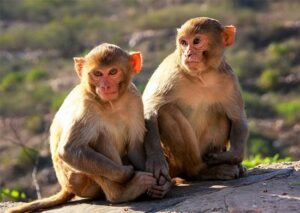
Galtaji is a complex of Hindu temples built into a natural gorge in the Aravalli hills, 10 kilometres east of Jaipur — a functioning pilgrimage site where natural springs feed a series of sacred pools (kunds) surrounded by temple pavilions, the air thick with incense and the sound of the resident monkey population (hundreds of rhesus macaques who treat the temple as their permanent home).
Most tourists go to Amber Fort and miss Galtaji entirely — which is a genuine loss, because Galtaji offers the single most authentically atmospheric religious site experience within reach of Jaipur. The pilgrims bathing in the sacred pools at dawn, the priests performing rituals at the main temple, the monkeys moving through the trees above the pavilions — all of it exists entirely for its own religious purpose rather than for tourism.
The narrow path leading to the main temple complex passes through a natural gorge where the sound of water and temple bells and monkeys creates an atmosphere that is uniquely and unmistakably Rajasthani in a way that the more famous fort sites — which are primarily architectural achievements — cannot replicate.
Getting there: Auto from the city (₹150–₹200) or Uber. No entry fee. Honest note: The monkey population is aggressive with food — carry nothing edible. The path can be crowded during festival periods and largely empty on weekday mornings (which is when to visit).
- Abhaneri Stepwell (Chand Baori) — The Hidden Geometric Marvel {#abhaneri}

Abhaneri is not technically in Jaipur — it’s 95 kilometres from the city in the Dausa district — but it belongs in this guide because it is the single most extraordinary thing within a reasonable day trip distance of the Pink City and is visited by perhaps 3% of Jaipur tourists.
Chand Baori is a 9th-century stepwell — 13 storeys deep, with 3,500 narrow steps arranged in perfect symmetry descending to the water 20 metres below. The geometric precision of the staircase pattern — each level identical, the steps narrowing toward the center with mathematical regularity — produces a visual effect that your brain genuinely struggles to process as real.
The stepwell featured in films including The Dark Knight Rises and The Fall — both productions chose it specifically for the otherworldly quality of its geometry. Standing at the rim and looking down at the 3,500 steps converging toward the dark water below, it is completely understandable why both directors immediately recognized it as a place that looks like it shouldn’t exist.
Getting there: 95 km from Jaipur — 2 hours by road. Hire a full-day driver (₹2,500–₹3,500) and combine with Fatehpur Sikri on the way back toward Agra, or visit as a standalone day trip. Entry: ₹50 for Indians.
Honest note: The surrounding village has very limited facilities — no significant restaurant options. Carry food and water for the day trip.

Practical Travel Tips {#practical-tips}
Cash vs Card: Jaipur’s old city and bazaars run primarily on cash. Fort entry fees accept UPI (scan and pay is now available at most Rajasthan ASI sites). Restaurants and hotels accept cards. Keep ₹2,000–₹3,000 in cash for daily bazaar shopping, street food, auto-rickshaws, and entry fees.
Photography fees: Several Jaipur attractions charge a separate camera fee (₹50–₹200) at the entry gate. Always ask at the ticket counter — paying the camera fee saves embarrassment at security checkpoints inside.
UPI payment: Widely accepted across Jaipur including at most fort entry gates, major restaurants, and hotels. Google Pay and PhonePe work without issue.
Best SIM for Rajasthan: Jio has the strongest coverage across Rajasthan including in Abhaneri and the rural Aravalli areas. BSNL is worth having as a backup for remote excursions.
Safety: Jaipur is one of India’s safest major tourist cities. The main caution zones are the bazaar areas around Johari Bazaar where gem and textile tout pressure can be persistent — confident, polite disinterest is the correct response. Solo female travel is generally safe; the old city is busy and well-populated at all sensible hours.
Dress code: Galtaji Temple requires modest dress — shoulders covered, lower body covered. Carry a scarf. The fort interiors require removal of footwear at certain temple sections — socks are worth wearing specifically for this.
Useful apps: Ola/Uber (transport), Google Maps offline (download Jaipur region before travel — rural Aravalli roads have patchy signal), ASI Rajasthan app (entry ticket information), Zomato (restaurant discovery in Jaipur works reliably).
Best Time To Visit Jaipur {#best-time}

October to February — Peak Season (Ideal): Jaipur’s finest travel window. Temperatures between 12–25°C, clear blue skies, the particular sharp desert light that makes fort photography extraordinary. October and November hit the sweet spot of good weather without the December-January peak pricing. The Jaipur Literature Festival (typically January) adds a cultural dimension worth planning around specifically.
March — Holi Festival Window: Jaipur’s Holi celebrations are among the most exuberant in India — the city turns vivid with colour, the forts see special events, and the atmosphere is genuinely festive in a way that rewards visitors who plan specifically for it. Accommodation books out 4–6 weeks ahead for the Holi window.
April to June — Pre-Monsoon Heat: Temperatures regularly reach 42–45°C. Fort visits become genuinely uncomfortable by 10 AM. If visiting in this window, confine outdoor activity to before 9 AM and after 5 PM. Indoor attractions (museums, haveli interiors) remain manageable with air conditioning. Accommodation prices drop 30–40% from peak.
July to September — Monsoon: The Rajasthan monsoon transforms the landscape — the Aravalli hills green up dramatically, the Maota Lake below Amber Fort fills to its photogenic maximum, and the city receives consistent rainfall. Not the most comfortable travel season but the most visually dramatic for photography. Prices drop significantly.
My recommendation: October, November, or February for the optimal combination of conditions, crowd levels, and pricing without the extreme peak-season hotel rates of December-January.
5-Day Jaipur Itinerary {#itinerary}
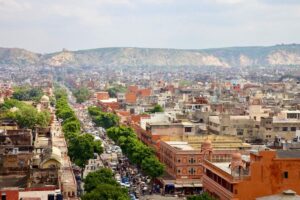
Day 1 — Arrival + Old City Introduction Check into Pink City accommodation. Afternoon: walk from Hawa Mahal to City Palace (30 minutes on foot through the bazaar). Johari Bazaar for an hour before closing. Dinner at a rooftop restaurant overlooking the old city — one planned atmospheric meal. Albert Hall after dinner for the illuminated exterior photography. Daily spend: ₹1,500–₹3,000
Day 2 — Amber Fort + Jaigarh + Nahargarh 7 AM Uber to Amber Fort (arrive at gate opening). Full Amber Fort exploration — 2 hours minimum. Jaigarh Fort (15 minutes from Amber by auto). Afternoon: drive to Nahargarh Fort. Arrive by 4 PM for the full sunset experience. Padao restaurant drinks with the view. Return to city by 7 PM. Daily spend: ₹2,000–₹4,000
Day 3 — City Palace + Jantar Mantar + Bazaar 9:30 AM City Palace (buy combo ticket with Jantar Mantar). Full exploration — 3 hours. Jantar Mantar directly after with audio guide. Afternoon: Johari Bazaar for block-print fabric shopping (negotiate — starting prices are always high). Evening: Chokhi Dhani cultural village for a Rajasthani dinner experience (₹900–₹1,200 per person including dinner). Daily spend: ₹2,500–₹5,000
Day 4 — Galtaji + Off-Beat Jaipur 6:30 AM auto to Galtaji Temple for the dawn experience before the crowds arrive. Return by 9 AM. Late morning: Panna Meena Ka Kund (a beautiful but lesser-known stepwell near Amber Fort — free entry, extraordinary photography). Afternoon: Jal Mahal (the water palace in Man Sagar Lake — photographed from the lakeside, not accessible inside, but remarkable from the shore). Evening: sundowner at a rooftop café in the old city. Daily spend: ₹1,000–₹2,000
Day 5 — Abhaneri Day Trip + Departure 7 AM departure with hired driver to Abhaneri (Chand Baori stepwell, 2 hours). Arrive by 9 AM for the best light and minimum crowd. Return to Jaipur by 1 PM. Airport or railway station for departure. Daily spend: ₹3,000–₹4,500 including driver
Budget Breakdown {#budget}
| Expense | Budget Option | Mid-Range | Luxury |
| Accommodation — 5 nights | ₹4,000–₹10,000 | ₹15,000–₹35,000 | ₹75,000+ |
| Transport (local + Abhaneri) | ₹2,500–₹4,000 | ₹5,000–₹8,000 | ₹12,000+ |
| Fort Entry Fees — 5 days | ₹1,500–₹2,000 | ₹1,500–₹2,000 | ₹1,500–₹2,000 |
| Food — 5 days | ₹3,000–₹5,000 | ₹6,000–₹12,000 | ₹20,000+ |
| Shopping & Miscellaneous | ₹2,000–₹5,000 | ₹5,000–₹15,000 | ₹30,000+ |
| Total Per Person | ₹13,000–₹26,000 | ₹32,500–₹72,000 | ₹1,38,500+ |
Where to save: Hostel in old city over hotel, auto-rickshaw over Uber for short distances, thali meals at local restaurants (₹120–₹180 for a full Rajasthani thali), combining Amber + Jaigarh in one day to minimize transport costs.
Where to splurge: Amber Fort light-and-sound evening show, one dinner at a heritage haveli restaurant, the Abhaneri full-day driver hire, and the City Palace combo ticket that includes Jantar Mantar — genuinely the best-value combined ticket in Rajasthan.

Final Verdict — Honest Assessment of Jaipur {#verdict}
Jaipur is the finest city destination in India for travelers who find pure heritage travel compelling — and I say this with full awareness of the competition the statement faces. The fort architecture here is genuinely world-class by any international standard. Amber Fort would be a major global attraction in any country. The old city street culture — the camel-decorated trucks, the block-print fabric shops spilling onto the pavement, the chai wallahs at every corner, the silver jewellery workshops where you can watch craftspeople working in doorways — produces a sensory richness that no amount of prior research adequately prepares you for.
One honest drawback worth naming clearly: Jaipur’s tourist commercial pressure is real and sustained. The gem shop commission circuit — where auto drivers take tourists to specific shops in exchange for referral fees — operates aggressively and can consume entire afternoons if you’re not aware of how to decline politely but firmly. The phrase “I am only here for forts — no shopping today” delivered with complete friendliness and zero ambiguity works consistently. Know it before you arrive.
Jaipur is perfect for: History and architecture enthusiasts, photographers, first-time Rajasthan visitors, couples for whom heritage atmosphere is the point of travel, families with children who respond to the scale and drama of Rajput fort architecture, and international travelers for whom Jaipur represents their first significant encounter with Indian royal history.
You might find Jaipur challenging if: You need beach, nature, or complete quiet — Jaipur is a living Indian city and is busy, colourful, and occasionally loud in ways that energize some travelers and overwhelm others. Two days is the minimum; five is the ideal.
Planning to combine Jaipur with other incredible Indian destinations? If food-forward travel motivates you, our Kerala Food Guide 2026: Traditional Dishes You Must Try covers India’s most extraordinary regional cuisine in the same depth this guide gives to Jaipur’s heritage. For smooth trip planning advice that applies equally well to Jaipur as to any Indian destination, our Kerala Travel Tips 2026: Complete Guide for a Smooth Trip covers the practical foundations of Indian travel planning with transferable precision.
Extending your trip internationally after Jaipur? Dubai connects from Jaipur with direct flights — and our Dubai Food Guide 2026: Best Street Food & Restaurants makes the most of any extension. The contrast between Jaipur’s royal Rajasthani food culture and Dubai’s extraordinary multicultural street food scene tells one of Asia’s most interesting culinary stories in two stops.
And for the mountain counterpart to Jaipur’s desert royal landscape, our Manali Travel Guide — 7 Best Places + Hidden Gems (2026) and our Secret Places in Manali — 7 Hidden Gems You Must Visit in 2026 complete the picture — because the traveler who finds the real Jaipur will always want to find the real Manali too.