


📋 Table of Contents
- Why Bali Food Will Surprise Every Indian Traveler
- Understanding Bali’s Food Geography
- How To Get To Bali
- Getting Around Bali’s Food Neighbourhoods
- Where To Stay For Food Access
- 15 Bali Dishes Every Indian Traveler Must Try
- 1. Nasi Goreng — Indonesia’s Soul Food
- 2. Mie Goreng — The Noodle Version You Need
- 3. Satay — Grilled Skewers on Every Corner
- 4. Babi Guling — The Famous Suckling Pig
- 5. Bebek Betutu — Slow Cooked Duck in Banana Leaf
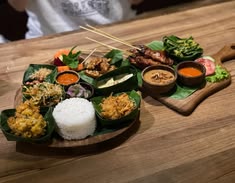
- 6. Nasi Campur — Bali’s Everything Plate
- 7. Lawar — The Traditional Ceremonial Dish
- 8. Gado Gado — The Peanut Sauce Salad Indians Love
- 9. Soto Ayam — The Healing Chicken Soup
- 10. Tempeh and Tofu Dishes — The Vegetarian Gold
- 11. Pisang Goreng — Fried Banana Done Right
- 12. Es Campur — The Shaved Ice Dessert
- 13. Jamu — The Ancient Herbal Tonic
- 14. Bali Coffee — Single Origin From the Source
- 15. Fresh Coconut Water — The Drink That Costs Nothing
- Bali Food for Indian Travelers — Specific Guide
- Best Food Markets & Streets in Bali
- Practical Food Tips for Indians in Bali
- Best Time To Visit for Food Experiences
- 5-Day Bali Food Itinerary
- Budget Breakdown
- Final Verdict — Honest Assessment
Why Bali Food Will Surprise Every Indian Traveler {#why-bali-food}
I arrived in Bali expecting to miss Indian food within forty-eight hours.
I had packed a small bag of instant masala packets — the emergency rations of every Indian traveler who has been burned by Southeast Asian food that looked more interesting than it tasted. By day two, the masala packets were still untouched. By day five, I had forgotten they existed. I found them on the final day of the trip while repacking and genuinely couldn’t remember the last time I had wanted something that wasn’t Balinese.
This surprised me comprehensively. Bali’s food scene is not the first thing most Indian travelers research before departure — the temples, the rice terraces, the nightlife get the attention, while the food quietly waits to ambush you. And ambush is the right word. The flavours here — coconut milk, galangal, lemongrass, palm sugar, kaffir lime, dried shrimp paste, and chilli combinations that build heat in ways that feel entirely familiar to an Indian palate — hit with the warmth of a cuisine you’ve somehow eaten before even when you haven’t.
Bali shares something fundamental with Indian cooking: a deep relationship with spice, a comfort with bold flavours, a respect for cooking technique, and a belief that the best food is made slowly from fresh ingredients. These shared foundations make Bali’s food one of the most naturally accessible cuisines for Indian travelers — with enough difference to be genuinely exciting and enough familiarity to feel comfortable from the first meal.
This guide covers every dish worth eating, every neighbourhood worth eating it in, and every food trap worth avoiding. The masala packets stay at home.
Understanding Bali’s Food Geography {#food-geography}

Bali’s best food exists in a geographic and cultural pattern that Indian travelers specifically benefit from understanding before arrival.
Warung culture — Bali’s equivalent of the Indian dhaba or street stall — is the foundation of the island’s food scene. A warung is a small family-run food stall or simple restaurant where dishes are often displayed in glass cases at the entrance, prices are genuinely low, and the cooking is done by people who have been making the same recipes their entire lives. The best food in Bali is almost always at a warung. The worst value food is almost always at a tourist-facing restaurant with English photographs on the menu.
Geographic food differences: South Bali (Seminyak, Canggu, Kuta) has the most international food scene — cafés, brunch spots, vegan restaurants, and Western food dominate alongside Indonesian options. Ubud is the healthiest eating zone — organic cafés, raw food restaurants, and excellent traditional Balinese cooking coexist in unusual density. East and North Bali have the most authentically local warung food — dishes cooked for the community rather than for tourism.
For Indian travelers specifically: Bali has significant Indian food presence in south Bali and Ubud — South Indian, North Indian, and Rajasthani restaurants serve familiar food for those missing home flavours. This guide covers the Balinese food worth exploring, with a specific section on Indian food options for the days when you need it.
How To Get To Bali {#how-to-get}
Ngurah Rai International Airport (DPS) connects from all major Indian cities via Singapore, Kuala Lumpur, or Hong Kong connections. Mumbai to Bali takes 7–9 hours, Delhi 8–11 hours. Return fares from ₹18,000–₹35,000 depending on season and booking timing.
For a comprehensive Bali trip with accommodation, transfers, and sightseeing arranged — the Tripyverse Bali Tour Package covers the island’s essential circuit. For couples, the Tripyverse Bali Honeymoon Package and Bali Romance Escape build the most intimate Bali experience. For group travel, the Tripyverse Bali Bliss 5N/6D Group Package handles every element in one transparent booking.
For the complete Bali trip planning picture beyond food — tips, transport, hidden spots, and budget — our Bali Travel Tips 2026: Everything You Must Know and our Hidden Gems in Bali 2026: Secret Spots for Peaceful Travel cover every practical detail alongside the food guide.
Getting Around Bali’s Best Food Neighbourhoods {#getting-around}
Scooter rental (IDR 70,000–₹100,000 per day, ₹350–₹500): The most practical tool for food exploration. The best warungs in Bali are not on the tourist main streets — they’re on the side roads, at the back of markets, and in residential neighbourhoods where locals eat. A scooter gets you there without negotiating taxi prices for every journey.
Grab (available in south Bali and Ubud): For urban food trips — from accommodation to specific restaurants in Seminyak or Ubud — Grab gives transparent pricing. IDR 25,000–₹80,000 for most in-zone food trips.
Walking in food-dense zones: Ubud’s central food street (Jalan Dewi Sita), Seminyak’s restaurant corridor (Jalan Kayu Aya), and Canggu’s café strip (Jalan Batu Bolong) are all walkable food destinations where the density of options makes the scooter unnecessary.
Market access: Ubud’s morning market (Pasar Ubud) operates 5–7 AM and requires walking from central Ubud accommodation — no vehicle needed. Badung Market in Denpasar is the island’s largest traditional market and requires Grab or a private driver.
Where To Stay For Food Access {#where-to-stay}
Ubud — The best food base in Bali for Indian travelers who want both authentic Balinese cuisine and excellent vegetarian and organic options. The density of good eating within walking distance of central Ubud accommodation is exceptional.
Seminyak / Canggu — Best for international food variety, beach cafés, brunch culture, and the broadest range of Indian food options on the island.
East Bali (Sidemen, Amed) — Best for the most authentic warung experience — food cooked for the community at genuinely local prices with zero tourist markup.
Budget Tier (₹750–₹2,000/night): Local homestays across all regions — Breakfast included at most Bali homestays means two of the day’s meals are handled before you even leave the property. Balinese home-cooked breakfast — rice porridge, banana pancakes, fresh fruit, and Bali coffee — sets the food standard for the day.
Mid-Range (₹2,500–₹7,500/night): Komaneka at Bisma, Ubud — Rice terrace views and a restaurant with exceptional Balinese tasting menus. The Layar, Seminyak — Private pool villa with access to Seminyak’s best restaurant corridor within walking distance.
Luxury (₹10,000+/night): Four Seasons Sayan, Ubud — The Riverside Café here uses produce from their own organic garden and the Ayung River valley below. The breakfast spread is the finest in Ubud.
15 Bali Dishes Every Indian Traveler Must Try {#must-try-dishes}
- Nasi Goreng — Indonesia’s Soul Food {#nasi-goreng}
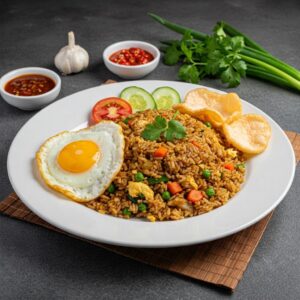
Nasi goreng is Indonesia’s national dish and Bali’s most ubiquitous food — fried rice cooked in a wok with sweet soy sauce (kecap manis), garlic, shallots, chilli, and whatever protein the cook prefers, topped with a fried egg, prawn crackers, and a cucumber-tomato garnish. It appears on every menu from the most basic roadside warung to five-star hotel breakfast spreads.
The Indian traveler connection is immediate: this is essentially the Indonesian cousin of our fried rice, made with the same fundamental technique but completely different flavour architecture. The kecap manis (sweet soy sauce) gives nasi goreng a caramelized sweetness that Indian fried rice doesn’t have. The level of spice is adjustable by simply pointing to the chilli sambal on the table and indicating your preference through gestures that cross all language barriers.
Best nasi goreng for Indian travelers: Ask for “nasi goreng sayur” (vegetarian fried rice) to avoid the shrimp paste (terasi) that appears in standard versions. The vegetarian version is widely available and nearly as flavourful.
Where to eat it: Any warung, any time. Breakfast, lunch, dinner — nasi goreng is Bali’s answer to every meal situation. Price: IDR 20,000–₹40,000 (₹100–₹200) at warungs. IDR 80,000–₹120,000 (₹400–₹600) at tourist restaurants.
Insider tip: The best nasi goreng I ate in Bali cost IDR 25,000 from a roadside warung in Ubud’s residential area, ordered at 7:30 PM when the wok was freshly seasoned from the evening service. Timing and location over price every time.
- Mie Goreng — The Noodle Version You Need {#mie-goreng}
Mie goreng is nasi goreng’s noodle counterpart — identical cooking technique, identical flavour profile, yellow egg noodles instead of rice. For Indian travelers who grew up eating Maggi, the first mie goreng is a revelation: this is what instant noodles are trying to approximate, made fresh, with actual ingredients, for ₹150.
The wok-char on properly made mie goreng — the slight smokiness that comes from high heat contact between noodle and iron — is its defining quality and the thing that distinguishes a great version from an adequate one. The best mie goreng has a faint smoky undertone beneath the sweet soy and garlic that makes it impossible to stop eating.
Vegetarian version: “Mie goreng sayur” — available everywhere, excellent everywhere.
Price: IDR 20,000–₹35,000 (₹100–₹175) at warungs.
- Satay — Grilled Skewers on Every Corner {#satay}

Satay (sate in Indonesian) is Bali’s most universally accessible street food — small pieces of marinated chicken, beef, pork, or fish threaded onto bamboo skewers and grilled over coconut shell charcoal, served with a peanut sauce that is simultaneously sweet, spicy, and deeply nutty in a way that Indian peanut chutneys approximate but don’t quite replicate.
The smell of satay grilling over coconut charcoal is the specific smell I associate most strongly with Bali evenings — it drifts across every market, every temple festival, every village night fair. Following that smell to its source consistently produces the best satay experiences available.
For vegetarians and non-pork eaters: Satay ayam (chicken) and satay ikan (fish) are the most widely available non-pork versions. Vegetarian satay with tempeh or tofu is available at most Ubud restaurants and some warungs.
Price: IDR 20,000–₹40,000 (₹100–₹200) for 5–10 skewers at street stalls.
- Babi Guling — The Famous Suckling Pig {#babi-guling}
Babi guling is Bali’s most celebrated dish — a whole suckling pig stuffed with turmeric, lemongrass, galangal, ginger, and chilli, then slow-roasted on a spit over coconut wood until the skin crackles and the meat inside is impossibly tender and fragrant. It is served as a ceremonial dish at Balinese Hindu festivals and sold daily at dedicated babi guling restaurants.
For non-pork eaters — which includes most Indian travelers — this section exists for cultural knowledge rather than personal eating. Babi guling restaurants are prominent and widely discussed in Bali travel content, and knowing what they are and why they matter to Balinese food culture enriches your understanding of the island even if the dish itself is not on your menu.
Honest note for Indian vegetarian and non-pork travelers: Bali has substantial non-pork and vegetarian eating options — this guide addresses these specifically in the Indian Travelers section below. The prominence of babi guling in Bali food content should not create the impression that the island is difficult for non-pork eaters. It isn’t.
- Bebek Betutu — Slow Cooked Duck in Banana Leaf {#bebek-betutu}

Bebek betutu is the dish that consistently converts Indian travelers to Balinese food permanently. Duck marinated in a complex paste of shallots, garlic, ginger, galangal, turmeric, candlenut, and eleven other spices, wrapped in banana leaf, and slow-cooked for 6–8 hours until the meat falls from the bone with the gentlest encouragement. The result is a depth of flavour that requires nothing else — the spice combination permeates every fibre of the meat and the banana leaf adds a faint smokiness that no metal vessel replicates.
The spice profile of bebek betutu will feel immediately familiar to an Indian palate without being identical to anything in Indian cooking — it’s the Southeast Asian spice tradition responding to the same raw materials (ginger, garlic, turmeric, chilli) with a completely different technique and result. I ate bebek betutu for the first time at a small restaurant in Ubud and sat with the empty plate for five minutes trying to identify every flavour I had encountered. I still can’t completely.
Where to eat the best bebek betutu: Betutu Men Tempeh, Ubud — A small warung that has been making bebek betutu using the same family recipe for decades. IDR 65,000–₹85,000 per serving. Pre-order by noon for evening service — it sells out consistently.
Warung Ibu Oka — Famous primarily for babi guling but serves excellent bebek betutu for non-pork diners. IDR 70,000 per serving.
Price: IDR 60,000–₹120,000 (₹300–₹600) depending on restaurant tier.
- Nasi Campur — Bali’s Everything Plate {#nasi-campur}
Nasi campur is the Balinese version of the rice plate — steamed rice surrounded by small portions of five to eight different dishes: a meat or fish preparation, tempeh, tofu, lawar (vegetable and coconut dish), sambal, vegetables, and sometimes a small piece of satay. It’s the complete Balinese meal in one plate.
For Indian travelers, nasi campur is the most efficient way to taste Bali’s full food range in a single sitting — the equivalent of ordering a full thali to understand a regional Indian cuisine. The combination changes by restaurant and by day based on what the cook prepared that morning. Pointing at a nasi campur display case and receiving whatever is freshest that day is one of the most pleasurable food gambles available in Bali.
Price: IDR 25,000–₹60,000 (₹125–₹300) at warungs. IDR 80,000–₹150,000 at restaurant tier.
- Lawar — The Traditional Ceremonial Dish {#lawar}
Lawar is a traditional Balinese preparation of finely chopped vegetables, coconut, and spices — sometimes with minced meat, sometimes purely vegetarian — that appears at every Hindu ceremony in Bali as a sacred offering food and at every traditional restaurant as a daily side dish. The vegetarian version (lawar putih or white lawar) uses young jackfruit, long beans, and grated coconut with a spice paste that is simultaneously fresh and deeply complex.
For Indian vegetarian travelers specifically, lawar putih is one of the most interesting dishes Bali offers — the young jackfruit texture and the spice combination produce something that feels connected to Indian cooking techniques (the jackfruit curry tradition, the coconut-based preparations of South India) while being completely its own thing.
Where to find it: Any traditional Balinese warung serving full meals. Always ask for “lawar putih” (white lawar) to confirm you’re getting the vegetarian version.
Price: IDR 15,000–₹25,000 (₹75–₹125) as a side dish.
- Gado Gado — The Peanut Sauce Salad Indians Love {#gado-gado}

Gado gado is Indonesia’s most loved salad — steamed vegetables (potato, long beans, bean sprouts, cabbage, spinach), tofu, tempeh, and boiled eggs, served with a warm peanut sauce that is thick, sweet, spicy, and deeply savoury. It is entirely vegetarian, entirely halal, genuinely nutritious, and consistently one of the best things an Indian traveler can eat in Bali.
The peanut sauce is the specific element that converts Indian travelers into gado gado devotees — it has the texture of Indian peanut chutney, the sweetness of a tamarind preparation, and the heat of a sambal combined into one sauce that improves everything it touches. I have never met an Indian traveler who tried gado gado and didn’t immediately want more of the peanut sauce on everything.
Where to eat the best gado gado: At any warung or market food stall across Bali. The version sold from portable carts at morning markets in Ubud and Denpasar — assembled fresh to order — is the best version available.
Price: IDR 20,000–₹40,000 (₹100–₹200).
- Soto Ayam — The Healing Chicken Soup {#soto-ayam}
Soto ayam is Indonesia’s turmeric-yellow chicken soup — a clear broth coloured and flavoured with turmeric, lemongrass, galangal, and kaffir lime leaves, served over rice or noodles with shredded chicken, boiled egg, bean sprouts, fried shallots, and a squeeze of lime. It is Bali’s comfort food, consumed at breakfast, as a hangover remedy, and as the standard recovery meal after a long day of temple visits.
For Indian travelers, soto ayam tastes like a cousin of rasam — the same sour-aromatic-warming quality, built from overlapping spice layers, served piping hot. The turmeric base will feel immediately familiar. The lemongrass and kaffir lime will feel new and interesting. The combination will feel like something you want again the next morning.
Where to eat it: Morning warung food stalls at traditional markets across Bali. IDR 20,000–₹35,000 (₹100–₹175).
- Tempeh and Tofu Dishes — The Vegetarian Gold {#tempeh}

Indonesia invented tempeh — a fermented soybean cake with a nutty, meaty texture and a depth of umami flavour that no other vegetarian protein source replicates. In Bali, tempeh is served fried (tempeh goreng — the most addictive snack on the island), in curry preparations (tempeh manis — sweet and spicy), and as a satay alternative. Fresh Balinese tempeh has a flavour quality categorically different from the packaged versions available in Indian health food stores.
For Indian vegetarian travelers, tempeh is the most important Bali food discovery available. It provides the protein satisfaction that meat dishes deliver elsewhere on the menu, at a price (IDR 15,000–₹25,000, approximately ₹75–₹125 per serving) that makes it the best-value food available. Tempeh goreng — deep fried with a light spice coating — eaten with sambal and steamed rice is one of the finest simple meals in Bali and entirely vegetarian.
Where to eat the best tempeh: Any traditional warung. The freshness of the tempeh is visible — it should look dense and white-grey inside, smell faintly of fermentation, and fry to a golden crisp rather than a greasy dark brown.
- Pisang Goreng — Fried Banana Done Right {#pisang-goreng}

Pisang goreng (fried banana) is Bali’s most universal street snack — banana coated in a light rice flour batter and deep fried until golden, served hot with a drizzle of palm sugar syrup or a sprinkling of grated coconut. It costs IDR 5,000–₹10,000 (₹25–₹50) per piece at market stalls and is genuinely excellent.
For Indian travelers who grew up eating kela pakora or banana chips, pisang goreng will feel immediately familiar and simultaneously better than you expected. The rice flour batter is lighter than chickpea flour and crisps to a delicate shell rather than a dense coating. The banana inside — varieties of local banana not available in Indian markets — is sweeter and more fragrant than anything your local fruit stall sells.
Where to find it: Every Balinese market, every morning food stall, every roadside snack vendor. The best versions are made to order from the cart in front of you.
- Es Campur — The Shaved Ice Dessert {#es-campur}
Es campur is Bali’s most elaborate dessert — shaved ice over a base of coconut jelly, palm seeds (kolang-kaling), sweet corn, grass jelly, and red beans, topped with coconut milk and palm sugar syrup, served in a tall glass or deep bowl. It is vivid, cold, textural, and completely unlike any dessert in Indian cooking.
For Indian travelers who find Western desserts cloying, es campur offers a different register of sweetness — lighter, coconut-forward, refreshing rather than heavy. The textural variety — crunchy shaved ice, chewy jelly, soft beans — produces a dessert experience that rewards attention. On a hot Bali afternoon, there is nothing more appropriate.
Price: IDR 15,000–₹30,000 (₹75–₹150) at market stalls and warungs.
- Jamu — The Ancient Herbal Tonic {#jamu}

Jamu is Indonesia’s ancient herbal medicine tradition — tonics made from turmeric, ginger, galangal, tamarind, and various combinations of roots and herbs, consumed daily for health and digestion. The most common version is jamu kunyit asem — turmeric and tamarind — which tastes like a concentrated haldi doodh crossed with a tangy ginger shot.
For Indian travelers, jamu is the food-culture discovery that produces the most instant recognition. The turmeric-ginger-tamarind combination is deeply familiar to any Indian who grew up with home remedies, ayurvedic preparations, or simply with a mother who added haldi to everything. Bali’s jamu tradition and India’s haldi milk tradition emerge from the same ancient Southeast and South Asian understanding of turmeric as medicine, and encountering jamu is encountering a cultural cousin you didn’t know existed.
Where to find it: Jamu sellers carry their bottles in bamboo baskets through markets and neighbourhoods in the early morning. Ubud’s morning market has three or four permanent jamu stalls. Price: IDR 5,000–₹15,000 (₹25–₹75) per glass.
- Bali Coffee — Single Origin From the Source {#bali-coffee}

Bali produces some of Southeast Asia’s finest coffee — the Kintamani highlands in north-central Bali grow Arabica beans at altitude with a distinctive citrus-floral character that specialty coffee markets worldwide source specifically. Drinking Kintamani coffee at a café overlooking the Kintamani caldera, surrounded by the same volcanic landscape where the coffee trees grew, is one of those specific travel food experiences that cannot be replicated at home at any price.
Bali also produces Luwak coffee — the infamous civet coffee where beans are eaten and passed by civets before processing. The ethical questions around captive civet farming are real and worth researching before purchasing. Wild-collected Luwak coffee exists and is legitimate; farmed Luwak coffee raises genuine animal welfare concerns.
Where to drink the best Bali coffee: Kintamani coffee plantation tours (IDR 50,000 including tasting). Single-origin coffee cafés in Ubud — Seniman Coffee Studio and Anomali Coffee both serve exceptional Kintamani Arabica. IDR 35,000–₹60,000 per cup at specialty cafés.
- Fresh Coconut Water — The Drink That Costs Nothing Important {#coconut-water}
Every beach, every market, every roadside vendor in Bali sells fresh young coconut (kelapa muda) — green coconut with the top macheted open, served with a straw, for IDR 10,000–₹25,000 (₹50–₹125). The coconut water inside is cold (the fruit comes from the cool morning harvest), slightly sweet, faintly mineral, and genuinely the most hydrating drink available on the island.
For Indian travelers managing the Bali heat — and in April through October the heat is real and consistent — fresh coconut water is the most practical hydration strategy available. It costs a fraction of bottled water, is more hydrating than any sports drink, and is available literally everywhere. I drank three or four per day across every Bali trip and arrived home with a hydration standard that took two weeks of Delhi tap water to ruin.
Bali Food for Indian Travelers — Specific Guide {#indian-specific}
This section addresses the specific questions Indian travelers bring to Bali’s food scene:

Vegetarian options: Bali’s vegetarian food is genuinely excellent and widely available. Gado gado, tempeh goreng, lawar putih, nasi campur vegetarian, mie goreng sayur, nasi goreng sayur, pisang goreng, and most fruit-based desserts are all vegetarian. The organic café culture in Ubud produces some of the finest vegetarian food in Southeast Asia. The honest note: Confirm “no daging, no ikan, no udang, no terasi” (no meat, no fish, no prawn, no shrimp paste) when ordering at traditional warungs where shrimp paste is often used as a background flavouring in nominally vegetarian dishes.
Halal options: Bali has a substantial Muslim population in certain areas (particularly north Bali and Denpasar) and halal restaurants are available across the island. Look for the green crescent halal certification at restaurant entrances. Most chicken (ayam), beef (sapi), fish (ikan), and vegetarian dishes at Muslim-run warungs are halal. Avoid pork restaurants which are clearly identified.
Indian food in Bali: South Bali has multiple Indian restaurants serving dosa, idli, biryani, and North Indian curries for the significant Indian tourist and expat population. Ubud has several Indian restaurants. These are genuinely available and genuinely decent — not homesick compromises but legitimate options for the days when you want something familiar. Masala Cafe, Seminyak and Ananda, Ubud are both consistently recommended by Indian travelers.
Spice tolerance: Balinese food is spicy by Southeast Asian standards but generally below Indian tolerance levels. If you want more heat, the table sambal (chilli paste) is available at every warung and every restaurant — add as desired. If you want less heat, “tidak pedas” (not spicy) is understood everywhere.
Food allergies: Peanut is present in many Balinese dishes (gado gado peanut sauce is ubiquitous). Shrimp paste (terasi) appears in many sambals and as a background flavouring. Both require specific communication — the phrase “alergi kacang” (peanut allergy) and “alergi udang” (shrimp/prawn allergy) are understood at most tourist-area restaurants.
Best Food Markets & Streets in Bali {#food-markets}
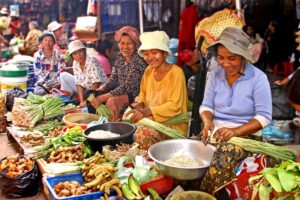
Ubud Morning Market (Pasar Ubud): Operating 5–7 AM daily in Ubud’s central market building and surrounding streets. The most concentrated Balinese food culture experience available on the island — fresh tempeh, jamu sellers, pisang goreng stalls, coconut vendors, cooked rice dishes wrapped in banana leaves, and the particular atmosphere of a market operating at full capacity before the tourist day begins. Arrive by 6 AM for the fullest experience. Free entry, cash only.
Badung Market, Denpasar: Bali’s largest traditional market — two floors of produce, spice, and food stalls selling every ingredient in Balinese cooking at the prices local people actually pay. Not a tourist market — a working food supply infrastructure that feeds the island. The spice section alone is worth the Grab ride from Seminyak (IDR 40,000). Buy fresh turmeric, lemongrass, galangal, and kaffir lime leaves to take home in your checked luggage — quantities that would cost ₹500 in an Indian spice market cost IDR 10,000 here.
Jalan Dewi Sita, Ubud: Ubud’s best food street — organic cafés, traditional warungs, Balinese restaurants, and international food coexisting on a single pedestrian-friendly lane. Walking the full length at dinner time and choosing based on smell and atmosphere produces consistently excellent results.
Canggu Food Scene: Jalan Batu Bolong and the surrounding streets — Bali’s most creative café and food scene, with specialty coffee, innovative Balinese-international fusion, excellent smoothie bowls, and some of the best brunch options on the island. More expensive than traditional warungs but genuinely inventive food that uses Bali’s extraordinary tropical produce in ways that no warung attempts.
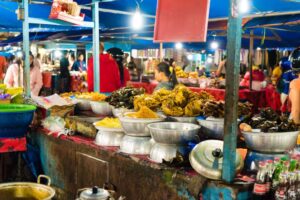
Kreneng Night Market, Denpasar: Operating from 6 PM onwards — a large evening market with dozens of food stalls serving Balinese, Javanese, and Indonesian dishes at genuinely local prices. The most authentic evening food experience available close to south Bali. Take a Grab (IDR 50,000 from Seminyak) and eat your way through three or four stalls for IDR 80,000 total.
Practical Food Tips for Indians in Bali {#practical-tips}
Always check for shrimp paste in vegetarian dishes: Terasi (shrimp paste) is used as a flavour base in many Balinese preparations that appear vegetarian from the menu description. Say “tidak pakai terasi” (without shrimp paste) when ordering at warungs if you’re strictly vegetarian or have shellfish allergies.
Cash for food markets and warungs: Traditional warungs and market food stalls operate entirely on cash. Keep IDR 100,000–₹200,000 (₹500–₹1,000) in small denominations for food throughout the day. Large notes (IDR 100,000) cause change problems at market stalls — carry IDR 10,000 and IDR 20,000 notes specifically.
Food safety: Bali’s food safety record at traditional markets and warungs is generally good for a Southeast Asian destination. Standard precautions: eat freshly cooked food (visible cooking is reassuring), avoid pre-cooked dishes that have been sitting at ambient temperature for hours, drink only bottled or filtered water. Fresh coconut water from the sealed green nut is always safe.
The Bali belly reality: Every traveler to Southeast Asia encounters digestive adjustment in the first 1–3 days as the gut adapts to a new food microbiome. This is not illness — it is adaptation. Carry oral rehydration salts and basic probiotic capsules from home for the adjustment period. By day three, most Indian travelers have fully adapted and are eating adventurously without issue.
Tipping at warungs and restaurants: Not expected at warungs — the price is the price. At tourist-facing restaurants, 10% is appreciated but not mandatory. Many higher-end restaurants include a 10% service charge. Check the bill before adding additional tip.
Useful food phrases: “Pedas sekali” (very spicy — to warn or request), “Tidak pedas” (not spicy), “Tanpa daging” (without meat), “Vegetarian” (understood everywhere in tourist areas), “Berapa harganya?” (how much?), “Enak sekali!” (very delicious — use this and watch the cook’s face transform).
Best Time To Visit Bali for Food Experiences {#best-time}
April to June — Shoulder Season: Post-harvest period in many agricultural areas means fresh tempeh, new season rice, and the particular tropical produce abundance that follows a wet season. Markets are full, prices are pre-peak, and the food energy on the island is high without the August visitor numbers.
July to August — Peak Season: All food experiences are available but popular restaurants and markets are busiest. Ubud Morning Market is worth the slight additional crowd. Food festival events sometimes occur in this window — check Visit Bali’s event calendar.
September to October: My favourite food window in Bali. Pre-harvest rice terraces at their most golden and photogenic. Post-peak tourist numbers mean warungs have more time and attention for individual customers. Cool evenings in Ubud make outdoor dining exceptional.
November to March — Wet Season: The fresh produce abundance of the wet season means Bali’s tropical fruits — mangosteen, rambutan, salak, durian — are at peak availability and lowest price. Durian season specifically (November–February) is worth experiencing for curious Indian travelers who have never encountered the fruit in its fresh form — it smells overwhelmingly, tastes like nothing else, and divides every group of travelers along exactly the lines you’d expect.
5-Day Bali Food Itinerary {#itinerary}
Day 1 — Arrival + South Bali Food Introduction Land at Ngurah Rai, Grab to Seminyak accommodation. Late afternoon: walk Jalan Kayu Aya food corridor — identify three restaurants you want to return to. Evening: dinner at a Seminyak warung (nasi campur, IDR 40,000). Pisang goreng from a street vendor for dessert (IDR 10,000). Food spend: IDR 60,000–₹100,000 (₹300–₹500)
Day 2 — Ubud Morning Market + Traditional Food Day 4:45 AM alarm. Grab to Ubud Morning Market by 5:30 AM (last market activity by 7 AM). Buy: jamu from the market stall, fresh coconut, banana leaf rice parcels. Breakfast at the market for IDR 30,000. Mid-morning: warung nasi campur lunch on Jalan Dewi Sita. Afternoon: Betutu Men Tempeh for bebek betutu dinner (pre-ordered at noon). Gado gado from a cart as a snack. Food spend: IDR 120,000–₹200,000 (₹600–₹1,000)
Day 3 — Kintamani Coffee + Rice Terrace Lunch Morning drive to Kintamani highlands. Coffee plantation tour and tasting (IDR 50,000). Lunch at a Kintamani restaurant overlooking the caldera (the view is worth the slight premium). Afternoon: Ubud satay from a street stall (IDR 30,000). Evening: tempeh goreng and nasi goreng at a residential warung away from the tourist main street. Food spend: IDR 150,000–₹250,000 (₹750–₹1,250)
Day 4 — Denpasar Market + Street Food Night Morning Grab to Badung Market, Denpasar (buy spices to take home, eat soto ayam from the market food section, IDR 25,000). Afternoon: return to Seminyak or Canggu. Evening: Grab to Kreneng Night Market — eat at three different stalls for IDR 80,000 total. Es campur dessert from a market stall (IDR 20,000). Food spend: IDR 130,000–₹200,000 (₹650–₹1,000)
Day 5 — Canggu Café + Departure Meal Morning: Canggu specialty coffee at Seniman or a Jalan Batu Bolong café (IDR 45,000). Smoothie bowl for breakfast (IDR 55,000). Final nasi goreng lunch from a warung before airport transfer. Emergency coconut water purchase at the airport for the flight. Food spend: IDR 120,000–₹200,000 (₹600–₹1,000)
Want the complete Bali experience arranged — accommodation, transport, and guided food experiences included? The Tripyverse Bali Tour Package covers the island comprehensively. For couples combining romance and food exploration, the Tripyverse Bali Romance Escape and Bali Honeymoon Package build intimate dining experiences into the itinerary. For groups, the Tripyverse Bali Bliss 5N/6D handles every element.
Budget Breakdown {#budget}
| Food Style | Daily Food Budget | What You Eat |
| Full Local (warung only) | IDR 80,000–₹130,000 (₹400–₹650) | Nasi goreng, nasi campur, tempeh, satay, coconut water |
| Mix Local + Café | IDR 150,000–₹250,000 (₹750–₹1,250) | Add specialty coffee, one café meal, market snacks |
| One Daily Splurge | IDR 300,000–₹500,000 (₹1,500–₹2,500) | Add bebek betutu restaurant, Kintamani coffee tour |
| Full Foodie Experience | IDR 600,000–₹1,000,000 (₹3,000–₹5,000) | Premium restaurants, cooking class, coffee plantation |
The extraordinary reality of Bali’s food for Indian travelers: the IDR 80,000–₹130,000 daily budget delivers genuinely world-class eating. The warung nasi campur at IDR 40,000 competes with everything on the tourist restaurant menu at four times the price on every dimension except ambience. Spending more in Bali buys you atmosphere, view, and occasionally greater ingredient quality — not fundamentally better food.
For the complete cost breakdown of a Bali trip from India, our Bali Budget Trip from India 2026: Real Costs & Tips covers every expense category with real numbers.

Final Verdict — Honest Assessment of Bali Food for Indians {#verdict}
Bali’s food scene is one of the most naturally accessible international cuisines for Indian travelers — and one of the most consistently underestimated in pre-trip research. The masala packet stays at home. The emergency provisions stay in the drawer.
The spice architecture of Balinese cooking feels like a familiar language spoken in a different accent — the same fundamental ingredients (turmeric, ginger, garlic, chilli, coconut) arranged in a completely different order to produce completely different results. Jamu feels like haldi doodh’s Indonesian cousin. Gado gado’s peanut sauce feels like a chutney that got seriously ambitious. Tempeh goreng feels like the tofu evolution we’d been waiting for. And bebek betutu feels like slow cooking taken to a spiritual level.
One honest note for Indian vegetarian travelers: Shrimp paste is genuinely present in many Balinese dishes that appear vegetarian from the menu. This requires explicit communication rather than assumption. The phrase “tidak pakai terasi, saya vegetarian” (without shrimp paste, I am vegetarian) communicates clearly at any warung and is understood at every tourist-area restaurant. This is a five-second conversation that ensures the next 45 minutes of eating are exactly what you intended.
Bali food is perfect for: Indian vegetarians who engage actively with the menu, non-vegetarian Indian travelers who want maximum new flavour experience at minimal cost, food-curious travelers who want to understand a complete food culture rather than just eat familiar food abroad, and anyone who has underestimated how good a ₹150 meal can be when it’s made by someone who has been making it for thirty years.
For the complete practical Bali travel picture — transport hacks, visa tips, money saving strategies, and itinerary planning — our Bali Travel Tips 2026: Everything You Must Know covers every practical detail. For the hidden Bali beyond the food streets — the quiet rice terrace valleys, secret beaches, and peaceful temples that make the island extraordinary beyond its cuisine — our Hidden Gems in Bali 2026: Secret Spots for Peaceful Travel is the essential companion guide.
Planning to combine Bali with a Dubai stopover on your India connection? Our Dubai Food Guide 2026: Best Street Food & Restaurants makes the most of any layover — the contrast between Bali’s warung culture and Dubai’s extraordinary multicultural food scene tells the complete story of Asia’s food diversity in two stops.
For the mountain and backwater counterpart to Bali’s tropical food culture, our Kerala Food Guide 2026: Traditional Dishes You Must Try and the Hidden Places in Kerala 2026 complete the picture of Asia’s two most food-rich tropical destinations for Indian travelers — the coconut connects them both.
And for India’s mountain north as the complete contrast to all this tropical warmth and coconut, our Manali Travel Guide — 7 Best Places + Hidden Gems (2026) and Secret Places in Manali — 7 Hidden Gems You Must Visit in 2026 complete the Asia travel picture — from Bali’s warung breakfasts to Manali’s maggi at 3,000 metres.