

📋 Table of Contents
- The Mistake That Taught Me Everything About Bali Travel
- Understanding Bali Before You Arrive
- Getting To Bali — Smart Booking Tips
- Visa, Entry & Airport Tips
- Getting Around Bali Without Overpaying
- Where To Stay — Location Decisions That Matter
- 25 Essential Bali Travel Tips
- Practical Travel Essentials
- Best Time To Visit Bali
- 7-Day Bali Itinerary
- Budget Breakdown
- Final Verdict — Honest Assessment
The Mistake That Taught Me Everything About Bali Travel {#mistake}

I paid IDR 350,000 for a taxi from Ngurah Rai Airport to Seminyak on my first Bali trip.
The ride took forty minutes. The driver was pleasant, the car was air-conditioned, and I tipped generously because I had no idea that the correct price for that journey — using Grab, which I didn’t yet know operated in Bali — was IDR 85,000. I had spent the equivalent of ₹1,325 on a journey that should have cost ₹425.
This would have been a minor irritation if it had been an isolated incident. But the same pattern continued across the first two days: a private driver quote I accepted without negotiating, a beach club entry fee I paid without realizing a public beach with an identical view was forty metres away, a restaurant I chose because it had an English menu rather than walking another two minutes to find the warung where the actual neighbourhood ate lunch.
By day three I had recalibrated. I downloaded Grab. I started asking accommodation staff where they ate rather than where they sent guests. I rented a scooter. The trip transformed so dramatically from day three onwards that it felt like arriving in a different country.
This guide exists so your day one looks like my day three. Every tip here cost me either money, time, or a missed experience to learn. You get them all for free.
Understanding Bali Before You Arrive {#understanding}
Bali is a small Hindu-majority island — approximately 5,780 square kilometres, roughly the size of Goa — within the world’s largest Muslim country Indonesia. This religious distinction created a culture unlike anything else in Southeast Asia: elaborate daily offerings, living temple traditions, performing arts that exist as genuine spiritual practice rather than tourist performance, and a relationship between the physical and spiritual world that permeates every visual detail of the island from the flower arrangement on your breakfast tray to the carved stone gateway at the entrance of every compound.

Understanding this cultural context before you arrive changes what you see when you get there. The offerings (canang sari) placed on the ground every morning are not decoration — they are daily prayers. The temple ceremonies that close roads and fill the air with gamelan music are not performances for visitors — they are the community’s spiritual calendar in action. Approaching them with this understanding produces encounters that tourists who treat them as photographic inconveniences will never access.
Geographically, Bali divides into five distinct travel zones with different characters: south Bali (beaches, nightlife, surf), Ubud (culture, rice terraces, arts), east Bali (authenticity, diving, volcanic landscape), north Bali (waterfalls, highlands, coffee plantations), and the Bukit Peninsula (dramatic cliffs, premium surf, sunset views). Planning which zones you want to prioritize before booking your accommodation determines whether your Bali trip is frustrating and expensive or smooth and extraordinary.
Getting To Bali — Smart Booking Tips {#getting-there}
For Indian travelers specifically:
Ngurah Rai International Airport (DPS) in Denpasar connects from India via Singapore, Kuala Lumpur, Hong Kong, and increasingly direct. Mumbai to Bali runs 7–9 hours with connection. Delhi to Bali takes 8–11 hours. Return fares from ₹18,000–₹35,000 depending on airline, season, and booking timing.
Smart booking strategy:
Book 8–12 weeks ahead for the best fare-to-seat combination. Set Google Flights fare alerts immediately when your dates are decided — I’ve saved ₹3,000–₹6,000 on single bookings this way. Singapore Airlines via Singapore and AirAsia via Kuala Lumpur are the most reliable India-Bali connections. August and December are peak months — fares spike 40–60%. May, June, September, and October offer excellent conditions at significantly lower airfares.
Open-jaw booking: Consider flying into Bali and out of a different Indonesian city if your itinerary extends beyond Bali — the fare difference is often minimal and the logistical saving is significant.
For travelers who want the complete Bali trip arranged without individual booking complexity — flights, accommodation, transfers, and guided experiences in one transparent package — the Tripyverse Bali Tour Package covers the island’s essential circuit comprehensively. For couples, the Tripyverse Bali Honeymoon Package and Bali Romance Escape curate the most intimate Bali experience. For group travel, the Tripyverse Bali Bliss 5N/6D Group Package handles every element in one booking.
Visa, Entry & Airport Tips {#visa-tips}

Visa on Arrival (VOA): Indian passport holders obtain a Bali VOA at Ngurah Rai Airport — USD 35 (approximately ₹2,900), valid 30 days with one 30-day extension available. The VOA queue can run 45–90 minutes during peak season arrivals.
The smarter approach: Apply for Indonesia’s e-VOA online at molina.imigrasi.go.id before departure. Cost is identical. Processing takes 3–5 business days. You access the dedicated e-VOA lane at the airport which typically moves in under 10 minutes. This single preparation step saves 45–80 minutes on arrival when you are tired, carrying luggage, and ready to reach your accommodation.
Airport money — never exchange here: The airport currency exchange rates are the worst on the island — typically 15–20% below the rates available at licensed money changers in Kuta, Seminyak, and Ubud. Withdraw only enough IDR from the airport ATM (carry an ATM card that rebates foreign fees if possible) to cover your taxi or Grab ride to accommodation. Exchange the bulk of your currency in town.
Airport transport — use Grab: My IDR 350,000 taxi mistake from the opening story happened because I didn’t know Grab operates from Ngurah Rai Airport. The designated Grab pickup point is a 5-minute walk from the arrivals hall. A Grab to Seminyak or Kuta costs IDR 80,000–₹120,000 (₹400–₹600). A Grab to Ubud costs IDR 200,000–₹280,000 (₹1,000–₹1,400). The taxi operator price for identical journeys is typically 2–3 times higher. Download Grab before landing.
Getting Around Bali Without Overpaying {#getting-around}

This is the area where most Bali tourists lose significant money — and where smart travelers make their greatest savings.
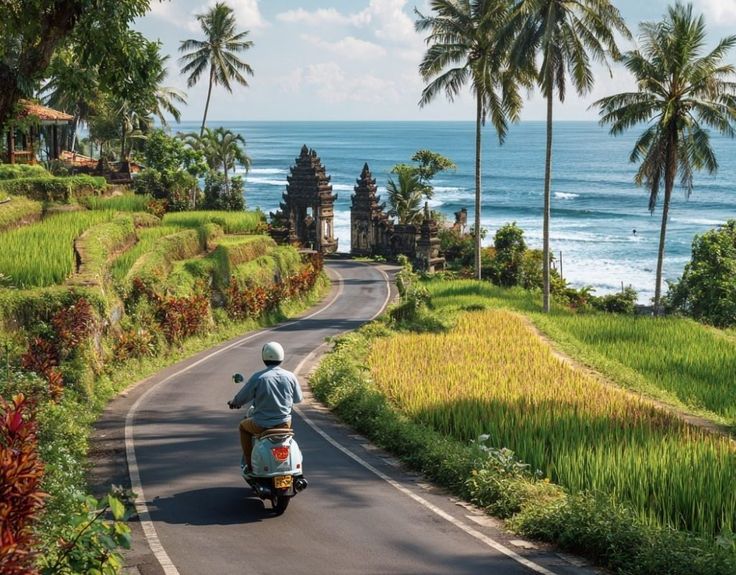
Scooter rental — your most powerful tool: A scooter costs IDR 70,000–₹100,000 per day (₹350–₹500). It gives you complete freedom: turn down any lane, stop at any view, follow roads that narrow to tracks, discover the hidden Bali that private driver itineraries never include. For confident riders, this is the single best transport decision you can make in Bali. For our complete guide to Bali’s hidden spots that scooter access unlocks, read Hidden Gems in Bali 2026: Secret Spots for Peaceful Travel.
Grab — for urban south Bali: Grab operates in Kuta, Seminyak, Canggu, Denpasar, and increasingly in Ubud. Always the most transparent pricing available in these areas. Never available at tourist attractions due to local taxi regulation — use for accommodation-to-restaurant and accommodation-to-airport journeys in urban zones.
Private car with driver — for multi-destination days: Full-day hire (8–10 hours) costs IDR 500,000–₹700,000 (₹2,500–₹3,500). Always negotiate the full-day rate before departure. Ask your accommodation to recommend a trusted driver — this produces better quality, more flexible service than booking through tourist agencies at significantly lower rates.
Blue Bird taxis — only metered taxi worth using: Identified by distinctive blue colouring. All other taxi operators in Bali use negotiated fares — always agree on the price before entering any non-Blue Bird, non-Grab vehicle.
The navigation rule: Google Maps works reliably across Bali including rural east and north Bali roads. Download offline maps for the regions you’re visiting before leaving accommodation each morning.
Where To Stay — Location Decisions That Matter {#where-to-stay}
The single most important accommodation decision in Bali is not the room — it’s the location relative to the experiences you want to have.
South Bali (Seminyak, Canggu, Kuta) — Best for beach life, nightlife, cafés, surf, and easy access to the airport. Most expensive and most crowded zone.
Ubud — Best for culture, rice terraces, yoga, arts, and spiritual experiences. The most atmospherically authentic base on the island.
East Bali (Sidemen, Amed, Candidasa) — Best for solitude, authentic village life, diving, and the island’s most dramatic volcanic landscape at a fraction of south Bali’s prices.
North Bali (Munduk, Singaraja) — Best for waterfalls, highland plantations, and a genuinely local Bali experience that tourists haven’t yet arrived in significant numbers to disrupt.
Budget Tier — IDR 150,000–₹400,000 per night (₹750–₹2,000): Canggu surf hostels — Modern facilities, social atmosphere, surf-adjacent location from IDR 150,000. Sidemen Valley guesthouses — Family-run rooms with rice terrace views from IDR 200,000. Munduk homestays — Highland village homes from IDR 180,000 including home-cooked breakfast.
Mid-Range Tier — IDR 500,000–₹1,500,000 per night (₹2,500–₹7,500): Bisma Eight, Ubud — Hillside jungle and rice terrace views, infinity pool. The Layar, Seminyak — Private pool villa at mid-range pricing. Puri Lumbung Cottages, Munduk — Traditional rice barn accommodation in highlands.
Luxury Tier — IDR 2,000,000+ per night (₹10,000+): Four Seasons Sayan, Ubud — Suspended over the Ayung River gorge. Alila Villas Uluwatu — Clifftop private pool overlooking the Indian Ocean. Amankila, East Bali — Three-tiered infinity pools above the Lombok Strait.
25 Essential Bali Travel Tips {#essential-tips}
Tips 1–5: Planning & Booking {#planning-tips}
Tip 1 — Apply for e-VOA before departure, always. The IDR 35 cost is identical to the airport VOA. The time saving is 45–80 minutes. Apply at molina.imigrasi.go.id at least 5 business days before travel. This is the single most time-efficient pre-trip preparation step available.
Tip 2 — Download Grab before landing at Ngurah Rai. The app requires a phone number registration that takes 5 minutes in good WiFi. Do it at home. At the airport on arrival, exhausted and carrying bags, is not the moment to register a new app while taxi touts quote you three times the correct price.
Tip 3 — Book accommodation in multiple zones rather than one central base. Bali is not a city — it’s an island with distinct geographic zones separated by 1–3 hours of travel. Spending your entire trip based in Seminyak and day-tripping to east Bali adds 5–6 hours of transport to every day you want to see something genuinely beautiful. Book 2 nights in south Bali, 3 nights in Ubud, 2 nights in east Bali — and you wake up where the experiences are.

Tip 4 — Book Tegallalang before 8 AM or after 4 PM — or don’t go at midday. The famous rice terraces are genuinely beautiful. They are also genuinely crowded between 9 AM and 4 PM with tour buses from south Bali. The light before 8 AM and after 4 PM is also categorically better for photography. Early arrival solves both problems simultaneously.
Tip 5 — Kuta vs Seminyak vs Canggu — know the difference before booking. These three south Bali resort areas are adjacent and completely different. Kuta is dense, commercial, and oriented toward budget package tourism. Seminyak is more refined — better restaurants, beach clubs, boutiques. Canggu is the creative, surf-and-café district preferred by digital nomads and younger independent travelers. Book Seminyak or Canggu rather than Kuta unless your budget requires otherwise.
Tips 6–10: Money & Budget Hacks {#money-tips}
Tip 6 — Never exchange currency at the airport. The airport rates are 15–20% worse than licensed in-town money changers. Withdraw IDR 300,000–₹500,000 from the airport ATM for immediate transport needs and exchange everything else at Dirgahayu or Central Kuta money changers in town. Count your money at the counter before leaving — street money changer counting tricks are real and consistent.
Tip 7 — The Grab vs taxi price difference is never small. The airport taxi to Seminyak at IDR 350,000 versus Grab at IDR 85,000 is not an exceptional difference — it is the standard ratio. For every urban journey in Bali where Grab operates, use it. The aggregate saving over 7 days of urban transport is genuinely significant.
Tip 8 — Eat at warungs, not tourist restaurants. A warung (traditional Indonesian food stall or small restaurant) serves nasi goreng, mie goreng, satay, fresh fish, and Balinese curries for IDR 25,000–₹50,000 (₹125–₹250) per meal. The identical dishes at a tourist-facing restaurant in central Seminyak cost IDR 120,000–₹200,000 (₹600–₹1,000). The warung food is consistently better. The heuristic: if the menu has photographs and prices listed in multiple currencies, walk one street further.

Tip 9 — Public beaches vs beach clubs — know the free option first. Bali’s private beach clubs charge IDR 200,000–₹500,000 (₹1,000–₹2,500) minimum spend or entry fee. Seminyak’s public beach — the same sand, the same sunset, the same ocean — is free. Nyang Nyang Beach is free. Amed Beach is free. Padang Padang Beach charges IDR 15,000 (₹75) entry. Budget for one beach club experience if the atmosphere appeals — and use public beaches for the other six days.
Tip 10 — Negotiate everything except metered taxis and Grab. Accommodation rates, private driver fees, souvenir prices, massage prices, and activity package rates are all negotiable in Bali. Start at 50% of the asking price and settle around 65–70%. This applies to surf lessons, cooking classes, bike rentals, guided treks, and any privately quoted rate. The only prices that are not negotiable are Blue Bird metered taxi fares and Grab app fares — these are accurate and fair.
Tips 11–15: Transport & Navigation {#transport-tips}

Tip 11 — Rent a scooter if you’re a confident rider. IDR 70,000–₹100,000 per day (₹350–₹500) for complete transport freedom across the entire island. The scooter is the difference between visiting the tourist Bali and discovering the actual Bali. Wear a helmet always — Bali roads are genuinely unpredictable, and the helmet quality of most rentals is adequate but bring your own for safety if you plan extended riding.
Tip 12 — Bali traffic peaks between 8–10 AM and 5–7 PM in south Bali. Plan temple visits, market trips, and inter-zone travel outside these windows. The Seminyak-to-Ubud drive that takes 90 minutes at 7 AM takes 2.5+ hours at 9 AM in peak season. Time your departures accordingly.
Tip 13 — Download offline Google Maps for east and north Bali specifically. Signal drops in east Bali plantation roads, north Bali highland villages, and jungle areas near waterfalls. An offline map saves the specific situation of being at a Sekumpul Waterfall trailhead junction with no signal and three identical-looking paths.
Tip 14 — The correct way to travel Ubud without a scooter. Ubud has no reliable public transport. Grab works within a limited radius of central Ubud. For the Campuhan Ridge Walk, Tegallalang, and nearby temples, a private driver for a half-day (IDR 300,000–₹400,000, approximately ₹1,500–₹2,000) is the most practical option. Book through your accommodation rather than street touts — the price is identical and the reliability is significantly better.
Tip 15 — The Bali taxi touting system — how to navigate it. At major tourist sites, airports, and beach areas, taxi touts will approach constantly with quoted prices that are typically 2–4 times the Grab rate. The correct response is not negotiation — it’s declining and opening Grab. If Grab isn’t available at that specific location, negotiate from a starting point of 40% below the tout’s opening price and expect to settle around 60–70% of it.
Tips 16–20: Food, Culture & Respect {#culture-tips}

Tip 16 — Step over offerings, never on them. The canang sari flower and incense offerings placed on the ground every morning are genuine prayers rather than decoration. Stepping on them is considered deeply disrespectful. In busy tourist areas where offerings are placed on pavements, step over rather than through them. This takes three seconds of awareness and communicates more respect than any amount of cultural sensitivity language.

Tip 17 — Always carry a sarong in your day bag. Every temple in Bali requires covering the lower body. Most temples provide rental sarongs (IDR 10,000–₹20,000) at the entrance, but carrying your own lightweight sarong costs nothing additional, weighs nothing in a day bag, and eliminates the rental situation entirely. Buy one at any market (IDR 30,000–₹50,000, approximately ₹150–₹250) on your first day.
Tip 18 — Ask before photographing temple ceremonies. Balinese Hindu ceremonies welcome respectful observation but not aggressive photography. Stand at a respectful distance, don’t use flash, and ask (gesture works fine) before photographing priests or active ritual participants. Most ceremony participants will actively welcome you closer when approached with genuine respectful curiosity rather than a camera immediately raised.
Tip 19 — The warung ordering system — understand it before sitting down. Many Bali warungs display their dishes in glass cases at the entrance rather than providing menus — you point at what you want, they plate it, you eat, and pay at the end. The price is often not displayed — ask “berapa?” (how much?) before ordering if budget is a concern. The amount will be fair. This system is the most authentic and affordable way to eat in Bali and completely non-intimidating once you’ve done it once.
Tip 20 — Learn five Indonesian phrases. “Terima kasih” (thank you), “Berapa harganya?” (how much?), “Tolong” (please), “Tidak mau” (I don’t want / polite decline for touts), and “Enak sekali” (very delicious — the most powerful warung phrase available). Using even one of these phrases produces a response from a Balinese local that makes you feel like you’ve unlocked access to a version of the island most tourists never reach.
Tips 21–25: Safety, Health & Packing {#safety-tips}
Tip 21 — Bali belly is real — prevention is cheaper than treatment. Drink only bottled or filtered water. Avoid ice in budget warungs and street stalls (fine at restaurants). Eat freshly cooked food rather than dishes that have been sitting out. Peel all fruit yourself. Carry oral rehydration salts and basic antidiarrheal medication from home — pharmacy versions in tourist areas cost 3–4 times the Indian pharmacy price for identical products.
Tip 22 — Motorbike safety is genuinely important. Bali has one of the highest motorbike accident rates in Southeast Asia among tourists. Wear a proper helmet (not the decorative ones some rental shops offer). Never ride after even one drink. Slow down on wet roads — Bali’s tiles and compacted earth become genuinely slippery in rain. Wear shoes rather than sandals for any ride exceeding 20 minutes.
Tip 23 — Altitude medication for Mount Batur trekkers. Mount Batur at 1,717 metres is not high enough for acute altitude sickness but is high enough that poorly acclimatized travelers from sea-level cities can experience headaches and nausea at the summit. Stay hydrated the day before, eat a proper meal before the 4 AM start, and carry a light snack for the summit. Descend immediately if dizziness develops rather than waiting at the top.
Tip 24 — Sunscreen and mosquito repellent from home. Sunscreen in tourist areas of Bali costs 3–4 times the Indian retail price. Mosquito repellent is similarly overpriced at tourist-facing pharmacies. DEET-based repellent is worth bringing from home — dengue fever is present in Bali and the prevention is straightforward. Apply repellent in the evening specifically — dengue mosquitoes are most active at dawn and dusk.

Tip 25 — The monkey forest bag security rule. At Ubud’s Sacred Monkey Forest and Uluwatu Temple, long-tailed macaques have a highly developed appreciation for sunglasses, phones, water bottles, hats, earrings, and anything else that catches the light or can be grabbed. Keep all valuables in a zipped bag held in front of your body rather than a side or back bag. Don’t carry food that is visible or smellable. If a monkey grabs something, surrender it immediately — they return items for food trade and the negotiation is less amusing when it’s your phone.
Practical Travel Essentials {#practical}
Currency: Indonesian Rupiah (IDR). 1 IDR ≈ ₹0.005. IDR 100,000 ≈ ₹500. The large denomination numbers make it easy to mentally misplace a zero — always double-check calculations before paying.
Cash vs Card: Bali is primarily cash-based outside major hotels and restaurants in south Bali. ATMs throughout the island charge IDR 25,000–₹50,000 per withdrawal from most foreign cards. Withdraw larger amounts less frequently to minimize fees. Cards work at all major hotels, most restaurants in Seminyak and Ubud, and most established tourist activity operators.
SIM Card: Buy Telkomsel at Ngurah Rai Airport arrivals hall — IDR 80,000–₹150,000 for 10–15 days of solid data. Telkomsel has the best rural coverage of all Indonesian carriers including in east Bali’s plantation roads and north Bali’s highland villages where other networks drop.
Electricity: Indonesian plugs are Type C (two round pins) at 220V/50Hz — the same as India. Most Indian phone chargers work directly. Check your laptop charger’s voltage rating if traveling with one.
Language: Indonesian (Bahasa Indonesia) is the national language. Balinese is spoken locally. English is widely understood in tourist areas. In rural east and north Bali, basic Indonesian phrases are significantly more useful than English.
Safety: Bali is very safe for international travelers by any regional standard. Solo female travel is widely considered safe. Drug laws are extremely severe — Indonesia imposes mandatory death penalty for drug trafficking. This is not a risk worth taking under any circumstances.
Best Time To Visit Bali {#best-time}
April to June — Shoulder Season Sweet Spot: Post-rainy season lushness combined with pre-peak crowd levels and pre-peak pricing. The rice terraces are vivid green, the waterfalls are running strong, humidity is comfortable, and accommodation and flights are 20–30% below August pricing. My consistent first recommendation for any Bali trip.
July to August — Peak Season: School holiday influx from Australia, Europe, and increasingly India makes this the busiest and most expensive window. Accommodations fill weeks ahead. Popular attractions are at maximum capacity. Weather is excellent. Visit if these are your only available dates — just book everything 8–12 weeks ahead.

September to October — Second Sweet Spot: Post-peak pricing returns, crowds thin significantly, weather remains excellent, and the island feels genuinely more relaxed than August. October specifically offers the combination of good weather, green landscape from early-season rains, and manageable tourist numbers that makes it one of Bali’s finest months.
November to March — Wet Season: Daily afternoon showers (typically 1–3 hours) rather than all-day rain. Mornings frequently beautiful and clear. Accommodation prices drop 30–40%. Rice terraces and highlands reach maximum green. Waterfalls at peak flow. Actively recommended for budget travelers and anyone who wants to experience a more local, less tourist-saturated Bali. The phrase “Bali in the wet season is terrible” is spread by people who haven’t been.
December to January — Festive Peak: New Year period brings significant international visitor numbers and matching price spikes. Christmas in Bali is genuinely festive and worth experiencing if your budget accommodates peak pricing.
My recommendation: May, September, or October for the optimal combination of conditions, crowd levels, and pricing.
7-Day Bali Itinerary — Built Around These Tips {#itinerary}
Day 1 — Arrival + South Bali Orientation Land at Ngurah Rai. e-VOA dedicated lane (pre-applied). Grab to Seminyak accommodation (IDR 85,000). Exchange currency at Dirgahayu money changer (not airport). Afternoon: Seminyak beach walk, sunset at La Plancha (free entry, drink minimum). Warung dinner for IDR 40,000. Daily spend: IDR 300,000–₹500,000 (₹1,500–₹2,500)

Day 2 — Uluwatu + Kecak Dance Private driver to Uluwatu (IDR 350,000 return including waiting). Uluwatu Temple (IDR 50,000 entry) — hold bags tight, macaques active. Kecak Fire Dance at sunset (IDR 100,000). Jimbaran Bay seafood dinner on the beach (IDR 150,000–₹250,000). Return to Seminyak. Daily spend: IDR 700,000–₹1,000,000 (₹3,500–₹5,000)
Day 3 — Transfer to Ubud + Tegallalang 7 AM departure from Seminyak. Private driver via Tegallalang (arrive 8:30 AM — before tour buses). Valley floor walk (free). Arrive Ubud by noon. Afternoon: Sacred Monkey Forest (IDR 80,000) — bag secured, no food visible. Evening: Ubud Palace Legong performance (IDR 100,000). Daily spend: IDR 600,000–₹900,000 (₹3,000–₹4,500)
Day 4 — Ubud Dawn + Culture 5:45 AM: Campuhan Ridge Walk (free, 2 hours, bring phone torch for first 15 minutes). 7 AM: Ubud market — buy sarong if not yet purchased (IDR 40,000). Afternoon: cooking class or temple circuit with private driver (IDR 350,000–₹500,000). Evening: restaurant with rice terrace view — one planned splurge meal. Daily spend: IDR 500,000–₹800,000 (₹2,500–₹4,000)

Day 5 — Mount Batur Sunrise Trek 2 AM pickup. 4 AM trek start. Summit sunrise. Descent through Kintamani village. Return to Ubud by 10 AM. Afternoon rest — this is mandatory, not optional. Evening: gentle Ubud exploration. Daily spend: IDR 700,000–₹1,000,000 (₹3,500–₹5,000) including guide and transfer
Day 6 — East Bali Hidden Gems Scooter rental for the day (IDR 80,000). Sidemen Valley rice terrace walk (free). Tirta Gangga water palace swim (IDR 65,000 total). Amed Beach sunset. Overnight Amed bungalow. Daily spend: IDR 350,000–₹600,000 (₹1,750–₹3,000)
Day 7 — Amed Dawn + Departure 5:30 AM: Amed beach for Mount Agung reflection at dawn. Return to airport via private driver (IDR 400,000–₹500,000, 3 hours). Depart with a full memory card and a bank account that, if you followed these tips, looks significantly better than it would have. Daily spend: IDR 500,000–₹700,000 (₹2,500–₹3,500)
Budget Breakdown {#budget}
| Expense | Budget Option | Mid-Range | Luxury |
| Return Flights | ₹18,000–₹25,000 | ₹28,000–₹40,000 | ₹50,000+ |
| e-VOA | ₹2,900 | ₹2,900 | ₹2,900 |
| Accommodation — 7 nights | ₹5,250–₹14,000 | ₹17,500–₹52,500 | ₹70,000+ |
| Transport — 7 days | ₹3,500–₹7,000 | ₹10,500–₹17,500 | ₹25,000+ |
| Food — 7 days | ₹3,500–₹5,250 | ₹8,750–₹17,500 | ₹35,000+ |
| Activities & Entry | ₹4,000–₹7,000 | ₹10,000–₹17,500 | ₹25,000+ |
| SIM + Miscellaneous | ₹1,500–₹2,500 | ₹2,500–₹4,000 | ₹5,000+ |
| Total Per Person | ₹38,650–₹63,650 | ₹80,150–₹1,51,900 | ₹2,12,900+ |
Where to save: Grab over taxis, warungs over tourist restaurants, scooter over private driver, public beaches over beach clubs, guesthouses in east Bali over south Bali villas, e-VOA application over airport queue time (not money, but time is money).
Where to splurge: The Kecak Fire Dance at Uluwatu (IDR 100,000 — best cultural performance value in Southeast Asia), Mount Batur guided sunrise trek (worth every rupee of the guide fee), and one properly conducted day in east Bali with a knowledgeable local driver who knows the back roads.
For our complete real-cost breakdown of a Bali trip from India with every expense transparently calculated, our Bali Budget Trip from India 2026: Real Costs & Tips covers every dirham — sorry, every rupiah — in full detail.

Final Verdict — Honest Assessment {#verdict}
Bali rewards preparation more generously than almost any destination in Asia. The gap between a tourist who arrives without these tips and one who arrives with them is not a gap in experience quality — it is a gap in cost, stress, and access to the version of the island that actually justifies the flight.
The island itself is extraordinary — the Kecak at Uluwatu, the Mount Batur sunrise, the rice terrace landscape, the daily spiritual practice visible everywhere from roadside shrines to ceremony processions that close entire streets. None of this requires expensive tours or luxury accommodation to access. It requires knowing where to look, when to arrive, what price to pay, and how to behave in a way that opens doors rather than closing them.
One honest drawback worth naming: Bali’s tourist infrastructure has become so comprehensive in south Bali and Ubud that it actively insulates visitors from genuine cultural encounter if you stay within its comfortable bounds. The temple experience that costs IDR 100,000 with a guide can be identical to the temple visit that costs IDR 20,000 if you arrive at the right time and behave with genuine curiosity. The authentic Bali is always available — it just requires choosing it over the packaged version that is always being offered more loudly.
These tips are perfect for: First-time Bali visitors who want to avoid the expensive mistakes that veterans made, Indian travelers specifically navigating the VOA, currency, and transport systems for the first time, budget travelers who want to extract maximum Bali per rupee, and any traveler who has heard Bali is overrated and wants to understand why that assessment applies only to the version of Bali that doesn’t use these tips.
For our complete guide to Bali’s hidden spots — the peaceful rice terrace valleys, secret beaches, and quiet temples that these tips help you access — our Hidden Gems in Bali 2026: Secret Spots for Peaceful Travel is the natural companion read to this guide.
And if you’re combining Bali with a Dubai stopover on the India connection — which many India-Bali routing options include — our Dubai Food Guide 2026: Best Street Food & Restaurants makes the most of even a 6-hour layover. The contrast between Bali’s warung culture and Dubai’s extraordinary multicultural street food scene tells the entire story of Asia’s food diversity in two stops.
For the mountain counterpart to Bali’s tropical landscapes, our Manali Travel Guide — 7 Best Places + Hidden Gems (2026) and Secret Places in Manali — 7 Hidden Gems You Must Visit in 2026 complete the picture — because the traveler who navigates Bali’s transport system correctly will find Manali’s hidden valleys with the same confident preparation.