


📋 Table of Contents
- Why Bali’s Hidden Side Will Change How You Travel
- Where Hidden Bali Lives
- How To Get There
- Getting Around Hidden Bali
- Where To Stay For Peaceful Bali
- 10 Hidden Gems in Bali for Peaceful Travel
- 1. Sidemen Valley — The Authentic Rice Terrace World
- 2. Munduk — The Misty Highland Village
- 3. Amed Beach — The Diver’s Secret Coast
- 4. Tirta Gangga — The Royal Water Palace Nobody Visits
- 5. Penglipuran Village — The Most Immaculate Village in Bali
- 6. Sekumpul Waterfall — The Hidden Cascade Worth Every Step
- 7. Trunyan Village — The Ancient Cemetery on the Lakeside
- 8. Nyang Nyang Beach — The Clifftop Secret Nobody Mentions
- 9. Jatiluwih Rice Terraces — UNESCO Terraces Without the Crowds
- 10. Pura Lempuyang — The Temple Most Tourists Photograph Wrong
- Practical Travel Tips
- Best Time To Visit
- 5-Day Hidden Bali Itinerary
- Budget Breakdown
- Final Verdict
Why Bali’s Hidden Side Will Change How You Travel {#why-hidden-bali}

The most peaceful moment I found in Bali happened by accident on a Tuesday morning.
I had taken a wrong turn on my scooter somewhere north of Ubud — following a road that narrowed from tarmac to concrete to packed earth before opening suddenly into a valley I hadn’t seen on any map, any blog, or any Instagram account I’d scrolled through during three weeks of pre-trip research. Below me, rice terraces dropped in green steps toward a river I could hear but not yet see. Three women were working the nearest terrace, their woven hats moving in slow rhythm. A rooster called from somewhere invisible. The air smelled of wet earth and something sweet I later identified as wild frangipani growing along the terrace walls.
I sat on my scooter for twenty minutes without taking a photograph. That felt like the correct response.
Everyone who travels to Bali encounters the island’s extraordinary surface — the Tegallalang swings, the Tanah Lot sunset, the Ubud traffic, the Kuta beach. These things are worth seeing. But the Bali that produces the twenty-minute scooter stops and the valley mornings and the conversations with rice farmers who have never had a tourist ask them a genuine question — that Bali requires a different kind of navigation.
This guide is entirely that navigation.
Where Hidden Bali Lives {#where-hidden-bali}
Hidden Bali concentrates in four geographic zones that standard itineraries consistently bypass. East Bali — the regencies of Karangasem and Klungkung — holds the island’s most authentic rice terrace landscapes, ancient royal architecture, and a coastline that receives a fraction of the south Bali visitor numbers. North Bali — the Buleleng regency — is cooler, quieter, and contains waterfalls, coffee plantations, and a diving coast that most Bali visitors never reach. Central Bali’s highland villages beyond the Ubud tourist corridor — Penglipuran, Kintamani’s outer villages, the Munduk highlands — offer a version of Balinese village life that has changed very little in a generation. And south Bali’s Bukit Peninsula has pockets of genuinely uncrowded coastline hidden from the main surf break tourism by nothing more than a longer walk.
Understanding this geographic map is the first step toward the peaceful Bali this guide describes.
How To Get There {#how-to-get}
Ngurah Rai International Airport (DPS) in Denpasar is Bali’s only international entry point — well connected from across Asia and from India specifically via Singapore, Kuala Lumpur, and Hong Kong connections.
From India: Mumbai to Bali takes 7–9 hours with one connection. Delhi to Bali runs 8–11 hours. Budget return fares from ₹18,000–₹35,000 depending on booking window and season. Book 8–12 weeks ahead for the best combination of price and seat availability.
Visa on Arrival: Indian passport holders obtain a Bali VOA at the airport for USD 35 (approximately ₹2,900), valid 30 days. Apply online via Indonesia’s e-VOA portal (molina.imigrasi.go.id) before departure to access the faster dedicated lane and avoid the VOA queue which can run 45 minutes in peak season.
If you want the complete Bali experience arranged seamlessly — accommodation, guided sightseeing, and transfers — the Tripyverse Bali Tour Package covers the island’s best destinations comprehensively. For group travel, the Tripyverse Bali Bliss 5N/6D Group Package handles every logistical element in one transparent booking. Couples seeking the most romantic hidden Bali experience will find the Tripyverse Bali Honeymoon Package and Bali Romance Escape both curated specifically around the island’s most intimate and beautiful corners.
For our complete overview of Bali’s mainstream top ten attractions alongside these hidden spots, read our full Bali Travel Guide 2026: 10 Amazing Places to Visit — and for the complete cost breakdown of a Bali trip from India, our Bali Budget Trip from India 2026: Real Costs & Tips covers every rupee with full transparency.
Getting Around Hidden Bali {#getting-around}
Reaching hidden Bali requires more transport independence than the standard tourist circuit — and the good news is that achieving this independence is genuinely straightforward.
Scooter rental is the single most effective tool for hidden Bali exploration. Daily rental costs IDR 70,000–₹100,000 (approximately ₹350–₹500). The freedom to turn down unmarked lanes, stop at viewpoints that don’t appear on any tourist map, and follow roads that narrow from tarmac to concrete to packed earth before opening into valleys of extraordinary beauty — this is the hidden Bali access that no private driver itinerary can replicate. Most hidden destinations in this guide are most authentically reached on two wheels.
Private car with local driver is the most practical option for multi-destination days in east and north Bali where distances are significant. A full-day hire costs IDR 500,000–₹700,000 (approximately ₹2,500–₹3,500). Always negotiate the full-day rate. Ask your accommodation to recommend a trusted driver who knows the back roads — the difference between a driver who knows only the tourist routes and one who knows the district is the difference between a good day and an extraordinary one.
Google Maps covers all of hidden Bali reliably including unpaved roads in east Bali and north Bali’s plantation tracks. Download offline maps before leaving your accommodation each morning.
Difficulty for first-timers: Moderate. The transport challenge in hidden Bali is not navigation — it’s having the confidence to turn down lanes that look too small, too quiet, too unrelated to anything you’ve read about. That confidence is the entire access key.
Where To Stay For Peaceful Bali {#where-to-stay}

The accommodation rule for hidden Bali: Base yourself in the zone you want to explore rather than commuting from south Bali daily. A guesthouse in Sidemen, a homestay in Munduk, or a small villa in Amed puts you inside the peaceful Bali experience rather than adjacent to it.
Budget Tier — IDR 150,000–₹400,000 per night (₹750–₹2,000):
Local guesthouses in Sidemen — Simple family-run rooms from IDR 200,000–₹350,000 (₹1,000–₹1,750) with rice terrace views that boutique hotels charge ten times more to approximate. The home-cooked breakfast included at most Sidemen guesthouses is itself a reason to stay.
Munduk Village homestays — From IDR 180,000–₹300,000 (₹900–₹1,500) in genuine highland village houses. Cool temperatures, coffee plantation surroundings, and breakfasts that involve freshly picked fruits from the garden outside.
Amed Beach bungalows — Simple beachside bungalows from IDR 200,000–₹350,000 (₹1,000–₹1,750). Waking up 30 metres from the water in near-complete silence is the entire point.
Mid-Range Tier — IDR 500,000–₹1,500,000 per night (₹2,500–₹7,500):
Alaya Resort Ubud — Positioned away from central Ubud’s traffic, surrounded by rice terraces, with an infinity pool that looks across the valley. The peaceful mid-range Ubud experience.
Puri Lumbung Cottages, Munduk — Traditional Balinese rice barn-style accommodation in the highlands. Coffee and clove plantations surrounding the property, cool mountain air, extraordinary valley views.
Luxury Tier — IDR 2,000,000+ per night (₹10,000+):
Alila Manggis, East Bali — On the east Bali coast between Candidasa and Amed, surrounded by rice terraces and black sand beaches with Mount Agung visible from the pool. The most peaceful luxury positioning in Bali.
Amankila, East Bali — Three-tiered infinity pools overlooking the Lombok Strait, rice terrace hillsides behind, complete solitude. The benchmark for peaceful luxury in Bali.
10 Hidden Gems in Bali for Peaceful Travel {#hidden-gems}
- Sidemen Valley — The Authentic Rice Terrace World {#sidemen}

Sidemen is where Bali’s rice terrace landscape exists in its most authentic, least curated form — a highland valley in east Bali’s Karangasem regency where the terraces are worked by farming families who have been here for generations, where Mount Agung rises on the northern horizon still smoking gently from its 2017 eruption, and where the tourist infrastructure is so minimal that you can walk for two hours through working agricultural land without encountering a single swing operator, ticket booth, or Instagram photographer.
The Sidemen valley walk — 3–5 hours self-guided through rice terraces, bamboo bridges over clear rivers, and small farming villages — is the finest free landscape walk available in Bali. No entrance fee. No guide required unless you want one. The terraces face west, which makes the late afternoon light extraordinary — long shadows across the rice rows, Agung turning gold behind, the valley filling with the sound of irrigation water moving between the levels.
I spent two nights in a guesthouse in Sidemen that cost IDR 250,000 (₹1,250) per night and watched Agung change colour at sunset from my veranda both evenings. On neither evening was there another person watching from anywhere I could see.
Getting there: 90 minutes from Ubud by scooter or private driver. Don’t miss: The bamboo bridge river crossing in the lower valley at dawn — the light through the rice plants at this hour is the finest photography Sidemen produces. Honest note: Very limited restaurant options. Eat where your guesthouse cooks — home-cooked Balinese food in valley guesthouses consistently exceeds anything the tourist restaurants in Ubud produce.
- Munduk — The Misty Highland Village {#munduk}

Munduk sits at 900 metres in north-central Bali’s Buleleng regency — a highland village of coffee, clove, and vanilla plantations where the temperature drops to 18°C at night and mist rolls through the valley from the west in the late afternoon. It receives perhaps 2% of the visitors that Ubud handles on any given day, despite being genuinely more atmospheric, significantly cooler, and surrounded by landscapes of equal or greater beauty.
The Munduk waterfall trail covers four waterfalls in a single 2–3 hour loop through plantation forest — Munduk Waterfall, Golden Valley Waterfall, Red Coral Waterfall, and Melanting Waterfall — each with distinct character and each, in the early morning before any other visitors arrive, offering the specific quality of solitude that makes waterfall experiences genuinely restorative rather than merely photographic.
The coffee plantation walks available through local homestays (IDR 50,000–₹100,000 per person) show you the complete coffee production process — from cherry to cup — in plantations that have been operating since the Dutch colonial period. The cup of Balinese single-origin coffee you drink at the end of the walk, sitting at a table overlooking Lake Tamblingan, is one of the finest cups available anywhere in Indonesia.
Getting there: 2.5 hours from Ubud, 3 hours from south Bali. Private driver or scooter. Don’t miss: The Lake Tamblingan sunrise canoe from Munduk’s lakeside — the lake sits inside a volcanic caldera, entirely surrounded by primary forest with no road access on three sides, and the dawn mist on the water is genuinely extraordinary. Honest note: Munduk’s roads narrow significantly in the village center. Scooter riders should approach with care and low speed.
- Amed Beach — The Diver’s Secret Coast {#amed}

Amed is a 14-kilometre stretch of fishing villages and black sand beaches on east Bali’s coast — separated from the tourist circuits of south Bali by 2.5 hours of winding mountain road that most package tourists never navigate. The reward for those 2.5 hours is a coastline that combines excellent diving and snorkeling with genuine fishing village character, affordable beachside accommodation, and a pace of life that makes south Bali feel like a different country.
The USAT Liberty shipwreck at Tulamben — 30 minutes north of Amed — is one of the top ten dive sites in Southeast Asia. A World War II cargo ship that was torpedoed in 1942 and now rests in 3–30 metres of water just 30 metres from shore, covered in coral and home to hundreds of fish species including bumphead parrotfish schools that arrive at dawn in formations so large they are audible underwater. Snorkeling over the shallow sections costs nothing beyond the snorkel gear rental (IDR 50,000).
The Amed dawn is one of Bali’s finest free experiences — the fishermen launching their traditional jukung outrigger boats in the first light, Mount Agung reflected in the still water of the bay, the black sand beach entirely empty, the smell of salt and wood smoke from the morning cooking fires.
Getting there: 2.5 hours from Ubud, 3+ hours from south Bali. Don’t miss: Sunrise at Amed Bay with Mount Agung reflecting in the water. Set an alarm for 5:30 AM and walk to the beach before the fishermen launch. Honest note: Amed has limited nightlife and entertainment. This is entirely the point. If evening entertainment is important to your trip, base yourself in south Bali and day-trip to Amed instead.
- Tirta Gangga — The Royal Water Palace Nobody Visits {#tirta-gangga}

Tirta Gangga is a 1948 royal water palace in east Bali’s Karangasem district — a series of ornamental pools, fountains, and stone gardens fed by a sacred spring, surrounded by rice terraces with Mount Agung on the northern horizon. Entry costs IDR 50,000 (approximately ₹250). Swimming in the palace pools costs an additional IDR 15,000. The combination of spring-fed clear water, ancient stone sculpture, rice terrace surroundings, and Agung in the background produces one of Bali’s most specific and quietly extraordinary experiences — and receives perhaps 5% of the visitors that Tegallalang handles on the same day.
I arrived at 7:30 AM on a weekday and had the palace pools entirely to myself for 45 minutes. The water is cool and mineral-clear. The stepping stones across the pools have moss growing on their edges. The sound of the ornamental fountains is the only sound. A temple priest was arranging fresh flower offerings at the main shrine when I arrived and did not look up from the work for the entire time I was there.
Getting there: 2.5 hours from Ubud. Typically combined with Sidemen or Amed on a full east Bali circuit day. Don’t miss: The rice terrace walk accessible directly from the palace gardens — completely free, 45 minutes, produces landscape photography comparable to Tegallalang at 2% of the crowd.
- Penglipuran Village — The Most Immaculate Village in Bali {#penglipuran}
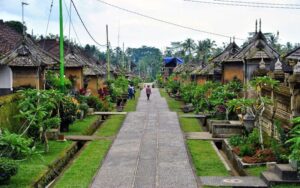
Penglipuran is a traditional Balinese village in the Bangli highlands — a UNESCO-recognized example of traditional village planning where every family compound is built to an identical layout along a single ceremonial axis, the bamboo forest behind the village has been preserved unchanged for centuries by community law, and the central ceremonial street is kept immaculately clean through a collective responsibility system that has operated without interruption since the 13th century.
Entry costs IDR 30,000 (approximately ₹150). The village receives visitors but has maintained its residential and ceremonial character — families live here, practice here, and celebrate here in exactly the way they have for generations. Walking the central axis in the early morning, before the day-trip buses from south Bali arrive, produces an encounter with genuine Balinese village culture that the tourist infrastructure of Ubud approximates but never quite achieves.
The bamboo forest path behind the village (accessible through the village, no additional fee) is one of Bali’s most atmospherically complete natural walks — the bamboo growing so densely overhead that the light turns green and the temperature drops five degrees within fifty metres of the forest entrance.
Getting there: 45 minutes from Ubud, 30 minutes from Kintamani. Easy scooter or private driver access. Best timing: Arrive by 8 AM before the tour group buses from south Bali arrive between 10–11 AM. The village feels entirely different in those two early hours.
- Sekumpul Waterfall — The Hidden Cascade Worth Every Step {#sekumpul}

Sekumpul in north Bali is consistently rated by travelers who have seen it as the most beautiful waterfall in Indonesia — a cluster of seven cascades, the main fall dropping approximately 80 metres into a narrow jungle gorge, reached by a 45-minute descent through rice terraces and forest that is itself beautiful enough to justify the trip regardless of what waits at the bottom.
The combined sound of seven waterfalls converging in a confined space — the mist reaching 50 metres up the gorge walls, every surface permanently wet, the light filtering through the jungle canopy in green-lit rays that illuminate the spray — produces a visceral sensory experience that photographs can suggest but never fully communicate. This is the place in Bali where your phone goes back in your pocket because looking is simply more rewarding than photographing.
Entry: IDR 20,000 (₹100). Mandatory local guide: IDR 200,000–₹300,000 for the group. The guide is essential — the trail is steep, the river crossings are slippery, and the approach route changes with rainfall. Budget 3–4 hours total including the ascent back. Wear proper shoes rather than sandals.
Getting there: 2.5 hours from Ubud by private driver. Usually combined with Munduk highlands or north Bali circuit. Don’t miss: Arrive before 9 AM for the best light inside the gorge and the thinnest crowds. The light at 8 AM through the gorge canopy produces the finest Sekumpul photography available.
- Trunyan Village — The Ancient Cemetery on the Lakeside {#trunyan}
Trunyan is a Bali Aga village — one of Bali’s pre-Hindu indigenous communities — on the eastern shore of Lake Batur, accessible only by boat, where the dead are neither buried nor cremated but placed openly beneath a sacred banyan tree that neutralizes the smell through its root system. It is one of the most genuinely unusual and culturally significant places in Bali and one of the least visited by international tourists.
The boat across Lake Batur from Kedisan (IDR 100,000–₹150,000 per person round trip) takes 25 minutes across black volcanic water with Mount Batur visible above and the caldera walls rising on all sides. The village community is small, proud, and does not perform for visitors — you are a guest rather than an audience, and behaving accordingly produces a more genuine encounter than any guided tour delivers.
Honest note: Trunyan is not for every traveler. The open-air cemetery is confronting by design and intent. Visit with genuine cultural curiosity rather than dark tourism motivation, and the experience is profoundly humanizing. Visit for the wrong reasons and it will feel accordingly uncomfortable.
Getting there: Kedisan village on Lake Batur’s shore is 90 minutes from Ubud.
- Nyang Nyang Beach — The Clifftop Secret Nobody Mentions {#nyang-nyang}

Nyang Nyang Beach sits on the Bukit Peninsula’s southwestern edge — a 1.5-kilometre stretch of white sand that receives perhaps thirty visitors on a busy day, despite being accessible from central Seminyak in under an hour. The access requires a 20-minute descent down a steep cliff path (concrete steps, manageable but not trivial) that deters the vast majority of visitors who prefer beaches with direct road access.
The reward for the descent: one of the cleanest, most genuinely beautiful beaches on the Bukit Peninsula, with the Indian Ocean directly south producing consistent waves on a windward shore, no vendors, no beach clubs, no music, and a horizon that extends uninterrupted to the Antarctic.
I sat on Nyang Nyang for three hours on a quiet November morning with eight other people visible across the entire beach. At Seminyak, 45 minutes away, there were several thousand.
Getting there: Scooter to the cliff-top car park area, then 20-minute descent on foot. No entrance fee. Bring all water and food — there is nothing at beach level. Don’t miss: The clifftop photography before the descent — the view of the beach from above, with the ocean stretching south and the waves visible from height, is among the finest coastal photographs available in Bali.
- Jatiluwih Rice Terraces — UNESCO Terraces Without the Crowds {#jatiluwih}

Jatiluwih is a UNESCO World Heritage landscape in central Bali’s Tabanan regency — 303 hectares of ancient rice terraces following the traditional subak irrigation system, covering an entire mountainside in the kind of cultivated beauty that makes agricultural landscapes feel sacred. It receives perhaps 15% of the visitors that Tegallalang handles despite being significantly larger, significantly more dramatic, and carrying an authenticity that the heavily commercialized Tegallalang now struggles to project.
The Jatiluwih circuit walk — a 4-kilometre loop through the terrace landscape with distant ocean views on clear days — costs IDR 40,000 (approximately ₹200) entry and can be completed in 2–3 hours at a genuinely unhurried pace. In the right season (November or April–May when the rice is young and vivid green), the landscape produces photography that equals anything available in Bali.
Getting there: 90 minutes from Ubud or 2 hours from south Bali by private driver or scooter. Best timing: Weekday mornings between 7–10 AM for the best combination of light and minimal visitor numbers.
- Pura Lempuyang — The Temple Most Tourists Photograph Wrong {#lempuyang}

Pura Lempuyang on east Bali’s Mount Lempuyang is famous for one photograph — the “Gates of Heaven” shot with Mount Agung perfectly framed between two split gate (candi bentar) pillars, reflected in a pool of water placed by photographers to create the mirror effect. This photograph is one of the most shared Bali travel images globally. It is also completely artificial — the reflecting pool doesn’t naturally exist there, it’s a small portable tray of water that photographers bring and position.
What the photograph doesn’t show is the actual temple complex — seven temples ascending the mountain across 1,700 stone steps — which is genuinely, quietly extraordinary and receives almost no visitors beyond those who arrive for the gate photograph and immediately leave. The upper temples, reached by 1–2 hours of climbing through monkey-inhabited forest, offer views across east Bali to the coast that no gate photograph captures. Arrive before 6:30 AM for the best gate light and the shortest queue. Stay after the photograph for the climb — this is where Lempuyang gives you something that actually belongs to you rather than to everyone’s Instagram simultaneously.
Getting there: 2.5 hours from Ubud by private driver. Entry IDR 50,000. Honest note: The gate photograph queue can run 45–90 minutes in peak season. The climb above takes you away from the queue immediately and entirely.
Practical Travel Tips for Hidden Bali {#practical-tips}
Cash is essential outside south Bali: ATMs are sparse in east and north Bali. Carry IDR 500,000–₹1,000,000 (₹2,500–₹5,000) whenever exploring remote areas. Money changers in Ubud and Denpasar offer significantly better rates than airport desks — use Dirgahayu or Central Kuta chains for reliable counting.
Telkomsel SIM for rural coverage: Telkomsel has the best network coverage in Bali’s remote areas — east Bali valleys, north Bali plantations, and highland villages where other networks drop. Buy at Ngurah Rai Airport arrivals — IDR 80,000–₹150,000 for 10–15 days of data.
Temple sarong always in your bag: Every temple visit in Bali requires covering the lower body with a sarong. Carry one lightweight sarong in your day bag — it weighs nothing, solves every temple entry situation instantly, and costs IDR 30,000 at any market rather than the IDR 15,000 rental fee charged at individual temple entrances.
Go earlier than you think necessary: Hidden Bali’s peace is most accessible before 9 AM. Every destination in this guide is categorically different before the tour buses arrive from south Bali. Jatiluwih at 7 AM and Jatiluwih at 11 AM are genuinely different places. Penglipuran at 8 AM and Penglipuran at 10 AM are entirely different experiences. The alarm is always worth setting.
Offline maps before you leave accommodation: Google Maps works reliably across hidden Bali including unpaved roads. Download offline maps for east Bali and north Bali specifically before leaving mobile network coverage — plantation and forest roads in these areas have intermittent signal.
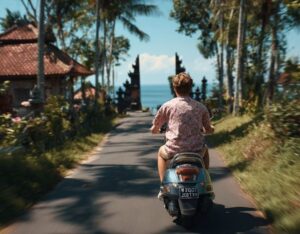
Safety: Bali is very safe for international travelers including solo women. Hidden Bali is remote rather than unsafe. The scooter is a genuinely practical transport tool for experienced riders — wear a helmet regardless of local practice, and slow down on wet roads in north and east Bali where morning moisture lingers on shaded corners.
Best Time To Visit Hidden Bali {#best-time}

April to October — Dry Season: The optimal window for hidden Bali exploration across all destination types. Clear skies, low humidity, and the particular sharp light that makes rice terrace and waterfall photography extraordinary. April, May, June, and September hit the sweet spot of excellent conditions without peak August crowds or December-January pricing.
November to March — Wet Season: Daily afternoon showers (typically 1–3 hours rather than all-day rain) make many mornings beautiful and clear. The rice terraces and plantations in Munduk and Sidemen reach their most vivid green. Sekumpul and Munduk waterfalls run at maximum flow. Accommodation prices drop 30–40%. The wet season is genuinely the best time to visit hidden Bali for budget travelers who don’t mind timing outdoor activities to morning windows.
July to August — Peak Season: Even hidden destinations receive more visitors in this window. Jatiluwih and Penglipuran are noticeably busier. East and north Bali remain significantly quieter than south Bali and Ubud but require earlier starts for the best peaceful experience.
My recommendation for peaceful travel: May, September, or October. Post-shoulder season pricing, pre or post-peak crowds, and conditions that are excellent across every hidden zone simultaneously.
5-Day Hidden Bali Itinerary {#itinerary}

Day 1 — Arrival + Penglipuran Village Land at Ngurah Rai, collect VOA, private driver to Ubud accommodation. Afternoon rest. Late afternoon: Penglipuran Village (40 minutes from Ubud) — aim for 4 PM when the golden light hits the ceremonial axis and the tour groups have departed. Overnight Ubud. Daily spend: IDR 400,000–₹600,000 (₹2,000–₹3,000)
Day 2 — Jatiluwih + Munduk 7 AM departure for Jatiluwih rice terraces (arrive before 9 AM for best light and minimal visitors). Full circuit walk (2–3 hours). Mid-morning drive to Munduk highlands (1.5 hours). Afternoon waterfall trail. Overnight Munduk homestay. Daily spend: IDR 350,000–₹600,000 (₹1,750–₹3,000)
Day 3 — Munduk + North Bali Dawn: Lake Tamblingan sunrise canoe (arrange through homestay, IDR 150,000). Morning: coffee plantation walk (IDR 75,000). Afternoon: Sekumpul Waterfall (arrive by 9 AM for best gorge light). Overnight Munduk or drive south toward Ubud. Daily spend: IDR 500,000–₹800,000 (₹2,500–₹4,000)
Day 4 — East Bali Circuit Early departure to Sidemen Valley (90 minutes from Ubud). Morning rice terrace walk (free, 2–3 hours). Tirta Gangga water palace noon swim (IDR 65,000 total). Afternoon: Amed Beach sunset. Overnight Amed bungalow. Daily spend: IDR 400,000–₹700,000 (₹2,000–₹3,500)
Day 5 — Amed + Lempuyang + Departure 5:30 AM at Amed beach for Mount Agung dawn reflection (free). Drive to Pura Lempuyang (1 hour). 7 AM arrival for gate photograph before the queue builds. Full temple climb if time permits. Return to airport via south Bali. Daily spend: IDR 400,000–₹600,000 (₹2,000–₹3,000)
Want this itinerary arranged without the logistical planning? The Tripyverse Bali Tour Package covers Bali’s best destinations including several hidden gems with accommodation and transfers arranged. For couples wanting the most romantic version of hidden Bali, the Tripyverse Bali Romance Escape and Tripyverse Bali Honeymoon Package curate the most intimate experiences the island offers. For group travel, the Tripyverse Bali Bliss 5N/6D Group Package handles every element in one booking.
Budget Breakdown {#budget}
| Traveler Type | Daily Budget | What It Gets You |
| Budget Explorer | IDR 300,000–₹500,000 (₹1,500–₹2,500) | Guesthouse, scooter, local warungs, free walks |
| Mid-Range | IDR 700,000–₹1,200,000 (₹3,500–₹6,000) | Small villa, private driver, restaurant meals |
| Comfort Traveler | IDR 1,500,000+ (₹7,500+) | Boutique resort, guided experiences, spa |
Hidden Bali is dramatically more affordable than south Bali’s tourist circuit — guesthouses in Sidemen and Amed cost a fraction of Seminyak villas, local warungs in east Bali serve genuinely extraordinary food for IDR 30,000–₹50,000 (₹150–₹250), and the best experiences (Sidemen valley walk, Amed sunrise, Jatiluwih circuit, Nyang Nyang beach) cost between IDR 0 and IDR 50,000. The scooter at IDR 80,000 per day is the single best transport investment you can make for this itinerary.
Final Verdict — Is Hidden Bali Worth Seeking? {#verdict}

Without hesitation — and with the specific clarification that it is not just worth seeking but is the thing that transforms a good Bali trip into an extraordinary one that stays with you in the way that genuinely formative travel experiences do.
The mainstream Bali circuit delivers on its promises: Tegallalang is beautiful, Tanah Lot is spectacular, Ubud is fascinating. But all of it is experienced as part of a large shared audience who made the same decision from the same source material. Hidden Bali — Sidemen’s working terraces, Munduk’s misty plantation mornings, Amed’s dawn with Agung reflected in the bay, Nyang Nyang’s complete quiet, Sekumpul’s seven waterfalls in a narrow gorge — gives you something the mainstream circuit cannot: the feeling that what you are experiencing belongs specifically and completely to the moment you are in, rather than to everyone who will post the same photograph tomorrow.
One honest drawback: Hidden Bali requires more planning, more transport independence, and more comfort with the absence of tourist infrastructure than the standard circuit. If you need menus in English, ATMs within walking distance, and accommodation bookable on day-of-arrival, some of these destinations will create genuine friction. That friction is, consistently, where the best travel memories are made.
Hidden Bali is perfect for: Repeat Bali visitors who’ve done the standard circuit, photographers seeking compositions nobody else has taken this week, couples wanting genuine solitude, budget travelers who understand that the cheapest accommodation often has the most extraordinary view, and anyone whose previous Bali trip left them feeling that the real island was just slightly out of reach.
For the complete Bali picture — the mainstream attractions, the full cost breakdown, and the broader island context — our Bali Travel Guide 2026: 10 Amazing Places to Visit covers everything alongside these hidden gems. And for our complete Bali budget breakdown from India with every expense category transparently laid out, our Bali Budget Trip from India 2026: Real Costs & Tips is the essential financial companion to this guide.
Planning to combine Bali with a Dubai layover? Our Dubai Food Guide 2026: Best Street Food & Restaurants makes the most of any stopover between India and Bali — the contrast between Dubai’s extraordinary multicultural food culture and Bali’s temple warung tradition is one of Asia’s most interesting culinary juxtapositions.
And for the mountain counterpart to Bali’s tropical peace, our Manali Travel Guide — 7 Best Places + Hidden Gems (2026) completes the picture — because the traveler who finds the hidden Bali will always find the hidden Manali too.