


📋 TABLE OF CONTENTS
- The Moment I Fell in Love with Kashmir
- Where is Kashmir Located?
- How to Get to Kashmir
- Getting Around in Kashmir
- Where to Stay in Kashmir
- Top Things to Do in Kashmir
- Practical Travel Tips
- Best Time to Visit Kashmir
- 5-Day Kashmir Itinerary + Daily Costs
- Complete Budget Breakdown
- Final Honest Verdict
- The Moment I Fell in Love with Kashmir {#intro}

I was sitting in a shikara — one of those narrow wooden boats that glide across Dal Lake like they own the water — when I understood why poets have been writing about Kashmir for centuries. The morning mist was still hovering over the water. A old Kashmiri man was paddling toward me, his boat piled high with lotuses and marigolds, singing something I couldn’t understand but felt in my chest. Behind him, the Zabarwan mountains rose snow-capped and utterly indifferent to anything as small as my disbelief.
I had come here half-expecting disappointment. Kashmir had been on my list for years — one of those “too complicated, too expensive” destinations I kept kicking down the road. But I made it work on under ₹20,000 for five days, including flights. And I came back convinced that this is the most underrated budget destination in all of India.
People are quick to jump on Manali or Coorg or even Meghalaya when they want dramatic Himalayan scenery — but nothing quite prepares you for Kashmir. The scale is different. The culture is different. And if you’re smart about it, the cost is surprisingly manageable. Let me show you exactly how I did it.
- Where is Kashmir Located? {#location}

Kashmir sits at the northernmost tip of India, nestled in the Himalayas between Pakistan-administered territory to the west and Tibet to the east. The Kashmir Valley — where most tourists spend their time — is a high-altitude bowl roughly 135 km long and 32 km wide, sitting at around 1,600 metres above sea level. Srinagar, the summer capital of Jammu & Kashmir, is the main gateway city.
Despite being just a 2-hour flight from Delhi, Kashmir feels like a world apart — a blend of Mughal garden culture, Central Asian architecture, and Himalayan wilderness that you simply won’t find anywhere else in India.
- How to Get to Kashmir ✈️ {#how-to-get}

By Air (Recommended)
The easiest way in is through Sheikh ul-Alam International Airport in Srinagar (SXR). Direct flights operate from Delhi, Mumbai, Bangalore, Hyderabad, and several other major cities. Book 4–6 weeks in advance and you can find round-trip fares as low as ₹4,500–₹6,000 from Delhi on IndiGo, Air India, or SpiceJet. From Mumbai or Bangalore, budget around ₹7,000–₹10,000 return.
By Road (Budget Option)
The Jammu–Srinagar National Highway (NH44) is the main road link. Deluxe buses from Jammu to Srinagar (around 270 km) cost ₹500–₹800 and take 7–9 hours depending on traffic and road conditions. Government JKSRTC buses are cheapest; private Volvo sleepers are available too. This route is scenic but slow — the Banihal Tunnel has significantly cut travel time in recent years.
From Delhi by Train + Bus
Take an overnight train to Jammu Tawi (from ₹600–₹900 in sleeper class), then a shared taxi or bus onward to Srinagar. Total cost from Delhi: around ₹1,500–₹2,000 — significantly cheaper than flying but adds 18–20 hours to your journey.
- Getting Around in Kashmir 🚗 {#getting-around}
Once you’re in Srinagar, getting around is genuinely easy and cheap.
Shared Auto-Rickshaws: The most local and fun way to move within Srinagar. Short rides cost ₹15–₹30 per person. Slightly chaotic, wildly fun.
Shikara (Dal Lake): Non-negotiable. A one-hour shikara ride costs ₹200–₹300 for a private boat (negotiate firmly). For lake crossing only, shared shikaras charge ₹10–₹20.
Sumo (Shared Taxi): The lifeline for intercity travel. Srinagar → Gulmarg: ₹200 per seat in a shared Sumo. Srinagar → Pahalgam: ₹350 per seat. These depart from fixed points in the city and leave when full — usually by 8 AM.
Private Cabs: If you want flexibility, a private cab for a full-day trip to Gulmarg or Pahalgam costs ₹2,500–₹3,500. Worth splitting among 3–4 people.
Ola/Uber: Both are operational in Srinagar for city rides. Useful for airport transfers.
First-time visitors will find Srinagar very navigable. Signage is decent, locals are incredibly hospitable, and Google Maps works reliably throughout the valley.
- Where to Stay in Kashmir 🏨 {#where-to-stay}

Budget (₹500–₹1,200/night)
Houseboat stays on Dal Lake are the budget traveller’s secret weapon. Old-school wooden houseboats, especially in the Boulevard and Nagin Lake area, offer basic but clean rooms with lake views for ₹800–₹1,200/night including breakfast. Try: Houseboat Young New Full Moon or Green Houseboat — both have good reviews and genuine character.
Old City guesthouses near Lal Chowk and Nowhatta area: Basic rooms from ₹500–₹800/night. No frills, lots of local flavour.
Mid-Range (₹1,500–₹3,500/night)
Hotel Grand Mumtaz (Boulevard Road, Dal Lake frontage) — consistently great reviews, clean rooms, and easy access to shikaras. Around ₹2,500/night.
The Orchard Retreat & Spa, Pahalgam — if you’re heading to Pahalgam, this mid-ranger surrounded by apple orchards is exceptional value at around ₹3,000/night.
Luxury (₹6,000+/night)
Vivanta Dal View by Taj and The Lalit Grand Palace are the classic luxury picks. The Lalit is a converted maharaja’s palace — worth it for a splurge night if honeymoon vibes are on the agenda. (Speaking of which, if you’re planning a romantic Kashmir trip, check out the Kashmir honeymoon packages on Tripyverse — they include houseboat stays and Mughal garden access.)
Best Neighbourhoods to Stay: Boulevard Road along Dal Lake is ideal for first-timers. Nagin Lake is quieter and more local. Lal Chowk puts you in the heart of city action.
- Top Things To Do in Kashmir 🌊 {#things-to-do}
6.1 Shikara Ride on Dal Lake
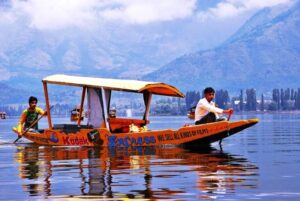
No trip to Kashmir is complete without at least one unhurried shikara drift across Dal Lake. The lake — roughly 18 sq km and home to floating vegetable gardens — is one of the most photographed places in India for good reason. Go early morning (6–8 AM) when the mist is still on the water and the vegetable-sellers are out. It costs ₹200–₹300/hour for a private boat.
Insider tip: Skip the “flower seller” shikaras that park next to you and try to upsell — politely decline and paddle on.
6.2 Mughal Gardens: Shalimar, Nishat & Chashme Shahi

The Mughals built three tiered gardens on the shores of Dal Lake, and all three are extraordinary. Nishat Bagh (Garden of Joy) is the largest — 12 terraces of chinars, fountains, and floral beds with mountain backdrop views that’ll wreck your phone’s storage. Entry is just ₹24 for Indians.
Shalimar Bagh is slightly smaller but equally beautiful, and Chashme Shahi (built around a natural spring) is the smallest and least crowded.
Best time: Spring (April–May) when the chinars are full and tulip season overlaps.
Insider tip: Visit all three in one day — they’re on the same road. A shared auto covers all three for ₹200–₹300 total.
6.3 Gulmarg — Ski, Cable Car & Meadows

Gulmarg sits at 2,650 metres and is one of Asia’s highest gondola destinations. In summer, the meadows are carpeted in wildflowers and the views of Nanga Parbat are staggering. In winter, it becomes a legit ski resort.
The Gondola ride runs in two phases: Phase 1 to Kongdori (₹780 return for Indians) and Phase 2 to Apharwat Peak at 3,980m (₹1,050 additional). Go on Phase 2 for the full Himalayan panorama — it’s genuinely jaw-dropping.
Getting there: Shared Sumo from Srinagar → ₹200/seat. The 57-km drive takes about 2 hours.
Honest warning: The Gondola queues in peak season (July–August) can be 2–3 hours long. Book tickets online in advance if possible.
6.4 Pahalgam — The Valley of Shepherds
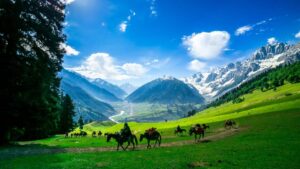
If Gulmarg is dramatic, Pahalgam is gentle. Set where the Lidder River carves through pine forests and meadows, Pahalgam is the base for the Amarnath Yatra pilgrimage and for trekkers heading toward Kolahoi Glacier. But even if you’re not trekking, simply wandering around Betaab Valley or sitting by the Aru Valley meadows is worth the 96-km journey from Srinagar.
Shared Sumo from Srinagar: ₹350/seat. Day trip is doable, but one night here is better.
Insider tip: Baisaran (“Mini Switzerland”) is a short pony ride (₹300–₹400 return) from Pahalgam town — meadows ringed by deodar forests with Himalayan peaks behind. Don’t skip it.
6.5 Sonamarg — Glacier Country
Sonamarg (“Meadow of Gold”) sits at 2,740m and is the starting point for Thajiwas Glacier — a short trek that takes you past rushing glacial streams to a proper year-round glacier. Pony rides to the glacier cost ₹600–₹800 return. The drive from Srinagar (80 km, 2.5 hours) passes through the stunning Sindh Valley.
Best for: Families, first-time Himalayan visitors, photographers.
Honest warning: The roads to Sonamarg can be extremely busy during peak season. Leave Srinagar by 7 AM.
6.6 Old City & Lal Chowk — Real Kashmir
Most tourists don’t spend enough time in Srinagar’s Old City — and that’s a mistake. The narrow lanes around Jamia Masjid (the grand 14th-century mosque), Shah Hamdan Shrine, and Khanqah-e-Moula are straight out of a different century. Carved wooden facades, small shops selling papier-mâché, pashmina touts, the smell of kahwa drifting out of tiny restaurants.
Spend at least half a day wandering here. It costs nothing except shoe leather.
6.7 Kashmiri Food — What to Eat & Where

You cannot do justice to Kashmir without eating like a Kashmiri. Key dishes to try:
- Wazwan — The ceremonial multi-course feast. Rogan Josh, Gushtaba (minced meat balls in yogurt gravy), Dum Aloo Kashmiri. A full wazwan at a local dhaba costs ₹300–₹500 per person.
- Kahwa — Saffron-spiced green tea with almonds. ₹30–₹60 per cup, find it everywhere.
- Modur Pulao — Sweet rice with dried fruits, perfect breakfast.
- Sheermal — Saffron-tinged flatbread. Grab it fresh from Old City bakeries.
Best budget dining: Ahdoos Restaurant (Residency Road), Krishna Dhaba near Lal Chowk (vegetarian), and the small eateries inside the Old City lanes.
6.8 Tulip Garden (Indira Gandhi Memorial Tulip Garden)

Open only from late March to mid-April, this is Asia’s largest tulip garden — over 1.5 million tulips in 60+ varieties across terraced slopes with Dal Lake below. Entry: ₹50 for Indians. If your dates overlap with the tulip season, this is an absolute must.
- Practical Travel Tips 💡 {#practical-tips}
Cash vs Card: Carry cash. ATMs are available in Srinagar but scarce in Gulmarg, Pahalgam, and Sonamarg. Many small vendors, shikaras, and dhabas are cash-only. Withdraw before leaving Srinagar.
SIM / Internet: Airtel and Jio both work in Srinagar and most tourist areas, though signals drop in remote valleys. Buy a local SIM at the airport or Lal Chowk (₹200–₹300 with data).
Safety: Kashmir is considerably safer for tourists than media coverage often suggests. Standard urban precautions apply. Solo women travellers do visit and report generally positive experiences — staying in tourist-dense areas (Boulevard Road, Dal Lake) is advisable for solo female travellers.
Useful Apps: Google Maps (works excellently), IRCTC (for train to Jammu), IndiGo/Air India apps for flight bookings.
Altitude note: Srinagar itself is at ~1,600m — no altitude sickness concerns. Gulmarg (2,650m) and Sonamarg (2,740m) are higher but most visitors acclimatize without issues. Gondola Phase 2 at ~3,980m may cause mild breathlessness — take it slow.
- Best Time to Visit Kashmir 📅 {#best-time}
| Month | Conditions | Verdict |
| Jan–Feb | Heavy snow, freezing temps (-5 to 5°C) | ❄️ Ski season, very cold |
| Mar–Apr | Snow melting, tulips blooming, 10–18°C | 🌷 Best for flowers |
| May–Jun | Pleasant 20–28°C, very busy | ✅ Peak tourist season |
| July–Aug | Warm, very crowded, monsoon in Jammu | 🌧️ Busy & humid |
| Sep–Oct | Clear skies, chinar leaves turning gold, 12–22°C | 🍂 Best overall |
| Nov–Dec | Getting cold, fewer crowds, 2–10°C | 🧣 Off-season deals |
Sweet spot for budget travellers: September–October for best combination of weather, golden foliage, and slightly lower prices. March–April for the tulips and spring blossoms. Avoid peak July–August if you’re on a tight budget — prices spike by 30–50%.
- 5-Day Kashmir Itinerary + Daily Costs ⏳ {#itinerary}
Day 1 — Srinagar: Dal Lake & Old City
- Morning: Arrive Srinagar, check into houseboat/guesthouse
- Late morning: Shikara ride on Dal Lake (1 hour)
- Afternoon: Nishat Bagh & Shalimar Bagh (shared auto)
- Evening: Wander Old City — Jamia Masjid, Shah Hamdan, local lanes
- Dinner: Ahdoos Restaurant or Old City dhaba
Estimated daily spend (budget traveller): ₹1,800–₹2,500
Day 2 — Gulmarg Day Trip
- Early morning: Shared Sumo from Taxi Stand → Gulmarg (₹200/seat)
- Morning–Afternoon: Gondola Phase 1 + Phase 2 (₹1,830 total)
- Late afternoon: Return Sumo to Srinagar
- Evening: Hazratbal Shrine visit (free), lakeside walk
Estimated daily spend: ₹3,000–₹3,500 (Gondola is the big cost)
Day 3 — Pahalgam
- Morning: Shared Sumo to Pahalgam (₹350/seat, ~3 hours)
- Afternoon: Betaab Valley walk (entry ₹50), pony ride to Baisaran
- Evening: Lidder riverside walk in Pahalgam town
- Night: Stay in Pahalgam budget guesthouse
Estimated daily spend: ₹2,200–₹2,800
Day 4 — Sonamarg + Return to Srinagar
- Morning: Shared vehicle to Sonamarg (₹400–₹500 per person)
- Midday: Trek to Thajiwas Glacier or pony ride (₹600–₹800)
- Late afternoon: Return to Srinagar
- Evening: Shopping at Polo View Market (pashmina, dry fruits, saffron)
Estimated daily spend: ₹2,500–₹3,000
Day 5 — Srinagar: Chashme Shahi, Shankaracharya Temple + Departure
- Morning: Chashme Shahi garden (₹10 entry), Shankaracharya Hill Temple (free, great views)
- Midday: Final kahwa, last shikara ride
- Afternoon: Head to airport
Estimated daily spend: ₹800–₹1,200
- Complete Budget Breakdown 💰 {#budget-breakdown}
Budget Traveller (₹20,000 for 5 days from Delhi)
| Expense | Cost (₹) |
| Flights Delhi–Srinagar–Delhi | 5,500 |
| Accommodation (5 nights houseboat/guesthouse) | 4,500 |
| Food (5 days, ₹400–₹500/day) | 2,200 |
| Dal Lake Shikara rides | 600 |
| Gulmarg Gondola (Phase 1 + 2) | 1,830 |
| Shared Sumo travel (Gulmarg, Pahalgam, Sonamarg) | 1,800 |
| Entry fees (Mughal gardens, Betaab Valley) | 200 |
| Pahalgam Baisaran pony ride | 400 |
| Sonamarg glacier pony/trekking | 700 |
| Miscellaneous (shopping, tips, local autos) | 1,200 |
| TOTAL | ₹18,930 |
Mid-Range Traveller: ₹35,000–₹45,000
Luxury Traveller: ₹80,000+
Where to save: Book flights 6 weeks out. Travel in shared Sumos, not private cabs. Stay in Dal Lake houseboats — they’re charming AND cheap. Eat at local dhabas, not hotel restaurants.
Where to splurge: The Gondola Phase 2 is non-negotiable. One good wazwan meal at a proper restaurant (₹600–₹800) is worth it. And if you’re visiting with a partner, even one night in a mid-range houseboat with proper lake views is money very well spent — you might find what you need via a Kashmir group tour package that bundles accommodation and transport for better value.
For a curated 2026 view of the best places to visit with insider tips, also check out the Kashmir travel guide 2026 on Tripyverse blogs — it has some excellent detail on spots I didn’t cover here.
If you’re comparing budget mountain destinations, our Manali travel guide for 2026 is a good read for context — Manali is cheaper to reach from Delhi but lacks Kashmir’s unique cultural depth.
- Final Honest Verdict 🤔 {#verdict}
Kashmir genuinely impressed me in ways I didn’t expect. The landscape alone — mountains, lake, meadows, glaciers, all within a 100-km radius of Srinagar — is staggering in its variety. But what really got me was the culture. The Kashmiri hospitality isn’t performed; it’s real. People invited me for chai. The old city felt ancient in a way that Rajasthan sometimes doesn’t anymore. And the food — the wazwan, the kahwa, the Modur Pulao — is completely distinct from anything else in Indian cuisine.
The one real drawback: Peak season (June–August) crowds are overwhelming, particularly at Gulmarg and Pahalgam. The Gondola queues can ruin a day. Some of the more “touristy” shikara rides feel transactional. And at certain popular spots, you’ll be approached quite persistently by vendors. This is just the reality of a heavily-touristed destination in peak season — go in September or April and it’s noticeably better.
Perfect for: First-time Himalayan travellers, budget-conscious couples (the houseboat experience is genuinely romantic at ₹1,200/night), families with kids who can handle day trips, photographers, and anyone who wants a radically different India experience without leaving the country.
Might want to skip if: You dislike crowds in any form, are looking for a beach holiday, or need all creature comforts without compromise at budget prices.
Go. Seriously. ₹20,000 and five days — Kashmir will do the rest.
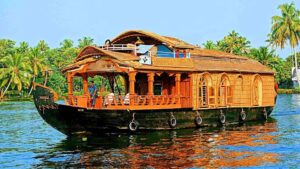
If you’re also weighing up international options for your next trip, we’ve got detailed guides on Bali 2026, Thailand 2026, and Dubai — each with budget breakdowns for Indian travellers. Or if you’re leaning toward Kerala’s backwaters as an alternative domestic pick, the Kerala travel guide 2026 is worth a read.