


📋 TABLE OF CONTENTS
- Why Everyone’s Missing the Real Kashmir
- Where Are These Hidden Gems Located?
- How to Get to Kashmir
- Getting Around Offbeat Kashmir
- Where to Stay Near These Hidden Places
- 10 Hidden Gems in Kashmir You Must Explore
- Practical Travel Tips for Offbeat Kashmir
- Best Time to Visit for Fewer Crowds
- 5-Day Offbeat Kashmir Itinerary
- Complete Budget Breakdown
- Final Honest Verdict
1. Why Everyone’s Missing the Real Kashmir {#intro}

I almost didn’t stop the car. We were rattling down a dirt track somewhere between Bandipora and Gurez Valley when my driver slowed without being asked and pointed silently at a hillside. A dozen Dard women in embroidered pherans were walking single-file along a ridge, carrying firewood, their figures perfectly framed against a sweep of snow-dusted granite. Nobody had told me about this. No travel blog, no Instagram hashtag, no tour package had prepared me for the fact that the Kashmir I’d spent twenty minutes reading about — Dal Lake, Gulmarg gondola, houseboat sunsets — was only the surface.
The real Kashmir is folded into valleys that don’t show up on Google’s top suggestions. It lives in a shepherd’s trail above Yusmarg, in the turquoise silence of Gangabal Lake, in the crumbling wooden mosques of Lolab Valley that nobody visits twice a week, let alone twice a day. It’s not that these places are difficult to reach — most aren’t. It’s that everyone follows the same tourist circuit and calls it “Kashmir.”
I’m not suggesting you skip Dal Lake or the Gulmarg gondola — those are genuinely spectacular, and our Kashmir travel guide 2026 covers them brilliantly. But if you want the version of Kashmir that stays with you for years, keep reading.
2. Where Are These Hidden Gems Located? {#location}

The hidden gems of Kashmir are spread across the Kashmir Valley and its surrounding ranges — from Gurez Valley near the Line of Control in the north, to the Sinthan Top plateau in the south, to the rarely-visited Lolab Valley tucked between Kupwara and Handwara in the northwest. Most of these spots sit within 3–6 hours of Srinagar by road, yet they see a fraction of the tourist traffic that Pahalgam and Gulmarg receive.
They’ve stayed under the radar partly because infrastructure is thinner — fewer paved roads, fewer guesthouses — and partly because most tour operators simply don’t promote what doesn’t have a gondola or a famous lake attached to it.
3. How to Get to Kashmir {#get-there}

By Air — Fastest and Often Cheapest
Fly into Sheikh ul-Alam International Airport, Srinagar (SXR). Direct flights operate from Delhi, Mumbai, Bangalore, and several other cities. Book 4–6 weeks in advance and you’ll find round-trip fares as low as ₹4,500–₹6,000 from Delhi on IndiGo, Air India, or SpiceJet. From Mumbai or Bangalore, budget ₹7,000–₹10,000 return.
By Road via Jammu — Budget Option
Take an overnight train to Jammu Tawi (₹600–₹900 sleeper class from Delhi), then a shared Sumo or JKSRTC bus onward to Srinagar (₹500–₹800, 7–9 hours). Total from Delhi: around ₹1,500–₹2,000 — significantly cheaper than flying, but adds 18–20 hours to your journey.
For anyone who wants vehicle access to offbeat routes sorted in advance, the Kashmir group tour packages on Tripyverse include flexible vehicle hire that works on non-touristy roads.
4. Getting Around Offbeat Kashmir {#getting-around}

Getting to the hidden corners of Kashmir almost always requires a hired vehicle. Shared Sumos don’t run to places like Gurez Valley, Bangus, or Sinthan Top. Here’s the honest breakdown:
Private Hired SUV/Innova: ₹3,000–₹4,500/day. Absolutely necessary for Gurez Valley, Sinthan Top, and Lolab Valley. Split among four people and it becomes very manageable.
Self-Drive/Bike Rental: Royal Enfield rentals in Srinagar run ₹1,200–₹1,800/day. Excellent for accessible hidden spots like Doodhpathri or Yusmarg where roads are decent.
Shared Sumo: Works for Yusmarg (₹150–₹200/seat from Srinagar) and Doodhpathri (₹250/seat via Charar-e-Sharief). Not available for truly remote destinations.
Difficulty level for first-timers: Moderate to high for genuinely remote spots. Roads to Gurez are narrow mountain tracks. Sinthan Top closes with snowfall. Always go with a local driver who knows the terrain.
5. Where to Stay Near Kashmir’s Hidden Gems {#stay}

Budget (₹600–₹1,500/night)
JKTDC Government Tourist Bungalows run by the J&K Tourism Development Corporation operate in Gurez, Yusmarg, and parts of Lolab Valley. Spartan but clean, with local meals. Book through the official JKTDC portal — ₹800–₹1,200/night. Expect zero mobile signal and zero crowds.
Village Homestays — Gurez Valley: The most authentic option on this list. Local families in Gurez take paying guests for ₹600–₹1,000/night including home-cooked Kashmiri food — thick mutton shorba, rice, and the freshest dum aloo you’ll taste. Ask your driver to connect you; these almost never appear on booking sites.
Mid-Range (₹2,000–₹4,000/night)
Camp Gurez, Gurez Valley: Tented camp with proper bedding and attached bathrooms, set against the dramatic Habba Khatoon Peak. Around ₹3,500/night including all meals.
Doodhpathri Eco Camps: Simple but lovely camps right in the meadow. About ₹2,500/night with meals included. Wake up to the sound of white-water streams and absolutely nothing else.
Luxury (₹6,000+/night)
The Khyber Himalayan Resort & Spa, Gulmarg: If you want a luxury base from which to make day drives to offbeat spots, The Khyber is the finest mountain resort in Kashmir — ₹12,000–₹18,000/night but genuinely extraordinary in every detail.
For couples wanting to combine romance with offbeat exploration, the Kashmir honeymoon packages on Tripyverse can be customised to include lesser-visited areas like Yusmarg and Doodhpathri.
Best base: Srinagar works for most itineraries — day drives or overnight stays at the remote spots. Gurez itself if you’re spending 2+ nights in the valley.
6. Ten Hidden Gems in Kashmir You Must Explore {#gems}
6.1 Gurez Valley — The Most Beautiful Valley You’ve Never Heard Of

Gurez Valley sits at 2,400 metres near the Line of Control, roughly 123 km north of Srinagar. The Kishanganga River runs glacier-cold and an almost unreal shade of blue through a wide, flat valley floor, flanked by granite peaks that push past 5,000 metres. The inhabitants — the Dard Shin people — are ethnically distinct from other Kashmiris, with fair skin and a language, Shina, spoken almost nowhere else in India.
You will see almost no other tourists here. The Razdan Pass road (open June–October) is narrow, steep, and occasionally alarming. An army check-post requires your ID. And then you emerge into Gurez and think: why doesn’t everyone know about this place?
Getting there: Hired SUV from Srinagar (4–5 hours). ₹3,500–₹4,500/day for the vehicle.
Insider tip: The Habba Khatoon Peak (named after Kashmir’s legendary 16th-century poetess) looming behind Dawar village is the single most photogenic view in offbeat Kashmir. Go at golden hour. Carry cash and a power bank — there are no ATMs and signal is essentially non-existent.
6.2 Doodhpathri — The Valley of Milk
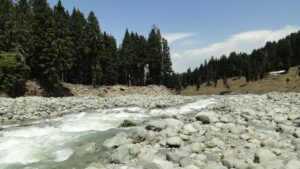
The name means “Valley of Milk,” named for the white, foam-flecked streams that rush through its meadows. Doodhpathri sits at 2,730 metres, just 42 km southwest of Srinagar, and is a wide highland meadow ringed by pine forest, fed by rivers so white with glacier silt they genuinely look like flowing milk. In summer, the meadows are carpeted with wildflowers so dense you almost feel guilty walking across them.
Most tourists have never heard of Doodhpathri. Most Kashmiri tour operators don’t push it because it lacks a gondola or a famous name. That is exactly why you should go.
Getting there: Shared Sumo from Srinagar via Charar-e-Sharief (₹250/seat). Private car: ₹2,000–₹2,500 for a return day trip.
Insider tip: The riverside spots two kilometres beyond the main meadow are almost always empty. Hire a local pony at the meadow entrance (₹300–₹400) for the forest loop trail. Bring a packed lunch — the handful of dhabas here are basic and inconsistent.
6.3 Gangabal Lake — Twin Alpine Lakes at 3,500 Metres

This one requires walking — and that’s precisely why it’s empty. The Gangabal twin lakes (Gangabal and Nundkol) sit at 3,500 metres in the Harmukh mountain range, surrounded by permanent snowfields and reflecting a perfectly conical 5,142-metre peak. The trek begins from Naranag — an 8th-century ruined temple complex that’s a destination in its own right — and takes 2–3 days return.
I did this trek in September and saw exactly four other trekkers the entire time. The silence at that altitude — the specific, total silence of being above the treeline with no roads or villages in any direction — is something I haven’t found anywhere else in India.
Getting there: Drive to Naranag (50 km from Srinagar, 1.5 hours). Trek from Naranag to the lakes takes 2 days up, 1–2 days return.
Trek details: Moderate to difficult. Hire a local guide (₹1,000–₹1,500/day) and carry a tent — there is no accommodation at the lakes. September is the best month: clear skies, minimal snow, dramatically beautiful light.
6.4 Yusmarg — Srinagar’s Forgotten Meadow

Yusmarg sits 47 km southwest of Srinagar at 2,400 metres. Where Gulmarg gets absolutely overrun, Yusmarg is quiet. The main meadow — a broad swathe of grass surrounded by pine and fir forest, with peaks above 4,000 metres on all sides — is used mainly by local Kashmiri picnickers and the occasional trekker. There are pony rides, forest walks, and a beautiful ridge trail to Sunset Peak.
I arrived on a Saturday in June expecting crowds and found maybe thirty people spread across the entire meadow. Thirty.
Getting there: Shared Sumo from Srinagar (₹150–₹200/seat, 2 hours).
Insider tip: Walk or take a pony to Nilnag Lake (around 6 km from the main meadow) — few tourists make it this far, and the lake is beautiful, set in thick deodar forest with nothing around it but birdsong.

Lolab Valley, near Kupwara district about 85 km north of Srinagar, is the Kashmir that existed before tourism. Apple orchards and walnut groves line the road. Wooden houses with intricately carved facades line the village lanes. Streams run cold and clear through the centre of every settlement.
There are no set attractions here. You walk. You sit by a stream. You eat at a local dhaba. An elderly Kashmiri man gave me walnuts from his tree and wouldn’t let me pay for them. That is the experience.
Getting there: Hired car from Srinagar, around 3 hours. No reliable shared transport.
Insider tip: Visit in late September to October when the walnut and chinar trees turn gold. The colour contrast against the dark mountains is extraordinary and almost impossible to photograph badly.
6.6 Sinthan Top — The Drive Nobody Takes
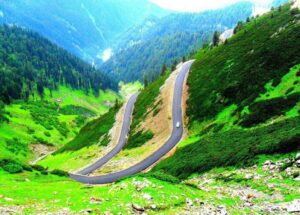
Sinthan Top is a high-altitude mountain pass at 3,700 metres connecting the Kashmir Valley to the Kishtwar district of Jammu. The road up — open June to October — passes through meadows of wild iris, high-altitude wetlands thick with migratory birds, and tiny dhabas run by Gujjar shepherds. At the top, you look out over the Kashmir Valley on one side and the Himalayan wilderness of Jammu on the other. Very few tourists come here.
Getting there: Hired car from Srinagar via Anantnag, about 3 hours to the top. Day trip is possible; combine with Pahalgam (80 km away) or Verinag on a southern loop.
Insider tip: The Gujjar shepherd dhabas at the summit serve the best mountain chai I’ve had anywhere — thick, intensely sweet, with something herby I couldn’t identify. They won’t take cards. Carry cash and drink at least two cups.
6.7 Naranag — Kashmir’s Forgotten Ancient Temples

Most visitors to Kashmir don’t know the valley has 8th-century Hindu temple ruins that rival anything in Hampi for atmosphere and scale. The Naranag temple complex, built by the Karkota dynasty around 700 CE, sits in a meadow beside a glacier stream at the base of the Harmukh range, 50 km from Srinagar. The massive stone blocks — some weighing several tonnes — are stacked without mortar in an architectural style unique to early Kashmiri craftsmanship.
Entry is free. You’ll almost certainly have the entire complex to yourself. The combination of ancient stone, mountain stream, and Himalayan backdrop makes this one of the best photography spots in all of Kashmir.
Getting there: Hired car from Srinagar, 1.5 hours. Easy day trip.
6.8 Bangus Valley — Kashmir’s Most Isolated Meadow
Bangus Valley, near Kupwara, is so remote that it sees almost no tourists at all. A rough 45-km road from Handwara leads into a high-altitude meadow system at 2,900 metres that in June and July becomes temporary home to thousands of sheep and the Gujjar nomads who herd them. The sky above Bangus is a specific shade of blue I’ve only ever seen at altitude — deeper than anywhere at sea level, somehow both darker and more vivid at the same time.
Getting there: Hired car from Srinagar, about 4 hours. The last 15 km is rough road that requires a vehicle with decent clearance. This is a full-day commitment — pack lunch, as there are no restaurants.
Insider tip: Local Gujjar families may offer you tea and bread — accept graciously. It’s not a commercial transaction; it’s just hospitality.
6.9 Verinag — The Secret Garden at the Source of the Jhelum
Most people don’t know that the Jhelum River — the great river that flows through Srinagar and eventually into Pakistan — has its source in a perfectly octagonal Mughal garden at the base of the Pir Panjal range, 80 km south of Srinagar. Verinag Garden, built by Emperor Jahangir in 1620, surrounds a natural spring that sends water rushing out in a startling, powerful torrent. The garden is modestly maintained; the spring is extraordinary; and you’ll share it with almost no one.
Getting there: Shared Sumo from Anantnag (₹60–₹80/seat). Hired car from Srinagar: about 2 hours. Entry ₹24 for Indians.
Insider tip: Combine Verinag with Sinthan Top and Pahalgam on a single southern loop day trip. Three completely different landscapes in one long day.
6.10 Tarisar & Marsar Lakes — Trekking to the Mirror Lakes
Two glacial lakes — Tarisar and Marsar — sit at 3,700 metres in the ranges above Pahalgam, accessible only on foot via a 2–3 day trek through high alpine pasture. When the wind drops, both lakes become perfect mirrors, reflecting the surrounding peaks so accurately that photographs look composited. These see a tiny fraction of even Gangabal’s modest visitor numbers.
Getting there: Base yourself in Pahalgam. The trek takes 2 days to Tarisar, 3 days for the Tarisar + Marsar circuit. A guide is essential (₹1,200–₹1,500/day). This is not a walk-in experience — plan in advance.
7. Practical Travel Tips for Offbeat Kashmir {#tips}
Cash is absolutely king everywhere offbeat. There are no ATMs in Gurez, Lolab, Bangus, or Yusmarg. Withdraw at least ₹3,000–₹5,000 in small notes in Srinagar before you leave the city. Do not assume you’ll find an ATM on the way.
Permits for Gurez: Gurez Valley sits near the Line of Control. Indian nationals need to register at the army check-post with a valid government ID — Aadhaar or passport both work. No special permit is required beyond registration. Just carry your ID and be straightforward at the post.
SIM and internet: Airtel and Jio work in Srinagar and main tourist areas but drop entirely in Gurez, Bangus, and Lolab Valley. Download offline Google Maps for every area you’re visiting before you leave Srinagar. BSNL sometimes works in remote areas where Jio and Airtel don’t.
Guides: For Gangabal, Tarisar-Marsar, and any multi-day treks, hire a licensed local guide through the Pahalgam or Srinagar tourist office. For Gurez and Lolab, your driver will effectively serve as your guide and fixer — choose him well.
Safety: These offbeat areas are genuinely safe for tourists. Army presence in Gurez is visible but personnel are friendly to travellers. Solo women should travel with a local driver vetted through a reputable agency rather than a random street booking.
8. Best Time to Visit Kashmir’s Hidden Gems {#best-time}
| Month | Conditions | Hidden Gems Access |
| Jan–Mar | Heavy snow, sub-zero temperatures | ❌ Most mountain passes completely closed |
| Apr–May | Snow melting, wildflowers beginning | ⚠️ Lower spots accessible, high passes still closed |
| Jun–Jul | Peak green season, all routes open | ✅ Best for Gurez, Doodhpathri, Bangus |
| Aug | Warm, occasional light rain | ✅ Good for most spots, leeches on forest trails |
| Sep–Oct | Crystal clear skies, golden foliage | ⭐ Best overall — trekking, photography, atmosphere |
| Nov–Dec | Valley fine but getting cold; high passes closing | ⚠️ Valley destinations only, Gurez closes October |
The sweet spot for offbeat Kashmir: September. Passes are still open, skies are crystalline, trekking conditions are ideal, and crowds are a fraction of peak summer. Golden chinar foliage in October makes Lolab Valley and the hillsides around Srinagar extraordinary for photography. For budget travellers, November offers dramatically lower prices in the valley — but don’t plan on reaching Gurez or Sinthan Top after mid-October.
9. 5-Day Offbeat Kashmir Itinerary {#itinerary}
Day 1 — Srinagar Base + Naranag Ruins
Arrive Srinagar. Hire your vehicle for the full 5-day package with a trusted local driver. After check-in at your houseboat or guesthouse, drive out to Naranag (1.5 hours) for the afternoon — the 8th-century temple ruins sit beside a glacier stream with the Harmukh range towering behind. Return to Srinagar for the evening.
Estimated daily spend: ₹2,000–₹2,500 (accommodation ₹1,000 + food ₹400 + car ₹800 + entry free)
Day 2 — Gurez Valley (Full Day + Overnight)
Early departure at 6 AM — the Razdan Pass road is best tackled before mid-morning. Drive through switchback mountain roads to Gurez (4–5 hours). Spend the afternoon exploring Dawar village, walking along the Kishanganga River, and reaching the Habba Khatoon Peak viewpoint for golden hour. Stay overnight in a JKTDC bungalow or village homestay inside Gurez.
Estimated daily spend: ₹3,500–₹4,500 (car included in multi-day package ₹3,500 + accommodation ₹1,000 + food ₹500)
Day 3 — Return via Lolab Valley
Morning departure from Gurez, returning toward Srinagar via Bandipora. Take the detour into Lolab Valley (adds about 2 hours) — walk through apple orchards, stop at a village dhaba, sit by a stream. Packed lunch from Gurez or Lolab. Back in Srinagar by early evening.
Estimated daily spend: ₹1,500–₹2,000 (car cost absorbed in multi-day package + food ₹600)
Day 4 — Doodhpathri or Yusmarg
Choose one. Doodhpathri is slightly further (2.5 hours from Srinagar) but the meadow is more spectacular. Yusmarg is closer (2 hours) and has better pony trails. Morning: walk the meadows, watch the white streams, hire a pony for the forest loop. Packed picnic lunch in the meadow. Return to Srinagar by evening.
Estimated daily spend: ₹2,000–₹2,500 (Sumo or car + meals + pony ₹400)
Day 5 — Sinthan Top + Verinag Garden Loop
Drive south from Srinagar via Anantnag to Sinthan Top (3 hours). Summit walk, Gujjar chai, dual-valley views. Descend and drive to Verinag Garden (45 minutes from Anantnag) — the Mughal spring, the octagonal garden, the source of the Jhelum. Return to Srinagar for departure flight.
Estimated daily spend: ₹2,500–₹3,000 (car + fuel + meals + entry ₹24)
10. Complete Budget Breakdown {#budget}
Budget Traveller — ₹28,000–₹32,000 for 5 Days from Delhi
| Expense | Cost (₹) |
| Flights Delhi–Srinagar–Delhi (booked early) | 5,500 |
| Accommodation — 5 nights (houseboat/JKTDC/homestay mixed) | 5,000 |
| Food — 5 days at ₹500/day average | 2,500 |
| Hired vehicle — 5-day driver package with SUV | 12,000 |
| Local guide fees (Naranag + Lolab day) | 1,500 |
| Entry fees (Verinag, Naranag) | 200 |
| Pony rides (Doodhpathri, Yusmarg) | 700 |
| Miscellaneous (shopping, tips, snacks) | 1,000 |
| TOTAL | ₹28,400 |
Note: This runs slightly higher than a standard Kashmir circuit because hired vehicles are non-negotiable for truly remote spots. Split the car hire across four people and the total drops comfortably. For a trip optimised entirely around shared transport and houseboat stays, the Kashmir budget trip under ₹20,000 guide walks you through exactly how to do it.
Mid-Range Traveller: ₹45,000–₹55,000 (better camps, private transfers, guide throughout)
Luxury Traveller: ₹85,000+ (The Khyber as base, private naturalist guide, helicopter options)
Where to save: Village homestays in Gurez over tented camps. Share the hired vehicle — it’s the single biggest cost variable. Pack lunch from Srinagar for remote day trips where dhabas are scarce and inconsistent.
Where to splurge: Your driver. A good, experienced local driver who knows these roads and these people makes the difference between a frustrating offbeat trip and an extraordinary one. Don’t cut corners on the person responsible for your safety on narrow mountain tracks.

11. Final Honest Verdict {#verdict}
The hidden gems of Kashmir humbled me in ways the famous spots — beautiful as they absolutely are — simply didn’t. Gurez Valley is one of the most extraordinary landscapes I’ve seen anywhere in India, full stop. Doodhpathri delivered meadow beauty without the gondola queues. Naranag gave me ancient history in a mountain setting I’d put up against any temple complex in the subcontinent. And the small moments — walnut from a stranger’s tree, chai from a Gujjar dhaba at 3,700 metres, the total silence of Gangabal at dawn — are the ones I’ll still be talking about in five years.
The one honest drawback: This trip requires significantly more planning, a vehicle hire budget, and a higher tolerance for rough roads and basic facilities than the standard Kashmir circuit. If you need reliable Wi-Fi every night, a proper restaurant within walking distance, and a comfortable bed guaranteed, some of these spots will genuinely frustrate you. Gurez especially is remote in the way that word actually means — no ATMs, no signal, no safety net beyond your driver and whatever you’ve packed.
Perfect for: Photographers who’ve run out of wall space for Dal Lake prints. Trekkers who want alpine silence without the Manali crowds. History lovers who can’t believe they’ve never heard of Naranag. Anyone who has already done “Kashmir” once and wants the version underneath it.
Might want to skip if: You’re on your first Kashmir trip and want to cover the highlights first — in which case start with the Kashmir travel guide 2026 and save the offbeat circuit for your second visit. Or if you’re comparing Kashmir against international offbeat options — our guides to Bali’s secret spots, Thailand, and Manali’s hidden valleys make for useful comparisons.
Go to the hidden Kashmir. You’ll come back different.