


📋 TABLE OF CONTENTS
- The Meal That Changed How I Think About Indian Food
- What Makes Kashmiri Cuisine Unique?
- How to Get to Kashmir
- Getting Around Srinagar to Find the Best Food
- Where to Stay Near the Best Food Streets
- 15 Kashmiri Dishes You Must Eat
- Best Restaurants and Food Streets in Srinagar
- Practical Tips for Eating in Kashmir
- Best Time to Visit Kashmir for Food Lovers
- 5-Day Kashmir Food Lover’s Itinerary
- Food Budget Breakdown
- Final Honest Verdict
1. The Meal That Changed How I Think About Indian Food {#intro}
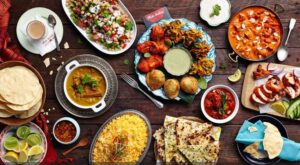
I had been travelling through India for years before I sat down to a Wazwan. I thought I knew what a proper Indian feast looked like — thalis in Rajasthan, Sadyas in Kerala, banana leaf lunches in Tamil Nadu. Then a Kashmiri host in Srinagar’s old city spread a white dastarkhwan across the floor, placed a large copper tray called a trami in the centre, and began setting down dish after dish of food I’d never encountered anywhere: lamb cooked seven different ways, each with its own aromatic logic, rice fragrant with saffron and whole spices, a creamy white gravy with meatballs that dissolved on the tongue like nothing I’d had before.
That meal — a proper Wazwan served in someone’s home — rearranged my understanding of Indian food entirely. Kashmiri cuisine is not a branch of North Indian cooking. It is a completely separate tradition with its own spice logic, its own techniques, its own philosophy. It’s built on dried ginger, fennel seed, and asafoetida more than on the turmeric-coriander-cumin axis that defines most Indian cooking further south. It is deeply, specifically itself.
This is the guide I wish I’d had before I arrived. Everything you need to eat, where to find it, and exactly how much to budget for the most distinctive regional cuisine in India.
2. What Makes Kashmiri Cuisine Unique? {#unique}

Kashmiri food sits at a remarkable cultural crossroads — shaped by Mughal court cooking, Central Asian trade routes, Persian culinary tradition, and the high-altitude geography of the Himalayas. The result is a cuisine that looks unlike anything else in India and tastes unlike it too.
Two parallel culinary traditions exist side by side in Kashmir. Kashmiri Pandit cooking is largely vegetarian, built on asafoetida and dried ginger rather than onion and garlic, with dishes like Dum Aloo and Chok Wangan (sour brinjal) at its centre. Kashmiri Muslim cooking — the more widely known tradition — is intensely meat-focused, centred around the elaborate multi-course Wazwan feast, the most ceremonial meal in Kashmiri culture.
The geography matters too. Kashmir’s cool high-altitude climate means the valley produces world-class saffron (among the most prized in the world), walnuts, dried apricots, lotus stems, and wild mountain herbs — all of which find their way into the food in ways that make it taste like nowhere else.
3. How to Get to Kashmir {#get-there}

By Air — Best Option for Food Travellers
Fly into Sheikh ul-Alam International Airport, Srinagar (SXR). Direct flights operate from Delhi, Mumbai, Bangalore, Hyderabad, and other major cities. Book 4–6 weeks ahead for fares as low as ₹4,500–₹6,000 return from Delhi on IndiGo, Air India, or SpiceJet. From Mumbai or Bangalore: ₹7,000–₹10,000 return.
By Road via Jammu — Budget Route
Take an overnight train to Jammu Tawi (₹600–₹900 sleeper from Delhi), then a shared Sumo or JKSRTC bus onward to Srinagar (₹500–₹800, 7–9 hours). Total from Delhi: ₹1,500–₹2,000. This works if you’re not in a rush and want to see the NH44 mountain scenery on the way in.
If you want food and logistics handled together, the Kashmir group tour packages on Tripyverse include guided food stops and local restaurant access as part of the itinerary.
4. Getting Around Srinagar to Find the Best Food {#getting-around}

Srinagar’s best food is concentrated in three areas: Lal Chowk and the surrounding old city lanes, the Boulevard Road along Dal Lake, and the residential neighbourhoods of Rainawari and Fateh Kadal where local Kashmiri families eat. Getting between them is straightforward.
Shared Auto-Rickshaw: ₹15–₹30 per person for most city rides. Best for navigating the narrow lanes of the old city where cars struggle.
Ola/Uber: Both work reliably in Srinagar. Useful for reaching restaurants on Boulevard Road or the Residency Road stretch. ₹60–₹120 for most rides.
On Foot: The old city area — Nowhatta, Maisuma, Rainawari — is best explored on foot. The food here is tucked into small shopfronts that you’ll walk past if you’re in a car.
Shikara to floating vendors: Dal Lake’s floating market operates early morning — vendors sell fresh lotus stems, greens, and vegetables from boats. Worth the ₹200–₹300 shikara hire just to watch and taste.
5. Where to Stay Near Kashmir’s Best Food Streets {#stay}

Budget (₹700–₹1,500/night)
Old City Guesthouses, Nowhatta or Rainawari area: Staying in the old city puts you within walking distance of the best local eateries, bakeries, and tea shops. Basic rooms from ₹700–₹1,000/night. No frills, maximum food access.
Houseboat stays, Dal Lake: Budget houseboats on Boulevard Road run ₹800–₹1,200/night including breakfast. Many houseboat families will also cook traditional Kashmiri meals if you ask in advance — some of the best food in Kashmir happens in private homes and houseboats rather than restaurants.
Mid-Range (₹2,000–₹4,000/night)
Hotel Grand Mumtaz, Boulevard Road: Clean, well-located, with a decent in-house Kashmiri restaurant. Around ₹2,500/night. The staff are genuinely helpful about directing guests to good local food spots.
Hotel Akbar, Residency Road: Central location, good value at ₹2,000–₹2,800/night. Walking distance to Ahdoos Restaurant, one of Srinagar’s oldest Kashmiri food institutions.
Luxury (₹6,000+/night)
The Lalit Grand Palace: A converted maharaja’s palace with Kashmir’s finest in-house dining — their Wazwan tasting menu is exceptional. ₹8,000–₹15,000/night.
Vivanta by Taj, Dal View: The restaurant here serves one of the most reliably good Kashmiri spreads in the city, particularly useful if you want a curated introduction to the cuisine. ₹7,000–₹12,000/night.
For couples planning a food-forward Kashmir trip, the Kashmir honeymoon packages on Tripyverse include curated dining experiences alongside the houseboat and garden visits.
Best neighbourhood to base yourself for food: Old city Srinagar — Nowhatta, Rainawari, Fateh Kadal. Boulevard Road is more convenient but slightly removed from the authentic local food scene.
6. Fifteen Kashmiri Dishes You Must Eat {#dishes}
6.1 Wazwan — The Grand Feast
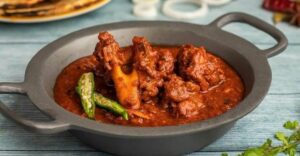
Wazwan is not just a meal; it is the defining cultural expression of Kashmiri Muslim identity. A full Wazwan comprises 36 courses (though most restaurant versions offer 7–12), cooked overnight by a head chef called a Waza and served on a large copper tray called a trami, shared among four diners. The centrepieces are Rogan Josh (lamb in a deep crimson sauce of Kashmiri red chilli and whole spices), Yakhni (lamb in yogurt-fennel gravy), Gushtaba (minced lamb meatballs in white yogurt gravy), and Methi Maaz (lamb with fenugreek).
The ritual of eating Wazwan is as important as the food itself — you eat with your hands from the shared trami, working through the courses as they arrive. I shared a trami with three strangers at a wedding I was invited into off the street, and I still think about the Gushtaba from that evening.
Where to eat it: Ahdoos Restaurant (Residency Road), Mughal Darbar (Residency Road), or ask your houseboat host to arrange a home Wazwan for an additional ₹500–₹800 per person.
Honest warning: Restaurant Wazwans are good; home Wazwans or wedding Wazwans are transcendent. If you get invited to one, cancel everything else.
6.2 Rogan Josh — The Dish Kashmir Is Famous For

Rogan Josh is Kashmir’s most internationally recognised dish, and unlike most famous regional dishes, it fully deserves its reputation. The deep crimson colour comes not from chilli heat but from Kashmiri red chilli (mild and vivid) and dried cockscomb flowers called Mawal, which give the sauce its extraordinary colour without making it punishing to eat. The lamb is slow-cooked in clarified butter with whole spices — cardamom, cloves, cinnamon — until the meat falls from the bone and the oil rises beautifully to the surface.
The Pandit version uses asafoetida instead of onion and garlic. The Muslim version uses onion and shallots. Both are extraordinary. Try both if you can — the flavour difference is significant and fascinating.
Where to eat it: Literally everywhere in Srinagar, but the benchmark version is at Ahdoos or Mughal Darbar. Budget: ₹280–₹380 for a portion.
Insider tip: The oil floating on the surface of proper Rogan Josh is not a sign of poor cooking — it’s the sign of authentically made dish. Don’t ask them to reduce it.
6.3 Gushtaba — The King Dish
Gushtaba is traditionally the final savoury dish in a Wazwan — the “king dish” that signals the feast is coming to its close. It is minced lamb, hand-pounded (not ground — the distinction matters enormously for texture) until silky, shaped into large meatballs, and cooked in a white yogurt-fennel gravy so delicate it barely seems capable of containing so much flavour. The meatballs are feather-light and dissolve rather than chew.
Making proper Gushtaba requires pounding the meat in a large wooden mortar (called a kanz) for 40–50 minutes. Shortcuts show in the texture immediately. The version at a proper restaurant or home kitchen is unlike anything else in Indian cooking.
Where to eat it: Part of most Wazwan sets. Standalone at Ahdoos (₹320–₹380). Do not substitute with a machine-minced version — ask specifically if it’s hand-pounded.
6.4 Dum Aloo Kashmiri — The Vegetarian Crown Jewel
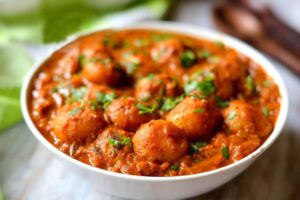
Dum Aloo is the dish that converts vegetarians to Kashmiri food forever. Small whole potatoes are deep-fried until the skin puckers and blisters, then pressure-cooked in a sauce of Kashmiri red chilli, fennel seed, dried ginger, and asafoetida — no onion, no tomato. The result is intensely spiced (not hot-spiced — aromatic-spiced) and deeply savoury in a way that doesn’t require meat to feel satisfying.
The Kashmiri Pandit version is the definitive one — made without onion and garlic, it has a purity of spice flavour that the Muslim version (which includes onion) doesn’t quite replicate. Both are excellent.
Where to eat it: Krishna Dhaba near Lal Chowk (primarily vegetarian, excellent Pandit-style cooking, ₹120–₹180). Ahdoos also does a reliable version.
6.5 Kahwa — Saffron Green Tea

Kahwa is the drink that Kashmir runs on. It is green tea brewed with saffron, whole cardamom, cinnamon sticks, and dried rose petals, poured into small china cups and topped with crushed almonds and sometimes a drizzle of honey. It is served everywhere — in homes, in carpet shops (where it functions as a soft sales lubricant), on shikaras, in hotel lobbies, and in tiny hole-in-the-wall tea stalls in the old city.
The copper samovar in which Kahwa is brewed is itself a piece of Kashmiri craft heritage. Watching the tea being prepared in a traditional samovar — charcoal glowing through the central chimney — is one of the small visual pleasures of the trip.
Where to drink it: Everywhere. Best versions in Old City tea stalls (₹30–₹50 per cup). Worst versions in tourist restaurants (₹120 for a bag dunked in hot water). The difference is immediately apparent.
Insider tip: Saffron quality varies enormously in Kashmir. Kahwa made with real Kashmiri saffron (Mongra grade) has a completely different depth of flavour than the tourist-grade alternatives. The tea stalls in Nowhatta area use the real thing.
6.6 Noon Chai — The Pink Salt Tea

Noon Chai (also called Sheer Chai or Gulabi Chai) is exactly what it sounds like: tea that is pink. Made by brewing a special type of tea leaf (Gunpowder green tea or traditional Kashmiri tea) with baking soda and salt, then combining it with milk — the chemical reaction between the alkaline baking soda and the tea tannins produces the distinctive pink-rose colour. It is thick, slightly salty, mildly creamy, and unlike any tea you’ve had before.
It is an acquired taste. I hated my first cup and loved my fifth. The key is drinking it fresh and very hot with a Kashmiri sheermal or kulcha alongside.
Where to drink it: Old City bakeries in the morning. Local dhabas near Lal Chowk. ₹20–₹40 per cup.
Honest warning: Noon Chai served to tourists is often diluted and sweetened to make it more approachable. The authentic version is saltier and thicker than most visitors expect. Stick with it.
6.7 Sheermal — Saffron Flatbread

Sheermal is a saffron-tinged, slightly sweet flatbread baked in a tandoor. The dough is made with milk, ghee, and saffron, giving it a pale gold colour and a richness that makes it more pastry than bread. It is traditionally eaten with Kahwa at breakfast or with Wazwan dishes — the sweetness of the bread against the savoury depths of Rogan Josh is a combination that shouldn’t work on paper and is extraordinary in practice.
The best Sheermal in Srinagar comes from the Old City bakeries near Jamia Masjid — tandoor-fresh in the early morning, brushed with ghee, served warm. One piece costs ₹15–₹25.
Where to eat it: Old City bakeries near Nowhatta Square and Jamia Masjid. Go before 9 AM for the best fresh-baked versions. They sell out.
6.8 Harissa — The Winter Dawn Dish
Harissa is Kashmir’s most seasonal and least-known dish — a slow-cooked porridge of minced lamb and rice or wheat, cooked in a large pot overnight with rendered fat and whole spices, stirred continuously until it reaches the consistency of thick porridge. It is served only in winter (November to February), primarily in the Old City, at small stalls that open only in the early morning hours.
I had Harissa at 7 AM on a cold November morning in Nowhatta, eaten standing at a small wooden counter with two local men on their way to work, and it was one of the most purely comforting things I’ve eaten anywhere. Rich, warming, porridge-thick, deeply savoury.
Where to eat it: Old City, Nowhatta area. Available November–February only. Stalls open at dawn and close when the pot is empty — usually by 9 AM. ₹80–₹120 per bowl.
Honest warning: Harissa is genuinely not available outside winter. Don’t let any restaurant convince you otherwise.
6.9 Tabak Maaz — Crispy Fried Ribs
Tabak Maaz is lamb ribs slow-cooked in milk and whole spices until tender, then pan-fried in ghee until the exterior is crisp and caramelised. The result is simultaneously succulent inside and crackling outside — the kind of dish that makes you immediately concerned about how many pieces are left on the tray. It is a Wazwan staple and one of the most immediately crowd-pleasing dishes in Kashmiri cooking.
Where to eat it: Part of most Wazwan sets. Available standalone at Ahdoos and Mughal Darbar (₹300–₹400 per serving).
6.10 Yakhni — Lamb in Yogurt Gravy
Yakhni is one of the more subtly flavoured dishes in the Wazwan — lamb cooked in a yogurt and fennel seed gravy that is pale ivory in colour and deeply aromatic. Where Rogan Josh is bold and crimson, Yakhni is restrained and refined. The yogurt base keeps the gravy light, and the fennel gives it a faintly anise-sweet quality that is uniquely Kashmiri.
It’s the dish I find myself thinking about weeks after leaving Kashmir — not because it’s the most dramatic, but because the flavour is so specifically itself, so unlike anything in the rest of Indian cooking.
6.11 Modur Pulao — Sweet Saffron Rice
Modur Pulao is a sweet rice preparation — basmati cooked with saffron, ghee, sugar, and an abundance of dried fruits including raisins, cashews, dried apricots, and almonds. It is traditionally a festive dish, served at weddings and celebrations. The combination of savoury rice, sweetness, and the richness of nuts and dried fruit is heady and luxurious.
Where to eat it: Wedding catering, home cooking, and at a few traditional restaurants in Srinagar on request. Not always on regular menus — ask specifically.
6.12 Lotus Stem Dishes — Nadru
The lotus stems grown in Dal Lake are a defining ingredient of Kashmiri cuisine, particularly in Pandit cooking. Called Nadru, they are used in multiple preparations — Nadru Yakhni (lotus stems in yogurt gravy), Nadru Monje (deep-fried fritters, a popular street snack), and Nadru Palak (with spinach). The texture is crunchy and slightly starchy, with a clean, mild flavour that absorbs spice beautifully.
Where to eat it: Nadru Monje from street stalls near Lal Chowk (₹40–₹60 for a plate of fritters). Nadru Yakhni at traditional Kashmiri restaurants.
6.13 Haak — Kashmiri Collard Greens
Haak is the simplest and most ancient dish in Kashmiri Pandit cooking — collard or mustard greens cooked in water with a tempering of asafoetida and dried red chilli, nothing else. No onion, no spice paste, no tomato. The leaves are cooked quickly to keep their vivid colour, and the result is clean, slightly bitter, deeply savoury in a mineral way. It is eaten with rice at almost every Kashmiri Pandit meal.
It sounds too simple to be worth mentioning. It is the kind of dish that makes you reconsider the entire concept of simple cooking.
6.14 Kashmiri Bakery — Kulcha, Lavasa, and Tchot
The Old City of Srinagar has a bakery culture that most visitors completely miss. Traditional Kashmiri breads — baked in wood-fired ovens called kanders — include Kulcha (ring-shaped soft rolls, similar to a bagel in shape, eaten with Noon Chai), Lavasa (thin crisp flatbread), and Tchot (a dense, slightly sour bread). Each neighbourhood has its own bakery; the smell of wood smoke and fresh bread in the early morning Old City is one of the best free experiences Kashmir offers.
Where to eat it: Any Old City neighbourhood. Look for the kander — the clay pot embedded in a sunken fire — and the queue of locals waiting. Follow the queue. ₹10–₹30 per bread.
6.15 Walnuts, Saffron, and Dry Fruits — The Edible Souvenirs
Kashmir is India’s primary producer of walnuts and one of the world’s finest sources of saffron. Both are available throughout Srinagar’s markets, particularly around Lal Chowk and the Polo View Market. Kashmiri walnuts are significantly more flavourful than the imported alternatives you get in other Indian cities — meatier, less bitter, with a creamy richness. The saffron (look for Mongra grade, the highest quality) is among the world’s best when genuine.
Where to buy: Polo View Market and the shops along Residency Road. Be aware that saffron adulteration is common — buy from reputable shops, expect to pay ₹400–₹600 per gram for genuine Mongra grade. Anything significantly cheaper is not what it claims to be.
7. Best Restaurants and Food Streets in Srinagar {#restaurants}

Ahdoos Restaurant, Residency Road: Srinagar’s oldest and most consistently reliable Kashmiri restaurant. The Wazwan set (₹500–₹700/person), the Rogan Josh, and the Tabak Maaz are all benchmark versions. Busy at lunch; book ahead for dinner.
Mughal Darbar, Residency Road: The closest competitor to Ahdoos, with a slightly more refined dining room and very similar quality. The Gushtaba here is particularly good.
Krishna Dhaba, near Lal Chowk: The best budget option for vegetarian Kashmiri food in Srinagar. Excellent Dum Aloo, Haak, and Nadru dishes. Full meal under ₹200.
Chai Jaai, Boulevard Road: A newer, more Instagram-friendly cafe that nonetheless does excellent Kahwa and a good Noon Chai. Useful if you want a comfortable sit-down tea experience rather than standing at an Old City stall.
Old City bakeries, Nowhatta: No name, no signage — just follow the smoke and the queue. The freshest bread in Srinagar, every morning.
Floating vegetable market, Dal Lake: Not a restaurant but an experience — take a shikara out at 6–7 AM and buy fresh lotus stems, nadru, and mountain greens directly from the boat vendors.
8. Practical Tips for Eating in Kashmir {#tips}
Halal and vegetarian availability: Kashmiri Muslim cooking is entirely halal. Kashmiri Pandit cooking is entirely vegetarian and onion/garlic-free. Both traditions are widely available in Srinagar. You will not struggle to find good food as either a meat-eater or a vegetarian.
Cash for food: Almost all Old City eateries, bakeries, street stalls, and small dhabas are cash-only. Carry small notes. ₹10–₹20 notes are useful for bakery purchases and chai stalls. Larger restaurants (Ahdoos, Mughal Darbar) accept cards.
Water and stomach adjustment: Kashmiri food is rich — lamb-heavy, ghee-heavy, yogurt-heavy. If you’re not used to this style of cooking, start with smaller portions and build up. The spicing is aromatic rather than chilli-hot, so heat is rarely the issue — richness occasionally is.
Food timing: Old City bakeries open at dawn and sell out by 9 AM. Harissa stalls (winter only) operate 6–9 AM. Main restaurant lunch service is 12:30–3 PM; dinner 7–10 PM. Kahwa is available all day everywhere.
Saffron buying tip: Buy saffron at shops, not from street vendors or shikara touts. Ask specifically for Mongra (Grade A1) saffron — the dried stigma strands, not powder (powder is almost always adulterated). A reputable shop will let you smell it before purchase.
9. Best Time to Visit Kashmir for Food Lovers {#best-time}
| Month | Food Highlights | Conditions |
| Jan–Feb | Harissa available, winter walnut harvests, fewer crowds | ❄️ Very cold (-5 to 5°C), snow possible |
| Mar–Apr | Spring greens, fresh Haak, morel mushrooms appear | 🌷 Pleasant, tulip season, mild crowds |
| May–Jun | Full produce season, all restaurants fully operational | ☀️ Busy, warm, best variety |
| Jul–Aug | Peak season, all food available, some tourist-trap pricing | 🌤 Hot and crowded, negotiate everything |
| Sep–Oct | Apple harvest, walnut season, saffron harvest begins | 🍂 Best overall — fresh produce everywhere |
| Nov–Dec | Harissa returns, dry fruit season, fewer tourists | 🧣 Cold, best saffron prices, authentic atmosphere |
The food lover’s sweet spot: October is when everything converges — the apple and walnut harvests are in full swing, the saffron harvest begins in Pampore (about 15 km from Srinagar — worth a visit in October specifically), and the summer crowds have thinned. November adds Harissa back to the table and brings the most atmospheric Old City experience of the year.
Spring bonus: March and April bring morel mushrooms (Gucchi) to Kashmiri cooking — wild-foraged from the forests and extraordinarily prized. A morel dish in season costs ₹600–₹1,200 but is genuinely worth it. Out of season, dried Gucchi is available year-round but at steep prices.
10. 5-Day Kashmir Food Lover’s Itinerary {#itinerary}
Day 1 — Srinagar: Old City Food Walk + Wazwan Dinner
Morning: Arrive Srinagar, check into houseboat or old city guesthouse. Head immediately to the Old City — Nowhatta area. Find a kander bakery, buy fresh Kulcha and Noon Chai for breakfast (₹50–₹80 total). Walk through the old city lanes: Jamia Masjid, Shah Hamdan, the cloth bazaar.
Afternoon: Lunch at Krishna Dhaba — Dum Aloo, Haak, Nadru Monje fritters. Walk to Polo View Market; buy a small quantity of Mongra saffron (verify quality before purchasing).
Evening: Dinner at Ahdoos Restaurant — the full Wazwan set. Order Rogan Josh, Tabak Maaz, Gushtaba, Yakhni. This is your first serious Wazwan experience; take notes.
Estimated food spend: ₹700–₹900
Day 2 — Dal Lake + Houseboat Cooking
Early morning (6 AM): Hire a shikara for the floating vegetable market. Buy fresh lotus stems and greens from boat vendors. Watch the lake wake up.
Late morning: Return to houseboat — ask your host to cook a traditional Kashmiri lunch using the produce you bought. Most houseboat families will do this for an additional ₹300–₹500. This is some of the best home cooking you’ll have in Kashmir.
Afternoon: Walk the Boulevard Road — try the Kahwa at a lakeside café. Visit Hazratbal for the atmosphere and the tiny tea stalls nearby.
Evening: Dinner at Mughal Darbar. Try their Seekh Kebab as a starter — different spicing from the Punjabi version you know.
Estimated food spend: ₹600–₹800
Day 3 — Pampore Saffron Fields + Gulmarg Gujjar Tea (if October)

Morning: Drive to Pampore (15 km from Srinagar) — the saffron capital of Kashmir. In October, the purple crocus flowers carpet the fields at dawn. Visit a processing facility and taste the difference between fresh and dried saffron. Buy directly from farmers.
Afternoon: Day trip to Gulmarg. Stop at a Gujjar shepherd dhaba on the way — mountain chai and simple mountain bread (roti with butter). Basic, seasonal, extraordinary.
Evening: Return to Srinagar. Dinner in the Old City — try a small local dhaba rather than a tourist restaurant. Point at what the person next to you is eating.
Estimated food spend: ₹500–₹700
Day 4 — Pahalgam + Local Trout + Kashmiri Picnic
Morning: Drive to Pahalgam (96 km). Pahalgam sits on the Lidder River and is known for fresh trout — local dhabas along the river serve freshly caught fish, simply pan-fried with local herbs. It’s not technically Kashmiri cuisine but it’s one of the best meals of any Kashmir trip.
Afternoon: Pick up provisions at a local market — dried apricots, walnuts, mountain honey — for a riverside picnic in Betaab Valley.
Evening: Return to Srinagar. Final Kahwa of the trip in an Old City tea stall. Buy your edible souvenirs: saffron, walnuts, dried morels if in season.
Estimated food spend: ₹600–₹900
Day 5 — Srinagar: Harissa Breakfast (Winter Only) + Departure
Morning (winter visit): Wake at 6 AM, walk to Nowhatta — find the Harissa stall. Bowl of Harissa, fresh Sheermal alongside. This is the most Kashmiri breakfast possible.
Morning (summer visit): Sheermal and Noon Chai from Old City bakery. Walk through the old city one last time.
Late morning: Head to airport for departure.
Estimated food spend: ₹200–₹400
11. Food Budget Breakdown {#budget}
Budget Food Traveller (₹400–₹600/day on food alone)
| Meal / Item | Cost (₹) |
| Old City bakery breakfast (Kulcha + Noon Chai) | 50–80 |
| Local dhaba lunch (Dum Aloo, Haak, rice) | 150–200 |
| Street snacks (Nadru Monje, fresh walnut) | 80–120 |
| Kahwa — 2 cups daily | 60–100 |
| Dinner at mid-range restaurant | 250–350 |
| Daily food total | ₹590–₹850 |
Mid-Range Food Traveller (₹900–₹1,500/day on food)
Adds: Wazwan set at Ahdoos (₹500–₹700/sitting, 2–3 times per trip), houseboat home-cooking experiences (₹400–₹500 extra), one morel mushroom dish in season.
Splurge Food Experience
Full Wazwan tasting menu at The Lalit Grand Palace: ₹1,800–₹2,500/person. Worth it once for the presentation and the setting.
Complete 5-Day Food Budget (Budget Traveller):
| Item | Cost (₹) |
| Flights Delhi–Srinagar return | 5,500 |
| Accommodation 5 nights (houseboat) | 5,000 |
| Daily food — 5 days at ₹700 average | 3,500 |
| One Wazwan dinner at Ahdoos | 600 |
| Houseboat home cooking experience | 500 |
| Edible souvenirs (saffron, walnuts) | 1,500 |
| Shikara hire, transport, misc | 1,500 |
| TOTAL | ₹18,100 |
This comfortably fits under the ₹20,000 mark — for the complete budget framework, the Kashmir budget trip under ₹20,000 guide has the full breakdown including accommodation and transport. And if you want to explore Kashmir’s food scene beyond Srinagar — the Gujjar dhabas, the offbeat valley cooking — our hidden gems in Kashmir guide covers those routes in detail.
Where to save on food: Old City tea stalls over tourist cafes (₹30 vs ₹120 for the same Kahwa). Krishna Dhaba over hotel restaurants for vegetarian meals. Buy walnuts from Polo View Market rather than airport shops — same product, half the price.
Where to splurge on food: One proper home Wazwan or wedding Wazwan if the opportunity presents itself. Mongra grade saffron rather than tourist-grade. Fresh morel mushrooms in season (March–April) — they’re expensive and entirely worth it.

12. Final Honest Verdict {#verdict}
Kashmiri cuisine is the most underrated regional food tradition in India. I say this having eaten my way through most of the country’s major food cultures over many years. The Wazwan is among the great ceremonial feasts of the world — not just of India. The vegetarian Pandit tradition is a revelation for anyone who thinks Indian vegetarian food means curry and dal. And the small things — Sheermal fresh from a kander, Kahwa from a copper samovar, Harissa on a cold winter morning — are the kind of food memories that stay with you permanently.
The honest drawback: The best Kashmiri food happens in homes and at weddings — not in restaurants. Restaurant Wazwans are good; home Wazwans are on another level entirely. Getting access to home cooking requires either knowing someone local, staying in a family houseboat and asking properly, or booking through a tour operator that has genuine local connections. The Kashmir travel guide 2026 has guidance on the best operators for this. Going through the wrong channels and eating only restaurant food is not the full experience.
Second honest drawback: If you don’t eat lamb, you will miss a significant portion of Kashmiri cuisine. The Pandit vegetarian tradition is excellent and genuinely satisfying, but the Wazwan — the heart of the food culture — is built on meat. Vegetarians will eat well; they just won’t eat everything.
Perfect for: Food travellers who’ve already done the classic Indian food circuits (Rajasthan, Kerala, Punjab) and want something genuinely different. Anyone with a serious interest in Mughal food history. Meat-eaters, especially lamb lovers — Kashmir is your version of heaven. Couples who want a food-and-landscape combination trip (the Kashmir honeymoon packages do this combination particularly well).
Might want to temper expectations if: You’re vegetarian and expecting the depth of variety you’d find in a South Indian or Rajasthani food tradition. The Pandit food is excellent but the variety is narrower. Also worth noting: if you’re comparing the food travel experience against internationally known cuisine destinations, our Kerala food guide and Thailand food tips make for interesting comparisons in depth of food culture.
Go. Eat the Gushtaba. Drink the Kahwa. Buy the saffron. You’ll understand what I mean when you get there.