


Table of Contents
- Introduction — The Valley That Stopped Me Cold
- Where Is Kashmir Located
- How to Get to Kashmir
- Getting Around Kashmir
- Where to Stay in Kashmir
- 10 Best Places to Visit in Kashmir
- Practical Travel Tips
- Best Time to Visit Kashmir
- 7-Day Kashmir Itinerary
- Budget Breakdown
- Final Verdict
🏔️ Introduction — The Valley That Stopped Me Cold
I wasn’t prepared for the moment the flight descended into Srinagar. One second you’re above a wall of grey cloud, and then — without warning — the entire Kashmir Valley opens below you like something from a dream you half-remember. Snow-draped peaks ringing an impossibly green valley, the Dal Lake catching the early morning light like hammered silver, houseboats lined up along the shore like a row of ornate wooden sentences. I actually held my breath.
I’d been told Kashmir was beautiful. I’d seen the photographs. I thought I understood. I didn’t.
Here’s what no photograph ever conveys: the smell of the valley in spring, when the chinar trees are budding and someone somewhere is always burning almond wood. The weight of a Pashmina shawl — the real kind, not the tourist market version — between your fingers. The sound of a shikara paddle dipping into still water at dawn. These are the things that make Kashmir not just a destination but a dislocation — the sensation of having arrived somewhere that operates at a different frequency than the rest of the world.
This is my complete, honest Kashmir travel guide for 2026. Everything I wish I’d known before I went, and everything that made me immediately start planning a return.
📍 Where Is Kashmir Located
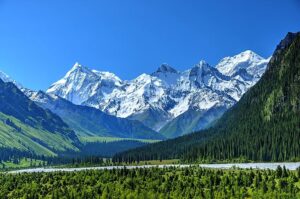
Kashmir — specifically the Kashmir Valley — sits in the northernmost part of India, cradled between the Pir Panjal range to the south and the Great Himalayan range to the north. It shares borders with Pakistan to the west and China to the east, which gives it both its complicated political history and its extraordinary geographical drama. Srinagar, the summer capital of Jammu & Kashmir, is the main gateway city at an elevation of around 1,585 metres — high enough to feel genuinely cool even in summer, breathtaking in the literal sense come winter.
The valley stretches roughly 135 kilometres from north to south and sits in a bowl of mountains that creates its own microclimate — one of the reasons it has historically been called Paradise on Earth, a phrase that actually earns its hyperbole here.
✈️ How to Get to Kashmir
By Air: The fastest and most practical option. Srinagar International Airport (SXR) is well-connected to Delhi, Mumbai, Bengaluru, and Jammu. IndiGo, Air India, SpiceJet, and Vistara all operate regular services. Flight time from Delhi is approximately 1.5 hours. During peak season (April–June and September–October), book at least 3–4 weeks in advance — prices spike hard. A Delhi–Srinagar round trip in shoulder season costs ₹6,000–11,000; peak season can hit ₹18,000+.
By Train + Road: Take a train to Jammu Tawi (well-connected from Delhi, Mumbai, and most major cities) and then continue by road. The Srinagar–Jammu National Highway (NH44) is one of the most scenically spectacular drives in India, passing through Banihal tunnel and the Jawahar Tunnel. Road distance from Jammu to Srinagar is around 270 km — plan for 6–8 hours depending on conditions. Shared taxis cost ₹700–1,000 per seat; private cabs run ₹3,500–5,000.
By Road from Delhi: A two-day road trip via Jammu is entirely doable for those who want the full Himalayan approach. Drive or take a Volvo bus to Jammu (Delhi to Jammu is around 580 km), overnight, then continue to Srinagar the next morning.
Important note for 2026: Always check the status of NH44 before travel — landslides and weather closures are common, particularly in July–August. The Banihal–Qazigund rail link has reduced road dependency but road remains the scenic option.
🚗 Getting Around Kashmir
Kashmir is genuinely easy to navigate as an Indian traveller once you understand the system.
Shikaras on Dal Lake: For getting between houseboats, ghats, and the floating vegetable market — this is your transport. ₹100–300 for short rides, ₹500–1,500 for longer excursions. Always negotiate before boarding.
Auto-rickshaws in Srinagar city: Good for short local hops. ₹50–150 per trip. Not metered — fix the price first.
Shared Sumo/Tempo Travellers: The backbone of inter-city Kashmir transport. Fixed routes from TRC (Tourist Reception Centre) in Srinagar to Gulmarg, Pahalgam, Sonamarg, and further destinations. Extremely affordable — ₹150–400 per seat — but departure times are irregular and dependent on vehicle filling up.
Private Cab: Most practical for group travel or anyone wanting flexibility. A full-day private cab in the valley costs ₹2,500–4,500 depending on destination and vehicle type. Drivers here double as excellent informal guides — many have deep knowledge of local routes and hidden spots.
Self-Drive: Technically possible but not recommended for first-timers. Mountain roads require experience, and road conditions change rapidly.
Difficulty level for first-timers: Moderate. The language barrier is minimal (locals speak good Hindi and often reasonable English), and the general infrastructure for tourists is well-developed. The only genuine challenge is managing the frequently chaotic negotiation culture and the incessant persistence of certain market vendors.
🏨 Where to Stay in Kashmir
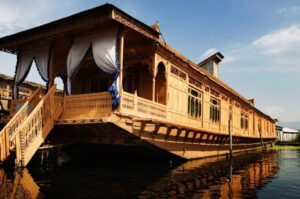
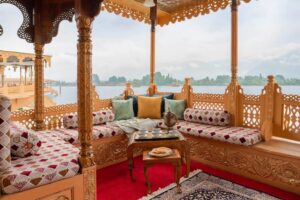
Dal Lake / Nagin Lake Houseboat (Budget–Mid-Range: ₹1,500–5,000/night): Staying on a houseboat is non-negotiable for at least two nights of your trip. These intricately carved wooden vessels come in enormous variety — from basic rooms with shared bathrooms to deluxe suites with hand-painted papier-mâché ceilings and private decks. Some recommended names: Nagin Bagh Houseboats, New Aban Houseboat (consistently reliable), and Victoria Group of Houseboats for mid-range. Book directly whenever possible — commissions eat into quality at some middleman-arranged properties.
Gulmarg (Mid-Range: ₹3,500–7,000/night): Hotel Highlands Park is a colonial-era property with excellent views and solid service. Hotel Affarwat is a comfortable mid-range option with a good restaurant. For a pure budget experience, several small guesthouses near the gondola base offer rooms from ₹1,200–2,500.
Pahalgam (Mid-Range–Luxury: ₹3,000–12,000/night): The Pahalgam Hotel is the gold standard — colonial property, riverside setting, legendary. Hotel Pine Palace Resort offers a good mid-range experience with mountain views. If you’re visiting on a Kashmir honeymoon package, the riverside luxury properties in Pahalgam are genuinely romantic — waking up to the sound of the Lidder River while snow peaks catch the first light is a moment that stays with you.
Srinagar City (Budget–Mid-Range: ₹800–3,500/night): Dal Gate area has the best concentration of budget guesthouses. The Lal Chowk neighbourhood is convenient for city access but noisier. Hotel Grand Shaheenabad and The Lalit Grand Palace (splurge) are both dependable options.
🌄 10 Best Places to Visit in Kashmir
1. Dal Lake — The Heart of Everything
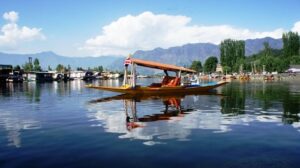
There is no Kashmir experience without Dal Lake. It’s not just a lake — it’s a city on water. Vegetable farmers tend floating gardens (locally called demb) that have been cultivated for generations. A morning shikara ride at 6 AM, before the tourist traffic begins, is one of the most serene experiences I’ve ever had anywhere in the world. The water reflects the mountains with a stillness that makes you feel like you’re floating between two skies.
How to get there: Dal Lake is essentially in Srinagar — accessible from multiple ghats along Boulevard Road. Time required: At least half a day; a full day if you want to explore the floating market and garden islands. Insider tip: The Nehru Dal Lake Park side of the lake is prettier and less crowded than the main Boulevard ghat area. Go at dawn.
2. Gulmarg — The Meadow of Flowers (and Asia’s Highest Gondola)

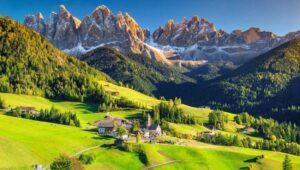
At 2,650 metres, Gulmarg is a bowl of emerald meadow ringed by snow peaks — and in winter, it transforms into one of India’s premier ski destinations. The Gulmarg Gondola, which climbs to the Apharwat Peak at 3,980 metres, is the main attraction: two phases of cable car, Phase II delivering you into a world of permanent snow and 360-degree Himalayan panorama that honestly competes with anything in the Alps.
How to get there: 52 km from Srinagar; shared Sumo ₹250–350 per seat, private cab ₹2,000–2,500 return. Time required: Full day from Srinagar, or overnight stay recommended. Honest warning: In peak summer (May–June), gondola queues can stretch 2–3 hours. Go on a weekday and arrive by 8 AM.
3. Pahalgam — Valley of the Shepherds
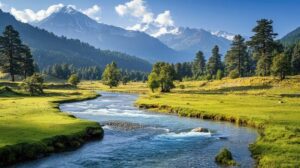
The Lidder River runs silver through Pahalgam, a valley town surrounded by dense pine forests, alpine meadows, and the kind of air that makes you feel ten years younger. It’s the base for the Amarnath Yatra pilgrimage, but even without any religious purpose, it’s a genuinely extraordinary place — particularly the Betaab Valley (named after the 1983 Bollywood film shot here) and Aru Valley, a 12 km further into the mountains, where wooden shepherd huts dot meadows that feel entirely removed from the 21st century.
How to get there: 96 km from Srinagar; shared Sumo ₹350–500 per seat. Time required: 2 days minimum to do it justice. Insider tip: Aru Valley is far less crowded than Betaab Valley and arguably more beautiful. Hire a local pony or walk the trail through pine forest — it takes about 45 minutes each way.
4. Sonamarg — The Meadow of Gold
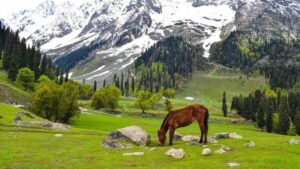
The name means “golden meadow” and at sunrise — when the light hits the fields of wildflowers and the Thajiwas Glacier glows amber and pink behind them — you understand immediately why. Sonamarg sits at 2,740 metres and serves as the base for treks to Vishansar and Gangabal lakes, as well as the day-trip glacier walk on Thajiwas.
How to get there: 87 km from Srinagar; private cab ₹2,500–3,500 return. Time required: Full day from Srinagar or overnight. Insider tip: The Thajiwas Glacier walk is done almost entirely on horseback (pony ride) in practice — solo hiking is possible but check conditions with locals first, particularly in early season when crevasses can be unpredictable.
5. Mughal Gardens — Shalimar, Nishat & Chashme Shahi
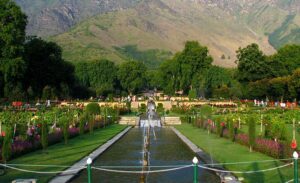
The three Mughal gardens along the eastern shore of Dal Lake are among the finest examples of Mughal landscape architecture in existence — terraced gardens climbing the hillside, stone water channels carrying glacial runoff through fountains, chinar trees the size of apartment buildings throwing shade over geometric flower beds. Shalimar Bagh is the most famous and most crowded. Nishat Bagh is larger and arguably more dramatic. Chashme Shahi is the smallest but has the most serene atmosphere and is fed by a natural spring considered medicinal.
Entry fee: ₹24–40 per garden. Best time to visit: April–May when flowers are at peak bloom, or October when chinar leaves turn gold and rust. Insider tip: Visit Chashme Shahi first thing in the morning — it’s quieter, the spring water is cold and genuinely refreshing, and the views over Dal Lake are extraordinary.
6. Shankaracharya Temple — Srinagar’s Spiritual High Point
Perched on a hill 300 metres above Srinagar, this ancient Shiva temple offers what is — without argument — the single best panoramic view of the entire Kashmir Valley. On a clear day you can see Dal Lake, the old city, the Jhelum River, and the full ring of surrounding peaks. The climb involves 250 stone steps from the road (or a cab to the base). The temple itself is simple, ancient, and genuinely atmospheric.
Entry: Free (small donation appreciated); security check required — carry ID. Best time: Sunrise or late afternoon golden hour. Honest warning: Bags and cameras must be deposited at the base — the security is thorough and non-negotiable.
7. Old Srinagar & Lal Chowk — The City’s Living Heart
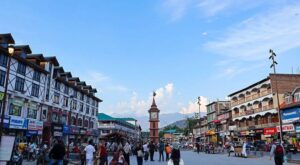
Srinagar’s old city is where the Kashmir that existed before mass tourism still breathes. The narrow lanes around Nowhatta and the Jamia Masjid (the largest mosque in Kashmir, with 378 wooden pillars and a courtyard that holds thousands) are genuinely fascinating — spice shops, papier-mâché craftsmen, wazwan restaurants operating out of ancestral kitchens, and the particular rhythm of a city that moves at its own pace. Lal Chowk is the commercial heart — chaotic, colourful, and excellent for people-watching.
How to get there: Auto-rickshaw from Dal Gate, ₹50–80. Time required: Half day minimum to wander properly. Insider tip: The waterfront promenade along the Jhelum near Shah Hamdan Mosque is one of Srinagar’s most atmospheric walks, especially at dusk.
8. Doodhpathri — The Valley of Milk
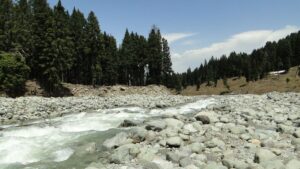
Far less visited than Gulmarg or Pahalgam, Doodhpathri (literally “bowl of milk,” named for its white-frothing streams) is a high alpine meadow about 42 km from Srinagar. The streams run so fast and white over smooth boulders that the water genuinely resembles milk in motion. I spent a morning there sitting beside a stream while shepherds moved their flocks through knee-deep wildflowers in the background. Nobody was selling anything. Nobody was asking me to sit on a pony. It was, in the best possible way, completely quiet.
How to get there: Private cab from Srinagar, ₹2,000–2,500 return. Time required: Half to full day. Honest warning: Not many food options on-site — pack your own lunch or snacks.
9. Wular Lake & Manasbal Lake — The Undiscovered Water
Most travellers focus entirely on Dal Lake and miss the fact that Kashmir has several other extraordinary water bodies. Wular Lake, about 60 km north of Srinagar, is one of the largest freshwater lakes in Asia — vast, wild, and almost entirely without tourist infrastructure. Manasbal Lake is smaller and lined with lotus flowers in summer, surrounded by the kind of village life that hasn’t changed perceptibly in decades. These are destinations for travellers willing to do a bit more planning — and the reward is a Kashmir almost entirely free of tourist crowds.
10. Wazwan Dinner — The Essential Cultural Experience
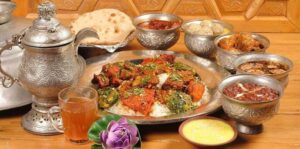
Not a place but an unmissable experience. Wazwan is Kashmir’s traditional multi-course banquet — 36 dishes in the full ceremonial version, though a restaurant-style meal typically covers 8–12. The highlights are Rogan Josh (slow-cooked lamb in Kashmiri red chilli and mawal flower — deeply aromatic, not aggressively spicy), Gushtaba (minced lamb meatballs in creamy yoghurt gravy, traditionally the final savoury dish), Dum Olav (whole baby potatoes in spiced yoghurt sauce — the vegetarian hero of the spread), and Seekh Kabab fresh off the charcoal.
Best restaurants: Mughal Darbar (Residency Road, Srinagar), Ahdoos Restaurant (a Srinagar institution), and Lhasa Restaurant for Tibetan-Kashmiri fusion. Budget: ₹400–900 per person for a full restaurant Wazwan. Insider tip: Eat with your right hand in the traditional style if you’re comfortable — it genuinely tastes different, and the hosts appreciate the gesture.
💡 Practical Travel Tips
Cash: Non-negotiable. ATMs in Srinagar are reliable, but in Gulmarg, Pahalgam, and smaller destinations, digital payments are inconsistent and card acceptance is limited. Carry sufficient cash before leaving Srinagar.
SIM cards: Postpaid Indian SIM cards with national roaming work in Srinagar and main towns. Prepaid SIMs registered outside J&K sometimes face restrictions — check with your carrier. BSNL tends to have the best coverage in remote areas. Connectivity in Gulmarg Phase II gondola area and in deep valleys is often zero — don’t rely on Google Maps in real time for mountain drives.
Safety: Kashmir is overwhelmingly safe for Indian tourists in 2026. The tourism infrastructure is excellent and locals are genuinely warm and hospitable. Exercise standard common sense around large public gatherings during sensitive dates (check local news before travel). Solo female travellers should know that eve-teasing is rare but the persistent attention of shikara and market vendors can feel overwhelming — a firm but polite “nahi chahiye” (I don’t want it) works effectively.
Permits: No Inner Line Permit required for Indian citizens in the main Kashmir Valley. Some restricted border areas near Gurez and Lolab Valley require prior permission — check J&K Tourism’s official site for the current list.
Useful apps: J&K Tourism app, MakeMyTrip (for last-minute accommodation), Maps.me (offline maps essential for remote areas), and WhatsApp (your houseboat owner, cab driver, and hotel will all communicate primarily via WhatsApp).
If you’re comparing other Himalayan destinations, our Manali travel guide covers a very different but equally rewarding mountain experience.
📅 Best Time to Visit Kashmir
March–April (Spring): Almond blossoms (February–March) and then the famous tulip bloom at Indira Gandhi Memorial Tulip Garden — the largest tulip garden in Asia — make this one of the most photogenic periods. Temperatures are pleasant (8–18°C), crowds are building but not yet overwhelming. This is an excellent time to visit.
May–June (Early Summer): Peak season. The valley is at its greenest, all mountain destinations are accessible, and the weather is genuinely perfect (15–25°C in the valley). Gulmarg still has snow. Honest reality: hotel prices jump 40–60%, shikara rides triple in cost, and Dal Lake’s Boulevard Road becomes a bumper-to-bumper crawl on weekends. Still worth it — but book everything well in advance. A Kashmir group tour during this period makes logistics significantly easier.
July–August (Monsoon): The valley receives moderate rainfall (not like Kerala or Goa). Roads to high-altitude destinations occasionally close after heavy rain. Greenery is extraordinary — almost aggressively lush. Amarnath Yatra season (typically June–August) means Pahalgam gets extremely busy. Avoid if: you want easy mountain access or are doing road-heavy itineraries.
September–October (Autumn): The single best season, in my opinion. The chinar trees turn amber, gold, and deep rust. The light has a quality that photographers describe as “golden” in a way that feels inadequate. Crowds thin after Eid holidays. Temperatures drop pleasantly (10–20°C). The Mughal Gardens in October are sublime. This is Kashmir at its most visually extraordinary.
November–February (Winter): Srinagar itself stays open and functional — cold (0 to -5°C) but manageable, with occasional snow. Gulmarg becomes a ski destination with excellent powder snow (December–February). Not for everyone, but genuinely beautiful and largely crowd-free.
Months to approach with caution: July–August (Amarnath Yatra crowds in Pahalgam), late June (intense peak-season pricing), and the immediate post-monsoon period (October 1 transitional week) when crowds are still heavy.
⏳ 7-Day Kashmir Itinerary
Day 1 — Arrival in Srinagar + Dal Lake Arrive at Srinagar airport, check into houseboat. Evening shikara ride at golden hour. Dinner on the houseboat deck. Estimated spend: ₹2,500–4,500 (houseboat + meals + shikara)
Day 2 — Srinagar City Day Morning: Shankaracharya Temple at sunrise. Mid-morning: Mughal Gardens (Nishat and Shalimar). Afternoon: Old City walk — Jamia Masjid, Nowhatta market, papier-mâché workshops. Evening: Wazwan dinner at Mughal Darbar. Estimated spend: ₹1,800–3,000
Day 3 — Gulmarg Full day excursion to Gulmarg. Gondola ride (Phase I + II). Meadow walk. Return to Srinagar houseboat by evening. Estimated spend: ₹3,500–5,000 including cab + gondola tickets (Phase I ₹740, Phase II ₹920)
Day 4 — Sonamarg Full day to Sonamarg. Thajiwas Glacier visit (pony ride or walk). Packed lunch recommended. Return to Srinagar by evening. Estimated spend: ₹2,500–4,000
Day 5 — Transfer to Pahalgam Morning departure from Srinagar to Pahalgam (3–3.5 hours). Check into riverside property. Afternoon: Betaab Valley visit. Evening: Walk along the Lidder River. Estimated spend: ₹3,000–6,000 (transport + hotel + meals)
Day 6 — Pahalgam: Aru Valley Full day in Aru Valley — hire a pony or walk the forest trail. Packed lunch in the meadow. Late afternoon return to Pahalgam town. Explore local market — Kashmiri saffron, dried fruits, walnuts. Estimated spend: ₹1,500–2,500
Day 7 — Return to Srinagar + Departure Morning: Visit Chashme Shahi garden. Light shopping at Lal Chowk for Pashmina and Kashmiri handicrafts. Transfer to airport. Estimated spend: ₹1,500–2,500
💰 Budget Breakdown
| Category | Budget Traveller | Mid-Range | Splurge |
| Accommodation | ₹800–1,800/night | ₹2,500–5,000/night | ₹7,000–18,000/night |
| Food | ₹400–600/day | ₹800–1,500/day | ₹2,000–4,500/day |
| Local transport | ₹300–600/day | ₹1,000–2,000/day | ₹3,000–4,500/day |
| Activities | ₹200–500/day | ₹800–2,000/day | ₹3,000–6,000/day |
| Daily total | ₹1,700–3,500 | ₹5,100–10,500 | ₹15,000–33,000 |
Full 7-day trip estimate: Budget traveller: ₹12,000–25,000 (excluding flights) Mid-range: ₹36,000–73,000 (excluding flights) Splurge: ₹1,05,000–2,30,000 (excluding flights)
Where to save: Shared Sumo over private cab for inter-city travel. Basic houseboat category over premium. Dal Lake floating market for fresh fruit and vegetables. Local dhabas serve excellent haak (Kashmiri greens) and rajma-chawal for ₹120–200.
Where to splurge: At least two nights on a properly good houseboat — the cheap ones tend to have maintenance and cleanliness issues. One genuinely good Wazwan restaurant meal. Real Pashmina from a certified seller (Government Arts Emporium is the safest bet for authenticity).
Planning a trip with your partner? The Kashmir honeymoon package from Tripyverse covers the houseboat stay, Gulmarg, Pahalgam, and all logistics — genuinely useful if you’d rather not negotiate shikara rides on your honeymoon.
If you enjoy exploring other iconic Indian destinations, our Jaipur travel guide and Kerala travel guide are both worth bookmarking for your next trip.
🤔 Final Verdict — Honest Opinion
What genuinely impressed me most about Kashmir was the gap between what I expected and what I found. I expected postcard beauty — I got that and more. What I didn’t expect was the depth: the complexity of the culture, the sophistication of the cuisine, the warmth of people who have every reason to be weary of curious strangers but are instead consistently gracious and proud of their home.
The honest drawback, and it’s a real one: the sheer weight of commercial pressure on every tourist interaction. The shikara drivers, the papier-mâché sellers, the pony wallahs — everyone has a commission, a cousin, a shop they’d like to show you. It doesn’t ruin the experience, but it does require you to develop a firm, polite, patient manner of declining. If you’re the kind of traveller who finds this kind of persistent attention exhausting, Kashmir will test you. Go with that expectation, and it becomes manageable.
Kashmir is perfect for: Couples (genuinely one of the most romantic destinations in India — the houseboat dinners, the mountain mornings, the wildflower meadows), photography enthusiasts who want endlessly varied material across a single trip, Indian travellers who want a “foreign-feeling” experience without a passport, and anyone who responds to landscapes with genuine emotional intensity.
Who might want to reconsider: Travellers who prefer beach destinations, those who need seamless digital connectivity at all times, and anyone with mobility limitations that make mountain terrain challenging.
Go. Go in autumn if you can. Go with curiosity and without a rigid agenda. And book at least two nights on the lake — you’ll understand why by the first morning.
Explore Kashmir with Tripyverse: Kashmir Group Tour | Kashmir Honeymoon Package
Also explore: Manali Travel Guide 2026 | Bali Travel Guide 2026 | Dubai Travel Guide 2026