


📋 Table of Contents
- Why Hidden Kerala Will Change How You Travel
- Where Does Hidden Kerala Actually Live?
- How To Get There — Entry Points & Airports
- Getting Around Hidden Kerala
- Where To Stay — Budget to Luxury
- 10 Hidden Places You Must Explore
- 1. Munroe Island — The Backwater Village Time Forgot
- 2. Bekal — North Kerala’s Forgotten Coastline
- 3. Palaruvi Waterfall — The Hidden Cascade
- 4. Thenmala — Kerala’s Eco-Tourism Secret
- 5. Vagamon — The Meadow Destination Kerala Keeps Quiet
- 6. Cherai Beach — Fort Kochi’s Secret Neighbour
- 7. Silent Valley — The Last Undisturbed Rainforest
- 8. Thirumullavaram Beach — Kollam’s Hidden Crescent
- 9. Kumarakom Bird Sanctuary — Dawn Wildlife Secret
- 10. Meesapulimala — Kerala’s Hidden Trek
- Practical Travel Tips for Hidden Kerala
- Best Time To Visit
- 5-Day Hidden Kerala Itinerary
- Budget Breakdown
- Final Verdict — Honest Opinion
Why Hidden Kerala Will Change How You Travel {#why-hidden-kerala}
The most beautiful place I found in Kerala wasn’t in any guidebook.

I found it by getting completely lost on a wrong turn off the Munnar highway — a narrow lane that descended through a cardamom plantation so dense the afternoon light turned green, opened suddenly into a small valley with a river the colour of polished jade running through it, and ended at a cluster of three houses where a woman was hanging washing on a line between two jackfruit trees. She looked at me with mild curiosity, pointed in the direction I’d clearly come from, and went back to her washing.
I sat by that river for two hours. A kingfisher arrived. A fisherman waded in up to his knees forty metres downstream. The cardamom smell was extraordinary. Nobody else came.
That moment — accidental, completely unplanned, impossibly perfect — represents something about Kerala that the standard tourist circuit never quite delivers. The state has a hidden layer that is quieter, stranger, more intimate, and more genuinely beautiful than anything on the mainstream itinerary. Munnar, Alleppey, and Fort Kochi are wonderful. But they are also increasingly shared with thousands of people who made the same itinerary decision from the same guidebook page.
Hidden Kerala offers the same landscape quality, the same extraordinary food, the same warmth of human encounter — with almost none of the crowd. This guide is entirely about that hidden layer. Ten places that most Kerala visitors never find.
Let’s go.
Where Does “Hidden Kerala” Actually Live? {#where-hidden-kerala}
Hidden Kerala exists across four broad geographic zones that most standard itineraries skip entirely:
The far northern coast — Kasaragod and Bekal district — where a dramatically different landscape of laterite cliffs, empty beaches, and ancient forts sits largely unvisited despite being genuinely world-class. The deep Wayanad and Idukki highlands beyond the main tourist towns, where plateau meadows, tribal communities, and cloud forests create landscapes that look nothing like the Kerala most visitors know. The central backwater villages tucked between Alleppey and Kollam — Munroe Island, the Ashtamudi Lake network — where life unfolds entirely on and around water with almost zero tourist infrastructure. And the Munnar hinterland — the valleys, river corridors, and forest edges that sit just off the main tea estate roads and reward any traveler willing to take an unmarked turn.
These zones sit within 1–4 hours of Kerala’s major tourist destinations. They receive a fraction of the visitor numbers. And they share one quality the mainstream circuit increasingly lacks — the feeling that you have arrived somewhere that exists for reasons entirely other than your arrival.
How To Get There — Entry Points & Airports {#how-to-get-there}
Kerala’s three major airports serve as entry points for different hidden zones and make the state one of India’s most accessible destinations from virtually every major city.
Cochin International Airport (COK) — The most connected entry point. Direct flights from Mumbai (1.5 hours), Delhi (3 hours), Bangalore (1 hour), and all major Indian cities via IndiGo, SpiceJet, and Air India Express. Return fares from ₹3,500–₹10,000 depending on booking timing. Best base for central and southern hidden destinations — Munroe Island, Thenmala, Vagamon, Cherai Beach, and Kumarakom all fall within comfortable reach.
Calicut International Airport (CCJ) — The most practical entry for northern Kerala hidden spots. Bekal, Valiyaparamba backwaters, and Silent Valley are all significantly closer from Calicut than from Cochin. Direct flights from Mumbai, Delhi, Bangalore, and Gulf destinations.
Thiruvananthapuram International Airport (TRV) — Best for southern hidden Kerala. Palaruvi, Thirumullavaram Beach, and Thenmala are all within 1–2 hours of Thiruvananthapuram by road.
By Train: The Kerala rail network connects all three airport cities to the rest of India efficiently and affordably. For budget travelers, overnight trains from Mumbai, Delhi, or Bangalore to Ernakulam, Kozhikode, or Thiruvananthapuram eliminate one night’s accommodation cost entirely — a meaningful advantage on a tight budget.

If you want a well-structured Kerala trip that covers both the mainstream highlights and creates space for hidden exploration without the logistical complexity, the Tripyverse Kerala 5N/6D Package builds an itinerary that moves through the state in a way that naturally brings you close to these hidden zones. For the most comprehensive Kerala experience extending to Kanyakumari, the Tripyverse Kerala Kanyakumari Explorer 6N/7D covers the state’s full geographic spread. For couples wanting the most romantic hidden Kerala experience, the Tripyverse Kerala Honeymoon Package specifically includes several of these quieter, more intimate destinations. And for a focused 4-night introduction to the state’s best, the Tripyverse Kerala Escape 4N/5D provides the perfect foundation before extending into hidden territory independently.
Getting Around Hidden Kerala {#getting-around}
Hidden Kerala requires slightly more transport flexibility than the standard tourist circuit — and that flexibility is entirely manageable once you understand the options available.
Local taxi with a driver-guide is the single most practical option for hidden Kerala exploration. A full-day hire of 8 hours costs ₹2,500–₹3,500 and gives you the freedom to turn down unmarked lanes, stop at viewpoints that don’t exist on any map, and ask your driver — who invariably knows every hidden waterfall, river bend, and plantation track within 40 kilometres — for recommendations that will consistently outperform anything in any written guide. The relationship between a curious traveler and a knowledgeable local driver in Kerala is one of the genuinely underrated pleasures of traveling here.
Rental bikes — Royal Enfield or scooters — are available in Munnar, Wayanad, and Varkala from ₹400–₹800 per day. For the Munnar hinterland and Wayanad backroads specifically, two wheels at your own pace is the most rewarding way to travel. The best discoveries on these routes happen when you stop the engine, notice something interesting through a gap in the trees, and walk toward it.
KSRTC buses cover all major Kerala towns reliably and cheaply. For hidden villages off the main routes, connect by local auto-rickshaw (₹30–₹100) from the nearest bus stop.
Google Maps covers most hidden Kerala reliably including forest approach roads. Download offline maps for each region before leaving mobile network coverage — BSNL has the best signal in remote hill and forest areas where Jio can be patchy.
Difficulty level for first-timers: Moderate between destinations, low within each. The real challenge is not navigation — it’s knowing which places to navigate toward. Which is precisely what this guide addresses.
Where To Stay — Budget to Luxury {#where-to-stay}
Budget Tier — ₹800–₹2,500 per night:
Local homestays in Wayanad villages — Family homes from ₹1,200–₹2,000 including home-cooked breakfast that will recalibrate your understanding of what Kerala breakfast means. The warmth of family hospitality here is genuinely different from hotel service — quieter, more personal, more real.
Thekkady eco-stays near the reserve buffer zone — Simple but atmospheric forest-edge accommodation from ₹1,500. Waking up to forest sounds rather than traffic is worth more than the room rate suggests.
Munroe Island homestays, Kollam — Canal-side rooms on the island itself from ₹1,800–₹2,500. Waking up surrounded by water with no tourist infrastructure visible in any direction is the experience these stays deliver uniquely.
Mid-Range Tier — ₹3,000–₹8,000 per night:
Vythiri Resort, Wayanad — Treehouse-style rooms genuinely in the forest, excellent food cooked from the surrounding garden, location that puts you 20 minutes from most of Wayanad’s hidden spots. One of Kerala’s most atmospherically complete mid-range stays.
Windermere Estate, Munnar — Heritage plantation bungalow in the Munnar hinterland. The most genuinely atmospheric highland accommodation in Kerala — old wooden floors, tea estate views from every window, silence that is total after 9 PM.
Luxury Tier — ₹10,000+ per night:
Taj Bekal Resort, Kasaragod — On an almost entirely undeveloped stretch of north Kerala coastline that represents the most beautiful resort location I have seen anywhere in India. The beach in front is empty. The backwaters behind are empty. The resort exists in a bubble of extraordinary natural privilege.
CGH Earth Coconut Lagoon, Kumarakom — Built entirely on reclaimed wood without cutting a single tree, positioned on the Vembanad Lake shore, accessible only by boat. The most environmentally conscious luxury stay in Kerala and arguably the most beautiful.
10 Hidden Places in Kerala You Must Explore {#hidden-places}
- Munroe Island — The Backwater Village Time Forgot {#munroe-island}

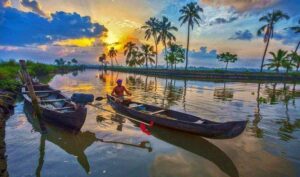
Munroe Island sits in the middle of the Ashtamudi Lake near Kollam — a cluster of eight small islands connected by narrow canals where daily life unfolds entirely on and around water. Fishermen cast nets from wooden dugout canoes at dawn. Women paddle small boats between houses with the unhurried rhythm of people who have lived like this for generations. Children swim in the canals after school with the particular fearlessness of children who have grown up in water. The coconut palms grow so densely overhead that certain canal stretches exist in a permanent green half-light regardless of the time of day.
This is not the Alleppey houseboat circuit with its tourist boats and restaurant dhows — Munroe Island has almost no tourist infrastructure whatsoever. There is no main street, no souvenir shop, no beach club charging AED 200 for a sun lounger. There is water, palms, a few basic homestays, and a canal system you explore by small wooden canoe for ₹300–₹500 per hour arranged through your homestay owner.
I spent a morning paddling through the inner canals with a local guide who knew every family on every bank. He pointed out a house where a 94-year-old woman had been weaving coir mats since before India’s independence. She was weaving when we passed. She waved without looking up.
Getting there: Kollam is 90 minutes from Thiruvananthapuram by train. Munroe Island is 30 kilometres from Kollam — auto or taxi (₹400 one way).
Don’t miss: Stay overnight rather than visiting as a day trip. The dawn canoe through the morning mist before any engine sound reaches the inner canals is the experience that makes Munroe Island one of the most quietly extraordinary places in all of India.
Honest note: Basic accommodation only. If you need strong WiFi and air conditioning, adjust expectations before arriving.
- Bekal — North Kerala’s Forgotten Coastline {#bekal}
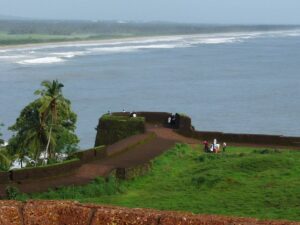
Bekal sits in Kasaragod district at Kerala’s far northern tip — a stretch of coastline so dramatically different from the tourist beaches of the south that it feels like a completely separate state. The Bekal Fort, a massive circular laterite structure built in the 17th century and jutting directly into the Arabian Sea, is one of the most architecturally distinctive forts anywhere in India. The Bombay film’s famous infinity pool scene was shot here — yet somehow Bekal remains genuinely uncrowded even in peak season.
The beach stretching north from the fort is clean, wide, backed by casuarina trees, and almost entirely empty. The water is clear and relatively calm by Kerala beach standards. The fort’s keyhole-shaped observation window — framing a perfect oval of Arabian Sea within ancient stone walls — produces the most architecturally interesting beach photograph in all of Kerala. I stood at that window for fifteen minutes just watching the waves frame themselves differently with every swell.
Beyond Bekal, the Valiyaparamba backwaters — a network of interconnected islands and waterways in Kasaragod district — offer houseboat and ferry experiences with virtually zero tourist infrastructure and none of the Alleppey crowds. A government ferry through this network costs ₹15–₹25 and delivers backwater scenery that equals anything the southern circuit produces.
Getting there: Kasaragod is 3 hours from Calicut by train. Bekal Fort is 12 kilometres from Kasaragod town — auto or taxi (₹200–₹300).
Don’t miss: The keyhole window at the fort at sunset — the light through the stone oval changes colour every five minutes and produces endlessly different photographs.
Honest note: Bekal’s accommodation scene remains limited. Book well ahead and verify current availability before building a tight itinerary around this destination.
- Palaruvi Waterfall — The Hidden Cascade Most Kerala Visitors Never Reach {#palaruvi}
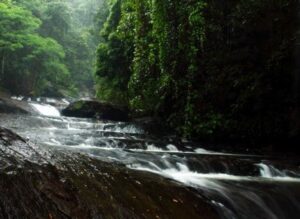
Palaruvi means “stream of milk” in Malayalam and the waterfall earns the name completely — a 91-metre cascade of white water pouring down a dark granite face into a pool of astonishing clarity, surrounded by dense forest that smells of wet earth, wild cardamom, and something floral I’ve never been able to precisely identify.
Palaruvi sits in the Aryankavu forest range near Kollam — technically not difficult to reach but consistently overlooked in favour of more famous Kerala waterfalls. The forest trail to the base pool takes 20 minutes, is clearly marked, and passes through trees loud with birds I couldn’t name, with filtered green light and the sound of falling water growing progressively louder until the cascade suddenly appears through a gap in the trees with the impact of something genuinely unexpected.
Swimming in the Palaruvi pool is permitted and extraordinary — the water is cold, completely clear, and the surrounding forest walls make it feel like a private amphitheatre that exists entirely for you. I arrived at 8 AM on a Tuesday in November and had the pool entirely to myself for 45 minutes. I am not sure I have ever felt more grateful for a Tuesday morning.
Getting there: Palaruvi is 70 kilometres from Thiruvananthapuram — 2 hours by road. KSRTC buses from Thiruvananthapuram to Aryankavu, then a 6-kilometre auto ride (₹60 forest entry fee).
Don’t miss: Arrive before 9 AM on weekdays for genuine solitude. Weekends bring local visitors from Thiruvananthapuram in significant numbers from mid-morning.
Honest note: The swimming pool is shallow in summer months (March–May). October–February gives the fullest water flow and best swimming conditions.
- Thenmala — Kerala’s First Eco-Tourism Destination Nobody Visits {#thenmala}

Thenmala sits in the Shendurney Wildlife Sanctuary near Kollam — Kerala’s first officially designated eco-tourism destination and one of the state’s most comprehensively developed yet chronically undervisited adventure travel zones. The Kallada River runs through it — cold, clean, running over smooth granite boulders — with a suspension bridge crossing it at a point where forest canopy meets water in a way that makes every photograph look professionally composed.
The destination offers mountain biking trails through the forest, a sculpture garden embedded naturally in the landscape, a deer rehabilitation centre, boating on a forest lake, and guided treks through the Shendurney wildlife corridor — all within a single well-planned complex that feels far less manicured than its organizational description suggests.
The rock climbing wall beside the river is perhaps Thenmala’s most unexpected element — Kerala’s only dedicated outdoor climbing facility with routes for beginners and intermediate climbers, operated by trained instructors at ₹200–₹300 per session. Climbing a route with a clear Kerala forest stretching in every direction below you is a specific experience with very few equivalents in Indian travel.
Getting there: Thenmala is 72 kilometres from Thiruvananthapuram — 2 hours by KSRTC bus (₹80) or taxi (₹1,500 one way).
Don’t miss: The suspension bridge at the golden hour — the river below turns copper and the forest light goes extraordinary for about 20 minutes before sunset.
Honest note: The destination can feel slightly over-organized compared to raw hidden Kerala. Embrace the structure — the facilities here are genuinely good and the wildlife corridor access they provide is otherwise impossible.
- Vagamon — The Meadow Destination Kerala Keeps Remarkably Quiet {#vagamon}

Vagamon sits at 1,100 metres in the Idukki district — a high-altitude plateau of rolling green meadows, pine forests, and mist that drifts through the landscape at unpredictable intervals throughout the day. It’s sometimes described as the “Kashmir of Kerala,” which is a reasonable overstatement — the combination of open grassland, pine-scented cold air, and persistent cloud cover does produce a landscape feeling genuinely unlike anything else in south India.
The Thangal Para rock viewpoint, reached by a 20-minute climb up a smooth granite dome, gives a 360-degree view of the Vagamon plateau that on a clear morning extends to distant peaks on the Tamil Nadu border. I sat at the top eating rice and curry from a small banana leaf parcel I’d bought from a stall at the base and felt as close to genuinely alone in a beautiful landscape as I’d felt anywhere in India. There were three other people on the summit. None of them were speaking.
Paragliding operates from Vagamon between October and May at ₹2,500–₹3,500 per flight with a trained pilot — the takeoff from the meadow’s highest edge and the flight over the plateau and pine forest below produces aerial views of Kerala’s highland landscape that are simply not available any other way and worth every rupee of the cost.
Getting there: Vagamon is 3.5 hours from Kochi — shared taxi from Kottayam (₹200–₹300 per seat) or KSRTC bus.
Don’t miss: The pine forest walk at dusk when the temperature drops suddenly and the mist rolls in from the west — the pine smell intensifies dramatically in the cold and the forest sounds completely different after 5 PM.
Honest note: Vagamon has been discovered by weekend visitors from Kochi and Kottayam — avoid Saturday nights and Sunday mornings for the most authentic experience.
- Cherai Beach — Fort Kochi’s Best-Kept Secret {#cherai}

Cherai Beach sits 25 kilometres north of Fort Kochi on Vypeen Island — a 15-kilometre stretch of sand where Chinese fishing nets are visible from the shore, dolphins appear regularly in the early morning just beyond the break, and the backwater system runs parallel to the beach just 200 metres inland. This creates a geography unique in Kerala — you can swim in the Arabian Sea in the morning and watch a sunset over backwater canals in the evening from the same general location, separated by a 5-minute walk.
Most Fort Kochi visitors never make the 40-minute drive to Cherai, choosing the well-known Marari Beach further south instead. This is a consistent mistake. Cherai is cleaner, less crowded, and offers that rare dual-water geography that makes it genuinely unlike any other Kerala beach.
The fish market at the northern end of Cherai operates at dawn — catch coming in directly from the boats, sold on the beach itself to local buyers and restaurants in a transaction conducted entirely through gesture and negotiation and finished before most tourists have had their first coffee. Arriving at 6 AM with a cup of tea from a nearby stall and watching this unfold in the first light costs nothing and stays with you permanently.
Getting there: Ferry from Fort Kochi to Vypeen Island (₹4, 5 minutes) then auto to Cherai beach (₹200–₹300, 30 minutes).
Don’t miss: The dual sunrise — watch the sun come up from the beach side, then walk 200 metres inland and watch the same morning light hit the backwater canals from the other direction. The 5-minute walk between these two completely different water worlds is one of Kerala’s most quietly extraordinary experiences.
Honest note: Cherai is beginning to appear in more travel content. Visit on weekday mornings for the most undisturbed experience — it remains significantly quieter than any comparable Kerala beach.
- Silent Valley National Park — The Last Undisturbed Rainforest in India {#silent-valley}
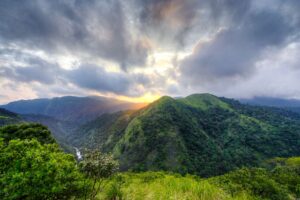
Silent Valley is one of the most biologically significant forests in Asia — a 237 square kilometre tract of tropical rainforest in the Nilgiri hills that has never been disturbed by human settlement, agriculture, or logging in recorded history. It contains over 1,000 species of flowering plants, 400 butterfly species, 34 species of mammals, and a Lion-tailed Macaque population found nowhere else on earth at this density.
Access is deliberately and carefully restricted. The Forest Department allows a maximum of 50 visitors per day. Entry requires advance booking through the Kerala Forest Department website at ₹300 per person. The guided trek into the forest is mandatory, included in the fee, covers 5 kilometres of genuine primary rainforest, and is conducted by guides who speak about the forest in the reverent near-whisper of people who have spent years understanding what they’re walking through.
The silence that gives the park its name is real and produces a particular disorientation for anyone accustomed to urban environments. At certain points in the interior — far enough from the entry road that no engine sound reaches you — the forest produces a quality of quiet in which your own heartbeat becomes briefly audible. A Lion-tailed Macaque moving through the upper canopy 30 metres above you, its silver-grey mane catching the filtered light, produces a specific quality of wonder that I have struggled to articulate to anyone who hasn’t experienced it.
Getting there: Mukkali village (the park entry point) is 3.5 hours from Calicut. Pre-book forest entry at keralaforest.gov.in. Accommodation in Mukkali village homestays from ₹1,500.
Don’t miss: The morning trek slot — forest sounds and wildlife activity peak in the first two hours after dawn and the light quality through primary canopy at this time is extraordinary for photography.
Honest note: Permits sell out frequently during peak season and on weekends year-round. Check availability 2–3 weeks ahead. This is genuinely worth planning your entire itinerary around rather than treating as an afterthought.
- Thirumullavaram Beach — Kollam’s Hidden Crescent Nobody Visits {#thirumullavaram}

Thirumullavaram sits 6 kilometres from Kollam town — a curved crescent of golden sand facing the Arabian Sea, backed by a casuarina grove, with almost zero tourist infrastructure, no hawkers, no beach clubs, and no package tour groups visible in any direction. The water is clean and the waves are consistent without being dangerous.
What makes Thirumullavaram genuinely special beyond its emptiness is the surrounding geography — the beach curves around a small rocky headland where tidal pools form at low tide, and at the far southern end a small river mouth creates a sandbar that shifts position with each tidal cycle, producing a different beach configuration every time you visit. The light here in late afternoon — casuarina trees casting long shadows across the sand, the sea turning deep gold — produces landscape photography that looks professionally composed without any intention or effort.
I walked the full length of this beach on a November afternoon and counted eleven other people. It is 6 kilometres from a major Kerala town with regular rail connections to the rest of India. The complete invisibility of beautiful places in this state never stops being remarkable.
Getting there: Kollam Junction is 1.5 hours from Thiruvananthapuram by train. Auto to Thirumullavaram beach costs ₹80–₹100.
Don’t miss: The tidal pools at the northern headland at low tide — small fish, crabs, and sea anemones visible in clear water between the rocks, completely untouched by any tourism.
Honest note: No facilities whatsoever on the beach. Carry all water and food. The nearest tea stall is a 15-minute walk from the beach entry point.
- Kumarakom Bird Sanctuary — Dawn Wildlife That Rivals Any Reserve in India {#kumarakom}

Kumarakom Bird Sanctuary on the eastern shore of Vembanad Lake is one of India’s most significant migratory bird destinations — and one of the country’s most accessible, most affordable, and most consistently rewarding wildlife experiences. Yet it receives a fraction of the visitor numbers of more aggressively marketed wildlife destinations despite being genuinely superior for bird photography.
The sanctuary covers 14 acres of reclaimed land on the lake shore and hosts over 170 bird species including Siberian storks, herons, egrets, and kingfishers. Between November and February, migratory arrivals peak dramatically. The dawn boat safari (₹200 per person in a shared wooden boat, departing at 6 AM) covers the lake-edge marshland in the best light of the day — and in November, the sound and visual of thousands of birds lifting simultaneously off the water as the sun clears the eastern treeline is one of the most genuinely spectacular wildlife moments available anywhere in India at any price.
Getting there: Kumarakom is 16 kilometres from Kottayam — taxi (₹400) or boat connection from Alleppey government ferry.
Don’t miss: The 6 AM boat safari in November or December. Arrive 20 minutes early to secure the front of the boat for photography. Bring a long lens if you have one — even a phone zoom will produce usable images in the morning light.
Honest note: The sanctuary itself is small. The boat safari is the entire experience — don’t arrive expecting to walk extensive forest trails. The wildlife viewing from the water is extraordinary precisely because it’s not competing with infrastructure.
- Meesapulimala — Kerala’s Second Highest Peak for Serious Trekkers {#meesapulimala}

Meesapulimala at 2,640 metres is Kerala’s second highest peak — a two-day trekking route through high-altitude shola forests and open grasslands that sits within the Rajamala area of Eravikulam National Park yet receives almost no visitors compared to the far more marketed Anamudi summit nearby.
The trail passes through rhododendron forests that bloom in vivid red between February and March — a flowering display that transforms the entire character of the highland landscape temporarily. The high grassland corridors provide near-guaranteed Nilgiri Tahr sightings (these prehistoric-looking mountain goats have lost most of their fear of humans within the park and will graze within 20 metres of a patient observer). On ridge sections where both the Kerala plains and Tamil Nadu plains are simultaneously visible on either side, the geographical scale of the Western Ghats becomes fully apparent in a way it never does from any road viewpoint.
The trek requires Forest Department permission (apply at Rajamala entry gate, ₹500–₹700 per person), a registered guide (₹800–₹1,200 per day), and overnight camping at the high camp which is included in the permit fee. The cold at 2,600 metres on a clear December night — the stars absolutely extraordinary, the valley lights of Munnar visible far below — is one of those experiences that reorganizes your sense of where you are in the world.
Getting there: Rajamala is 15 kilometres from Munnar — taxi (₹400). Permits are daily-limited and sell out on peak season weekends. Apply in person at the gate by 7 AM for same-day availability or book ahead through registered agents in Munnar.
Don’t miss: The rhododendron section in February–March. The red flowers against the shola forest green and the distant blue of the Tamil Nadu plains on a clear morning is the finest visual Kerala’s mountains produce.
Honest note: This is a physically demanding two-day trek requiring reasonable fitness. The trail gains 1,200 metres of elevation from the base. Don’t attempt it without prior trekking experience and proper footwear.
Practical Travel Tips for Hidden Kerala {#practical-tips}

Cash is non-negotiable in hidden Kerala: Homestays, forest permits, local canoe operators, village restaurants, auto-rickshaws, and government ferries all run on cash entirely. ATMs become genuinely sparse beyond major towns. Carry ₹3,000–₹5,000 minimum whenever exploring off the main tourist circuit and replenish at the first town ATM before heading further out.
BSNL SIM for remote areas: Jio and Airtel lose signal in Silent Valley, Meesapulimala, inner Wayanad, and many forest areas. A BSNL SIM is worth picking up at Kochi airport if your itinerary includes any remote destinations — the coverage difference in forest and hill areas is significant.
Local driver-guides are your best resource: For hidden Kerala specifically, a local taxi driver who genuinely knows their area will consistently recommend experiences that outperform any written guide. Ask your homestay owner to suggest a driver they personally trust. This relationship — curious traveler plus knowledgeable local driver — is one of the most valuable things Kerala travel produces.
Forest permits require advance planning: Silent Valley, Meesapulimala, and Eravikulam all have strict daily visitor caps. Check keralaforest.gov.in and eravikulamnationalpark.org regularly. For Silent Valley specifically, book 2–3 weeks ahead during October–February peak season.
Leech socks for forest treks between June and October: Active on all Kerala forest trails during and after monsoon. Carry salt as a deterrent, wear full-length socks pulled over trouser cuffs. This becomes routine quickly and should not deter forest exploration — the post-monsoon forest beauty more than compensates.
Safety across all hidden Kerala destinations: Kerala is consistently one of India’s safest states for all traveler types including solo women. Hidden Kerala is remote rather than unsafe — a meaningful distinction that should not deter exploration.
Best Time To Visit Hidden Kerala {#best-time}
October to February — The Ideal Hidden Season: Post-monsoon Kerala is at its most extraordinary — forests lush and full, waterfalls running at maximum flow, bird migration peaking at Kumarakom, Meesapulimala trail conditions optimal, and Vagamon meadows at their most vivid green. November is the single best month across every hidden zone simultaneously — genuinely perfect conditions without peak December pricing.
March to May — Good for Northern and Highland Zones: Bekal and the northern coastline remain pleasant. Vagamon and Wayanad are comfortable at altitude. Rhododendrons bloom on Meesapulimala in February–March. Waterfall flows begin reducing. Paragliding at Vagamon operates at its best window.
June to September — Monsoon: Many hidden trail destinations become inaccessible due to trail conditions and significant leech activity. However, the visual beauty of Kerala’s hidden valleys and forests in monsoon is extraordinary — the light, the green, and the mist produce photography that cannot be replicated in any other season. Research each specific destination’s monsoon accessibility carefully before planning.
5-Day Hidden Kerala Itinerary {#itinerary}
Day 1 — Arrival + Cherai Beach Dawn Land at Cochin airport. Ferry to Vypeen Island (₹4), auto to Cherai Beach homestay. Early sleep. 5:30 AM alarm for dawn fish market arrival. Sunrise on the beach. Afternoon: Fort Kochi Chinese fishing nets at sunset (25 minutes by ferry). Overnight Fort Kochi. Daily spend: ₹1,500–₹2,500
Day 2 — Munroe Island Canals Early train from Ernakulam to Kollam (₹80, 2 hours). Auto to Munroe Island homestay (₹400). Afternoon canoe through the inner village canals. Sunset over Ashtamudi Lake from the homestay veranda. Overnight Munroe Island — stay for the dawn. Daily spend: ₹1,800–₹3,000
Day 3 — Palaruvi Waterfall + Thenmala Early auto to Palaruvi (arrive before 9 AM for solitude). Swim in the pool. Mid-morning drive to Thenmala eco-destination. Suspension bridge at golden hour. Overnight Thenmala or Kollam. Daily spend: ₹1,500–₹2,500
Day 4 — Vagamon Plateau Early KSRTC bus or shared taxi to Vagamon (3.5 hours). Thangal Para rock climb for 360-degree views. Paragliding if budget and conditions allow (₹2,500–₹3,500). Pine forest walk at dusk. Overnight Vagamon homestay in the cold. Daily spend: ₹2,000–₹5,500 depending on paragliding
Day 5 — Kumarakom Dawn + Departure 5:30 AM taxi to Kumarakom (1.5 hours). 6 AM dawn boat safari at the bird sanctuary (₹200). Mid-morning drive or boat to Kochi. Depart from Cochin airport with a memory card full of images nobody else at the departure gate will have. Daily spend: ₹1,500–₹2,500
Want this entire itinerary managed without the logistical complexity? The Tripyverse Kerala Escape 4N/5D Package covers the state’s essential destinations with accommodation and transfers arranged. For a more comprehensive Kerala experience, the Tripyverse Kerala 5N/6D Package and the Kerala Kanyakumari Explorer 6N/7D build itineraries that cover Kerala’s full geographic range. For couples making this a honeymoon trip, the Tripyverse Kerala Honeymoon Package builds the most romantic version of this itinerary with private stays and curated experiences that remove every friction point.
Budget Breakdown {#budget}
| Traveler Type | Daily Budget | What It Gets You |
| Budget Explorer | ₹1,500–₹2,500 | Village homestays, KSRTC buses, forest permits, local canoe trips |
| Mid-Range Traveler | ₹4,000–₹7,000 | Quality homestays, private taxis, guided treks, boat safaris |
| Comfort Traveler | ₹10,000–₹20,000 | Resort stays, private vehicles, premium guided experiences |
Hidden Kerala is significantly more affordable than mainstream Kerala because the infrastructure is built around local visitors rather than international tourism pricing. The best experiences — Munroe Island canals, Palaruvi pool, Cherai dawn, Kumarakom bird safari — cost between ₹0 and ₹300 individually. The real investment is time, flexibility, and a willingness to travel slightly beyond the comfortable and the familiar.
Final Verdict — Honest Assessment of Hidden Kerala {#final-verdict}
Hidden Kerala is the thing that transforms a good Kerala trip into an extraordinary one that stays with you for years after you’ve returned.
The mainstream circuit is genuinely worth doing — Munnar’s tea estates are beautiful, Alleppey’s houseboats are wonderful, Fort Kochi’s heritage is rich. But all of it is experienced alongside thousands of other people who made the same decisions from the same source material. Hidden Kerala offers landscape of equal or greater quality, food of equal authenticity, and human warmth that is often more concentrated precisely because it’s not diluted by the volume of tourism the mainstream destinations carry.
One honest drawback worth naming clearly: Hidden Kerala requires more planning, more logistical flexibility, and occasionally more physical effort than the tourist circuit. Forest permits sell out. Roads are occasionally rough. Accommodation is simpler and less consistent. WiFi is unreliable. If you need air-conditioned comfort and English-menu restaurants within a five-minute walk at all times, certain destinations on this list will test your tolerance meaningfully. That test is, in my consistent experience, worth taking.
Hidden Kerala is perfect for: Experienced Indian travelers who’ve completed the standard circuit, photography-focused visitors, trekkers, birdwatchers, couples wanting genuine solitude, solo travelers looking for authentic encounter, and anyone whose previous Kerala trip left them with the feeling that the real state was just slightly out of reach of where they stayed.
Consider the mainstream circuit first if: This is your first Kerala trip, you’re traveling with young children requiring predictable infrastructure, or you have fewer than 5 days — in which case the standard circuit will deliver more consistently within a tighter time window.
Planning to contrast Kerala’s hidden tropical south with India’s secret mountain north? Our Manali Travel Guide — 7 Best Places + Hidden Gems (2026) and our deep-dive Secret Places in Manali — 7 Hidden Gems You Must Visit in 2026 are essential reading before your next northern escape — the traveler who finds Munroe Island will find the secret Manali valleys too.
And if you’re extending your India trip internationally — Cochin to Dubai is just 3 hours by air — our Dubai Travel Guide 2026: 10 Must-Visit Places & Hidden Gems and our practical Dubai Travel Tips 2026: Save Money, Time & Mistakes cover everything needed for a seamless and affordable extension from Kerala’s hidden backwaters to Dubai’s extraordinary skyline.