

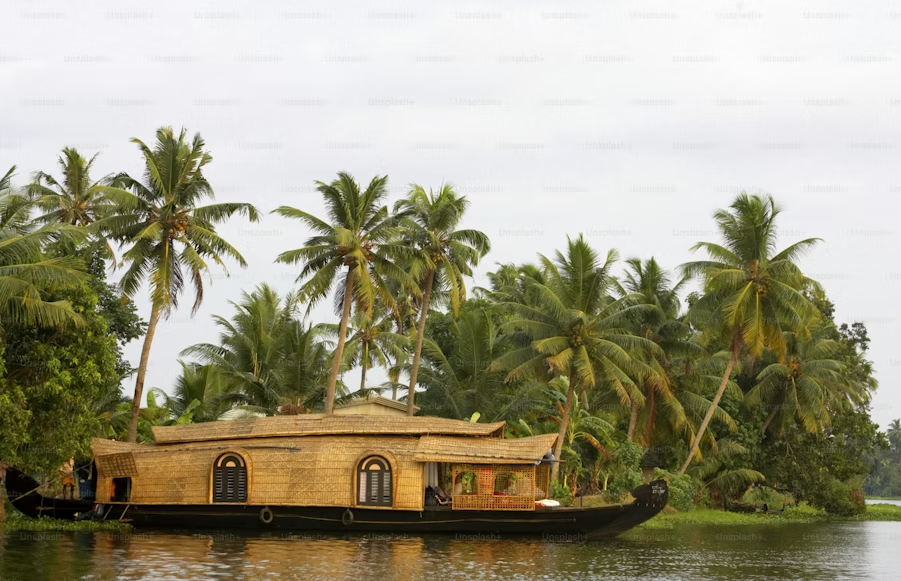
I booked my Kerala trip on a Tuesday evening with ₹28,000 in my travel budget and absolutely zero confidence that it would be enough.
Five days later, I came home having slept on a houseboat in Alleppey, watched the sunrise from a Munnar tea estate, eaten the most extraordinary fish curry of my life for ₹180, taken a government ferry through the backwaters for ₹15, and stood on a red laterite cliff at Varkala watching the Arabian Sea turn every shade of orange imaginable at sunset.
Total spend including flights: ₹31,500. And I genuinely could not identify a single moment of the trip where I felt I was compromising on experience to save money.

Here’s the truth nobody writes about Kerala travel: this is one of the most budget-friendly states in India for the quality of experience it delivers. The public transport is excellent. The food is extraordinary and inexpensive. The most beautiful things to see — the backwaters at dawn, the tea estate mist at sunrise, the cliff sunsets at Varkala — cost nothing or almost nothing. The challenge isn’t finding affordable options. The challenge is knowing which affordable options are genuinely good and which are false economy.
This guide covers every rupee. Let’s plan your Kerala trip.
📍 Why Kerala Works So Well for Budget Travelers
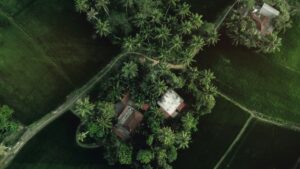
Kerala occupies India’s southwestern tip — a long, narrow strip of extraordinary geographic diversity running 580 kilometres between the Western Ghats mountain range to the east and the Arabian Sea to the west. It shares borders with Karnataka and Tamil Nadu, and sits approximately 1,200 kilometres south of Mumbai and 2,000 kilometres from Delhi.
What makes Kerala particularly budget-friendly is a combination of factors that don’t usually align so neatly: excellent state-run public transport (KSRTC buses and government ferries that are cheap and reliable), a deeply developed homestay culture that offers genuine hospitality at ₹800–₹2,000 per night, a food ecosystem built around feeding a large working population affordably and well, and a landscape where the most spectacular experiences — the backwaters, the mountain mist, the cliff beaches — are entirely free to experience.
The state also has a literacy rate above 96% and a tourism infrastructure that has been thoughtfully developed over decades. First-time visitors consistently find Kerala easier to navigate than they expected.
✈️ How To Get To Kerala Affordably
Flights — the biggest cost to manage:
Kerala has three major airports: Cochin International Airport (COK) — the most connected and best entry point for a 5-day itinerary; Thiruvananthapuram (TRV) — best if you’re starting from the south; and Calicut (CCJ) — ideal for Wayanad-first trips.
Budget flight costs (return, economy):
- Mumbai to Cochin: ₹3,500–₹7,000 booked 4–6 weeks ahead
- Delhi to Cochin: ₹5,500–₹10,000 in the same window
- Bangalore to Cochin: ₹2,500–₹5,000

Airlines to watch: IndiGo, SpiceJet, and Air India Express consistently offer the best fares on India-Kerala routes. Set Google Flights fare alerts the moment your dates are confirmed — I’ve caught sales this way that saved ₹2,000–₹3,500 on a single booking.
Smart booking tip: Flying into Cochin and out of Thiruvananthapuram (or vice versa) is worth considering for a 5-day trip that moves south — it eliminates backtracking and the open-jaw fare difference is often minimal.
By Train: The Kerala Express from Delhi, the Rajdhani from Mumbai, and numerous Superfast trains connect major Kerala cities affordably. If you have time flexibility, overnight trains eliminate one night’s accommodation cost — a significant budget advantage.
🚗 Getting Around Kerala on a Budget
This is where your Kerala budget is won or lost — transport between destinations is your biggest daily variable after accommodation.
KSRTC Buses — your budget backbone: Kerala’s state bus network is genuinely excellent. Comfortable, air-conditioned options available on major routes. Key fares:
- Kochi to Munnar: ₹120–₹180
- Munnar to Thekkady: ₹80–₹120
- Thekkady to Alleppey: ₹150–₹200
- Alleppey to Varkala: ₹80–₹120
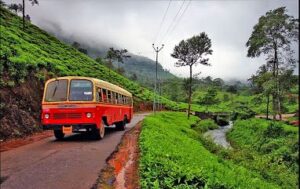
Government Ferries — the scenic budget miracle: The government ferry from Alleppey to Kottayam costs ₹15 and takes 2.5 hours through the most beautiful backwater scenery in Kerala. The Ernakulam to Fort Kochi ferry costs ₹5 and takes 10 minutes. These are the most dramatically underpriced travel experiences in India.
Shared Jeeps: For mountain routes — particularly Kochi to Munnar — shared jeeps cost ₹150–₹200 per person from the KSRTC stand and offer a more direct route than buses on some timings.
Careem/Ola/Uber: Available in Kochi and Thiruvananthapuram. For inter-city distances, private taxis cost ₹2,500–₹4,000 per leg — worthwhile if split between 3–4 people but expensive solo.
Auto-rickshaws: ₹30–₹100 for short local trips. Meter in Kochi; negotiate elsewhere.
Budget transport strategy: KSRTC buses between all major destinations + government ferries wherever available + auto-rickshaws locally. This combination covers your entire 5-day Kerala itinerary for approximately ₹800–₹1,200 total in transport costs — a number that genuinely surprises most people when they calculate it.
🏨 Where To Stay in Kerala on a Budget

Kerala’s homestay culture is one of the most genuinely developed in India — families across the state have been hosting travelers for decades, and the quality, warmth, and home-cooked food available at ₹800–₹2,000 per night is extraordinary by any international comparison.
Budget Tier — ₹600–₹2,000 per night:
Zostel Kochi, Fort Kochi — Social, well-located in the heritage district, rooftop with harbour views. Dorm beds from ₹600, private rooms from ₹1,400. Book at least a week ahead in peak season.
Government Tourist Bungalows (multiple locations) — Kerala Tourism operates clean, well-maintained properties across the state at ₹800–₹1,500 per night. Consistently underused and underrated by independent travelers.
Local Homestays, Munnar — Family-run homes in the tea estate areas from ₹1,200–₹2,000 including breakfast. The breakfast alone — appam, stew, fresh banana, filter coffee — justifies the accommodation cost completely.
Backwater Homestays, Alleppey — Canal-side homestays from ₹1,500–₹2,500 per night. Many include a short canoe trip through nearby waterways as part of the stay. These are the budget alternative to houseboats and genuinely magical in their own right.
Mid-Range Tier — ₹3,000–₹7,000 per night:
Fragrant Nature, Alleppey — Backwater-view rooms, excellent breakfast, helpful staff. The sweet spot between budget and luxury for Alleppey.
Spice Tree, Munnar — Hillside property with panoramic tea estate views and exceptional food. Worth the upgrade if your budget stretches.
For travelers who want everything arranged without the research: The Tripyverse Kerala Escape 4N/5D Package bundles accommodation, transfers, and key experiences across the state’s best destinations in one transparent price — removing every logistical uncertainty from the planning process. For couples specifically, the Tripyverse Kerala Honeymoon Package curates the most romantic version of Kerala travel with private houseboat nights and clifftop stays built into the itinerary.
🌊 Best Budget Experiences in Kerala — Free & Nearly Free
🏮 1. Fort Kochi — Free Heritage Walking
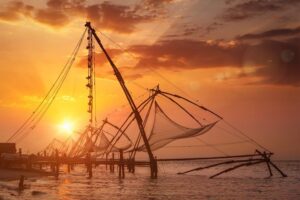
Fort Kochi’s entire heritage district is completely free to explore — and it’s one of the most visually extraordinary urban environments in India. The Chinese fishing nets at sunset cost nothing to watch. The Mattancherry lanes cost nothing to wander. The St. Francis Church (India’s oldest European church) costs nothing to enter. The Dutch Palace (Mattancherry Palace) costs ₹5.
The ₹5 Ernakulam-Fort Kochi ferry is the best-value transit experience in the state. A Kathakali performance at the Kerala Kathakali Centre costs ₹300–₹500 and is worth every rupee as your one paid cultural experience in Fort Kochi.
Budget daily spend in Fort Kochi: ₹500–₹1,200 including accommodation, food and local transport
🍵 2. Munnar Tea Estates — Mostly Free, Extraordinarily Beautiful

The drive to Munnar through tea estates is free — you just need to be on the KSRTC bus or shared jeep looking out the window. The estates themselves are visible from every road and viewpoint. Top Station viewpoint costs ₹30. Mattupetty Dam area costs ₹20–₹50 for parking.
Eravikulam National Park — home to the endangered Nilgiri Tahr — costs ₹115 to enter and is the one paid attraction in Munnar that is genuinely non-negotiable. Book online in advance during peak season.
The dawn tea estate walk with a local guide costs ₹300–₹500 per person and produces the most beautiful photographs of your entire Kerala trip. Worth it completely.
Budget daily spend in Munnar: ₹1,500–₹2,500 including accommodation and activities
🛶 3. Alleppey Backwaters — Budget Options That Are Genuinely Good

The houseboat question is where every Kerala budget conversation arrives eventually. Here’s the honest breakdown:
Private houseboat (1 night, 2 people): ₹6,000–₹15,000 — genuinely extraordinary but stretches a tight budget significantly.
Shared/budget houseboat: ₹3,500–₹5,000 for two — the experience is similar, the boat slightly less pristine, the canal route slightly more crowded.
Canal-side homestay with canoe trip: ₹1,500–₹2,500 per night — this is the genuine budget alternative. Sleeping 10 metres from the backwater, with a morning canoe through the narrow village canals before the tourist boats emerge, is an experience that competes with the houseboat on every emotional measure except the floating-bedroom novelty.
Government ferry (Alleppey to Kottayam): ₹15 for 2.5 hours of the most beautiful backwater scenery in Kerala. If your budget allows only one backwater experience, this is the one.
Budget daily spend in Alleppey: ₹2,000–₹4,000 depending on accommodation choice
🏖️ 4. Varkala — The Free Cliff Sunset That Changes Everything
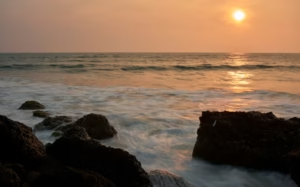
Varkala’s red laterite cliff, the beach below it, and the sunset over the Arabian Sea are all completely free. Walking the clifftop path costs nothing. Swimming at Papanasam Beach costs nothing. Sitting at the cliff edge watching the horizon change colour through fourteen shades of orange and pink costs nothing.
The lighthouse (₹15 to climb) gives you a panoramic view of the curved coastline that is worth the minimal entry fee.
Where Varkala costs money: the clifftop restaurants, which are pleasant but significantly overpriced for the quality relative to what you’d pay for the same food in Thiruvananthapuram. Strategy: eat your main meals at the budget restaurants one lane back from the clifftop (same views, 40% less expensive), splurge on one clifftop dinner for the atmosphere.
Budget daily spend in Varkala: ₹1,200–₹2,500 including accommodation
🐘 5. Thekkady & Periyar — Wildlife Without Breaking the Budget

Periyar Tiger Reserve boat safari: ₹150–₹300 for a 2-hour lake cruise watching elephants, otters, and deer from the water. This is India’s most affordable wildlife experience relative to the quality of sighting it delivers.
Spice plantation walk: ₹200–₹500 per person arranged through your hotel. The smell of freshly cracked cardamom at the source is worth every rupee.
Bamboo rafting deeper into the reserve: ₹1,000 per person through the Forest Department. The most immersive Periyar experience — book 2 days ahead.
Budget daily spend in Thekkady: ₹1,500–₹2,500 including accommodation and safari
🍛 6. Kerala Food — Budget Eating That Rivals Any Cuisine in India
This section deserves its own prominent place in any Kerala budget plan because food is where Kerala genuinely subsidizes your entire trip.
What food costs in Kerala:

- Complete Kerala thali (banana leaf with rice, fish curry, dal, vegetable dishes, papad, pickle, payasam): ₹120–₹200 at a local restaurant
- Appam and stew breakfast: ₹60–₹100
- Fresh fish curry from a Varkala or Kovalam beach shack: ₹180–₹350
- Filter coffee from a traditional Kerala café: ₹15–₹25
- Kerala parotta with chicken curry: ₹80–₹120
- Puttu and kadala curry breakfast: ₹50–₹80
Daily food budget: ₹300–₹500 feeds you extraordinarily well across Kerala if you eat where locals eat. ₹600–₹800 covers one splurge meal per day alongside budget eating for the rest.
Where to eat: Any restaurant with a banana leaf thali visible from the entrance and local workers eating inside. This heuristic has never failed me in Kerala.
💡 Practical Budget Travel Tips for Kerala
Cash is essential: Kerala’s budget ecosystem — homestays, local restaurants, KSRTC buses, government ferries, auto-rickshaws, temple entry fees — runs almost entirely on cash. Keep ₹3,000–₹5,000 in cash at all times. ATMs are available in all towns but sparse in remote areas.
SIM Card: BSNL has the best coverage in Kerala’s hill and forest areas where Jio and Airtel can be patchy. Pick up a BSNL or Jio SIM at Kochi airport before heading into the hills.
Google Maps offline: Download offline maps for each region before leaving mobile coverage. Works reliably including hill routes and backwater areas.
Bargaining: Appropriate at local markets and with auto-rickshaws outside Kochi. Not appropriate at restaurants, government facilities, or homestays.
Mosquito repellent: Essential for backwater areas. Pack DEET-based repellent — it saves money versus buying overpriced tourist-area repellent on arrival.
Temple visits: Many of Kerala’s most beautiful temples do not allow non-Hindus inside. Research specific temples before making them the primary reason for a day trip to avoid disappointment.
Safety: Kerala consistently ranks among India’s safest states including for solo female travelers. Standard awareness applies in tourist beach areas.
📅 Best Time To Visit Kerala on a Budget
October to November — Best Budget Window: Post-monsoon Kerala is at its most lush and beautiful. Temperatures are comfortable, all outdoor activities are running, the backwaters are full, and accommodation prices haven’t yet reached peak-season levels. October and November are the sweet spot of value versus experience quality — my personal recommendation for any budget-focused Kerala trip.
March to April — Second Best Window: Temperatures rise in coastal areas but remain pleasant in Munnar and Wayanad. Pre-peak pricing applies. Thrissur Pooram (April/May) is worth planning around if cultural travel interests you.
December to February — Peak Season: Best weather, highest prices. Accommodation costs 40–60% more than shoulder season. Houseboats need booking weeks ahead. Beautiful but harder to manage on a tight budget — book everything 6–8 weeks ahead if visiting in this window.
June to September — Monsoon: Prices drop 40–50% across hotels and activities. The landscape is extraordinarily green. Some mountain roads become challenging and certain activities are limited. Ayurvedic centers specifically recommend monsoon for treatments. Viable for very budget-conscious travelers who research conditions carefully.
⏳ Complete 5-Day Kerala Budget Itinerary
Day 1 — Fort Kochi Arrival & Heritage Exploration
Arrive at Cochin airport. Auto-rickshaw to Fort Kochi hotel or homestay (₹500–₹700). Check in, freshen up. Afternoon: walk the Fort Kochi heritage district — Dutch Palace (₹5), Jewish Synagogue area (free), Mattancherry lanes (free). Sunset at the Chinese fishing nets — free and genuinely breathtaking. Evening Kathakali performance at Kerala Kathakali Centre (₹300). Dinner at a local Fort Kochi restaurant — fish curry rice (₹150–₹180).
Day 1 spend: ₹1,500–₹2,200 (excluding accommodation)
Day 2 — Munnar Tea Estate Country
Early KSRTC bus from Kochi to Munnar (₹150, 4 hours through increasingly beautiful mountain scenery). Check into homestay. Afternoon: Top Station viewpoint (₹30), Mattupetty Dam (₹20). Evening: walk through the tea estate surroundings as the light turns golden and the mist begins rolling in. Dinner at homestay (typically included or ₹100–₹150 extra).
Day 2 spend: ₹500–₹800 (excluding accommodation)
Day 3 — Munnar Dawn + Thekkady
Wake before sunrise for the tea estate walk with local guide (₹400). Eravikulam National Park if budget allows (₹115). Post-lunch KSRTC bus to Thekkady (₹100, 3 hours spectacular mountain road). Check in. Evening spice market walk in Thekkady town (free). Dinner at a local Thekkady restaurant (₹150–₹200).
Day 3 spend: ₹800–₹1,200 (excluding accommodation)
Day 4 — Periyar Wildlife + Alleppey Backwaters
7 AM Periyar Lake boat safari (₹200). Morning in the reserve. Post-lunch KSRTC bus to Alleppey (₹180, 3.5 hours). Check into canal-side homestay. Evening: walk the Alleppey waterfront (free). Government ferry reconnaissance for next morning departure. Dinner at a local restaurant near the canal (₹150).
Day 4 spend: ₹700–₹1,000 (excluding accommodation)
Day 5 — Backwaters + Varkala Departure
7 AM government ferry from Alleppey through the backwaters toward Kottayam (₹15, 2.5 hours — the most beautiful ₹15 you will spend in India). Connect to Varkala by bus and auto (₹120 total). Afternoon on the cliff — walk the path, swim at Papanasam Beach (free). Sunset from the cliff edge (free and completely unforgettable). Dinner at a clifftop restaurant — your one splurge meal of the day (₹400–₹600). Overnight at Varkala budget guesthouse or train/bus to Thiruvananthapuram for departure.
Day 5 spend: ₹700–₹1,200 (excluding accommodation)
Want this entire itinerary managed for you without the planning stress? The Tripyverse Kerala Escape 4N/5D Package covers Fort Kochi, Munnar, Thekkady, and Alleppey with accommodation, transfers, and guided activities in one transparent booking — ideal for travelers who want the experience without the logistics. For couples making this a honeymoon trip, the Tripyverse Kerala Honeymoon Package builds the most romantic version of this itinerary with private houseboat nights, clifftop dinners at Varkala, and curated experiences that remove every friction point from traveling as a couple.
💰 Complete Kerala Budget Trip Cost Breakdown — 5 Days

| Expense | Budget Option | Mid-Range Option |
| Return Flights (per person) | ₹3,500–₹7,000 | ₹8,000–₹12,000 |
| Accommodation — 5 nights | ₹4,000–₹8,000 | ₹12,000–₹25,000 |
| Food — 5 days | ₹2,000–₹3,500 | ₹5,000–₹9,000 |
| Transport (within Kerala) | ₹800–₹1,200 | ₹3,000–₹6,000 |
| Activities & Attractions | ₹1,500–₹2,500 | ₹5,000–₹9,000 |
| Miscellaneous | ₹500–₹1,000 | ₹1,000–₹2,000 |
| Total Per Person | ₹12,300–₹23,200 | ₹34,000–₹63,000 |
The honest number: A genuinely well-planned Kerala budget trip for 5 days costs ₹15,000–₹25,000 per person including flights from Mumbai or Bangalore. From Delhi, add ₹3,000–₹5,000 to the flight cost. This makes Kerala one of the best-value travel experiences available to Indian travelers — international-quality landscapes, food, and cultural experiences at domestic trip prices.
Where to save: KSRTC buses over private taxis, canal homestays over houseboats, local banana-leaf restaurants over tourist-facing cafés, government ferries over private boat tours
Where to splurge: At least one houseboat night or canal homestay on the backwaters (this is the Kerala moment), the Eravikulam National Park dawn visit in Munnar, and one clifftop dinner at Varkala watching the sun set into the Arabian Sea

🤔 Final Verdict — Is Kerala Achievable on a Tight Budget?
More achievable than you think — and more rewarding than almost any other Indian state at the same price point.
The specific combination that makes Kerala work for budget travelers is this: the most emotionally powerful experiences here are either free or nearly free (backwater dawn, tea estate sunrise, cliff sunset), the food is genuinely extraordinary and inexpensive, the public transport is reliable and cheap, and the homestay culture delivers warmth and quality that expensive hotels in other states struggle to replicate.
One honest caveat: Kerala’s peak season (December–January) applies real upward pressure to accommodation prices — particularly for houseboats, which can triple in price during the holiday window. If budget is your primary constraint, October, November, or March give you 85% of the peak-season experience at 50–60% of the price.
Kerala budget trips are perfect for: Solo travelers doing their first South India trip, couples on a tight honeymoon budget who want maximum romance per rupee, friend groups of 3–4 who can split taxi costs and homestay rooms, and any Indian traveler who has been putting off Kerala because they assumed it was expensive — it isn’t, if you know how to approach it.
You may find budget Kerala challenging if: You’re visiting in peak December–January without booking accommodation 6–8 weeks ahead, or if you’re traveling solo and can’t split the private houseboat cost — in which case the canal homestay alternative becomes even more important to know about.
Planning to extend your Kerala trip with a quick international leg? Cochin to Dubai is just a 3-hour flight, and our Dubai Travel Guide 2026: 10 Must-Visit Places & Hidden Gems covers everything you need for a seamless extension. Our Dubai Travel Tips 2026: Save Money, Time & Mistakes will ensure you apply the same budget-smart approach to Dubai that served you so well in Kerala — because the traveler who navigates Kerala’s backwaters on ₹15 knows exactly how to navigate Dubai’s metro for AED 6.
And if you’re planning a mountains counterpart to Kerala’s tropical south — the contrast is genuinely one of India’s great travel juxtapositions — our Manali Travel Guide — 7 Best Places + Hidden Gems (2026) and our curated Secret Places in Manali — 7 Hidden Gems You Must Visit in 2026 are essential reading before your next northern escape.