


📋 Table of Contents
- Why Kerala Food Will Ruin You For All Other Indian Cuisine
- Understanding Kerala’s Food Geography
- How To Get To Kerala
- Getting Around Kerala’s Best Food Neighbourhoods
- Where To Stay For Food Access
- 15 Traditional Kerala Dishes You Must Try
- 1. Kerala Sadya — The Grand Banana Leaf Feast
- 2. Appam with Stew — The Perfect Kerala Breakfast
- 3. Kerala Fish Curry — The Soul of the State
- 4. Puttu and Kadala Curry — The Working Man’s Breakfast
- 5. Karimeen Pollichathu — Pearl Spot in Banana Leaf
- 6. Kerala Prawn Curry — Coastal Fire in a Bowl
- 7. Malabar Biryani — The North Kerala Rice Masterpiece
- 8. Kerala Parotta with Beef or Chicken Curry
- 9. Thalassery Fish Biryani — The Hidden Rice Treasure
- 10. Avial — The Vegetable Dish That Tells Kerala’s Story
- 11. Kerala Filter Coffee — The Morning Ritual
- 12. Unniyappam — The Temple Sweet
- 13. Payasam — The Sacred Dessert
- 14. Kappa and Meen Curry — Tapioca Meets the Sea
- 15. Kozhi Curry — Kerala Chicken the Way It Should Be
- Where To Eat — Best Restaurants and Street Food Spots
- Practical Food Travel Tips
- Best Time To Visit For Food Experiences
- 5-Day Kerala Food Itinerary
- Budget Breakdown
- Final Verdict — Honest Assessment
Why Kerala Food Will Ruin You For All Other Indian Cuisine {#why-kerala-food}
I made a significant mistake on my first Kerala trip. I ate at the hotel restaurant for three consecutive meals.

The food was fine. Perfectly fine. And while I was eating my perfectly fine hotel breakfast on the third morning, a woman at the next table was eating something that arrived on a banana leaf the size of a small tablecloth — rice mounded in the center, surrounded by at least twelve small portions of different curries, chutneys, pickles, and something golden that I later discovered was a coconut milk payasam. The smell that drifted across was something between a spice market and a forest after rain.
I abandoned my perfectly fine hotel breakfast immediately. I pointed at her plate. The waiter understood completely.
What arrived changed my relationship with Indian food in a permanent and irreversible way. Kerala cuisine is the most complex, most deeply layered, most quietly extraordinary regional food tradition in India — a cuisine built on coconut in every form, on curry leaves and mustard seeds and dried red chillies, on fish pulled from the Arabian Sea and rivers the colour of jade, and on cooking techniques passed down through generations that produce flavours no restaurant menu description will ever adequately capture.
This guide is the Kerala food education I wish someone had handed me before my first trip. Fifteen dishes. Every one essential.
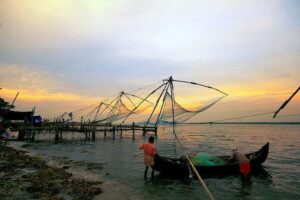
Understanding Kerala’s Food Geography {#food-geography}
Kerala’s cuisine divides naturally along geographic and cultural lines that a traveler should understand before eating their way through the state.
North Kerala — Malabar region covering Kozhikode, Kannur, and Kasaragod — produces the state’s most Arab-influenced cuisine. Centuries of Arab spice traders arriving at Kozhikode’s port left behind a food tradition built around rich rice dishes, slow-cooked meats, and the Malabar Biryani that is widely considered the finest biryani in south India.
Central Kerala — Ernakulam, Thrissur, and the backwater districts — is the home of the grand Sadya tradition, the Karimeen Pollichathu using Pearl Spot fish caught from the Vembanad Lake, and the Syrian Christian beef and pork dishes that exist nowhere else in India with quite the same depth of tradition.
South Kerala — Thiruvananthapuram, Kollam, and the coastal belt — produces the most seafood-intensive cooking in the state. The fish curry here — tamarind-based, deeply red, cooked in earthen pots — is the version that Kerala’s own people argue about most passionately when discussing which district does it best.
Understanding this geographic food map is the most useful framework you can carry into a Kerala trip. It tells you not just what to eat — but where to eat it for the most authentic version.
For a comprehensive overview of Kerala’s destinations — the places where the best food lives — our detailed Hidden Places in Kerala 2026: Secret Gems covers the state’s most authentic neighbourhoods and villages where the real food culture is most concentrated and alive.
How To Get To Kerala {#how-to-get-there}
Kerala’s three major airports — Cochin International Airport (COK), Thiruvananthapuram (TRV), and Calicut (CCJ) — connect from virtually every major Indian city. Mumbai to Cochin takes 1.5 hours, Delhi 3 hours, Bangalore 1 hour. Budget carriers like IndiGo, SpiceJet, and Air India Express offer return fares from ₹3,500–₹10,000 depending on booking timing.
By train, the Kerala Express from Delhi and the Rajdhani from Mumbai connect all major Kerala cities affordably with overnight options that eliminate one night’s accommodation cost.
For travelers who want the entire Kerala experience arranged seamlessly — including the food-rich destinations this guide covers — the Tripyverse Kerala Escape 4N/5D Package covers the state’s best destinations in one transparent booking. The Tripyverse Kerala 5N/6D Package extends this coverage further. For couples wanting the most romantic food-rich Kerala experience, the Tripyverse Kerala Honeymoon Package curates intimate dining experiences alongside the state’s most beautiful destinations. And for the most comprehensive Kerala journey extending to Kanyakumari, the Tripyverse Kerala Kanyakumari Explorer 6N/7D covers the full southern arc of India’s most food-rich coastal state.
Getting Around Kerala’s Best Food Neighbourhoods {#getting-around}
Deira of Kerala — if such an equivalent exists — is Fort Kochi’s Mattancherry area and Kozhikode’s old town, where the most concentrated and historically rich food culture lives. Both are walkable once you’re based there.
Local autos: ₹30–₹100 for short food destination trips within towns. Essential for reaching the non-tourist-facing local restaurants that serve the best food at the lowest prices.
KSRTC buses: Cover all major Kerala towns. For food-focused travel between Kozhikode (Malabar Biryani territory) and Kochi (Sadya and backwater fish curry country), buses cost ₹120–₹180 and take 4–5 hours through continuously interesting landscape.
Private taxis: ₹2,500–₹3,500 per day. Worth it for food day trips — reaching the best fish curry restaurants near Alleppey’s backwaters, or the Thalassery biryani restaurants that sit slightly off the main road in Kannur district.
Careem/Ola/Uber: Available in Kochi and Thiruvananthapuram. Reliable for reaching restaurant districts from hotels.
Food navigation tip: Ask your homestay owner or hotel staff where they personally eat — not where they send tourists. This question, asked sincerely, consistently produces the best restaurant recommendations in Kerala.
Where To Stay For Food Access {#where-to-stay}
Budget Tier — ₹800–₹2,500 per night:
Local homestays across Kerala — The most food-relevant accommodation choice available. Kerala homestay breakfasts — appam and stew, puttu and kadala, idiyappam with coconut milk, filter coffee — are frequently the best meals of the entire trip and included in the room rate. The hosts cook these from recipes that have been refined across generations.
Zostel Kochi, Fort Kochi — Social, well-located in the heritage district. The staff breakfast recommendations consistently outperform any restaurant guide for the area.
Mid-Range Tier — ₹3,000–₹8,000 per night:
Brunton Boatyard, Kochi — Heritage hotel with the best Kerala seafood restaurant I’ve eaten in indoors. The Karimeen Pollichathu here is worth the room upgrade alone.
Spice Tree, Munnar — Hillside property whose kitchen uses produce from the surrounding estate and garden. The food here is a genuine reason to stay — not just an afterthought.
Luxury Tier — ₹12,000+ per night:
Taj Bekal Resort, Kasaragod — Multiple restaurants including a dedicated Kerala cuisine dining experience using traditional cooking methods and locally sourced fish. The breakfast spread here is the most comprehensive traditional Kerala food display I’ve encountered at any property.
CGH Earth Coconut Lagoon, Kumarakom — The kitchen here is built around Vembanad Lake’s own catch. Karimeen prepared within hours of being caught from the lake 50 metres from your table is a specific food experience with very few equivalents.
15 Traditional Kerala Dishes You Must Try {#traditional-dishes}
- Kerala Sadya — The Grand Banana Leaf Feast {#sadya}

The Kerala Sadya is the most complete single-meal experience in Indian cuisine — a vegetarian feast served on a fresh banana leaf with a minimum of twelve dishes and sometimes as many as twenty-eight, eaten in a specific sequence that moves from salt and banana chips through rice and multiple curries to payasam dessert, following an order that has been codified over centuries of tradition.
The leaf itself is oriented with the tip pointing left. Each dish occupies a designated position. The rice arrives last among the main dishes, spooned onto the leaf in a generous mound. The papadams go in the upper left. The banana chip in the upper center. Avial arrives when the rice does. This is not random — the placement sequence reflects a deeply considered philosophy about how flavours should interact and in what order the palate should encounter them.
I ate my first proper Sadya at a small restaurant in Thrissur on a Sunday — the traditional day for Sadya meals — and spent 45 minutes eating it. I then sat there for another 20 minutes simply because standing up felt wrong. The banana leaf afterward, folded over from the top as custom requires to indicate satisfaction, felt like closing a book you weren’t ready to finish.
Where to eat the best Sadya:
Ariya Nivaas, Thiruvananthapuram — A legendary Kerala meals restaurant that has been serving traditional Sadya and banana leaf meals since 1950. The quality is consistent in a way that only decades of practice produces. Full Sadya on Sundays (₹180–₹250 per person).
Hotel Sarovaram, Thrissur — The Thrissur Sadya is considered by many Kerala food travelers to be the most authentic regional version. This hotel serves it daily with seasonal variations that reflect what’s growing in the surrounding district.
Any traditional Kerala hotel with banana leaf meals visible from the entrance — This is the best restaurant discovery heuristic for Sadya. If you see banana leaves being laid on long tables and local families filing in, you have found the right place. The quality of the Sadya at these anonymous local establishments frequently exceeds anything a tourist-facing restaurant produces.
Price: ₹120–₹300 for a full traditional Sadya depending on location and establishment.
Insider tip: Always eat Sadya with your right hand only — this is both tradition and the correct technique for mixing the curries into the rice in the proportions that produce the best flavour balance.
- Appam with Stew — The Perfect Kerala Breakfast {#appam}

Appam is a bowl-shaped rice crepe — lacy and crisp at the edges from the fermentation of the batter, soft and almost pillowy in the thick center from the coconut milk that is added to produce the rise. It arrives at the table slightly steaming, the edges translucent and golden, the center white and yielding. It smells of fermentation and coconut simultaneously — a smell that is deeply, specifically Kerala in a way that I have never encountered in any other cuisine.
The stew that accompanies it — typically a coconut milk-based preparation with potato, pearl onions, and either chicken or vegetables, flavoured with whole spices including cardamom and cloves — is the architectural counterpart to the appam’s texture. The thin coconut milk of the stew soaks into the soft center of the appam and produces a flavour combination that is simultaneously delicate and deeply satisfying.
I ate appam and stew for breakfast every day of my first Kerala trip without any sense of repetition. The combination has the quality of a meal you could eat indefinitely — it never becomes background noise, never stops being interesting.
Where to eat the best appam and stew:
Any Kerala homestay that offers breakfast — Home-made appam and stew is the absolute gold standard. The fermentation timing, the coconut milk proportion, and the spice balance in a family kitchen refined over decades produces something that restaurant versions rarely match.
Kashi Art Café, Fort Kochi — The appam here is made fresh to order and served with a coconut milk stew that uses local vegetables. AED 80–₹120 per person. The courtyard setting adds atmosphere that makes breakfast feel like the best part of the day.
Hotel Woodlands, Kochi — A traditional Kerala breakfast institution that has been serving appam and stew since before most of its current customers were born. ₹60–₹90 per person.
Price: ₹60–₹120 at local restaurants. Included in most homestay room rates.
- Kerala Fish Curry — The Soul of the State {#fish-curry}
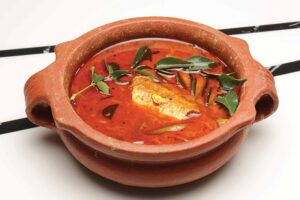
If Kerala has a defining dish — a single preparation that most completely expresses what the state’s cuisine is — it is the fish curry. Not any single recipe but the tradition itself: fish cooked in an earthen pot, in a gravy of tamarind, coconut milk or coconut paste, dried red chillies, green chillies, curry leaves, and a spice combination that varies by district, family, and catch.
The earthen pot (manchatti) is not aesthetic choice — it is essential chemistry. The porous clay absorbs and redistributes the cooking heat differently from any metal vessel, and the fish curry that results has a depth and roundness of flavour that steel pot versions simply do not replicate. Restaurants that serve fish curry in metal vessels are telling you something about their priorities.
The smell of a Kerala fish curry cooking — tamarind souring into the air, curry leaves popping in the oil, dried red chillies releasing their heat into the kitchen — is one of the most evocative food smells in India. I encountered it for the first time walking past a home kitchen in Alleppey and stood outside for a minute before I understood what I was experiencing.
Where to eat the best Kerala fish curry:
Chakara Restaurant, Varkala — Clifftop restaurant serving the freshest catch from the Varkala beach fishing boats, prepared in traditional earthen pot fish curry. The combination of the curry and the Arabian Sea visible from the table is hard to improve upon. ₹300–₹500 for a full fish curry meal.
Hotel Biju’s, Alleppey — A local institution that cooks fish curry in the traditional Kuttanad style — more coconut milk, slightly sweeter, deeply aromatic. Full meal ₹150–₹200.
Any coastal village home restaurant between Alleppey and Kollam — The fish curry served in small home restaurants along the backwater road is frequently the most authentic version available anywhere in the state.
Price: ₹150–₹500 depending on fish variety and establishment.
- Puttu and Kadala Curry — The Working Man’s Breakfast {#puttu}

Puttu is steamed rice flour and coconut — alternating layers pressed into a cylindrical mold and steamed until the rice flour is cooked through and the coconut layers remain distinct within it. It arrives at the table looking like a white cylinder dusted with coconut, smelling of clean steam and fresh coconut, and breaking apart with a gentle pressure that releases the distinct layers simultaneously.
Kadala curry is black chickpea curry — cooked with a roasted coconut masala that gives it a dark, deep, complex gravy completely unlike any North Indian chickpea preparation. The earthiness of the black chickpeas against the sweet freshness of the puttu coconut layers produces a contrast that is one of the most satisfying breakfast combinations in Indian cooking.
This is what Kerala’s working population has eaten for breakfast for generations. The combination costs ₹40–₹70 at any traditional Kerala hotel. It will feed you until well past noon.
Where to eat the best puttu and kadala:
Any tea shop or traditional hotel displaying the cylindrical puttu vessel in a glass case — This is the most reliable quality indicator for puttu. Fresh-steamed puttu served within 10 minutes of ordering from a vessel you can see is always better than pre-made puttu reheated.
Hotel Sri Krishna, Thrissur — Traditional Kerala breakfast institution with particularly well-made kadala curry — the roasted coconut masala here has the depth of something that has been refined over many breakfast services.
Price: ₹40–₹80 per serving at local establishments.
- Karimeen Pollichathu — Pearl Spot Fish in Banana Leaf {#karimeen}
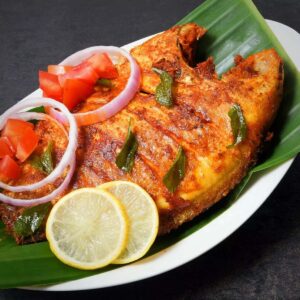
Karimeen is the Pearl Spot fish — a freshwater fish found specifically in Kerala’s backwaters and lakes that has a sweet, firm flesh and a flavour completely unlike any saltwater fish. Pollichathu means cooked in banana leaf — the fish is marinated in a complex masala paste of chilli, turmeric, ginger, garlic, and spices, wrapped tightly in banana leaf, and cooked on a griddle until the leaf chars slightly and the fish inside steams in the masala.
Unwrapping a Karimeen Pollichathu at the table produces a specific moment — the folded banana leaf releasing a cloud of steam carrying the masala smell, the fish underneath already partially caramelized from the direct heat, the charred leaf adding its own faint smoke note to the entire composition.
I ate this for the first time at a small restaurant on the Alleppey backwaters — the fish had been caught that morning from the water visible from the restaurant window. The waiter told me this matter-of-factly. I sat with that information for a moment before I started eating.
Where to eat the best Karimeen Pollichathu:
Finishing Point Restaurant, Alleppey — Famous among Kerala food travelers specifically for this dish. The Karimeen here comes from the adjacent backwaters and the pollichathu preparation is done with a marinade that has been their house recipe for decades. ₹350–₹500 per serving.
Brunton Boatyard, Kochi — The finest presentation of this dish in a restaurant context. ₹600–₹800 but the quality is genuinely extraordinary.
Any backwater restaurant between Alleppey and Kumarakom — The combination of fresh catch and traditional preparation in small restaurants along this road produces versions that compete with any premium establishment.
Price: ₹300–₹800 depending on restaurant tier.
- Kerala Prawn Curry — Coastal Fire in a Bowl {#prawn-curry}

Kerala’s prawn curry uses the freshwater prawns from the backwaters and the larger sea prawns from the coastal catch — cooked in a coconut milk base with green chillies, curry leaves, and a spice combination that builds heat gradually rather than hitting immediately. The coconut milk moderates the fire while the dried red chillies provide the initial wave of heat. The whole spices — cardamom, cloves, cinnamon — add a warmth that lingers well after the last spoonful.
The best versions of this dish are cooked in the same earthen vessels as the fish curry and served with Kerala red rice — a partially milled rice that has a nuttier flavour and a darker colour than white rice and absorbs the prawn curry gravy in a way that white rice simply doesn’t.
Where to eat the best Kerala prawn curry:
Rice Boat, Kochi — Floating restaurant on the Vembanad Lake waterfront with exceptional prawn curry using locally sourced backwater prawns. ₹500–₹700 for a full meal.
Thaff Restaurant, Kozhikode — The Malabar-style prawn curry here has an additional dimension from the northern spice tradition — slightly more complex, with kokum adding tartness alongside the tamarind. ₹250–₹400.
- Malabar Biryani — The North Kerala Rice Masterpiece {#biryani}
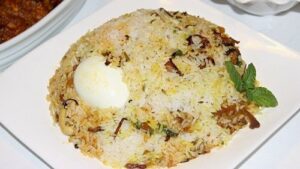
Malabar Biryani from Kozhikode is widely and seriously argued to be the finest biryani in south India — and the argument is not without merit. The Malabar version uses Kaima rice — a short-grain, fragrant variety grown specifically in north Kerala — cooked in the dum method with ghee, caramelized onions, fried cashews, raisins, and a spice combination built around mace, cardamom, and rose water in proportions that produce a fragrance unlike any other Indian rice dish.
The chicken or beef version is the traditional preparation — the meat marinated separately in a yogurt and spice mixture before being layered with the semi-cooked rice and finished sealed in the dum vessel. The moment the seal is broken at the table and the accumulated steam releases, the Malabar Biryani reveals its full fragrance all at once. It is one of the most dramatically pleasurable food openings in Indian cuisine.
Where to eat the best Malabar Biryani:
Rahmath Hotel, Kozhikode — The institution. Serving Malabar Biryani from this location since 1949 without interruption. The chicken biryani here is the version other Kozhikode biryani restaurants are implicitly measured against. ₹180–₹280 per plate.
Zain Hotel, Kozhikode — The beef biryani at Zain has a devoted following among Kerala food travelers that the restaurant has never had to actively cultivate. ₹150–₹250 per plate.
Paragon Restaurant, Kozhikode — The most nationally recognized Kozhikode biryani restaurant. Consistent quality, reasonable pricing, accepts cards. ₹200–₹320 per plate.
Price: ₹150–₹320 per plate at Kozhikode establishments.
- Kerala Parotta with Beef or Chicken Curry {#parotta}
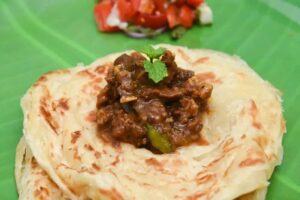
Kerala Parotta is a layered flatbread — made from maida flour, worked until extremely supple, coiled and then flattened and cooked on a griddle with generous amounts of oil until the layers separate and the bread has a crispness at the edges and a softness within. The technique of making parotta — the rhythmic spinning and flattening and coiling — is visible in most restaurants that serve it, and watching it is itself a minor pleasure.
The beef curry that traditionally accompanies it in Kerala is the Syrian Christian version — slow-cooked with black pepper, whole spices, and coconut in a preparation that is unlike any beef dish in the rest of India. The combination of the layered parotta tearing apart in strips and being dipped into the dark, spiced beef gravy produces the kind of meal that people specifically travel back to Kerala to eat again.
Where to eat the best parotta and beef curry:
Any Syrian Christian restaurant in Ernakulam or Kottayam — This is the heartland of Kerala’s beef curry tradition. Small restaurants with plastic chairs and no English menus in these areas consistently serve the most authentic version.
Hotel Saas, Kottayam — Traditional Kerala Christian cooking institution with a beef curry that has its own devotional following among local regulars. ₹120–₹180 for parotta and curry.
Price: ₹80–₹180 per serving.
- Thalassery Fish Biryani — The Hidden Rice Treasure {#thalassery}

Thalassery in north Kerala produces a fish biryani that is different from both the Malabar chicken biryani and from any other fish rice dish in India — it uses the same Kaima rice as Malabar biryani, but the fish (typically large king fish or seer fish) is cooked separately in a coconut and spice masala before being layered with the dum rice, producing a dish where the fish masala permeates the rice in a way that biryani made with marinated meat never quite achieves.
This dish is genuinely difficult to find outside Thalassery and the surrounding Kannur district. That geographic specificity is part of its value — it is one of those food experiences that genuinely requires you to be in the right place, and that reward for being there feels proportionate to the effort.
Where to eat the best Thalassery fish biryani:
Hotel Aleyas, Thalassery — The reference restaurant for this dish. Has been serving Thalassery fish biryani since before the current owner was born. ₹200–₹300 per plate.
Paris Hotel, Thalassery — The breakfast fish biryani here — served from 7 AM — is a Thalassery institution that requires early arrival to avoid selling out. ₹180–₹250.
- Avial — The Vegetable Dish That Tells Kerala’s Story {#avial}
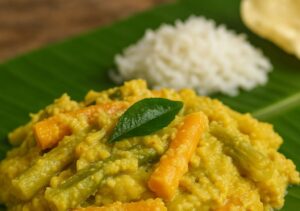
Avial is Kerala’s most distinctively regional vegetable dish — a mixed preparation of whatever vegetables are available (typically raw banana, yam, drumstick, raw mango, carrot, and Kerala cucumber), cooked together with freshly grated coconut, green chillies, cumin, and a final addition of coconut oil and curry leaves. The vegetable pieces are cut long and thick. The coconut coating is coarse rather than ground smooth. The preparation is finished with raw coconut oil poured over the top just before serving, leaving a fragrance that is one of the most specific and beautiful smells in Kerala cooking.
Avial is always part of a Sadya and is considered by many Kerala cooks to be the most technically demanding of the traditional Sadya dishes — the vegetables must be cooked to exactly the right texture (each vegetable is different), the coconut coating must be applied correctly, and the final coconut oil finishing must be done at the right temperature to release the curry leaf aroma without burning either element.
Where to eat the best Avial: At any traditional Sadya. As a standalone dish at traditional Kerala restaurants in Palakkad and Thrissur where the vegetable tradition is strongest. ₹40–₹80 per serving as part of a thali.
- Kerala Filter Coffee — The Morning Ritual {#filter-coffee}

Kerala filter coffee is made by passing hot water through a cylinder of finely ground dark-roasted coffee and chicory, collecting a thick decoction, and combining it with hot whole milk in precise proportions. It is served in a small steel tumbler with a wider steel bowl (davara) — you pour the coffee back and forth between the two to cool it and create a froth. The sound of this pouring, the steam, and the specific smell of chicory-forward coffee and whole milk are inseparable from the Kerala morning experience.
I have had coffee in forty countries and in some of the world’s best cafés. Nothing produces the particular feeling of a Kerala filter coffee drunk standing at a tea shop counter at 6:30 AM while the day is just beginning around you. It costs ₹12–₹20.
Where to drink the best filter coffee: Any traditional tea shop displaying the cylindrical steel coffee filter behind the counter. The quality indicator is the ratio of decoction to milk — too much milk and the chicory complexity disappears. The best cup I’ve had in Kerala came from a stall in Thrissur with no name that I have never been able to find again.
- Unniyappam — The Temple Sweet {#unniyappam}

Unniyappam are small, round, deep-fried rice dumplings — made from rice flour, jaggery, ripe banana, coconut pieces, sesame seeds, and cardamom, cooked in a special multi-cavity pan until golden brown and slightly crisp outside with a soft, banana-sweet interior. They are temple food — traditionally prepared as prasad (sacred offering) at Kerala’s Hindu temples and distributed to devotees.
The combination of the jaggery sweetness, the ripe banana fragrance, the sesame earthiness, and the coconut pieces providing texture within the soft dumpling produces something that manages to be simultaneously simple and deeply satisfying. A bag of ten from a temple stall costs ₹20–₹30. This is not a price that should be possible for something this good.
Where to eat the best Unniyappam: At temple stalls near major Kerala temples during festival periods. Street food vendors in Thrissur and Guruvayoor who specialize exclusively in temple sweets. The quality of Unniyappam made fresh for temple offering is categorically different from packaged versions.
- Payasam — The Sacred Dessert That Ends Every Great Meal {#payasam}

Payasam is Kerala’s dessert — a milk or coconut milk based sweet preparation that comes in dozens of regional and seasonal variations. The most famous is Palada Payasam — rice flakes cooked in milk with sugar and cardamom until the milk reduces to a thick, fragrant, ivory-coloured sweetness. Semiya Payasam (vermicelli in sweetened milk) is the daily version. Ada Pradhaman — rice flakes in coconut milk with jaggery and coconut oil — is the Onam festival version and considered by many Kerala food authorities to be the finest payasam of all.
The Ambalapuzha Paal Payasam — a specific milk payasam prepared at the Ambalapuzha Krishna Temple in Alleppey district — has been offered as temple prasad for 400 years using the same recipe. Receiving this payasam as prasad after a temple visit is one of those food experiences that transcends the purely culinary into something genuinely difficult to describe.
Where to eat the best Payasam: At the Ambalapuzha Sree Krishna Temple (the Paal Payasam prasad is distributed to all visitors). At traditional Kerala restaurants during Onam (typically August–September) when the full Sadya with multiple payasam types is served. At any Kerala homestay whose owner makes payasam on the premises — which is most of them.
- Kappa and Meen Curry — Tapioca Meets the Sea {#kappa}
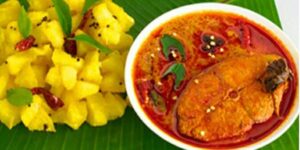
Kappa is boiled tapioca — cooked until completely soft, mashed slightly with coconut oil and salt, sometimes finished with a tempering of mustard seeds and curry leaves. It is Kerala’s most economical staple food and, eaten with the right accompaniment, one of the most satisfying things in the state’s cuisine.
That accompaniment is fish curry — specifically the red, tamarind-based fish curry of central and south Kerala. The combination of the soft, bland tapioca and the intensely spiced, slightly sour fish curry creates a balance that makes both elements better than either is separately. This is coastal Kerala’s everyday food — the meal that a fishing family eats after a long morning on the water. It costs ₹80–₹120 at any traditional coastal restaurant.
Where to eat the best Kappa and Meen Curry: Along the coastal road between Alleppey and Kollam where small home restaurants serve this combination using the day’s catch. Any traditional Kerala restaurant in Thiruvananthapuram or Kollam with both kappa and fish curry on the menu.
- Kozhi Curry — Kerala Chicken the Way It Should Be {#kozhi}

Kerala’s chicken curry uses small, free-range country chicken — roasted coconut masala, black pepper, curry leaves, and a slow cooking technique that produces a dark, dry-ish gravy completely unlike the cream-based chicken curries familiar from North Indian restaurants. The chicken itself cooks until the meat is falling from the bone in a gravy that has reduced to a thick, aromatic coating rather than a liquid sauce.
This is the chicken curry that appears as part of a full Kerala meal alongside parotta or rice — the version served at family gatherings, at Christian weddings, at traditional feast meals. The difference between this and a hotel restaurant chicken curry is the difference between a conversation and a performance of one.
Where to eat the best Kozhi Curry: At traditional Syrian Christian restaurants in Kottayam and Ernakulam. At Kerala homestays where dinner is served — home-cooked kozhi curry is invariably better than restaurant versions. At local restaurants in Thrissur that serve full Kerala non-vegetarian meals.
Where To Eat — Best Restaurants and Street Food Spots {#where-to-eat}
Fort Kochi — Best for eclectic food and heritage atmosphere: Kashi Art Café (breakfast), Old Harbour Restaurant (seafood), Ginger House (traditional Kerala meals). Walk the Mattancherry lanes for the most interesting street food discoveries.

Kozhikode — Best for Malabar food tradition: Rahmath Hotel (Malabar Biryani), Zain Hotel (beef biryani), Paragon Restaurant (consistent quality), Bombay Hotel (Muslim-style snacks and halwa).
Alleppey — Best for backwater fish and seafood: Hotel Biju’s (traditional fish curry), Finishing Point (Karimeen Pollichathu), the nameless restaurants along the backwater road between Alleppey and Kottayam.
Thiruvananthapuram — Best for traditional Sadya and South Kerala cuisine: Ariya Nivaas (the gold standard for traditional meals), Hotel Ananda Bhavan (breakfast institution), Indian Coffee House (filter coffee and snacks since 1957).
Thrissur — Best for authentic local Kerala food: Hotel Sarovaram (Sunday Sadya), Sri Krishna (breakfast), any tea shop in the Thrissur old town area for the most unmediated food encounter with the city.
Practical Food Travel Tips {#practical-tips}
Cash for street food and local restaurants: Kerala’s best food is at establishments that run entirely on cash. Keep ₹1,000–₹2,000 in small denomination notes when exploring food streets and markets. Cards work at mid-range and above restaurants in major cities.
Eat where locals eat: The single most reliable food quality heuristic in Kerala is crowd composition. If the restaurant has local families, local workers, and people eating with complete attention and no conversation, the food is good. If the menu has photographs and multiple languages, the food is probably fine.
Sadya timing: Traditional Sadya is most authentically eaten on Sundays (when most Kerala families have it) and during festival periods — Onam, Vishu, and Thrissur Pooram are the peak Sadya seasons. Some restaurants only serve the full Sadya on Sundays.
Temple food: Many of Kerala’s most significant traditional food experiences are linked to temple ritual — Ambalapuzha Paal Payasam, Unniyappam prasad, the Guruvayur temple offerings. Non-Hindu visitors can access the prasad food at the entrance or prasad counters of most Kerala temples without entering the inner sanctum.
Vegetarian vs non-vegetarian: Kerala is emphatically non-vegetarian in the majority of its food culture — particularly in Christian and Muslim households and restaurants. However, the traditional Kerala vegetarian Sadya is one of the most complex and satisfying vegetarian meals in India. Both traditions are strong and worth experiencing fully.
Allergy awareness: Coconut is in almost everything in Kerala — coconut oil, coconut milk, grated coconut, coconut cream. This is not a cuisine for coconut allergies. Shellfish is similarly present across most coastal restaurant menus.
Best Time To Visit Kerala For Food Experiences {#best-time}
August–September — Onam Festival: The most significant food period in the Kerala calendar. The Onam Sadya — served on Thiruonam day — is the most elaborate version of the feast served anywhere in the state. Full Sadya with 26 dishes is standard at traditional restaurants and homes. Hotel packages for Onam Sadya sell out weeks ahead. If your travel is food-motivated, this is the single most compelling timing argument for any Kerala trip.
October to February — Peak Season: Best overall travel window with all food experiences fully available. Seafood is at its freshest from October onward after the monsoon. Traditional restaurants operate at full capacity. Festival food culture is active through the Thrissur Pooram period in April–May.
December to January — Christmas and New Year: Kerala’s Syrian Christian Christmas food traditions — rice cakes, plum cake, beef preparations specific to the season — add a distinctive food dimension that doesn’t exist at any other time of year.
March to May — Thrissur Pooram Period: The Sadya culture is particularly active around major temple festivals. Malabar food culture in Kozhikode operates year-round and is unaffected by season.
June to September — Monsoon: Some seafood varieties become less available as fishing activity reduces in rough seas. However, freshwater fish from the backwaters — Karimeen particularly — is available year-round and at its best in monsoon-fed water conditions.
5-Day Kerala Food Itinerary {#itinerary}
Day 1 — Fort Kochi: Heritage Food Exploration
Arrive Cochin airport. Check in Fort Kochi. Morning: filter coffee and puttu-kadala at a traditional tea shop. Afternoon: Mattancherry heritage lane walk — spice shops, pickle vendors, coconut oil sellers. Evening: Karimeen Pollichathu at a backwater restaurant. Night: Kashi Art Café for dessert and coffee.
Food spend: ₹400–₹700
Day 2 — Alleppey: Backwater Fish Curry Country
KSRTC bus or taxi to Alleppey (2 hours). Lunch: traditional fish curry and kappa at Hotel Biju’s. Afternoon: government ferry through backwater canals (₹15) — note the home kitchens visible from the water and the smell of fish curry cooking at 4 PM in the villages. Evening: Karimeen Pollichathu at Finishing Point. Night: homestay dinner if staying with a local family.
Food spend: ₹500–₹900
Day 3 — Thrissur: Sunday Sadya and Filter Coffee Culture
Early KSRTC to Thrissur (3 hours). Sunday Sadya lunch at Hotel Sarovaram (₹200–₹250). Afternoon: Thrissur tea shop filter coffee circuit — three different stalls, three different interpretations of the same drink. Evening: traditional snacks from the Thrissur old town market area — unniyappam, banana fritters, rice cakes.
Food spend: ₹400–₹600
Day 4 — Kozhikode: Malabar Biryani Pilgrimage
Train or bus to Kozhikode (4 hours). Lunch: Malabar Biryani at Rahmath Hotel (arrive by 12:30 PM — it sells out). Afternoon: Kozhikode beach halwa shops — the famous Kozhikode Halwa (made from rice flour and coconut oil) is sold from specialist shops near the beach road. Evening: Muslim-style evening snacks at the old town tea shops. Overnight Kozhikode.
Food spend: ₹500–₹800
Day 5 — Kozhikode to Departure
Breakfast: Thalassery fish biryani at Paris Hotel Thalassery (1 hour from Kozhikode, worth the trip). Midday: return to Kozhikode or Kochi for departure. Airport farewell meal: filter coffee from the terminal tea stall — the last Kerala taste before leaving.
Food spend: ₹300–₹500
Want the complete Kerala experience beyond food — accommodation, transfers, and guided sightseeing arranged seamlessly? The Tripyverse Kerala Escape 4N/5D Package covers the state’s essential destinations. The Tripyverse Kerala 5N/6D Package extends further. For the most comprehensive journey, the Tripyverse Kerala Kanyakumari Explorer 6N/7D covers the full southern arc. Couples planning a romantic food-focused Kerala trip will find the Tripyverse Kerala Honeymoon Package the most thoughtfully curated option — combining the best dining experiences with the most intimate destinations the state offers.
Budget Breakdown {#budget}
| Food Style | Daily Food Budget | What You Eat |
| Full Local | ₹300–₹500 | Homestay breakfast, local thali lunch, street food dinner |
| Mix of Local + Restaurant | ₹600–₹900 | Add one restaurant meal per day, Sadya on Sunday |
| One Splurge Daily | ₹1,000–₹1,800 | Add Karimeen Pollichathu, seafood restaurant, backwater dining |
| Full Foodie Experience | ₹2,000–₹4,000 | Premium restaurants, cultural meal experiences, cooking classes |
Kerala’s extraordinary food reality: the ₹300–₹500 per day budget delivers genuinely world-class eating. The gap between street food and restaurant quality in Kerala is smaller than anywhere else in India. A ₹180 Sadya at Ariya Nivaas in Thiruvananthapuram is not a compromise — it is the full, correct, traditional experience. The only thing a higher food budget buys you in Kerala is atmosphere and the occasional premium ingredient — not a fundamentally better meal.

Final Verdict — Honest Assessment of Kerala Cuisine {#final-verdict}
Kerala food is the most complete regional food tradition in India. I have eaten my way through most of the country’s significant regional cuisines with genuine attention and considerable appetite, and I return to this conclusion consistently: the depth, diversity, and quality-at-every-price-point of Kerala cooking is unmatched.
The Sadya alone — one meal, twelve to twenty-eight dishes, each one individually refined over centuries — would justify this claim. But then there is the Malabar Biryani and the Karimeen Pollichathu and the backwater fish curry and the filter coffee and the temple payasam and the appam at 7 AM in a homestay with coconut stew and nothing on the day’s agenda except eating well. All of it genuine. All of it extraordinary. Most of it under ₹200.
One honest drawback: Kerala’s food scene requires geographic knowledge and a willingness to eat where the tourists aren’t. The tourist-facing restaurants in Fort Kochi and major hotel dining rooms serve adequate food at significant markups. The real Kerala food is at local restaurants, homestays, and street stalls that require either local knowledge or the confidence to walk into an establishment with no English menu and point at what the person next to you ordered.
Kerala food is perfect for: Every traveling human being with an intact sense of taste. Food-motivated travelers specifically — this is one of the world’s great food destinations by any serious culinary standard. Budget travelers — the affordability of exceptional food here is almost offensive in its generosity.
You may find it challenging if: You have a serious coconut allergy (coconut is structurally present in most Kerala dishes), you require strictly vegetarian food at all times without prior restaurant research, or you’re uncomfortable navigating local restaurants without English menus.
For the complete picture of Kerala beyond food — the hidden destinations, secret beaches, and off-beaten-path experiences that contextualize where the best food actually lives — our comprehensive Hidden Places in Kerala 2026: Secret Gems is essential companion reading. The best Kerala food and the best Kerala places are usually found in exactly the same out-of-the-way locations.
Planning to contrast Kerala’s food richness with a quick international leg — Cochin to Dubai is just 3 hours by air? Our Dubai Travel Guide 2026: 10 Must-Visit Places & Hidden Gems and our practical Dubai Travel Tips 2026: Save Money, Time & Mistakes cover everything needed to make that extension seamless. And if you’re planning a complete India itinerary that stretches from Kerala’s coconut coast to Himachal’s snow-covered valleys, our Manali Travel Guide — 7 Best Places + Hidden Gems (2026) and our deep-dive into Secret Places in Manali — 7 Hidden Gems You Must Visit in 2026 complete the picture — because the traveler who eats their way through Kerala will want to trek their way through Manali too.