


Table of Contents
- Introduction — The Café I Almost Missed
- Where Is Shimla Located?
- How To Get To Shimla
- Getting Around Shimla
- Where To Stay in Shimla
- Top Things To Do — Cafes, Snow, Viewpoints & More
- Practical Travel Tips
- Best Time To Visit Shimla
- Suggested Itinerary — 5 Days in Shimla
- Budget Breakdown
- Final Verdict
- SEO Tags
- Pinterest & Image Strategy
- 🌴 Introduction — The Café I Almost Missed {#intro}

I almost walked past it three times. It had no Instagram geo-tag, no hand-painted mural designed for selfies, no QR menu. Just a frosted glass door wedged between a pharmacy and a wool shop on a narrow lane off the Mall Road, with the faint smell of cinnamon rolls and pine smoke drifting out from underneath. I pushed the door open and found twelve mismatched chairs, a wood-burning stove in the corner, and a window that framed the entire snow-dusted Shimla ridge like a painting someone forgot to sell.
That café — and I’m deliberately not naming it, so you have to find it yourself — is what Shimla really is, once you get past the toy train photos and the Jakhu temple queue. Shimla is India’s most storied hill station, the former summer capital of the British Raj, and it’s been “discovered” more times than most places deserve. And yet, somehow, it keeps hiding things.
The snow views nobody photographs. The colonial-era bakeries that have been making the same walnut cake since 1947. The viewpoints at dusk where the pine trees go orange and the valley below fills with blue smoke from a hundred evening fires. This guide is about finding all of it — the famous and the forgotten — without spending more than you have to.
- 📍 Where Is Shimla Located? {#location}
Shimla sits at an elevation of 2,205 metres in the Shivalik range of the outer Himalayas, in Himachal Pradesh, about 340 km north of Delhi and 116 km northeast of Chandigarh. It served as the summer capital of British India from 1864 to 1939, which explains the unusually high concentration of Tudor-Gothic architecture, Presbyterian churches, and half-timbered buildings for a town in the Himalayan foothills. It borders Uttarakhand to the east and is roughly 250 km from Manali — making it a natural starting or ending point for a broader Himachal circuit.
- ✈️ How To Get To Shimla {#howtoget}
By Air: Shimla Airport (SLV) at Jubbarhatti, 22 km from the town centre, is the closest airfield — but it’s tiny, weather-dependent, and serves only a handful of flights from Delhi (Alliance Air and SpiceJet, when operating). Most travellers fly to Chandigarh Airport (IXC), which has excellent connectivity from Delhi, Mumbai, Bengaluru, and Hyderabad. From Chandigarh, a cab to Shimla costs ₹1,500–₹2,000 (2.5–3 hours). Alternatively, HRTC buses run from Chandigarh ISBT to Shimla for ₹200–₹250.
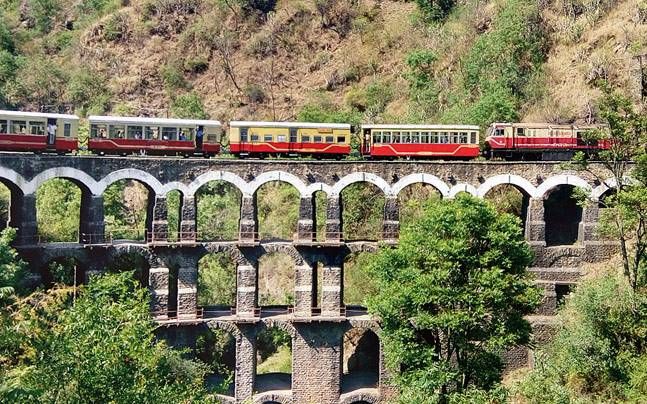
By Train — The Kalka-Shimla Railway: Like the Nilgiri toy train in Ooty, the Kalka-Shimla Railway is a UNESCO World Heritage narrow-gauge line that winds through 102 tunnels and over 800 bridges across 96 km of mountain terrain. The journey takes 5–6 hours from Kalka and costs ₹15–₹360 depending on class. Shivalik Deluxe Express and Himalayan Queen are the most popular services. Book months in advance during peak season — this is not an exaggeration. From Delhi, take an overnight train to Kalka and connect to the toy train in the morning.
By Road: The NH5 from Chandigarh to Shimla is well-maintained and scenic. HRTC Volvo buses from Delhi ISBT to Shimla run overnight (₹700–₹1,100, about 9–10 hours). From Chandigarh by road, allow 3 hours. Private cabs from Delhi cost ₹4,500–₹6,000.
Budget vs. Fast: Bus from Chandigarh is the cheapest. The toy train from Kalka is the most atmospheric. Flying to Chandigarh and cabbing in is fastest.
- 🚗 Getting Around Shimla {#gettingaround}
Shimla’s core — the Mall Road, Ridge, and Scandal Point — is pedestrian-only, which is both its charm and its logistical quirk. Private vehicles cannot enter the main town area; they park at Cart Road below and you walk up. This means:
- Walking: The primary mode for everything within the town centre. Budget 15–20 minutes from Cart Road to the Ridge, with steep staircases. People with mobility issues should plan carefully.
- Porters: Available at Cart Road to carry bags up to your hotel — ₹100–₹200 per bag depending on weight and distance.
- Local Buses: HRTC local buses connect Shimla to Kufri (₹35), Chail (₹60), and surrounding areas from the bus stand near Victory Tunnel.
- Taxis: Readily available at Cart Road and major stands. Shimla–Kufri costs ₹600–₹800 return. Shimla–Chail runs ₹1,200–₹1,500 return. Shimla–Narkanda is ₹2,000–₹2,500 return.
- Ola/Uber: Limited to lower Shimla and Cart Road area. Don’t rely on them for early morning departures.
For first-time visitors, the key adjustment is accepting that the town is vertical. Everything is either uphill or downhill. Comfortable shoes are non-negotiable.
- 🏨 Where To Stay in Shimla {#wheretostay}
Budget (₹800–₹2,000/night): The lanes below the Ridge and around Lakkar Bazaar have a dense cluster of guesthouses and small hotels at very reasonable prices. Hotel Dreamland and Hotel Mayur are functional, clean, and well-positioned. For travellers who want the social atmosphere of a hostel, Backpacker Panda Shimla (near Scandal Point) is the best-managed option — dorm beds from ₹600, private rooms from ₹1,800.
Mid-Range (₹2,500–₹6,000/night): Honeymoon Inn Shimla consistently delivers good value — clean rooms, reliable hot water, and a terrace with decent valley views. Hotel Combermere, a heritage property near the Mall, has character that newer hotels lack — creaky wooden floors, high ceilings, and a dining room that feels unchanged since 1960. For couples planning a Himachal trip where Shimla is one stop of several, the Tripyverse Himachal Honeymoon package bundles accommodation across multiple towns with transport and itinerary planning.
Luxury (₹7,000–₹25,000+/night): Wildflower Hall (an Oberoi property) at Mashobra, 13 km from Shimla, is genuinely one of the finest mountain resort experiences in India — cedar forest, colonial grandeur, and an outdoor heated pool overlooking the Himalayas. Chapslee Estate, a heritage boutique property in the centre of Shimla, is the other top-tier choice — only six rooms, immaculate service, and a garden that looks like it was transplanted from Surrey.
Best areas: Stay on or just below the Ridge for walking convenience. Avoid lower Cart Road hotels unless you don’t mind the climb several times a day.
- 🌊 Top Things To Do in Shimla {#todo}
☕ 1. Find Shimla’s Hidden Cafes — The Real Ones
Shimla’s café scene divides into two categories: the Instagram ones designed for photos and the real ones designed for cold afternoons. The Baljees on Mall Road is a legacy — a multi-generational confectionery and restaurant that’s been feeding Shimla since the 1940s. Their walnut cake and hot chocolate are not optional. Maria Brothers nearby is a bookshop-café hybrid with a first-edition book collection that would make a library jealous — go for the coffee, stay for the smell of old paper.
For the genuinely hidden options, explore the lanes running perpendicular to the Mall between the Gaiety Theatre and the Town Hall. Small cafes tucked into half-timbered buildings serve filter chai, Maggi with extra butter (it’s a Shimla thing), and apple cake made from local Kinnauri apples. No decor. No Wi-Fi password on the wall. Just warmth and views.
Insider tip: The best café windows look north over the ridge. Ask for a window seat specifically — in winter, the view of snow on the higher slopes while you hold a hot drink is genuinely moving.
🏔️ 2. Jakhu Temple & the Ridge at Sunrise

Jakhu Hill, at 2,455 metres, is the highest point in central Shimla. The Hanuman temple at the top is one of the oldest in Himachal — the monkeys here are ancient residents who seem to know they’re untouchable and act accordingly. The 2.5-km walk up from the Ridge takes about 45–60 minutes. A ropeway also operates from near the Scandal Point area (₹250–₹350 return) for those who’d rather not hike.
Go at sunrise. The Shimla Ridge below glows orange-pink, the snow peaks to the north catch the first light, and the town is completely silent except for temple bells and birds. By 9 AM, the tourist crowd arrives and the magic dilutes fast.
Honest warning: The monkeys at Jakhu are aggressive. Hold your bags tight, remove glasses and caps, and don’t show food under any circumstances. The Forest Department has rangers managing the situation, but it’s still a contact sport.
❄️ 3. Kufri — Snow Without the Kufri Crowds (If You Time It Right)

Kufri, 13 km from Shimla at 2,600 metres, is where most visitors go for snow. The problem is that most visitors go for snow at the same time, producing a traffic jam of jeeps and a snow-play area that feels more like an overcrowded parking lot than the Himalayas. The solution is simple: go on a weekday, arrive by 8 AM, and head to Mahasu Peak (the actual high point above Kufri) rather than the main tourist zone.
From Mahasu Peak on a clear January or February morning, you can see Badrinath, Kedarnath, and the entire sweep of the high Himalayas on the northern horizon. It requires a 45-minute uphill walk from the Kufri jeep stand, but the panorama is one of the best viewpoints accessible from Shimla without a serious trekking permit.
🌲 4. Narkanda — Shimla’s Best Day Trip Nobody Takes
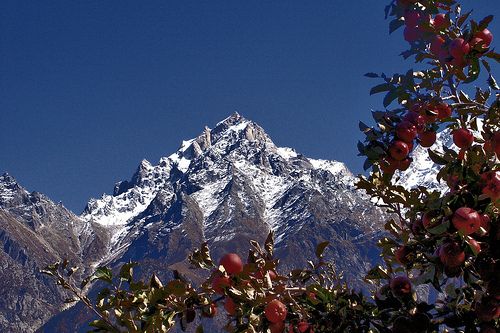
This is the one most Shimla guides skip. Narkanda, 65 km from Shimla at 2,708 metres, is a small roadside town that sits above the apple orchards and below the Hatu Peak summit. The drive from Shimla via NH5 passes through some of the most beautiful Himalayan highway scenery in Himachal — apple orchards that go red-gold in October, deodar cedar forests that block the sky, and roadside dhabas serving rajma chawal and hot chai with a view that costs nothing.
In winter, Narkanda gets genuine snow skiing (basic slopes, rental equipment ₹300–₹500/day). In summer, the Hatu Peak trek (10 km round trip) takes you to 3,400 metres with views that make Kufri look like a backyard. A return cab from Shimla costs ₹2,000–₹2,500. Start by 7 AM, be back in Shimla by 6 PM.
Insider tip: Stop at the Narkanda apple orchards in September–October. You can buy a full box of apples (5 kg) for ₹150–₹200 directly from orchard owners — the sweetest apples you will ever eat.
🏛️ 5. The Colonial Architecture Walk — Shimla’s Unsung Story

Shimla is essentially a living museum of Victorian and Edwardian architecture, and almost nobody treats it that way. The Gaiety Theatre (1887) is one of the finest surviving examples of Gothic-Victorian theatre design in Asia — Kipling performed here, as did many famous literary figures of the Raj era. The Viceregal Lodge (now the Indian Institute of Advanced Study, 2 km from the Ridge) is a Tudor-Gothic mansion set in 330 acres of grounds — the garden alone is worth the ₹50 entry fee.
Christ Church on the Ridge is the second-oldest church in North India, its stained-glass windows worth slowing down for. The old Rothney Castle (partially visible from the road) was once home to Lord Dufferin. Walk the Mall between 6–8 AM when it’s completely empty — the light on the sandstone buildings at that hour is extraordinary.
🍎 6. Himachali Food — The Underrated Part of the Trip

Most tourists eat butter chicken and Maggi in Shimla. That’s a mistake. Himachali cuisine is its own distinct tradition — slow-cooked, robust, and deeply satisfying in the cold.
Dham (a ceremonial meal of rice, madra — chickpeas in yogurt gravy, rajma, and boor ki kari) is the local festival meal and occasionally available at dhaba restaurants near the bus stand and Lakkar Bazaar. Siddu — a steamed wheat bread stuffed with poppy seeds, walnuts, and ghee — is the Shimla street food that no food guide ever mentions but should. Find it at the small stalls near the old bus stand in the morning. A plate with ghee costs ₹40–₹60.
The apple-based products deserve their own mention: local apple juice (not packaged — freshly pressed from November to January), apple murabba (a thick preserve), and apple cider from a few local producers around Mashobra and Narkanda. Buy these directly from orchard stalls, not souvenir shops.
📸 7. Sunset from Prospect Hill & Sunset Point
Prospect Hill is a small, forested summit 5 km from Shimla with a Kamna Devi temple at the top. The walk up through deodar forest takes about 30 minutes from the Boileauganj bus stop. At sunset, the view over the lower hills toward Chail and the Sutlej valley is completely unobstructed and completely crowd-free by comparison to the Ridge.
For a different angle, Sunset Point near Chail (45 km from Shimla) gives you one of the most dramatic valley-to-ridge panoramas in the region. The drive through apple orchards and Chail Palace grounds is itself worth the trip.
- 💡 Practical Travel Tips {#tips}
Cash vs. Card: Shimla town centre is card-friendly — most restaurants and shops on Mall Road accept UPI and cards. Smaller dhabas, guesthouses, and Kufri/Narkanda vendors are cash-only. Carry ₹2,000–₹3,000 in cash at all times. ATMs are on the Ridge and at Scandal Point.
Internet: Airtel and BSNL work reliably in Shimla town. Jio is patchy on the Ridge but fine at Cart Road. In Narkanda and Hatu Peak, expect very limited connectivity. Download offline maps (Maps.me or Google offline) before heading out.
Clothing: Even in April–May, Shimla evenings drop to 8–12°C. In January–February, expect -2°C to 5°C and pack accordingly — thermal base layers, a heavy fleece, a waterproof outer jacket, and non-slip boots. Shimla in winter without proper gear is genuinely miserable.
Safety: Shimla is very safe. The pedestrian-only town centre means no vehicle traffic anxiety. Solo women travellers consistently report positive experiences. The main concern is the monkeys at Jakhu — treat them seriously.
Useful Apps: HRTC bus app (for booking state buses), Google Maps (works well), Ola for Cart Road cabs, IRCTC for Kalka-Shimla train reservations.
- 📅 Best Time To Visit Shimla {#besttime}
| Month | Weather | Crowds | Verdict |
| January | -2 to 8°C, heavy snow | Medium | Snow lovers’ paradise — book ahead |
| February | 0 to 10°C, snowfall likely | Medium–High | Peak winter travel; book 4 weeks ahead |
| March | 5–15°C, snow melting | Low–Medium | Excellent — fewer crowds, crisp air |
| April | 10–20°C, spring flowers | Low | Underrated gem — cheap and beautiful |
| May | 15–25°C, mild summer | Very High | Holiday season; avoid unless essential |
| June | 18–28°C, pre-monsoon | High | Gets hot; crowds still heavy |
| July–August | Monsoon, heavy rain | Low | Landslide risk; roads unpredictable |
| September | 12–22°C, post-monsoon | Low | Hidden gem — lush and green |
| October | 8–18°C, apple season | Low–Medium | Best overall — apple orchards in colour |
| November | 3–12°C, cooling | Low | Quiet and atmospheric |
| December | -1 to 8°C, early snow | High | Christmas crowds; festive but expensive |
Sweet spots: March–April (before peak) and September–October (post-monsoon apple season). These months offer the best combination of weather, price, and manageable crowds. For a Himachal honeymoon, January–February for snow romance and October for golden orchards are both excellent — see the Tripyverse Himachal Honeymoon package for curated romantic itineraries across both seasons.
- ⏳ Suggested Itinerary — 5 Days in Shimla {#itinerary}

Day 1 — Arrive, Acclimatise, Mall Road Evening
- Arrive by noon, check in, rest and acclimatise
- Afternoon walk: Mall Road, Gaiety Theatre, Christ Church
- Sunset from the Ridge
- Dinner at Baljees (walnut cake mandatory)
- Estimated spend: ₹1,800–₹2,500
Day 2 — Jakhu Sunrise + Colonial Walk + Hidden Cafes
- 5:30 AM: Walk to Jakhu Hill for sunrise (or ropeway if needed)
- 9 AM: Return, breakfast at a local dhaba (siddu + chai)
- 11 AM: Colonial architecture walk — Viceregal Lodge, Christ Church, Rothney Castle area
- Afternoon: Hidden café exploration on the lanes off Mall Road
- Estimated spend: ₹1,200–₹1,800
Day 3 — Kufri + Mahasu Peak
- 7 AM: Depart for Kufri by cab (₹700–₹900 return)
- Mahasu Peak walk (45 min uphill) for snow and Himalayan panorama
- Afternoon: Back in Shimla, Lakkar Bazaar shopping (wooden crafts, Himachali shawls)
- Evening: Prospect Hill sunset walk
- Estimated spend: ₹1,500–₹2,500
Day 4 — Narkanda Day Trip
- 7 AM: Depart for Narkanda (cab ₹2,000–₹2,500 return)
- Narkanda apple orchards, Hatu Peak trek (if fit), roadside dhaba lunch
- Return by 6 PM
- Evening: Rest, hot dinner, early night
- Estimated spend: ₹2,500–₹3,500
Day 5 — Chail + Departure
- Morning: Drive to Chail (45 km) — Chail Palace, Sunset Point, world’s highest cricket ground (2,444 m)
- Lunch in Chail
- Return to Shimla for departure
- Estimated spend: ₹1,800–₹2,500
- 💰 Budget Breakdown {#budget}
| Category | Budget | Mid-Range | Luxury |
| Accommodation/night | ₹700–₹1,500 | ₹2,500–₹5,500 | ₹8,000–₹25,000 |
| Food/day | ₹200–₹400 | ₹500–₹900 | ₹1,500–₹3,000 |
| Transport/day | ₹200–₹500 | ₹700–₹1,500 | ₹2,500+ |
| Sightseeing/day | ₹50–₹200 | ₹300–₹600 | ₹1,000+ |
| Daily total | ₹1,150–₹2,600 | ₹4,000–₹8,500 | ₹13,000+ |
| 5-day trip | ₹6,000–₹13,000 | ₹20,000–₹42,500 | ₹65,000+ |
Where to save: Stay in lanes below the Ridge rather than on Mall Road. Use HRTC local buses to Kufri instead of private cabs. Eat at dhaba restaurants near the bus stand rather than Mall Road cafes (identical food, half the price). Buy apples and local produce from orchards directly.
Where to splurge: The Kalka-Shimla toy train (the Shivalik Deluxe, ₹360, is worth every rupee over the basic class). One dinner at a heritage hotel restaurant — the Oberoi Wildflower Hall afternoon tea, even if you’re not staying there, is a legitimate splurge that’s architecturally and gastronomically extraordinary. And the Narkanda day trip with a private cab — sharing that cost between two people makes it incredibly reasonable for what you get.

- 🤔 Final Verdict — Honest Opinion {#verdict}
What genuinely impressed me about Shimla on my last visit wasn’t the snow or the colonial architecture or even the café I described at the start. It was the density of it — the way you can turn a corner on a lane you’ve walked three times and find something you hadn’t noticed: a 1940s barber shop, a chai stall run by a man who has the same customers every morning, a window with a view you’d pay serious money for at a hotel in the Alps.
The real drawback: Shimla in May is a fundamentally different and lesser experience than Shimla in October or January. The crowd-to-space ratio collapses, prices spike 30–50%, and the pedestrian Mall Road starts feeling like a pressure cooker. If you have any scheduling flexibility, protect it.
Perfect for: History lovers, couples (especially in winter), solo travellers who enjoy long walks and cold mornings, anyone who finds Manali too adventure-focused and wants a more civilised hill station experience, and families with children who appreciate the toy train as much as adults do.
Might want to reconsider: Beach-weather seekers, party travellers, anyone with severe mobility issues (the town is extremely hilly and the steps are relentless), and travellers visiting only in May–June who expect the quiet Shimla of postcards — it doesn’t exist then.
If your Himachal circuit takes you further north, the comparison with Manali is inevitable. Shimla is more British, more colonial, more urban — Manali is rawer, wilder, more backpacker. Both deserve time. And if you’re building a broader South and North India comparison, the Ooty ultimate travel guide and Kerala guide on Tripyverse offer an interesting counterpoint to what a completely different kind of Indian hill experience looks like.
Shimla rewards patience and early mornings. Bring both.