

Table of Contents
- Wait — Maldives on ₹50,000? Let Me Explain
- Why Budget Maldives Is More Real Than You Think
- How To Get To Maldives Cheap from India
- Getting Around Without Draining Your Wallet
- Where To Stay on a Budget in Maldives
- Free & Cheap Things To Do in Maldives
- What To Eat in Maldives on a Budget
- Practical Money-Saving Tips
- Best Time To Visit for Lowest Prices
- 4-Day Budget Maldives Itinerary
- Complete ₹50,000 Budget Breakdown
- Final Honest Verdict
- 20 SEO Tags
- Image Placement Guide & All Image Links
- Pinterest Pin Strategy
1. Wait — Maldives on ₹50,000? Let Me Explain
I know what you’re thinking. The Maldives. The place with the overwater villas that cost ₹80,000 a night. The destination where a bottle of water costs USD 8 and a cocktail costs USD 25. The honeymoon destination for people who fly business class and don’t look at menus before ordering.
Yes. That Maldives. Under ₹50,000. Total. Flights included.
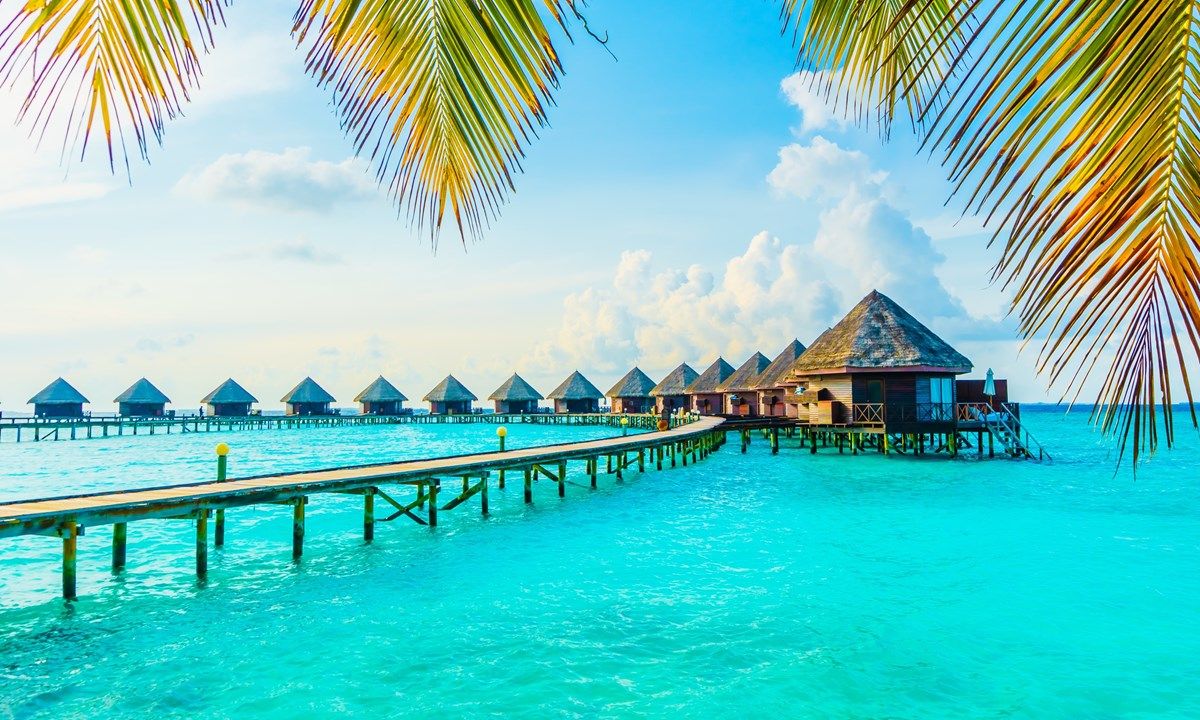
Here’s what most travel blogs about the Maldives won’t tell you: in 2009, the Maldivian government opened the country to guesthouse tourism on local inhabited islands, specifically to create an affordable alternative to the private resort model. Today, there are hundreds of guesthouses across islands like Maafushi, Thulusdhoo, Fulidhoo, Dhigurah, and Guraidhoo — clean, well-run, with access to bikini beaches, snorkeling reefs, and the same turquoise water that the USD 2,000-a-night resort next door is charging for. You’re swimming in the same Indian Ocean. You’re watching the same bioluminescent plankton glow at midnight. You’re seeing the same reef sharks under the same clear water.
The experience is different, not lesser. And it is entirely, genuinely possible for under ₹50,000 from most Indian cities. I’m going to prove it to you, line item by line item. Keep reading.
2. Why Budget Maldives Is More Real Than You Think
The private resort model — where you fly to a remote atoll, transfer by seaplane for USD 500 return, and spend a week completely isolated on a manicured island with no connection to actual Maldivian life — is beautiful. It’s also disconnected from everything that makes the Maldives worth understanding as a country.
The local island guesthouse experience gives you something that money genuinely cannot buy at a resort: proximity to real Maldivian village life. You walk the same streets as the families who have lived there for generations. You eat at the same tea shops where fishermen come in at 5 AM after a night at sea. You see how a Muslim atoll community works — the mosques, the markets, the dhoni boat builders, the children playing cricket on the harbor front.
The beaches are designated — most local islands have a “bikini beach” section where tourist dress codes apply, separate from the main beach where local standards are observed — and the snorkeling off the guesthouse jetty is frequently outstanding. Maafushi’s house reef has turtles. Thulusdhoo’s is famous for surfing. Dhigurah has whale shark sightings that rival any resort-organized excursion.
If you want the full context of how this compares to the premium resort experience before deciding, the complete 5-day Maldives itinerary guide covers both budget and luxury options side by side.
3. How To Get To Maldives Cheap from India

Flights are your single biggest expense and your biggest opportunity to save. This is where the ₹50,000 budget either works or fails.
The Golden Rule: Fly from South India
The closer your departure city to Malé, the cheaper the ticket. Kochi is the closest major Indian city to the Maldives — just 670 km. Flights from Kochi to Malé take under 2 hours and are consistently the cheapest available.
Best budget routes and approximate return fares (booked 60–90 days ahead):
- Kochi → Malé: ₹12,000–₹16,000 return (IndiGo direct, fastest and cheapest)
- Chennai → Malé: ₹13,000–₹17,000 return (IndiGo direct)
- Bengaluru → Malé: ₹14,000–₹19,000 return (IndiGo, SpiceJet)
- Mumbai → Malé: ₹15,000–₹21,000 return (IndiGo direct)
- Delhi → Malé: ₹17,000–₹24,000 return (IndiGo, Air India)
Budget booking rules:
- Book exactly 60–75 days ahead for the best IndiGo fares on this route
- Fly Tuesday to Thursday — weekend fares are 20–30% higher
- Avoid December 15 through January 15 (peak season, fares double)
- Avoid February (Valentine’s and honeymoon surge — significant price increase)
- May, June, September, and October are the cheapest months — target these windows
- Pack carry-on only — budget airlines charge ₹1,500–₹3,000 for checked baggage. Four days in the Maldives requires minimal clothing. A 7 kg cabin bag handles it easily.
Visa: Completely free for Indian passport holders. 30-day visa on arrival. No application, no fee, no paperwork beyond your passport and onward ticket. This is one of the few international destinations where the visa costs nothing.
4. Getting Around Without Draining Your Wallet

Airport Transfer to Malé / Hulhumalé: The airport sits on its own island — Hulhulé — adjacent to Malé. A ferry connects Hulhulé to Malé for MVR 20 (₹110) — takes 10 minutes. This is the budget traveler’s transfer. The taxi boat option costs USD 10–15 (₹840–₹1,260) for the same journey. Take the ferry.
Speedboat to Your Guesthouse Island (Maafushi Example): The shared speedboat from Malé to Maafushi runs multiple times daily, costs USD 10–12 (₹840–₹1,008) per person one way, and takes 45 minutes. This is the standard transfer for local island guesthouses in North Malé Atoll. Compare this to a seaplane transfer to a resort island in a remote atoll: USD 300+ return. The island you choose determines your transfer cost dramatically — stay in North Malé Atoll islands and transfers stay under ₹2,000 each way.
Getting around on the island: Most local islands are walkable in 20 minutes end to end. There are no taxis, no autos, no rickshaws. You walk everywhere. This is both charming and completely cost-free.
Day trip excursions: Shared snorkeling trips: USD 20–35 (₹1,680–₹2,940) per person. Shared sandbank excursions: USD 25–40 (₹2,100–₹3,360) per person. Shared dolphin watching cruises: USD 20–30 (₹1,680–₹2,520) per person. All bookable through your guesthouse — significantly cheaper than resort equivalents. Negotiate if booking multiple excursions — most guesthouses offer package deals.
Public ferry (for the ultra-budget traveler): Local ferries between inhabited islands cost MVR 10–50 (₹55–₹275). Extremely slow, very infrequent, not tourist-optimized. Useful if you have maximum flexibility and minimum budget. For a 4-day trip, the speedboat is the practical choice.
5. Where To Stay on a Budget in Maldives

Budget accommodation in the Maldives means local island guesthouses. Here’s what to expect and which ones deliver genuine value.
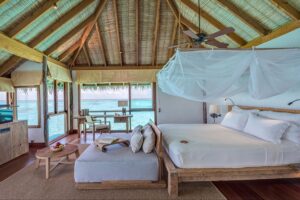
What a budget guesthouse gives you: A clean private room with air conditioning (essential — the heat is real), an attached or shared bathroom, breakfast usually included, WiFi, and access to the island’s bikini beach. No private pool, no butler, no overwater deck. What you gain is authenticity, community, and a fraction of the cost.
Best budget islands and guesthouses:
Maafushi Island (Most Popular Local Island) The most developed local island for tourism — multiple guesthouses, restaurants, diving operators, and a well-maintained bikini beach. The infrastructure is good. The downside: it can feel slightly crowded on weekends when day-trippers arrive from Malé.
- Maafushi Inn — Clean, reliable, breakfast included. USD 55–75 (₹4,620–₹6,300) per night. One of the most consistently reviewed guesthouses on the island.
- Kaani Beach Hotel, Maafushi — Slightly higher end of budget, great beach access, USD 80–100 (₹6,720–₹8,400). Good if you want a step up from basic.
Fulidhoo Island (Best for Quiet Atmosphere) Smaller, quieter, fewer tourists than Maafushi. The bikini beach here is less crowded and the snorkeling off the jetty has nurse sharks and rays. A more authentic village feel.
- Sand and Villa, Fulidhoo — Simple, honest, friendly hosts. USD 50–65 (₹4,200–₹5,460) per night including breakfast.
Guraidhoo Island (Good Snorkeling, Low Crowds) Another South Malé Atoll island with an excellent house reef and fewer tourists than Maafushi. Slightly longer speedboat transfer but worth it for the quieter experience.
- Guraidhoo Corner, Guraidhoo — Small family-run guesthouse, exceptional snorkeling access, USD 55–70 (₹4,620–₹5,880).
Thulusdhoo Island (For Surfers) Home to the famous Coke’s surf break. If you surf, this is where you stay. If you don’t, the beach and snorkeling are still excellent.
- Aqua Villa Inn, Thulusdhoo — USD 65–85 (₹5,460–₹7,140). Popular with the surfing crowd, good food, reliable WiFi.
Honest note: Budget guesthouses in the Maldives are not luxury. The rooms are functional, the beaches are shared, and you will hear the call to prayer five times a day. This is not a resort experience. It is a travel experience. If you need the resort experience, budget accordingly — or look at the Maldives 4N5D Beach Villa & Water Villa package by Tripyverse which gives you both a beach villa and water villa stay in a structured package.
6. Free & Cheap Things To Do in Maldives
The Bikini Beach — Free, All Day
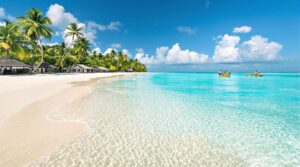
Every local island with tourist infrastructure has a designated bikini beach — a section of the island’s beach where tourists can wear swimwear. Maafushi’s bikini beach is sandy, clean, and faces the open ocean. Fulidhoo’s is smaller but more peaceful. You can spend entire mornings and afternoons here at zero cost beyond your guesthouse accommodation.
The water is warm (29–30°C year-round), the sand is white, and the color of the water — that specific turquoise that exists nowhere else on earth — is identical to what resort guests are paying ten times as much to access. Free.
House Reef Snorkeling — Free or Nearly Free

Most local island guesthouses either have direct access to a snorkeling reef from the beach, or a short 5-minute boat ride to one. Snorkeling gear rental costs USD 5–10 (₹420–₹840) per day if your guesthouse doesn’t include it. What you see — reef fish in species and quantities that stagger first-timers, sea turtles, reef sharks, octopus, rays — is genuinely world-class. Not resort-packaged. Not guided. Just you, the reef, and the clearest water you’ll encounter anywhere in your life.
I snorkeled every morning on my Maldives budget trip and felt no deprivation whatsoever. The reef at Fulidhoo had more turtles in one morning than I’d seen across three previous snorkeling destinations combined.
Insider tip: Ask your guesthouse host exactly where the best entry point for the house reef is. They know the coral layout, the turtle feeding spots, and the times when the nurse sharks gather under the coral overhangs. This local knowledge is completely free and far more valuable than any resort dive briefing.
Watching the Bioluminescent Plankton — Free

No ticket, no tour, no guided experience required. Walk to the beach edge after 11 PM on a clear, dark night — ideally around a new moon. Swish your foot in the shallows. Watch the water glow electric blue around your movement. This phenomenon, caused by bioluminescent phytoplankton, occurs across the Maldives and is completely unpredictable and completely free.
It happened on my second night in Fulidhoo. I was the only person on the beach. The blue glow traced my footprints for three or four seconds before fading. I stood there for half an hour.
When it’s most visible: May to October during the wet season — warmer water temperatures encourage plankton blooms. The darker the sky, the more vivid the glow. Ask locals if they’ve seen it recently — they know.
Exploring the Local Village — Free

Walking a Maldivian village on a local island is one of the most quietly interesting experiences the trip offers. Colorful painted walls, children playing in the streets, old men sitting outside the mosque after evening prayers, fishing boats being repaired on the beach. The pace of life on these islands is completely different from anything in urban India.
Respect the local culture — dress modestly when walking through the village (covered shoulders and knees, swimwear only on the designated bikini beach), don’t photograph people without asking, and accept tea if offered at a local home. The hospitality is genuine and costs nothing.
Shared Snorkeling Excursion — USD 20–35 (₹1,680–₹2,940)
For sights beyond your house reef — deeper coral gardens, manta ray cleaning stations, whale shark spots — a shared snorkeling excursion booked through your guesthouse is the budget option. These are group dhoni trips with 6–12 passengers, visiting 2–3 snorkeling sites in a half day. The cost is a fraction of resort-organized diving.
Dhigurah Island (South Ari Atoll) is particularly famous for whale shark sightings year-round — the channel off the island is a reliable aggregation site. If whale sharks are on your list, route your trip through Dhigurah. Shared snorkel trips here cost USD 30–40 (₹2,520–₹3,360) and sighting rates are high.
Sandbank Visit — USD 25–40 (₹2,100–₹3,360)

A tiny strip of white sand rising a meter above the Indian Ocean, surrounded by gradient turquoise water in every direction — no other land visible. A sandbank excursion is the most photogenic two hours of any Maldives trip and at USD 25–40 on a shared boat, it’s affordable even on a ₹50,000 budget. Book through your guesthouse. Go in the morning. Bring sunscreen. Leave everything else behind.
Local Café Food — Budget Eating in Maldives

This is where budget travelers reclaim significant money. Every local island has small cafés and restaurants serving Maldivian food at local prices — dramatically cheaper than resort dining. A plate of mas riha (tuna curry) with rice and roshi (flatbread) costs MVR 50–80 (₹275–₹440). Fresh tuna in some form appears at almost every meal — grilled, curried, smoked, in short-eats (hedhikaa) that function as the Maldivian equivalent of street snacks.
Short-eats are the essential budget food discovery: bajiya (tuna and coconut fritters), gulha (small fried dumplings with smoked tuna), and kuli boakibaa (tuna-spiced rice cakes) are sold at small cafés for MVR 5–15 (₹28–₹82) each. Buy a plate of assorted short-eats for breakfast — MVR 40 (₹220) — and you have a genuinely Maldivian meal for the cost of a cup of chai at a Delhi café.
7. Practical Money-Saving Tips
Bring USD cash from India. The Maldives runs on US dollars for tourist transactions. Convert Indian rupees to USD at a bank or authorized forex dealer in India before you travel — you’ll get significantly better rates than at Velana Airport’s money changers, which consistently charge 4–6% commission. Carry USD 200–300 in mixed denominations (USD 1, 5, 10, 20 bills) for guesthouse payments, tips, and excursion fees.
Use a zero-forex card for card payments. Niyo Global or Scapia credit card for any USD-denominated card transactions at guesthouses or restaurants that accept cards. No currency conversion markup saves you ₹500–₹1,500 across a 4-day trip.
Book excursions through your guesthouse, not through third parties. Guesthouses share the local network of dhoni operators and book at wholesale rates. Booking the same excursion through a Malé-based operator adds a middleman margin. The guesthouse route is always cheaper.
Avoid Malé restaurants. Malé’s cafés near the airport area cater to transiting tourists — prices are inflated relative to local island cafés. Eat on your guesthouse island for dramatically lower costs.
Pack your own snorkeling gear if possible. A decent mask and snorkel from Amazon India costs ₹800–₹1,500. Renting at a guesthouse for USD 8/day over 4 days costs ₹2,688. If you snorkel a lot, buying your own before travel pays off and you get better-fitting gear.
eSIM before flying. Airalo eSIM for Maldives — approximately ₹600–₹800 for 1 GB/day over 7 days — is cheaper than the local SIM at the airport (USD 15–20 plus setup complexity). Buy and activate before landing.
Drink water smartly. Ask your guesthouse if they have a filtered water refill station — many do and will refill your bottle for free or MVR 5 (₹28). Buying bottled water at resort prices adds up. Bring a reusable water bottle from India.
For more on what to pack to maximize comfort while minimizing luggage costs, the Singapore hidden gems and packing tips guide has a comprehensive tropical packing list that applies equally well to the Maldives.
8. Best Time To Visit for the Lowest Prices
May–June (Best Budget Window) The southwest monsoon begins in May but the Maldives rarely experiences the sustained downpours that the word “monsoon” implies. Rain comes in short intense bursts — usually afternoon thunderstorms lasting 1–2 hours — and the rest of the day is warm and swimmable. Prices drop 35–50% from peak season. Flights are at their cheapest. Guesthouses have availability. May and early June are the single best months for a budget Maldives trip.
September–October (Second Best Budget Window) Similar conditions to May–June — transitional weather, lower prices, fewer tourists. October is often described as having the best value-to-weather ratio of the entire year. Seas begin calming from the monsoon and prices haven’t yet begun the December rise.
July–August (Acceptable, Manta Ray Bonus) Manta rays aggregate around certain atolls during the wet season as the plankton blooms attract them. If manta rays are a priority, July and August in the South Malé or Ari Atolls offer the best sighting rates. Prices are moderate — lower than peak but not as low as May–June.
November–April (Dry Season — Beautiful But Priciest) The classic Maldives weather window — calm seas, clear skies, best visibility for snorkeling and diving. Also the most expensive window by far. December and January see the highest prices and highest crowds. February is the honeymoon surge. If you must go in the dry season, April is the best compromise — weather still good, prices beginning to ease from the February–March peak.
Avoid absolutely: December 20 to January 10 — Christmas and New Year’s surge makes this the single most expensive travel window for Maldives. Guesthouse prices double. Flights to Malé become extremely expensive and fill up months ahead.
9. 4-Day Budget Maldives Itinerary

Day 1 — Arrive Malé, Ferry to Hulhumalé, Speedboat to Maafushi Land at Velana International. Take the public ferry to Malé (MVR 20 / ₹110). Connect to the speedboat jetty at Male’s harbour for the Maafushi shared speedboat (USD 10–12 / ₹840–₹1,008). Arrive Maafushi in 45 minutes. Check in to guesthouse. Afternoon: walk the village, find the bikini beach, swim. Evening: short-eats at a local café for dinner — bajiya, gulha, tuna curry. Early sleep. Daily spend: USD 30–50 (₹2,520–₹4,200) excluding accommodation
Day 2 — House Reef Snorkeling & Sandbank 7 AM: House reef snorkel before breakfast — turtle sightings most frequent at dawn. Breakfast at guesthouse (included). 10 AM: Shared sandbank excursion booked the previous evening (USD 25–35). 2 hours on the sandbank — swimming, photographs, silence. Return by noon. Afternoon: rest, read, bikini beach. Evening: dolphin watching sunset cruise (USD 20–25). Dinner at local café — mas riha with rice. Daily spend: USD 55–75 (₹4,620–₹6,300) for excursions and meals
Day 3 — Full Snorkeling Excursion & Bioluminescence Night Morning: Shared multi-site snorkeling trip (USD 30–35) — 3 snorkeling sites over 4 hours. Pack water and snacks to avoid overpriced boat refreshments. Afternoon: rest. Explore the harbor — watch the fishing boats come in around 4 PM. Evening: quiet dinner at guesthouse or café. 11 PM: walk to beach edge alone and look for bioluminescent plankton. Free. Possibly unforgettable. Daily spend: USD 40–55 (₹3,360–₹4,620) for excursion and meals
Day 4 — Morning Snorkel, Local Village Walk, Depart 6:30 AM: Final sunrise snorkel at the house reef. Breakfast. Walk the full length of the local village — photograph the painted walls and harbor dhonis. Settle guesthouse bill. Speedboat back to Malé (USD 10–12). Public ferry to Hulhulé airport (MVR 20). Depart. Daily spend: USD 25–35 (₹2,100–₹2,940) including transfers
10. Complete ₹50,000 Budget Breakdown
| Expense Category | Budget Amount | Notes |
| Return Flights (from Kochi/Chennai) | ₹13,000–₹16,000 | IndiGo direct, booked 60–90 days ahead |
| Visa | ₹0 | Free on arrival for Indians |
| Accommodation (3 nights guesthouse) | ₹12,600–₹18,900 | USD 50–75 per night including breakfast |
| Airport Transfers (both ways) | ₹2,000–₹2,500 | Public ferry + shared speedboat |
| Meals (4 days local cafés) | ₹3,500–₹5,000 | Breakfast included, local cafés for lunch/dinner |
| Excursions (sandbank + snorkeling + dolphin) | ₹7,500–₹10,000 | Shared boats, guesthouse-booked |
| Snorkel gear rental | ₹1,400–₹1,700 | Or bring your own (saves this entirely) |
| Data eSIM | ₹700 | Airalo, 1GB/day for 5 days |
| USD cash conversion costs | ₹500–₹800 | Bank forex, not airport |
| Miscellaneous (tips, souvenirs, drinks) | ₹1,500–₹2,500 | Restraint required |
| Total | ₹42,700–₹57,400 | Comfortably achievable from South India |
The honest math: From Kochi or Chennai with early booking and May/June travel, this trip lands at ₹42,000–₹46,000 total. From Delhi with later booking and November travel, it stretches to ₹52,000–₹58,000. The ₹50,000 target is achievable from most Indian cities with correct timing and booking discipline.
Where to save the most: Flights — book 75–90 days ahead, fly from South India, avoid December and February. Accommodation — choose Fulidhoo or Guraidhoo over Maafushi for lower guesthouse rates. Food — eat exclusively at local cafés, embrace short-eats for breakfast, avoid anything marketed to tourists.
Where it’s worth spending: The sandbank excursion — USD 30 for the most photogenic experience of the trip. Non-negotiable. One whale shark snorkeling trip if you route through Dhigurah — USD 35–40, a wildlife experience unavailable at any price elsewhere in India.

11. Final Honest Verdict
What impressed me most about budget Maldives was how little the water cared about my accommodation tier. The same turquoise lagoon that resort guests pay ₹80,000 a night to access from their overwater deck was the same water I walked into from a sandy path next to a guesthouse. The turtles didn’t ask which island I was staying on. The bioluminescent plankton glowed exactly as brightly at midnight from Fulidhoo’s public beach as it would have from any resort jetty.
The honest drawback: budget Maldives requires compromise on comfort and atmosphere that not everyone is ready to make. Guesthouse rooms are functional, not beautiful. You cannot walk around in swimwear outside the bikini beach — local island dress codes are genuinely enforced and genuinely different from resort freedom. The food, while authentic and interesting, is limited in variety. If you need variety, quality dining, and the freedom to wear what you want everywhere, the resort model is the correct choice — and the Maldives 4N5D Beach Villa & Water Villa package by Tripyverse gives you that experience in a structured, well-priced format.
The other honest truth: ₹50,000 works, but it requires discipline. One impulsive resort day trip, one tourist-priced restaurant, one late flight booking — and the budget breaks. You have to want to do it on budget. It can’t just happen.
Perfect for: Indian travelers who want to tick the Maldives off the bucket list without a luxury budget. Solo travelers and couples comfortable with simple accommodation. Anyone who prioritizes experiences (snorkeling, nature, bioluminescence) over comfort. Budget-conscious honeymooners willing to trade the overwater villa for the authentic local island experience.
Comparing destinations before you decide? Our Bali travel guide and Kerala destinations guide cover two of the best alternatives at similar or lower total cost — worth reading side by side.
Who should reconsider: Anyone who finds budget discipline on holiday stressful. Families with young children who need resort-level safety infrastructure and entertainment. Travelers who prioritize food variety heavily — local island menus are limited and fish-forward.
The Maldives is within reach. The water is the same. Bring your snorkel, book your flights early, and go find out for yourself.