

Table of Contents
- Introduction — My First Bite Changed Everything
- Why Thai Food Is Unlike Anything Else
- The Five Flavour Philosophy
- 20 Must-Try Thai Dishes
- Best Street Food Cities & Markets
- Vegetarian & Vegan Thai Food
- Where to Eat: Budget vs. Mid-Range vs. Fine Dining
- Thai Food for Indian Travellers
- Practical Tips: Ordering, Spice Levels & Allergies
- Best Time to Visit for Food Festivals
- Sample 5-Day Thailand Food Itinerary
- Budget Breakdown
- Final Verdict
🍜 Introduction — My First Bite Changed Everything
I still remember the exact moment. It was 7 AM on a Tuesday in Bangkok’s Chatuchak neighbourhood, and I was standing in front of a woman who had been making khao tom — rice soup — since before I was born. She handed me a bowl with a quiet nod. The broth was silky, fragrant with galangal and lemongrass, with a barely-there heat that crept up slowly, like a secret being told. I hadn’t even finished my airport coffee and already I was thinking: nothing I’ve ever eaten prepared me for this.
That’s the thing about Thai food. People come expecting Pad Thai — which is genuinely delicious — and leave having discovered twenty things they didn’t even know existed. It’s a cuisine that somehow manages to be both wildly complex and profoundly comforting. You find it in Michelin-starred restaurants and on plastic stools by the roadside, and both versions can make your eyes close involuntarily after the first spoonful.
If you’re planning a trip to Thailand, the food alone is reason enough to go. And if you’re already going, this guide will make sure you don’t waste a single meal. If you’re still in the research phase, check out our complete Thailand travel guide for the full picture.
🌶️ Why Thai Food Is Unlike Anything Else
Thai cuisine is one of the most geographically diverse food cultures on earth. The north tastes nothing like the south. Bangkok eats differently from Chiang Mai. A dish called kaeng in one region might be unrecognisable under the same name in another province.
What ties it all together is a commitment to balance — not in a polite, compromising sense, but in the sense of controlled tension. A good Thai dish makes you feel at least three or four things simultaneously. That’s not an accident; it’s a philosophy baked into the cooking.
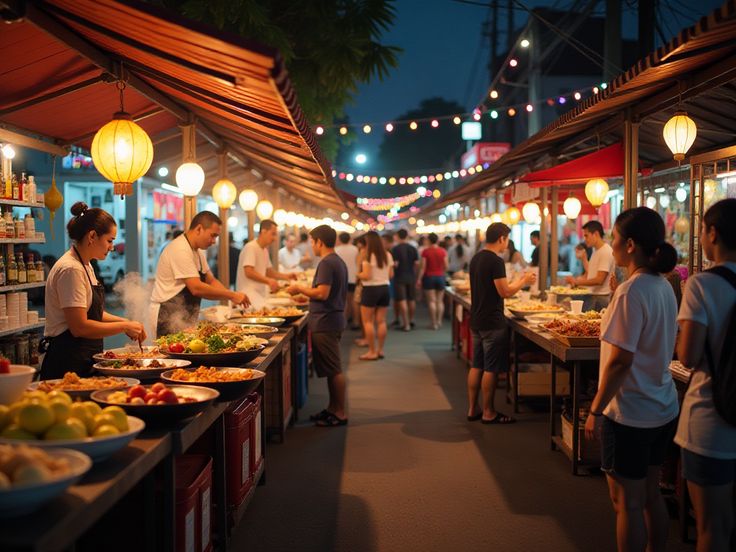
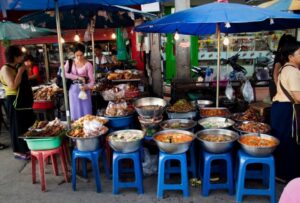
Thailand also has a street food culture that’s arguably the richest in the world. Night markets, morning markets, floating markets, air-conditioned food courts in malls — food is everywhere, at every hour, at prices that feel almost absurdly affordable. For Indian travellers especially, the experience of getting a full meal for ₹80–120 in Bangkok’s street markets is genuinely disorienting.
⚖️ The Five Flavour Philosophy
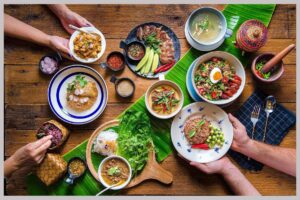
Understanding Thai food starts here. Every dish aspires to hit five sensations: sour, sweet, salty, bitter, and spicy. Fish sauce handles salt and umami simultaneously. Palm sugar softens sharpness. Lime adds brightness. Chillies — dried, fresh, or pickled — bring the heat. Bitter comes from vegetables like Thai eggplant or bitter melon, often in curries.
The ratio shifts by region. Northern food leans earthier and less sweet. Southern Thai food — think Phuket and Krabi — is the most aggressively spiced, with fiery curries and heavy turmeric use. Central plains cuisine (Bangkok and surroundings) is the most internationally familiar. If you’re visiting on a Phuket and Krabi package, brace yourself: southern Thai food will be significantly hotter than anything you encountered in Bangkok.
🍛 20 Must-Try Thai Dishes
1. Pad Thai
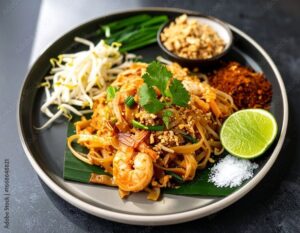
The international ambassador of Thai cuisine — stir-fried rice noodles with egg, tofu or shrimp, bean sprouts, and a tamarind-based sauce, finished with crushed peanuts and a squeeze of lime. Don’t let its familiarity make you dismissive. A good Pad Thai from a skilled street vendor — where the wok has a decade of flavour baked into its carbon — is something else entirely. Insider tip: Avoid tourist-strip Pad Thai. Find a vendor who has a queue of locals.
2. Tom Yum Goong
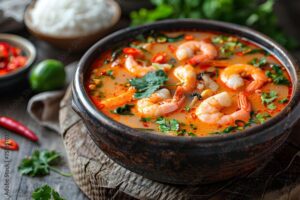
A hot and sour prawn soup that will reset your sinuses and your soul simultaneously. It’s built on lemongrass, kaffir lime leaves, galangal, and fish sauce, with fresh prawns added at the end. The aroma hits you before the bowl even touches the table. Honest warning: If you ask for “medium spicy,” expect something significantly hotter than Indian medium.
3. Som Tum (Green Papaya Salad)
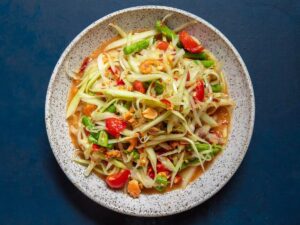
A shredded green papaya salad pounded in a mortar with dried shrimp, tomatoes, chillies, lime juice, and fish sauce. It’s crunchy, funky, spicy, and sour all at once — one of those dishes that rewires your idea of what a salad can be. The Isaan (northeastern) version is the most pungent; the Bangkok version is slightly milder.
4. Massaman Curry
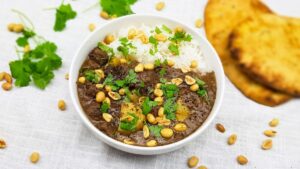
A southern Thai curry with a complex, slow-cooked richness that draws on Persian and Malay influences — cinnamon, cardamom, cloves, alongside the usual Thai aromatics. Typically made with beef or chicken, potato chunks, and roasted peanuts in a coconut milk base. It’s the gentlest of Thai curries in terms of heat, but the most layered in flavour. For Indian travellers: This might actually be the Thai dish that feels most familiar.
5. Pad Kra Pao (Holy Basil Stir-Fry)
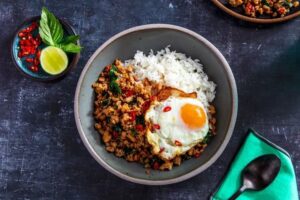
This is what many Thais eat when they don’t want to think about what to eat — minced pork or chicken wok-fried hard with holy basil, garlic, and bird’s eye chillies, served over rice with a fried egg on top. It’s available at almost every food court in Thailand for 50–70 THB (around ₹110–150). The egg yolk running into the spicy meat-rice is one of the great small pleasures of Thai food.
6. Khao Pad (Thai Fried Rice)
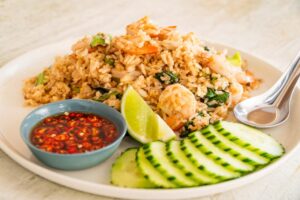
Deceptively simple and done brilliantly here: jasmine rice wok-fried with egg, fish sauce, and your choice of protein. The Thai version is lighter and more fragrant than Chinese-style fried rice. Served with cucumber slices, a lime wedge, and always a bottle of fish sauce, sugar, chilli flakes, and vinegar on the table for self-adjusting.
7. Gang Keow Wan (Green Curry)
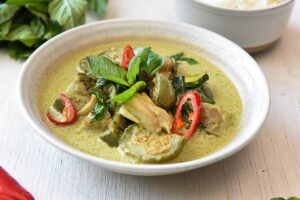
Arguably the most aromatic Thai curry — a bright green paste of fresh green chillies, lemongrass, kaffir lime zest, and galangal, cooked in coconut milk with Thai eggplant, bamboo shoots, and Thai basil. It’s simultaneously lighter and more perfumed than red curry. Insider tip: The green comes from the fresh herbs and chillies in the paste, not artificial colouring.
8. Tom Kha Gai
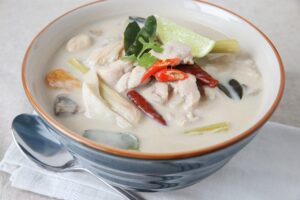
A milder, creamy cousin of Tom Yum — coconut milk-based soup with chicken, galangal, and mushrooms, finished with lime juice and fish sauce. Fragrant without being aggressive. Excellent for those who find Tom Yum too intense.
9. Mango Sticky Rice (Khao Niao Mamuang)
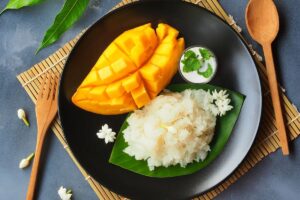
This is dessert, but it earns a serious entry on this list. Glutinous sticky rice cooked in sweetened coconut milk, served alongside sliced fresh mango (ideally the Nam Dok Mai variety — honey-sweet and almost floral), finished with a drizzle of salted coconut cream. Best in summer (March–May) when mangoes are at peak ripeness.
10. Khao Soi
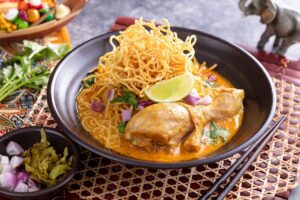
A northern Thai specialty that you simply won’t find authentically made outside Chiang Mai and the northern provinces. It’s a coconut milk-based curry soup with egg noodles, served with crispy fried noodles on top, pickled mustard greens, shallots, and lime on the side. The texture contrast between the soft and crispy noodles is the whole point. If you’re heading north, this is non-negotiable.
11. Larb
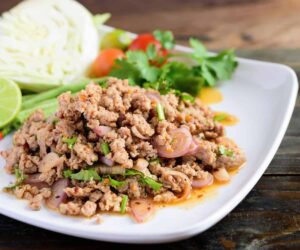
A Lao-influenced minced meat salad — pork, chicken, or beef — dressed with toasted rice powder, fish sauce, lime juice, dried chillies, and fresh mint. It’s one of the most distinctively northern/northeastern Thai dishes. The toasted rice powder is the secret weapon: it adds a nuttiness and just enough texture to the dressing.
12. Sai Oua (Northern Thai Sausage)
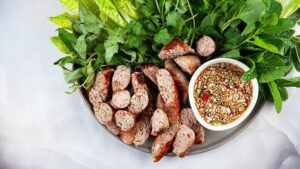
A herby, fragrant pork sausage from Chiang Mai, coiled and grilled until the skin crackles and the interior — packed with lemongrass, kaffir lime leaf, galangal, and red chilli paste — releases an extraordinary perfume. Best eaten from a Chiang Mai morning market with sticky rice.
13. Pad See Ew
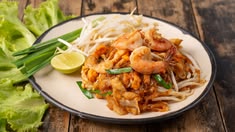
Wide flat rice noodles wok-fried in dark soy sauce with egg, Chinese broccoli (gai lan), and your choice of protein. It’s smoky, slightly sweet, and deeply satisfying. The dish lives and dies on the wok hei — that slightly charred, smoky quality that comes from a screaming hot wok. A good one will have faintly caramelised edges on the noodles.
14. Boat Noodles (Kuay Teow Reua)
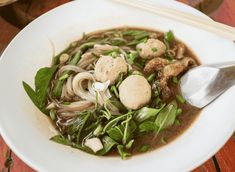
Tiny bowls of intensely flavoured pork or beef noodle soup, traditionally served from canal boats in Bangkok. Each bowl is small — maybe 150ml — but the broth is so concentrated with spices, blood thickener (in the traditional version), and pork organs that you typically order four or five bowls in succession. Best found at: Victory Monument area in Bangkok.
15. Gaeng Som (Sour Orange Curry)
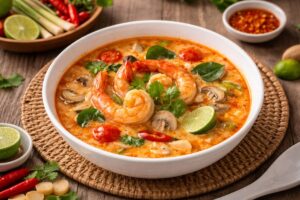
A southern Thai curry that’s closer to a sour tamarind soup than what most people think of as curry — no coconut milk, aggressively tart, with fish or prawns and vegetables. It’s an acquired taste for some, a revelation for others. Pairs brilliantly with plain rice.
16. Roti with Condensed Milk
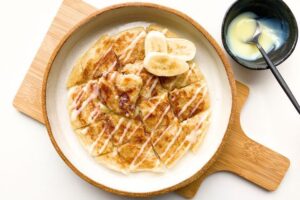
Technically borrowed from Malaysia and southern Thai Muslim culture, but eaten everywhere across the country now. A thin pan-fried flatbread, crackly at the edges, pulled thin and folded, drizzled with condensed milk and sometimes topped with banana or egg. It’s a midnight snack, a 7 AM breakfast, and a cure for everything. For Indian travellers: Think paratha’s more indulgent, sweeter Thai cousin.
17. Thai Iced Tea (Cha Yen)
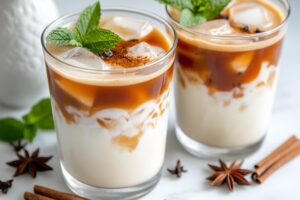
A glass of strong brewed black tea, often with vanilla and anise, poured over ice with sweetened condensed milk and evaporated milk. It’s orange, sweet, and utterly addictive. In 35°C Bangkok heat, this is survival gear.
18. Hoy Tod (Crispy Oyster Omelette)
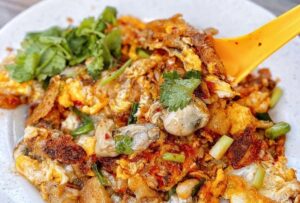
A street food classic — fresh oysters or mussels cooked in a crispy, starchy batter with egg, Chinese chives, and a sharp tamarind-based dipping sauce. The textural contrast between crisp edges and slightly gooey interior is the whole appeal. Found at night markets across Bangkok, Pattaya, and Phuket.
19. Khao Tom (Thai Rice Soup)
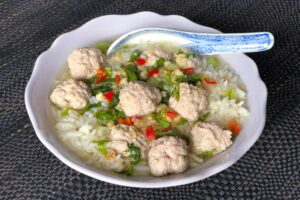
The dish that first stopped me in my tracks. A slow-cooked rice porridge in a delicate pork or chicken broth, topped with sliced ginger, crispy garlic, spring onion, and a soft-boiled egg. It’s the Thai equivalent of a warm hug — eaten for breakfast, as a late-night recovery meal, or whenever you need something gentle and restorative.
20. Durian (For the Brave)
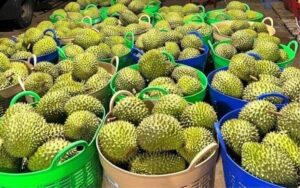
Not a dish, but an experience. Thailand’s “king of fruits” is polarising with legendary intensity — either you find it transcendently rich and custard-like, or the smell alone ends the experiment. Honest warning: Many hotels and taxis explicitly ban it. But if you’re curious, the best Thai durians (Monthong variety) are available at markets from May to August and are milder than Southeast Asian durians in general.
🏮 Best Street Food Cities & Markets
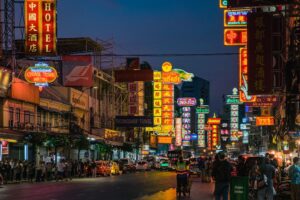
Bangkok is the epicentre. Yaowarat (Chinatown) at night is arguably the best single street food experience in the world — the entire road fills with stalls, vendors, and smoke, and you can eat a different dish every 20 metres for hours. Chatuchak Weekend Market has an excellent food section. Or Asok and Thong Lo neighbourhoods for a more polished local experience.
Chiang Mai has a slower, more approachable food scene centred around its night bazaar and Saturday/Sunday Walking Streets. This is the place for northern Thai specialties — Khao Soi, Sai Oua, Larb — that you simply won’t find authentically made in Bangkok.
Phuket Old Town is criminally underrated as a food destination. The Sino-Portuguese shophouse neighbourhood around Thalang Road has brilliant local Chinese-Thai food, and the weekend night market is one of the best in southern Thailand. If you’re there on a Thailand highlights group tour, make sure Phuket Old Town is on the list.
Floating Markets (Damnoen Saduak, Amphawa) are worth visiting for the experience and the grilled corn on the cob and coconut pancakes — just know they’re quite touristy. Go early.
🥦 Vegetarian & Vegan Thai Food
Here’s the honest reality: Thai food is traditionally heavy on fish sauce, shrimp paste, and oyster sauce — often invisibly. Even dishes that look vegetarian frequently aren’t. That said, Thailand has an excellent Buddhist vegetarian tradition.
Look for Jay food (เจ) — restaurants and stalls displaying the yellow Jay sign serve strictly vegan Buddhist food with no meat, eggs, dairy, or pungent vegetables. During the Vegetarian Festival (October), virtually every restaurant offers Jay menus. Cities like Chiang Mai and Phuket have strong Jay food communities year-round.
In mainstream restaurants, you can ask for “jay” or “mai sai nam pla” (no fish sauce) and “mai sai goong haeng” (no dried shrimp). Results vary — worth checking our Thailand travel tips for Indians for more detail on navigating dietary needs.
🍽️ Where to Eat: Budget, Mid-Range & Fine Dining
Budget (₹80–250 per meal): Street stalls, hawker centres, food courts in malls (MBK and Terminal 21 in Bangkok have excellent food courts at local prices), and Jay food restaurants. Pad Kra Pao with rice and egg at a street stall is around 60–80 THB (₹130–170).
Mid-Range (₹400–900 per meal): Neighbourhood restaurants with aircon, slightly broader menus, and better presentation. Places like Krua Apsorn in Bangkok or The Riverside restaurants in Chiang Mai. You’re paying for comfort and consistency more than for dramatically better food.
Fine Dining (₹1,500–4,000+ per meal): Bangkok has several genuinely world-class Thai restaurants — Nahm, Bo.lan, Savelberg — where tasting menus reinterpret traditional dishes with extraordinary technique. If you’re on a Thailand honeymoon package, at least one fine dining meal is absolutely worth it.
🇮🇳 Thai Food for Indian Travellers
Good news and one honest caveat.
The good news: the spice levels, the rice-based eating culture, the strong vegetarian options (especially Jay food), and the affordability all make Thailand an exceptionally comfortable food destination for Indian travellers. Massaman curry and Tom Kha Gai are natural entry points. Sticky rice in the north is eaten with hands, just like in many Indian households.
The honest caveat: fish sauce and shrimp paste are in almost everything. If you’re strictly vegetarian or Jain, you’ll need to be proactive — “vegetarian” at most Thai restaurants means no meat but not no seafood condiments. Jay food is your safest option. See our Thailand budget trip guide for restaurant options by city with vegetarian friendliness noted.
Also note: Thai spice and Indian spice operate differently. Thai bird’s eye chillies are smaller but hit faster and harder. Don’t assume your chilli tolerance from dal makhani or Kolhapuri mutton applies.
💡 Practical Food Tips
Ordering spice level: “Phed nit noi” = a little spicy. “Mai phed” = not spicy. “Phed mak” = very spicy (only if you mean it).
The condiment rack: Every Thai table has a four-bottle rack — fish sauce, sugar, chilli flakes in vinegar, and dried chilli. You are expected to season your own food. Don’t skip this; it’s part of the eating culture.
Cash is king at street stalls and markets. Most mid-range restaurants take cards. Fine dining always does. Carry small THB notes (20s and 50s).
Food safety: Stick to busy stalls with high turnover. If the vendor’s station looks like a production line — dozens of orders an hour — the food is fresh. Avoid anything that’s been sitting in a display case in the heat for unknown hours.
Apps: Google Maps has excellent restaurant coverage in Thai cities. Wongnai (Thailand’s equivalent of Zomato) has more local reviews but is mostly in Thai. Grab Food delivers in all major cities.
📅 Best Time for Food Experiences
November–February: Peak food festival season. Cool(er) weather means outdoor markets and street food are at their most pleasant. The Chiang Mai Winter Fair (December) and various temple fairs across the country have extraordinary food.
October: The Vegetarian Festival (Tesagan Gin Je) — particularly spectacular in Phuket — transforms the food scene completely. Every stall, restaurant, and market offers Jay food. Genuinely one of the most interesting food experiences in Asia.
March–May: Mango season. If Khao Niao Mamuang is on your list, this is when the mangoes are at their sweetest. The heat is brutal, but the fruit is worth it.
June–September: Monsoon season. Markets still operate, but outdoor events are affected. Durian season peaks here.
Avoid: Visiting major tourist areas during Songkran (Thai New Year, mid-April) if you’re primarily there for food — restaurants get extremely crowded and some close for the long weekend.
⏳ 5-Day Thailand Food Itinerary
Day 1 — Bangkok: The Classics Morning: Khao Tom breakfast at a neighbourhood rice soup stall. Mid-morning: Explore Yaowarat (Chinatown) — Chinese-Thai roasted meats, dim sum, fresh coconut. Lunch: Pad Kra Pao at a local food court (MBK Food Island). Afternoon: Thai iced tea and roti at a street stall. Evening: Full dinner crawl through Yaowarat night market — Hoy Tod, barbecued seafood, mango sticky rice. Estimated spend: ₹700–900
Day 2 — Bangkok: Going Deeper Morning: Boat noodles breakfast near Victory Monument. Mid-morning: Or Tor Kor Market — the best quality fresh produce and prepared food market in the country. Lunch: Som Tum and larb at a Isaan restaurant. Afternoon: Street desserts — Tab Tim Krob (water chestnuts in coconut milk), Khanom Krok (coconut pancakes). Evening: Fine dining at Nahm or a riverside dinner. Estimated spend: ₹1,200–2,500 depending on dinner choice
Day 3 — Transit to Chiang Mai + First Dinner Afternoon arrival. Check in. Evening: Sunday Walking Street if timing allows (runs Sundays) — the best single food market experience in northern Thailand. Or dinner at any local restaurant on Nimman Road. Estimated spend: ₹600–900
Day 4 — Chiang Mai: Northern Specialties Morning: Sai Oua and sticky rice at the Warorot Market. Lunch: Khao Soi — try Khao Soi Gai at Khao Soi Mae Sai or Khao Soi Islam for the Muslim version. Afternoon: Chiang Mai cooking class — take a 4-hour class to learn Massaman curry and Tom Kha from scratch. Evening: Larb and northern-style appetisers at a Kantoke dinner (traditional northern Thai seated dinner with cultural performance). Estimated spend: ₹900–1,400 including cooking class
Day 5 — Fly to Phuket: Southern Fire Afternoon: Phuket Old Town food walk — Hokkien noodles, Mee Ton Poe, Khanom Jeen (fermented rice noodles with curry). Evening: Gaeng Som and fresh grilled fish at a local seafood restaurant. Final dessert: Roti with banana and condensed milk from a late-night Muslim stall. Estimated spend: ₹800–1,200
For a complete itinerary pairing food with destinations, our Thailand 4N/5D group tour package covers Bangkok, Chiang Mai, and Phuket with food stops built in.
💰 Budget Breakdown
| Category | Budget Traveller | Mid-Range | Splurge |
| Breakfast | ₹80–120 (street stall) | ₹200–350 (café) | ₹400–700 (hotel buffet) |
| Lunch | ₹120–200 (food court) | ₹350–600 (restaurant) | ₹800–1,500 (fine dining) |
| Dinner | ₹200–400 (market) | ₹600–1,200 (restaurant) | ₹1,500–4,000 (tasting menu) |
| Snacks/drinks | ₹100–180 | ₹200–350 | ₹400–700 |
| Daily total | ₹500–900 | ₹1,350–2,500 | ₹3,100–6,900 |
Where to save: Street food and food courts are genuinely excellent — you are not sacrificing quality for price. Thai iced tea from a street cart is frequently better than the hotel version. Fruit from market vendors is fresher and cheaper than anywhere else.
Where to splurge: One proper Bangkok fine dining experience. A cooking class in Chiang Mai (₹1,200–2,000 for 4–5 hours, extremely good value). Fresh seafood in Phuket or Krabi, where you choose your fish from the display and it’s cooked to order.
For a detailed breakdown of total trip costs, our Thailand budget guide covers accommodation, transport, and activities alongside food.

🤔 Final Verdict — Honest Opinion
Thailand might be the finest food destination in the world for the combination of quality, variety, accessibility, and price. The depth of the cuisine rewards genuine curiosity — you can eat there for two weeks and still find dishes you’ve never encountered. The street food culture is alive and genuine in a way that feels increasingly rare.
The one real drawback: if you’re strictly vegetarian — especially Jain — it requires constant vigilance and communication. Fish sauce is Thailand’s salt. It’s invisible, it’s everywhere, and asking for it to be removed doesn’t always produce the intended result. Jay food is the reliable solution, but it limits your options somewhat. This is not a dealbreaker by any means, but it’s the honest reality.
This food destination is perfect for: Anyone who genuinely loves to eat. Couples (food experiences are some of the best shared memories you can make here — a good place to start is the Thailand honeymoon itinerary). Budget travellers who want extraordinary quality without extraordinary spending. Indian travellers comfortable navigating spice levels and dietary questions.
Who might find it challenging: Strictly Jain travellers without willingness to communicate extensively about ingredients. Those with severe shellfish allergies (shrimp paste appears in many dishes, often unlisted). Anyone who doesn’t like spicy food and is unwilling to ask for adjustments.
Go hungry. Go curious. Go with a loose plan and a willingness to follow the smell. Thailand will take care of the rest.
Planning your Thailand trip? Explore our curated packages: Phuket & Krabi | 5-Day Thailand Highlights | Thailand Honeymoon
Also worth reading: Bali Travel Guide 2026 | Kerala Travel Guide 2026 | Dubai Travel Guide 2026