

📋 TABLE OF CONTENTS
- The First Time I Set Foot in Bangkok…
- Why Thailand Works So Well for Indians
- Flights from India: How to Get There
- Getting Around Thailand
- Where to Stay (Budget to Luxury)
- 20 Essential Thailand Travel Tips for Indians
- Practical Info: Cash, SIM, Safety & Apps
- Best Time to Visit from India
- 7-Day Itinerary: First-Timer’s Thailand Loop
- Complete Budget Breakdown in INR
- Honest Final Verdict
- 80+ SEO Tags
- Pinterest + Image Strategy
INTRODUCTION
🌴 The First Time I Set Foot in Bangkok…
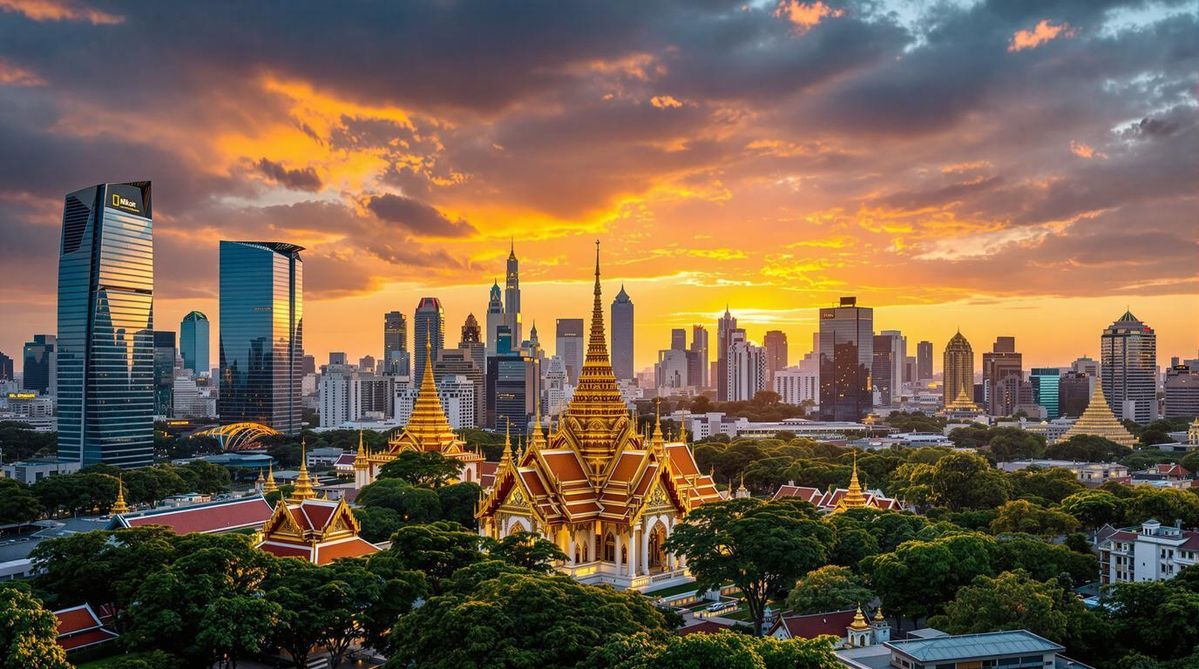
The immigration officer at Suvarnabhumi Airport stamped my passport and handed it back without even looking up. Within forty minutes I was sitting in a glass-walled airport taxi hurtling toward the city on a six-lane expressway, watching the Bangkok skyline materialize out of golden haze — towers of glass and gold-tipped temple spires competing for attention against a sky that couldn’t decide between violet and amber. I’d been dreaming about this trip for two years. I was not disappointed.
Here’s the thing nobody tells you before your first Thailand trip from India: it’s easier than you think, cheaper than you’ve budgeted for, and more varied than any single travel blog can capture. Thailand is not one destination — it’s a dozen destinations wearing the same name. A Bangkok street food lane smells nothing like a Chiang Mai night market. A Phuket beach resort feels like a different planet from a longtail boat anchored off a deserted Trang island. And none of it — not one bit — feels as foreign or intimidating as travellers from India sometimes assume.
I’ve now made four trips to Thailand from Pune — covering Bangkok, Chiang Mai, Krabi, Ko Lanta, Ko Kood, and Pai — and in that time I’ve collected twenty travel tips that I genuinely wish someone had given me before my first booking. From the visa process and currency to food for vegetarians and the one airline route that saves you eight hours of travel time, this guide covers all of it. Real prices. Real experiences. Zero brochure language.
💡 INSIDER TIP → If you’re still deciding between Thailand, Bali, and Kerala for your next trip, check out the Tripyverse Bali guide and Kerala guide for comparison — but I suspect Thailand will win once you see the costs.
GEOGRAPHY & CONTEXT
📍 Why Thailand Works Particularly Well for Indian Travellers
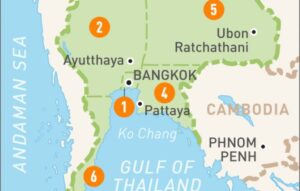
Thailand sits in mainland Southeast Asia, bordered by Myanmar to the west and north, Laos and Cambodia to the east, and Malaysia to the south. It’s roughly the size of France, which means the gap between Bangkok in the centre and the southern islands is real — but well-served by a network of budget flights, overnight trains, and fast ferries that make multi-destination trips entirely manageable.
What makes Thailand a particularly good fit for Indian travellers specifically? First, the food landscape: Thai cuisine uses coconut milk, rice, lentil-based dishes, fresh herbs, and vegetable-forward cooking that feels familiar to many Indian palates — and the vegetarian options, while not always labelled, are genuinely abundant once you know where to look. Second, the cost structure: everything from street food to mid-range hotels is priced at a level that feels almost embarrassingly affordable when converted to rupees. Third — and this one surprises people — the cultural warmth. I’ve never felt unwelcome in Thailand. The Thai concept of sanuk (finding joy in everything) extends to how locals interact with tourists, and it makes daily travel feel genuinely pleasant rather than transactional.
TRANSPORT
✈️ Getting to Thailand from India: All Your Options
Direct Flights from Major Indian Cities
| City | Gateway Airport | Best Airlines | Return Cost (Approx.) | Flight Time |
| Mumbai / Pune | Bangkok BKK / Phuket HKT | Air Asia, IndiGo, Thai Airways | ₹18,000–₹35,000 | 5–6 hrs |
| Delhi | Bangkok BKK | Thai Airways, Air India, Vistara | ₹20,000–₹38,000 | 5.5 hrs |
| Bengaluru / Chennai | Bangkok or Krabi KBV | AirAsia, Scoot | ₹15,000–₹28,000 | 3.5–5 hrs |
| Kolkata | Bangkok BKK | Air India, Biman Bangladesh | ₹13,000–₹24,000 | 2.5 hrs |
| Hyderabad | Bangkok BKK | Air Asia, Thai AirAsia X | ₹16,000–₹30,000 | 4.5–5 hrs |
Pro tip: Flying into Krabi (KBV) instead of Phuket saves 2–3 hours of onward travel if your destination is Ko Lanta, Ko Lipe, or the Andaman coast islands. For the Gulf of Thailand islands, fly Bangkok then take an overnight bus to Trat or Chumphon — you’ll save ₹4,000–₹8,000 over booking a separate domestic flight.
For a structured tour that handles routing logistics, the Tripyverse Thailand Highlights 4N/5D Group Tour is excellent value for first-time India-to-Thailand travellers — everything from airport transfers to island ferry bookings is included.
LOCAL TRANSPORT
🚗 Getting Around Thailand: What Actually Works
| Transport Type | Use Case | Approx. Cost | Difficulty |
| BTS Skytrain / MRT | Bangkok city travel | ₹40–₹180/trip | Easy ✅ |
| Grab app (Thailand) | City taxis, tuk-tuks | ₹100–₹600/ride | Easy ✅ |
| Overnight train | Bangkok → Chiang Mai / south | ₹400–₹1,200/seat | Easy ✅ |
| Budget domestic flight | Bangkok → Phuket / Krabi / CNX | ₹1,200–₹4,500 one way | Easy ✅ |
| Songthaew (shared truck) | City/island local transport | ₹30–₹120/person | Medium ⚠️ |
| Motorbike rental | Islands & smaller towns | ₹350–₹600/day | Medium ⚠️ |
| Ferry / speedboat | Between islands | ₹200–₹2,000/trip | Easy ✅ |
⚠️ HONEST WARNING → Motorbike rentals: Thailand drives on the left. Roads on islands can be steep, wet, and unmarked. Always wear a helmet and never ride after dark on unfamiliar roads. If in doubt, hire a driver for the day (₹800–₹1,400 on most islands).
ACCOMMODATION
🏨 Where to Stay in Thailand: Budget to Luxury
Budget (₹700–₹2,000/night)
Lub d Bangkok Siam: The gold standard for budget travellers in Bangkok — social hostel with private rooms, right on the BTS line. Clean, safe, excellent breakfast. Baan Orapin Guesthouse, Chiang Mai: A beautifully restored colonial house with garden, five minutes from the Sunday night market. Bee Bee Bungalows, Ko Mak: Simple beach bungalows on one of Thailand’s quietest gulf islands — the breakfast is genuinely home-cooked.
Mid-Range (₹2,500–₹6,000/night)
Ibis Styles Bangkok Ratchada: Fun, colourful, centrally located, and excellent value. Where Else Ko Lipe: Infinity pool, Sunrise Beach location, great staff. De Naga Hotel, Chiang Mai: Boutique property in the old town moat area with beautiful traditional architecture and a pool.
For a Phuket and Krabi combination with mid-range accommodation pre-selected, the Tripyverse Phuket-Krabi Package handles the hotel selection so you don’t have to spend hours on Agoda comparing reviews.
Luxury (₹7,000–₹30,000+/night)
Capella Bangkok: One of Asia’s finest city hotels — riverside suites with butler service. Soneva Kiri, Ko Kood: Treehouse eco-luxury with private pools and a beach cinema, for honeymoon couples who want total seclusion. Four Seasons, Chiang Mai: Rice paddy views, private villas, cooking classes. Worth it for a one or two-night treat.
Couples planning a romantic Thailand trip should explore the Tripyverse Thailand Honeymoon Package — it’s curated specifically for Indian couples with a mix of beach luxury and cultural experiences.
MAIN CONTENT — 20 TRAVEL TIPS
🌊 20 Essential Thailand Travel Tips for Indians
These are the twenty things I genuinely wish I’d known before my first trip. Some are practical, some are cultural, and at least one will save you an embarrassing amount of money.
- Get Your Visa on Arrival — It’s Easier Than You Think

📋 Visa · Entry
As of 2026, Indian passport holders can get a Visa on Arrival (VoA) at major Thai airports including Suvarnabhumi (Bangkok) and Phuket. The VoA costs ₹4,800 (2,000 THB) and gives you 30 days. The queue at Bangkok airport can be 60–90 minutes long during peak season. Solution: arrive with all your documents ready — passport photo, hotel booking, return flight ticket, proof of funds (bank statement showing at least ₹50,000), and the fee in Thai Baht cash. You cannot pay in INR or by card. There’s also a Thailand e-Visa available through the Thai embassy website that lets you skip the VoA queue entirely and is worth doing if you have time before departure.
💡 INSIDER TIP → Fill out the VoA form on the plane using the blanks provided in the in-flight magazine — Thai Airways distributes them. It saves 15 minutes at the queue.
- Thailand is Cheaper Than You’re Budgeting For
💰 Budget · Costs
The single biggest misconception I encounter from Indian travellers planning their first Thailand trip is overestimating costs. A generous street food lunch (pad Thai, spring rolls, fresh coconut) costs ₹150–₹350. A tuk-tuk ride in Bangkok is ₹80–₹200. A beach bungalow on Ko Mak is ₹900–₹1,800 per night. Dinner for two at a proper restaurant with beer rarely exceeds ₹1,500. The full cost breakdown for a Thailand trip under ₹50,000 is covered in detail in the Tripyverse Thailand budget guide — it breaks down every category with current 2026 prices.
💡 INSIDER TIP → Thailand’s 7-Eleven stores are everywhere and genuinely good value — fresh sandwiches, cold drinks, and instant noodles for ₹50–₹150. Budget travellers should treat them as a food resource, not a last resort.
- Always Have Cash — Cards Don’t Work Everywhere
💳 Cash · Payments
Thailand’s tourism infrastructure is more card-friendly than it was five years ago, but the smaller the island or restaurant, the less likely your Visa will work. ATMs across Thailand charge a fixed withdrawal fee of approximately ₹175–₹220 per transaction (regardless of amount), so withdraw larger sums less frequently rather than small amounts daily. The best strategy: withdraw a substantial amount of Baht at a city ATM (Bangkok, Krabi, Chiang Mai) before heading to any island. Never rely on finding an ATM on Ko Ngai, Ko Phayam, or Ko Sukorn.
💡 INSIDER TIP → Use Wise or Niyo Global for India-to-Thailand currency. Both offer near-interbank exchange rates and significantly lower fees than traditional bank cards or airport money changers.
- The Food is More Vegetarian-Friendly Than You Think — If You Know What to Ask
🥗 Food · Vegetarian
Thai cuisine’s foundation is fish sauce, oyster sauce, and shrimp paste, which means ‘vegetarian’ on a Thai menu often means something different from what an Indian vegetarian expects. However: Buddhist vegetarian restaurants (look for the yellow flag with Thai script) serve completely plant-based food and are found in every Thai city. In tourist areas, saying ‘I am vegetarian — no fish, no meat, no shrimp paste’ and showing the Thai phrase จาน เจ (jaan je) on your phone will get you reliably meat-free food. Pad Thai with tofu, som tam (papaya salad — ask without dried shrimp), mango sticky rice, and roti with banana are all reliably veg and universally excellent.
💡 INSIDER TIP → Chiang Mai has a thriving vegan scene. The area around Nimman Road has at least fifteen dedicated vegan restaurants. Plan a meal or two there.
- Dress Respectfully at Temples — or Pay the Fine
🛕 Culture · Etiquette
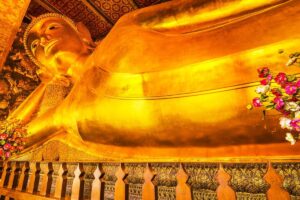
Thailand is a deeply Buddhist country and temple etiquette is taken seriously — not as a performance for tourists, but as genuine practice. At any temple (wat), cover your shoulders and knees. Women especially: a light scarf or sarong carried in your day bag solves this instantly. At Wat Pho and Wat Arun in Bangkok, and Doi Suthep in Chiang Mai, improper dress will result in being turned away or charged for a cloth wrap rental. Remove shoes before entering any temple building. Never touch or point your feet at a Buddha image — it’s considered deeply disrespectful.
💡 INSIDER TIP → Grand Palace in Bangkok has the strictest dress code of any tourist site in Thailand. They’ve also famously cracked down on the tailors who used to tell tourists it was ‘closed today’ to redirect them to shops. If someone tells you a major attraction is closed, verify on Google before believing them.
- Buy a Local SIM at the Airport — Skip Your Roaming Plan
📱 SIM · Connectivity
The moment you clear immigration at Bangkok, Phuket, or Krabi airport, there are AIS and DTAC SIM counters that will sell you a tourist SIM for ₹600–₹900 giving you 15–30 days of 4G data with a calling package. This is dramatically cheaper and more reliable than any Indian carrier’s international roaming plan. AIS has the best rural coverage for southern Thai islands. Pick up a SIM before you leave the airport — the counters are right in the arrivals hall.
💡 INSIDER TIP → Download offline maps on Google Maps or Maps.me before your flight. Island roads are not always on data maps and the offline option is a genuine lifesaver.
- Use Grab Instead of Negotiating Tuk-Tuks
🚗 Transport · Apps
Grab is Thailand’s Uber equivalent and it works beautifully in Bangkok, Chiang Mai, Phuket town, and Krabi town. The meter-based pricing means you know exactly what you’re paying before you get in, and there’s no negotiation, no attempt to take you to a different destination, and no dramatic conversation about why the price has tripled. For first-time visitors, using Grab for the first few days while you get your bearings is highly recommended. Tuk-tuks are fun for short tourist-zone rides once you understand the local context — but always agree a price before getting in.
💡 INSIDER TIP → Bolt has also launched in Bangkok and is sometimes cheaper than Grab. Check both apps before booking.
- Don’t Only Go to Phuket and Phi Phi
🗺️ Planning · Islands
Phuket and Ko Phi Phi are beautiful — but if you’re flying all the way from India and spending what Thailand costs in flights and accommodation, you deserve to see more than the most touristed 0.1% of the country. The hidden islands of Thailand — Ko Kood, Ko Mak, Ko Ngai, Ko Mook, Ko Phayam — offer better beaches, healthier reefs, and a fraction of the crowds at the same or lower prices. I’ve covered these islands in full detail in the Tripyverse hidden islands guide that shows you exactly how to get to each one.
💡 INSIDER TIP → The Trang island cluster (Ko Ngai, Ko Mook, Ko Kradan) is accessible from Krabi in a single day and offers world-class snorkeling that blows Phi Phi out of the water — literally.
- Learn 5 Thai Phrases — It Changes Everything
🗣️ Language · Culture
Thai people light up when foreigners make even a token effort at the language, and this is not performative niceness — it’s genuine warmth. Five phrases to memorize: Sawasdee krap/ka (hello — krap for men, ka for women), Khob khun krap/ka (thank you), Phet nit noi (a little spicy — useful for food orders), Tao rai (how much?), and Mai phet (not spicy — your vegetarian life-saver). Learning these five took me twenty minutes on the flight and paid dividends for the entire trip.
💡 INSIDER TIP → Thais communicate a lot through smiles — and a genuine, warm smile in return to any service interaction, no matter how minor, dramatically improves the quality of every interaction you’ll have.
- Thailand’s Beaches Are Not All Equal — Know the Difference
🏖️ Beaches · Planning
The Andaman Sea (west coast — Phuket, Krabi, Ko Lipe) and the Gulf of Thailand (east coast — Ko Samui, Ko Phangan, Ko Kood) have different monsoon seasons, different water clarity, and different vibes. The Andaman has more dramatic limestone karst scenery and generally better snorkeling. The Gulf has gentler waves and calmer water, ideal for swimming. And critically: when the Andaman monsoon shuts down the west coast (May–October), the Gulf coast is still perfectly fine — and vice versa. Always check which coast your destination is on before booking.
- Street Food is the Best Food — And It Won’t Make You Sick
🍜 Food · Street Food
The single most common piece of advice given to Indian tourists by other Indian tourists who’ve done zero research is ‘be careful of street food in Thailand.’ This advice is wrong. Thai street food — pad Thai, khao man gai, mango sticky rice, roti, fresh green curry — is prepared at high heat, turned over rapidly, and eaten by tens of millions of Thais daily without incident. The key is the same as at any busy food stall anywhere in the world: eat where the locals eat, eat freshly cooked food (not food that’s been sitting), and trust your eyes. A stall with a queue of Thai people is safe. A stall specifically targeting tourists with a picture menu in ten languages deserves more scrutiny.
💡 INSIDER TIP → Night markets are Thailand’s most underrated food experience. Bangkok’s Or Tor Kor Market and Chiang Mai’s Saturday Night Market each have dozens of stalls where you can eat extremely well for ₹400–₹700 per person including drinks.
- Always Negotiate Taxi Prices in Tourist Areas (Except on Grab)
💬 Haggling · Taxis
Outside Bangkok’s metered taxi system and Grab’s fixed pricing, many tourist-area taxis, tuk-tuks, and longtail boats work on negotiated prices. The opening price is always inflated — sometimes 3–4x the actual local rate. Counter-offer at 50% of the opening price and expect to settle somewhere around 60–70%. The golden rule: agree the price before you get in, never after. Once you’re in the vehicle, your negotiating power evaporates. This applies to tuk-tuks in Bangkok’s tourist areas, taxis in Phuket, and longtail boats on any island.
- Thai Massage is Incredible — and Legitimately Medicinal
💆 Wellness · Massage
Thai massage is not a spa luxury — it’s a 2,500-year-old medicinal practice and one of the great experiences of any Thailand trip. A one-hour traditional Thai massage in Chiang Mai or Bangkok costs ₹350–₹700 at a reputable local parlour (more at hotel spas). It involves passive stretching, pressure-point work, and joint manipulation rather than the oil-based relaxation massage most Indians associate with the word ‘massage.’ If your first Thai massage doesn’t make you feel like a new person, you chose the wrong place.
💡 INSIDER TIP → The best massage parlours are not the ones with the glitziest storefronts in tourist zones — they’re the unassuming ones with Thai-speaking customers. Wat Pho in Bangkok has its own on-site massage school and is excellent.
- Don’t Drink the Tap Water — But Ice is Fine
🚰 Health · Water
Tap water in Thailand is not safe to drink, and this is universally known. What surprises Indian visitors: the ice in drinks at restaurants and bars is almost always commercially produced purified ice (the cylindrical tubes with a hole through the middle), which is perfectly safe. The ice you’d be worried about is homemade ice from tap water, which legitimate restaurants don’t use. So you can — and should — enjoy iced coffee, smoothies, and cold drinks without anxiety. Always buy bottled water for drinking; 1.5 litre bottles are ₹25–₹50 at any 7-Eleven.
- Book Accommodation in Advance for Peak Season
📅 Planning · Booking
November through February is Thailand’s peak season, and accommodation on the more popular routes — Phi Phi, Ko Samui, Ko Lipe — books out weeks to months in advance. If you’re travelling over Christmas, New Year, or Diwali break, book at least three months ahead. For the hidden islands with limited accommodation (Ko Kradan, Ko Ngai), book even earlier. Agoda consistently has better prices for Thai properties than Booking.com, and most guesthouses on smaller islands have direct WhatsApp booking that is cheaper than any platform.
- The Overnight Train is an Experience Worth Having

🚂 Transport · Train
Thailand’s overnight train network is clean, safe, comfortable, and one of the most atmospheric travel experiences in Southeast Asia. The Bangkok to Chiang Mai overnight sleeper (12 hours) costs ₹800–₹1,400 for a second-class air-conditioned berth and arrives in time for a morning coffee in the old city. The Bangkok to southern Thailand train (to Surat Thani or Hat Yai for island connections) is similarly excellent. Book through the State Railway of Thailand’s website or 12Go Asia.
- Thai Spice is a Different Heat from Indian Spice
🌶️ Food · Spice
Indian travellers sometimes assume their high spice tolerance will protect them from Thai food — this is not a safe assumption. Thai spice, particularly from fresh bird’s eye chilies (prik kee nu), is an aggressive, sharp heat that hits immediately and differently from most Indian chilies. ‘Medium spicy’ on a Thai menu ordered without qualification has brought tears to the eyes of people who eat Andhra-style food daily. Start by specifying ‘Thai spicy level 1’ or ‘nit noi phet’ (a little spicy) until you know what you’re dealing with.
- Respect the King and Royal Family — This is Not Optional
👑 Culture · Laws
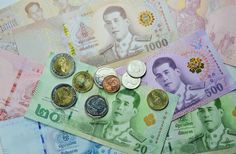
Thailand has strict lèse-majesté laws that make any criticism or disrespect toward the royal family a criminal offense. As a tourist, you are not exempt. Don’t make negative comments about the royal family in public, don’t deface currency (the King’s face appears on every banknote), and if the national anthem plays at 8 AM or 6 PM at a public location (common in parks and train stations), stop and stand still — it is expected and respectful.
- Songkran (Thai New Year) is Both Incredible and Chaotic
🎉 Festivals · Events
If your India–Thailand travel dates fall in mid-April (typically April 13–15), you’ll be in Thailand during Songkran — the Thai New Year festival and the world’s largest water fight. Bangkok, Chiang Mai, and every beach town transform into days-long water battles where getting completely soaked is mandatory and unavoidable. It’s extraordinary, joyful, and one of the great festival experiences in the world — but know what you’re signing up for. Protect electronics in waterproof bags, accept that you will be wet constantly for three days, and surrender to the fun.
💡 INSIDER TIP → Chiang Mai is considered the best city for Songkran — the moat surrounding the old town becomes ground zero for the water festivities, and the atmosphere is unlike anywhere else.
- Thailand Rewards Slow Travellers More Than Fast Ones
🐢 Philosophy · Travel Style
The biggest mistake most first-time Thailand visitors make is trying to see too much in too little time. Bangkok + Chiang Mai + Krabi + islands in 7 days means you spend most of your trip exhausted, in transit, or doing laundry. Thailand’s magic is in the unhurried details: a morning spent at a temple before the tourists arrive, an afternoon on a beach discovering the exact right shade of blue for your own private moment, an evening eating som tam and drinking Chang beer with locals at a night market. Give every destination breathing room. Ten days minimum for your first trip; fourteen is better.
💡 INSIDER TIP → The Thailand travel guide with all 10 best places — including lesser-known spots outside Bangkok — is a good next read for planning a full itinerary.
PRACTICAL INFO
💡 Cash, SIM, Safety & Useful Apps
Cash vs. Card
Thailand runs heavily on cash. While Bangkok’s major malls, hotel restaurants, and modern convenience stores accept cards, everything else — local restaurants, beach bars, island guesthouses, tuk-tuks, market stalls, ferry tickets at small piers — requires cash. ATMs are everywhere in cities and towns but sparse on small islands. The ATM surcharge is approximately ₹175–₹220 per withdrawal regardless of amount, so withdraw 5,000–10,000 THB at a time rather than small amounts. Always carry at least 2,000–3,000 THB in cash as an emergency reserve.
Best SIM Options
AIS Tourist SIM: 15 days, 15 GB data + calling package — ₹650. DTAC Happy Tourist SIM: 8 days unlimited data — ₹500. Both available at Suvarnabhumi Airport arrivals hall, Phuket Airport, and Krabi Airport. For longer trips (21–30 days), AIS True Move packages offer the best value and coverage.
Safety for Indian Travellers
Thailand is broadly very safe for Indian tourists, including solo women. Standard precautions apply: never leave drinks unattended at bars, keep digital copies of all travel documents, use hotel safes for passports and valuables, and buy travel insurance that covers motorbike riding and water sports — most standard Indian travel insurance policies exclude both and you don’t want to find this out after an accident. For the solo traveller’s complete Thailand safety checklist, the Tripyverse Thailand budget guide has a dedicated section.
Essential Apps for Thailand
| App | Use | Free/Paid |
| Grab | Taxis, food delivery, logistics | Free |
| Bolt | Alternative taxi, often cheaper in Bangkok | Free |
| 12Go Asia | Ferry and train bookings | Free |
| Agoda | Hotel bookings, best for Thailand prices | Free |
| XE Currency | Real-time THB/INR rates | Free |
| Google Translate | Thai script reading (camera mode) | Free |
| Maps.me | Offline maps for islands with no data | Free |
TIMING
📅 Best Time to Visit Thailand from India
| Month | Andaman (West) | Gulf (East) | Bangkok & North | Indian Holiday Match |
| Nov – Feb | ✅ Perfect | ✅ Excellent | ✅ Cool & dry | Christmas/New Year ⭐ |
| Mar – Apr | ✅ Still good | ✅ Good | ⚠️ Hot & hazy | Songkran (Apr 13-15) ⭐⭐ |
| May – Jun | ⚠️ Rains begin | ✅ Dry season | ⚠️ Hot, humid | Summer holidays |
| Jul – Sep | ❌ Monsoon | ⚠️ Gulf storms Aug+ | ⚠️ Rainy | Avoid islands |
| Oct | ⚠️ Transitional | ❌ Gulf monsoon peak | ⚠️ Tail end rains | Avoid Gulf coast |
Best overall window for Indians: November to February for perfect weather everywhere. March–April for lower prices and Songkran fun. If you must travel in monsoon season (July–September), stick to Chiang Mai, Bangkok, and the Gulf coast islands (Ko Kood, Ko Mak, Ko Mun Nork) and avoid the Andaman entirely.
ITINERARY
⏳ 7-Day First-Timer’s Thailand Loop from India
This route covers Bangkok + Chiang Mai + Krabi — the ideal first-timer’s circuit giving you city, culture, and beach in one trip.
DAY 1 Arrive Bangkok — Street Food & BTS Orientation
Land at Suvarnabhumi, buy SIM card, Grab to hotel. Afternoon: Wat Pho (1.5 hrs). Evening: Yaowarat (Chinatown) street food dinner — pad Thai, mango sticky rice, fresh coconut. Walk the neon-lit streets and understand why Bangkok is one of the world’s great food cities. Daily budget: ~₹4,500 all in
DAY 2 Bangkok Full Day — Temples, Markets, Sky Bars
Morning: Grand Palace + Wat Arun (allow 3–4 hrs, dress code required). Afternoon: Chatuchak Weekend Market (if Saturday/Sunday) or MBK shopping centre. Sunset: rooftop bar at Lebua or Vertigo. Dinner at Or Tor Kor Market. Daily budget: ~₹5,000–₹7,000 including entry fees & meals
DAY 3 Bangkok → Chiang Mai (Evening Flight or Day Train)
Explore Khao San Road area in the morning if you haven’t. Catch a budget flight (₹1,200–₹2,500) or overnight train (₹800–₹1,400) to Chiang Mai. Check in to old city hotel. Evening: Tha Phae Gate Night Bazaar for dinner and craft shopping. Daily budget: ~₹4,000 including transport
DAY 4 Chiang Mai — Doi Suthep, Elephant Sanctuary, Night Market

Morning: Doi Suthep temple (30 min drive up the mountain). Afternoon: ethical elephant sanctuary visit (book in advance — ₹2,800–₹4,000; choose no-riding sanctuaries). Evening: Saturday Night Market on Wualai Road if timing matches — Thailand’s best craft market. Daily budget: ~₹7,000–₹9,000 with sanctuary visit
DAY 5 Chiang Mai → Krabi (Fly)
Morning: Thai cooking class (3 hrs, ₹1,500–₹2,500 — book ahead). Late afternoon flight to Krabi (₹2,000–₹4,000 one way). Check in to Ao Nang or Krabi town. Sunset walk along Ao Nang beachfront. Daily budget: ~₹5,000–₹8,000 including flight
DAY 6 Krabi — Railay Beach & 4 Islands
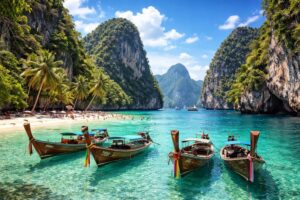
Early morning: longtail boat to Railay Beach (20 mins, ₹400 return) — explore Railay East and West, climb to Railay Viewpoint. Afternoon: 4 Islands boat tour (₹1,200–₹1,800 per person, snorkeling included). Evening: fresh seafood dinner at Ao Nang night market. Daily budget: ~₹4,000–₹6,000
DAY 7 Krabi Free Morning → Return Flight
One last breakfast of roti with condensed milk and Thai coffee at any local café. Browse Krabi market for souvenir shopping. Transfer to Krabi Airport (KBV) for evening flight home. Pro tip: pack a bag of dried mango and cashews for the flight. Daily budget: ~₹2,500 + return flight
COSTS
💰 Complete Budget Breakdown for Indians
| BUDGET
₹2,500/day per day (excl. flights) |
MID-RANGE
₹5,000/day per day (excl. flights) |
LUXURY
₹14,000+/day per day (excl. flights) |
| Expense Category | Budget (₹/day) | Mid-Range (₹/day) | Luxury (₹/day) |
| Accommodation | 700–1,800 | 2,500–5,000 | 7,000–30,000 |
| Meals (3x daily) | 500–900 | 1,200–2,500 | 3,000–7,000 |
| Local transport | 200–500 | 500–1,200 | 1,500–4,000 |
| Activities & entry | 300–700 | 800–2,000 | 2,000–6,000 |
| SIM + incidentals | 150–300 | 300–600 | 500–1,500 |
| TOTAL/day (excl. flights) | ₹1,850–₹4,200 | ₹5,300–₹11,300 | ₹14,000–₹48,500 |
| Return flights (India) | ₹13,000–₹38,000 depending on city & season |
Where to save: Eat street food and at local restaurants (not hotel restaurants). Use songthaews and overnight trains instead of domestic flights where possible. Stay one neighbourhood off the beach — it can halve accommodation costs on islands.
Where to splurge: One ethical elephant sanctuary visit in Chiang Mai (transformative experience, worth every rupee). A beach bungalow upgrade on your chosen island — the difference between garden view and beachfront is enormous in experience for a relatively small price increment. One excellent Thai cooking class.
FINAL OPINION

🤔 Honest Final Verdict
🌟🌟🌟🌟🌊 Rating: 4.8/5 for Indian Travellers
After four trips covering most of Thailand’s major regions, what genuinely impresses me most is the sheer accessibility of quality experiences at every budget level. You can eat extraordinarily well in Thailand on ₹400 a day or ₹4,000 a day — the food doesn’t drop in quality proportionally with the price. You can sleep in a ₹1,000 beach bungalow that faces the same sunrise as the ₹15,000 resort three doors down. That democratization of beauty is rare.
The honest drawback: Thailand’s most popular destinations — Phi Phi, Phuket’s Patong Beach, Ko Samui’s Chaweng — are genuinely over-touristed and, frankly, somewhat jaded as a result. The magic is real, but it requires a willingness to go slightly further, move slightly slower, and choose destinations that reward the effort. The traveller who books a Patong Beach resort and eats at the tourist restaurants on Walking Street will wonder what all the fuss is about. The one who spends three nights on Ko Kood will never want to leave.
Perfect for: Indian couples wanting a romantic trip with great food and beaches (check the Tripyverse honeymoon package). Budget backpackers who want to travel well without spending a lot. Food lovers. Solo travellers wanting safety and ease. Families with older children.
Who might struggle: Travellers who need strict vegetarian assurance at every meal without any language bridge. First-time international tourists who want a fully packaged, hand-held experience without any independent decision-making (in which case a structured tour is the right choice — the Tripyverse Thailand highlights group tour is excellent for this). Travellers visiting only in July–September who haven’t planned around the monsoon coast differences.
📚 More Travel Guides You’ll Love
- Thailand Travel Guide 2026 — 10 Best Places to Visit: Read on Tripyverse
- Thailand Budget Trip Under ₹50,000 — Real Costs 2026: Read on Tripyverse
- Hidden Islands in Thailand 2026: Read on Tripyverse
- Bali Travel Guide 2026: Read on Tripyverse
- Kerala Travel Guide 2026: Read on Tripyverse
- Dubai Travel Guide 2026: Read on Tripyverse
- Manali Travel Guide 2026: Read on Tripyverse
- Jaipur Travel Tips 2026: Read on Tripyverse