

I made every possible mistake on my first Dubai trip. Every single one.
I took a taxi from the airport instead of the metro and paid AED 80 for a ride that should have cost AED 10. I bought Burj Khalifa tickets at the gate on a Saturday evening and waited in a queue for 45 minutes, paying the highest possible rate for the privilege. I stayed in a beautiful hotel in the Marina that looked perfect on Booking.com but was a 25-minute taxi ride from everything I actually wanted to see — and those taxis added up to AED 400 over five days without me noticing until I checked my bank statement at the airport.
I came back from that first trip having spent about ₹25,000 more than I needed to. Not because Dubai is inherently expensive — it genuinely isn’t, if you know what you’re doing. But because I hadn’t done the thirty minutes of research that would have saved me from each of those decisions.

So I went back. This time armed with everything I’d learned the hard way. And I spent nearly half what I’d spent the first time, saw twice as much, and came home without a single regret about where my money went.
This guide is everything that second trip taught me — every hack, every timing trick, every specific decision that separates a smart Dubai trip from an expensive one. Whether this is your first visit or your third, I promise there’s something here that will save you real money and real time.
📍 Why Dubai Rewards Smart Travelers So Generously
Dubai sits on the southeastern coast of the Arabian Peninsula, facing the Persian Gulf, positioned as one of the world’s premier international transit and tourism hubs. It’s closer to India than most Indians realize — Mumbai is just three hours away by air, Delhi barely four — and it operates with a level of infrastructure efficiency that makes navigating it genuinely straightforward once you understand the system.
The city’s tourism economy is built around two parallel tracks: an extremely expensive luxury track that wants your money enthusiastically, and a remarkably affordable public infrastructure track that most tourists never fully use. The metro, the public beaches, the free attractions, the budget food corridors — all of it exists and works brilliantly. The only question is whether you know it’s there. This guide answers that question in detail.
✈️ Getting There — Flight Booking Hacks That Actually Work

Your flight is the single largest variable cost of any Dubai trip from India, and it’s also where the biggest savings opportunities live.
Book 6–10 weeks ahead for the best fares. This is the sweet spot for India-Dubai routes — close enough to be real inventory, far enough to avoid last-minute pricing. Inside this window, Mumbai–Dubai return fares on IndiGo, flydubai, or Air Arabia regularly appear between ₹9,000–₹14,000. Outside this window in either direction, prices climb fast.
Set Google Flights fare alerts immediately when you know your approximate travel dates. The alert system is free, takes two minutes to set up, and will notify you the moment prices drop on your specific route. I’ve caught sales this way that saved ₹6,000–₹8,000 on a single booking.
Consider flying into Sharjah (SHJ) instead of Dubai (DXB). Air Arabia operates primarily from Sharjah Airport, which is just 25 kilometres from central Dubai. A taxi from Sharjah to your hotel costs AED 60–80 and takes about 25 minutes. The flight ticket savings frequently exceed ₹3,000–₹5,000 — making the taxi cost completely irrelevant mathematically.
Travel on Tuesday or Wednesday. Weekend departures (Friday, Saturday, Sunday) consistently price higher on India-Dubai routes. A single day shift in your departure can save ₹2,000–₹4,000 on the ticket alone.
Avoid December and January if budget is a priority. These are peak season months — flights spike 40–60% above shoulder season rates, hotels follow, and everything costs more. October, March, and April offer nearly identical weather with dramatically lower prices across every expense category.
💳 Visa — Do This Right and Save Time
Indian passport holders need a UAE tourist visa, and the process is genuinely straightforward if you approach it correctly.
A 30-day single-entry tourist visa costs approximately AED 250–300 (₹5,500–₹6,500). Apply through Emirates or flydubai during your flight booking for the most seamless experience — the visa processing is integrated and typically takes 3–5 business days.
Apply at least 2 weeks before travel. Last-minute visa applications attract expedited processing fees that add AED 100–150 unnecessarily. Two weeks of lead time costs you nothing extra and eliminates all stress.
If you want everything handled in one booking — flights, visa, accommodation, transfers, and guided sightseeing — the Tripyverse Dubai 4N/5D Package processes visa assistance as part of the package and is specifically designed for Indian travelers who want a transparent all-in price without managing each piece separately.
🚗 Getting Around — The Transport Decisions That Make or Break Your Budget
This is the area where most Dubai tourists lose money without realizing it — and where smart travelers save the most.
The Dubai Metro is your best friend and most tourists ignore it. It’s air-conditioned, spotlessly clean, runs every 3–7 minutes, and connects every major tourist destination including both airport terminals, Dubai Mall, Mall of the Emirates, Dubai Marina, Deira, and more. A Nol Red Card costs AED 25 (including AED 19 preloaded credit) from any metro station. Individual trips cost AED 3–8. A full day of metro travel rarely exceeds AED 20.

Never take an airport taxi if you can avoid it. The minimum airport taxi fare is AED 25 plus a mandatory AED 20 airport surcharge. The metro from Terminal 1 or Terminal 3 to central Dubai costs AED 8–12 and takes 25–35 minutes. Over a five-day trip, choosing the metro over the taxi for airport transfers saves AED 80–120 immediately.
Use Careem over street taxis for non-metro journeys. Street taxis in Dubai are metered and honest — but Careem gives you upfront pricing, no language barrier, and a receipt. A typical cross-city Careem costs AED 25–40. Street taxis for the same journey cost similarly but with more uncertainty. Both are fine — Careem is just smoother for first-timers.
Never take a taxi between metro-connected destinations. I watched a family at my hotel take a taxi from Deira to Dubai Mall — AED 35 each way, AED 70 total for four people. The metro does the identical journey for AED 6 per person. That’s the difference between AED 70 and AED 24 for the same trip. Multiply that across five days and you understand where Dubai budgets quietly disappear.
Walk Old Dubai. The Al Fahidi neighbourhood, the Dubai Creek waterfront, Al Seef, and the entire souk district are compact and pedestrian-friendly. Walking here costs nothing, shows you more than any taxi window ever will, and is genuinely pleasant before 10 AM and after 5 PM.
🏨 Where To Stay — The Location Rule That Changes Everything
Dubai’s accommodation ranges from genuinely budget-friendly to extraordinarily expensive — and the difference in price between a well-located budget hotel and a poorly-located luxury one often works entirely in the budget hotel’s favour when you factor in daily transport costs.

The golden rule: stay within 5 minutes’ walk of a metro station. This one decision will save you more money across a 5-day trip than any other single accommodation choice. Every AED 30 taxi ride you avoid adds up to real savings over five days.
Budget Tier — AED 150–300 per night:
Rove Downtown — The best budget brand in Dubai without competition. Modern, clean, well-designed, and positioned directly beside the Dubai Mall metro station. Book 3–4 weeks ahead; it sells out regularly.
Zabeel House by Jumeirah, Al Seef — Boutique design hotel on the Creek waterfront in Old Dubai. Best base for exploring the hidden side of the city. Walking distance to Al Fahidi, the souks, and the abra crossing.
Rove City Centre Deira — Metro-connected, clean, affordable, and excellent for early morning souk access before the heat arrives.
Mid-Range Tier — AED 400–800 per night:
Vida Downtown Dubai — Burj Khalifa views from select rooms, walkable to Dubai Mall and the Fountain. Feels significantly more expensive than it actually costs in shoulder season.
Address Dubai Marina — Pool, beach access, marina views, and a lobby atmosphere that makes you feel like you’ve dramatically upgraded your life. Excellent value October–November.
Luxury Tier — AED 1,500+ per night:
Atlantis The Palm and Burj Al Arab for the full theatrical Dubai experience. If you can’t justify the room rate at Burj Al Arab, book afternoon tea there instead — it’s the most opulent two hours in the city at a fraction of the room cost.
🌊 Top Money and Time-Saving Tips By Attraction
💡 Tip 1 — Book Burj Khalifa Online, Always, Days Ahead
The Burj Khalifa has three ticket tiers based purely on when you book and which time slot you choose. The cheapest tickets — Level 124 at AED 149 — are only available online and sell out for popular time slots 3–7 days in advance. Gate tickets on the day cost significantly more and involve queues that can stretch 45 minutes on weekends.
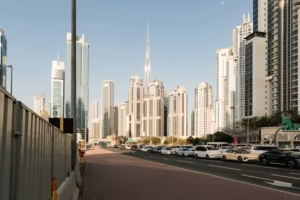
Book online at thetop.burjkhalifa.ae the moment your Dubai dates are confirmed. Choose the first morning slot (8:30 or 9 AM) — it’s the cheapest tier, has the best natural light for photography, and the thinnest crowds by a significant margin.
💡 Tip 2 — Dubai Fountain Is Completely Free
This surprises almost every first-time visitor: the Dubai Fountain — the world’s largest choreographed fountain, shooting water 150 metres into the air — is entirely free to watch from the public boardwalk around the Burj Khalifa Lake. Shows run every 30 minutes from 6 PM.
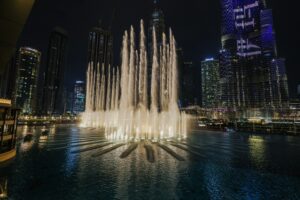
The restaurants around the lake charge significant premiums for fountain-view tables. The public boardwalk costs nothing and delivers an identical view. I watched four shows across two evenings from the boardwalk and would not have improved the experience by spending AED 200 on a lakeside dinner.
💡 Tip 3 — Use Public Beaches Over Beach Clubs

Private beach clubs in Dubai charge AED 150–250 per person just for entry — and that’s before food and drinks. Jumeirah Public Beach is free, clean, well-maintained, and sits directly in front of the Burj Al Arab. Kite Beach is free, lined with excellent food trucks, and popular with the city’s residents rather than its tourists. La Mer Beach is free and backed by street art murals and independent cafés.
The three best beach experiences in Dubai are all free. The expensive beach clubs sell atmosphere and exclusivity — not superior sand or water.
💡 Tip 4 — Eat in Deira and Bur Dubai, Not Downtown

The price gap between eating in Downtown Dubai and eating in Deira is staggering for identical quality of food. A complete South Indian thali in Deira costs AED 15–20. The same meal in a Downtown restaurant costs AED 60–80. A street shawarma anywhere in the city costs AED 5–8. Mall food courts (particularly in Dubai Mall itself) offer full meals for AED 25–40 in air-conditioned comfort.
Budget AED 40–60 per day for food if you eat street food, Deira restaurants, and mall food courts. Budget AED 150–250 per day if you eat primarily in Downtown or Marina restaurants. The food quality difference between these two strategies is minimal. The cost difference is enormous.
💡 Tip 5 — Desert Safari — Book Group, Not Private

A private desert safari costs AED 400–600 per person. A shared group safari with the same dune bashing, sandboarding, camel rides, and Bedouin camp dinner costs AED 150–200 per person. The experience is functionally identical. The sunset over the dunes looks exactly the same from a shared 4WD as from a private one.
Book through your hotel’s reception desk or a reputable online operator. Always confirm the pickup time, the camp dinner inclusion, and the return time before paying.
💡 Tip 6 — Global Village Entry Is AED 20 — Use It
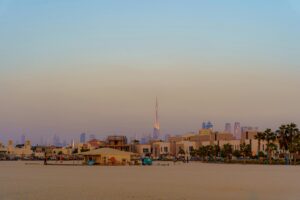
Global Village runs October through April and offers one of the best-value evenings in Dubai at AED 20 entry. Over 90 country pavilions, hundreds of food stalls, live entertainment, and a genuinely festive atmosphere that most package tours completely omit from their itineraries. Go on a weekday evening for the best experience — weekend crowds can make the main pathways genuinely difficult to walk.
💡 Tip 7 — Dubai Frame at AED 50 Is the Best-Value Paid Attraction
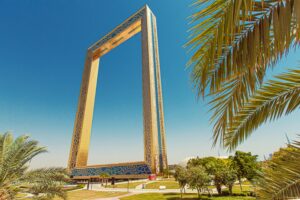
At AED 50 (roughly ₹1,100), the Dubai Frame gives you a 150-metre glass walkway, vertiginous floor views, and the striking visual of old Dubai on one side and new Dubai on the other — all in about an hour. It’s the single best value paid attraction in the city and consistently overlooked in favour of more marketed options.
For a complete guide to all of Dubai’s top attractions with full pricing and honest reviews, our Dubai Travel Guide 2026: 10 Must-Visit Places & Hidden Gems covers everything in one place.
💡 Essential Practical Tips
Nol Card — buy it immediately on arrival. Don’t wait until you need it. Buy your Nol Card at the airport metro station before leaving the terminal. It covers metro, bus, water bus, and some tram routes. Top up at any metro station or through the RTA app.
Cash requirement: Dubai runs almost entirely on cards. Keep AED 100–200 cash for the abra ride (AED 1), souk bargaining, and street food stalls. Every other transaction is tap-and-pay.
SIM Card: Etisalat or du tourist SIM from the airport arrivals hall — AED 55–75 for 10 days of strong 4G coverage. Buy it before leaving the airport. Don’t rely on hotel WiFi for navigation.
Timing for outdoor attractions: Visit outdoor sites before 10 AM or after 5 PM from April through October. The midday heat between these months is not a discomfort — it is a genuine barrier to enjoyment that no amount of enthusiasm overcomes.
Dress code strategy: One light scarf or pashmina in your bag covers every dress-code situation in Dubai — mosques, souks, and conservative indoor spaces all solved with one item that weighs nothing.
Photograph the Burj Khalifa from these free spots for better images than At the Top itself: the Dubai Frame glass bridge, the Al Seef waterfront at dusk, the Burj Khalifa Lake public boardwalk at the 9 PM Fountain show.
Never exchange currency at airport exchange counters. The airport rates are the worst in the city. Use an ATM once you’re in the city, or exchange at a licensed exchange house in Deira where rates are significantly better.
📅 Best Time To Visit — Month by Month

October — Excellent. Heat beginning to ease, Global Village opening, pre-peak pricing on hotels and flights. One of the two best months to visit.
November — Outstanding. Perfect temperatures, manageable crowds, reasonable prices. My personal favourite month for Dubai.
December — Great atmosphere, high cost. Dubai Shopping Festival, festive energy, New Year fireworks. Book everything 2–3 months ahead. Prices spike significantly.
January — Peak season in full swing. Best weather of the year, highest prices of the year. Beautiful but expensive.
February — Still peak, slightly softening. Temperatures perfect, prices beginning to ease from the January peak.
March — Sweet spot. Good weather, post-peak pricing, manageable crowds. Excellent for budget-conscious travelers.
April — Last comfortable month. Temperatures still manageable in the 30s. Book early April over late April as heat builds toward month end.
May to September — Hot. Temperatures 40–47°C. Viable only with a strategy built entirely around early mornings, air conditioning, and evening outdoor time. Compensated by dramatically lower prices across flights and hotels.
⏳ Smart 5-Day Dubai Itinerary — Maximum Value
Day 1 — Arrival + Old Dubai Metro from airport to hotel (AED 10). Afternoon in Al Fahidi — free. Abra to Deira (AED 1). Spice Souk and Gold Souk exploration — free. Thali dinner in Deira (AED 20). Al Seef waterfront sunset — free. Daily spend: AED 60–80
Day 2 — Downtown Day Burj Khalifa first morning slot (AED 149 — booked online in advance). Dubai Mall exploration — free. Dubai Fountain from the boardwalk (6 PM and 9 PM) — free. Food court dinner (AED 35). Daily spend: AED 190–220
Day 3 — Desert Safari Relaxed morning. Group desert safari from 3 PM (AED 150–180). Dune bashing, sandboarding, Bedouin camp dinner included. Back by 10 PM. Daily spend: AED 160–190
Day 4 — Beach + Culture Jumeirah Public Beach morning — free. Dubai Frame afternoon (AED 50). Kite Beach food trucks for dinner (AED 40). Dubai Marina Walk evening — free. Daily spend: AED 100–130
Day 5 — Global Village + Departure Global Village morning or evening (AED 20). Metro to airport (AED 10). Depart with a full memory card and a bank account that doesn’t need recovery time. Daily spend: AED 60–80
💰 Complete Budget Breakdown
| Expense | Budget Strategy | Mid-Range |
| Return Flights | ₹9,000–₹14,000 | ₹18,000–₹25,000 |
| Visa | ₹6,000–₹7,000 | ₹6,000–₹7,000 |
| Hotel — 5 nights | ₹12,000–₹18,000 | ₹25,000–₹40,000 |
| Food — 5 days | ₹4,500–₹7,000 | ₹10,000–₹18,000 |
| Transport | ₹2,000–₹3,000 | ₹4,000–₹7,000 |
| Attractions | ₹6,000–₹9,000 | ₹12,000–₹20,000 |
| Total Per Person | ₹39,500–₹58,000 | ₹75,000–₹1,17,000 |
The difference between these two columns is almost entirely explained by three decisions: when you book your flight, where you stay relative to the metro, and whether you eat in Deira or Downtown. Same city. Same experiences. Very different bills.
For the complete real-number cost breakdown with every expense category examined in detail, our Dubai Budget Trip from India 2026: Real Costs & Honest Tips walks through every dirham with full transparency.
🤔 Final Verdict — The Honest Truth About Saving in Dubai
Dubai is genuinely one of the most reward-rich cities in the world for a traveler who does their homework — and one of the most punishing for one who doesn’t. The gap between a smart Dubai trip and an expensive one is not about willpower or sacrifice. It’s about thirty minutes of research before you book and ten specific decisions across your trip that collectively save tens of thousands of rupees without removing a single meaningful experience.
The Burj Khalifa looks identical from AED 149 booked online as it does from AED 249 bought at the gate. The Fountain is equally spectacular from the free boardwalk as from a AED 200 restaurant table. The desert dunes at golden hour are equally beautiful from a shared group safari as from a private vehicle. Dubai almost uniquely among luxury destinations offers budget-friendly access to its headline experiences — if you know where to look for it.
One honest drawback worth naming clearly: Dubai’s layout actively discourages budget behavior. The premium option is always more visible, more convenient, and more aggressively marketed than the affordable one. Beach clubs have better signage than public beaches. Taxi queues are easier to find than metro entrances. This isn’t accidental — the city’s tourism economy benefits from you spending more. Smart travel here requires active, repeated choice of the affordable option over the convenient expensive one.
These tips are perfect for: First-time international travelers from India, repeat visitors who overspent last time, budget travelers who assumed Dubai was out of reach, and anyone who wants maximum experience per rupee spent.
You may not need this guide if: Budget is genuinely not a consideration and you’re specifically visiting for luxury hospitality and high-end retail — for which Dubai is, legitimately, one of the world’s best destinations.
For everything beyond the savings tips — the hidden neighbourhoods, secret spots, and local experiences that most tourists completely miss — our guide to Hidden Places in Dubai 2026: Beyond the Burj Khalifa is the natural next read. And if you’re building a broader India trip around your Dubai visit, our Manali Travel Guide — 7 Best Places + Hidden Gems (2026) and our deep-dive into Secret Places in Manali — 7 Hidden Gems You Must Visit in 2026 make the perfect companion reads — because the traveler who finds the best-value Dubai almost always finds the best-value Manali too.