

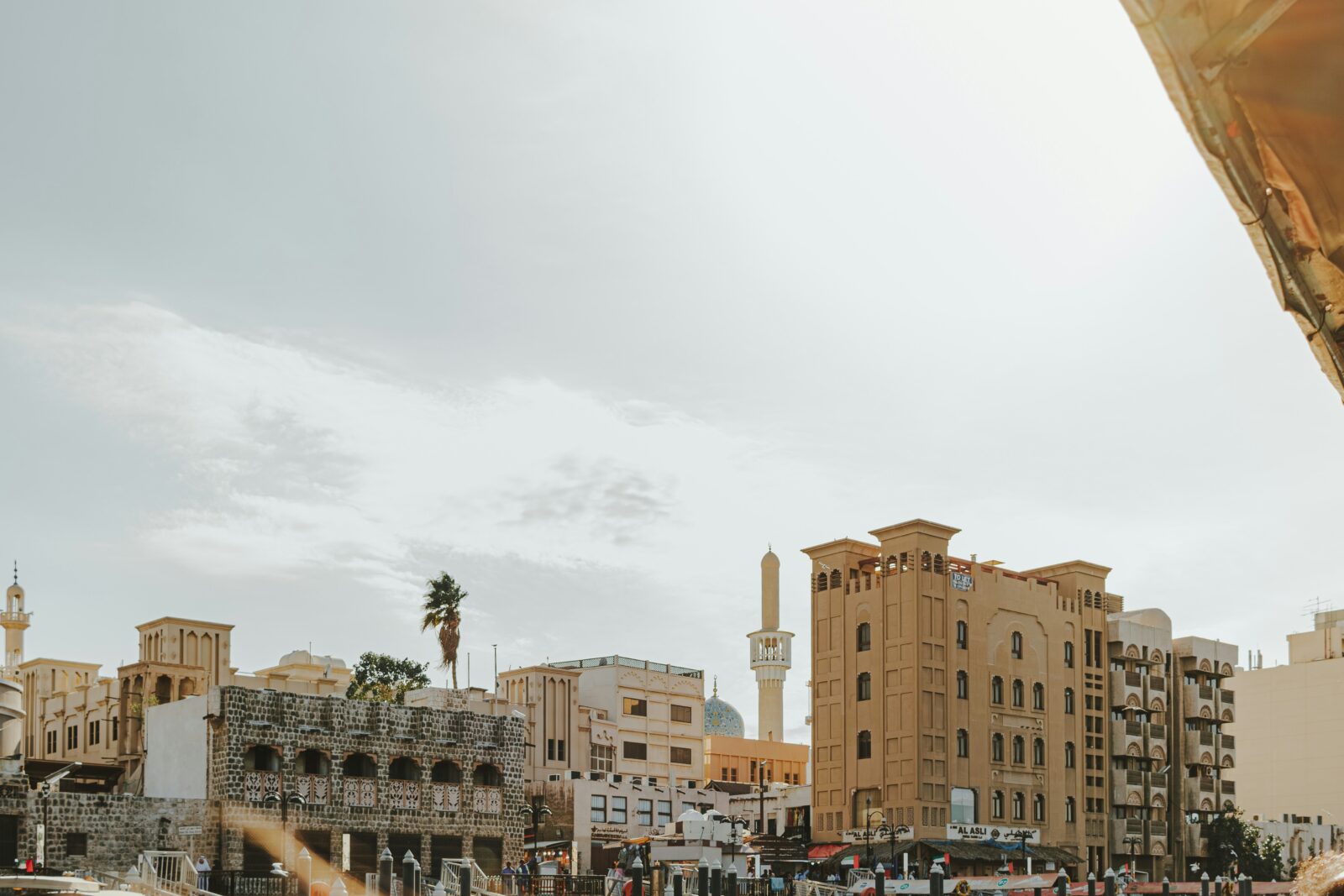
Everyone told me Dubai was the Burj Khalifa, the Palm, and the Mall. They were embarrassingly wrong — and I say that as someone who believed them for two full years before actually going.
I found this out on my third day, completely by accident. I’d ducked into a narrow lane in Deira trying to escape the midday heat — and suddenly found myself standing in a covered alley that smelled of cardamom and rose water, surrounded by sacks of dried limes, bowls of turmeric the colour of late sunsets, and elderly men sipping karak chai outside a shop that looked absolutely unchanged since 1975. Not a single tour group. Not one influencer with a ring light. Just the real, breathing, ancient-feeling city that somehow exists underneath all that glass and engineered ambition.
That one wrong turn changed how I experienced Dubai entirely.
Here’s what nobody tells you before your first trip: Dubai has two cities living inside each other simultaneously. The first is the one plastered across every travel reel — the Burj Khalifa, the Fountain show, the luxury beach clubs, the indoor ski slope inside a shopping mall. The second city is quieter, older, stranger, and infinitely more interesting. It hides in forgotten neighbourhoods, behind souk walls, along creek banks, in underground art spaces and mountain villages that don’t appear on any tourist map.
This guide is entirely about that second city. The one the locals quietly love. The one that will genuinely, repeatedly surprise you.

📍 Where Exactly Is “Hidden Dubai”?
Hidden Dubai isn’t a single location — it’s a scattered collection of overlooked pockets spread across the emirate’s distinct neighbourhoods and outer zones. Most of these spots sit within a 20–50 minute metro or taxi ride from the city centre, yet they receive a fraction of the tourist footfall that the main attractions handle daily.
The highest concentration of authentic, offbeat Dubai exists across three broad zones: Old Dubai (Deira, Bur Dubai, Al Fahidi district), the Al Quoz creative corridor tucked behind Sheikh Zayed Road, and the outer coastal and mountain areas beyond Jumeirah that the majority of visitors never reach. Understanding this basic geography is the first practical step toward experiencing a version of Dubai that feels genuinely different from the version being sold to you.
✈️ Getting To Dubai — Your Starting Point

Dubai International Airport (DXB) is one of the world’s busiest international hubs, with direct connections from virtually every major Indian city — Mumbai (3 hours), Delhi (3.5 hours), Bangalore, Hyderabad, Chennai, Kochi, Pune, Ahmedabad, and more. Budget carriers like IndiGo, flydubai, and Air Arabia regularly offer competitive return fares ranging from ₹9,000–₹18,000 depending on how far ahead you book and which season you travel in.
For Indian travelers, a 30-day UAE tourist visa costs approximately AED 250–300 (₹5,500–₹6,500) and can be arranged through your airline, a registered travel agent, or the UAE ICA online portal.
If you want the complete trip arranged in one place — flights, visa processing, accommodation, airport transfers, and guided sightseeing — the Tripyverse Dubai 4N/5D Package handles everything transparently and is particularly well designed for travelers who want to explore both the mainstream highlights and the hidden side of the city without the logistical headache of planning each piece separately.
For a full breakdown of Dubai’s mainstream top ten attractions alongside these hidden gems, the Dubai Travel Guide 2026: 10 Must-Visit Places & Hidden Gems on Tripyverse covers everything you need in one place. And if you’re also thinking about costs and budget planning for the overall trip, our Dubai Budget Trip from India 2026: Real Costs & Honest Tips breaks down every dirham you’re likely to spend — including which hidden spots cost almost nothing to visit.
🚗 Getting Around Dubai’s Hidden Corners
The Dubai Metro covers the major tourist corridors efficiently — but several of the city’s best hidden spots require a short Careem or Uber ride from the nearest station. Here is exactly how to navigate:
Dubai Metro Nol Card: AED 25 (including preloaded credit). Individual trips cost AED 3–8. Pick one up immediately at the airport on arrival — it covers Old Dubai, Al Quoz, and the Marina corridor comfortably.
Careem and Uber: Both operate seamlessly across the entire city including the older neighbourhoods. A taxi from Downtown to most hidden spots costs AED 20–50 depending on distance. Essential for Hatta, Kite Beach, and Al Quoz.
Walking: Al Fahidi, the Creek waterfront, Al Seef, and the Deira souk cluster are all genuinely walkable — provided you visit before 10 AM or after 5 PM. Attempting to walk these areas between noon and 4 PM from April through October is a commitment your body will reject quickly.
Difficulty level for first-timers: Moderate but very manageable. Google Maps works with impressive accuracy across all of Dubai including the oldest souk lanes. Most drivers speak English or Hindi fluently. The real challenge is knowing which hidden spots exist — which is precisely what this guide addresses.
🏨 Where To Stay To Access Hidden Dubai Best

Your neighbourhood choice determines how naturally you flow between the city’s hidden corners. Staying in Downtown or the Marina is convenient for the landmark attractions — but basing yourself in Deira or Bur Dubai puts you within walking distance of Old Dubai’s entire hidden ecosystem at significantly lower nightly rates.
Budget Tier — AED 150–300 per night:
Zabeel House by Jumeirah, Al Seef — A boutique design hotel positioned directly on the Creek waterfront, walking distance to Al Fahidi, the souks, and the abra crossing. The single best-positioned budget stay for hidden Dubai exploration. Book ahead — it fills consistently.
Rove City Centre Deira — Clean, modern, metro-connected, and reliably affordable. An excellent base for early morning souk visits before the heat and the crowds arrive simultaneously.
Mid-Range Tier — AED 400–800 per night:
Hyatt Place Dubai Baniyas Square — Right in the heart of Deira, surrounded by genuine old-city character with modern comfort maintained throughout. Walking distance to the Creek, Gold Souk, and Spice Souk.
XVA Art Hotel, Al Fahidi — A hidden gem that is itself the experience. A boutique art hotel built inside the Al Fahidi Historical District’s original wind-tower architecture, with a rooftop café, a changing gallery, and courtyard rooms that feel like sleeping inside living history. Staying here IS the hidden Dubai experience condensed into one address.
Luxury Tier — AED 1,200+ per night:
Palazzo Versace Dubai — Extravagant, theatrical, and positioned in Culture Village near the Creek — close enough to the old city to access it easily while maintaining every luxury comfort the brand implies.
🌊 10 Hidden Places in Dubai That Most Tourists Never Find

1. Al Seef — The Creek Waterfront District Nobody Talks About
Al Seef stretches along the southern bank of the Dubai Creek and is, without any exaggeration, one of the most atmospheric places in the entire city — yet it appears on almost no mainstream tourist itinerary and receives a fraction of the attention it deserves. The district is designed to evoke old Dubai, with wind-tower architecture rising above the waterfront, traditional abra boats drifting quietly past, wooden dhow restaurants moored along the bank, and karak chai stalls that fill the evening air with the smell of cardamom and condensed milk.
I walked Al Seef on a Thursday evening just as the sun was dropping behind the Creek, the water turning amber and deep gold, old men playing backgammon outside a traditional café with their chairs pulled onto the pavement. For a solid twenty minutes I completely forgot I was standing in one of the most modern, engineered cities on earth. The nearest metro station is Al Fahidi — walk ten minutes south along the waterfront and Al Seef unfolds naturally in front of you.
Insider tip: Visit after 6 PM when the light softens and the waterfront restaurants open their outdoor seating along the creek edge. The atmosphere at dusk here rivals anything the Marina promenade offers — at a fraction of the price and with none of the performative luxury.

2. The Spice Souk, Deira — Raw, Unfiltered & Genuinely Extraordinary
Every Dubai visitor goes to the Gold Souk. Almost nobody walks deep enough into Deira to find the Spice Souk — which is, in my opinion, the more interesting of the two by a meaningful margin. The covered lanes are narrow and slightly chaotic, piled with mountains of vivid turmeric, towers of dried rose petals, sacks of frankincense resin cracked open to show the amber crystals inside, jars of Iranian saffron, bundles of dried black limes used in traditional Emirati cooking, and bowls of mixed spices ground fresh that morning.
The smell reaches you before you can see the stalls — a layered, complex, ancient smell that immediately relocates you somewhere completely removed from the glass towers two kilometres away. Vendors press samples of oud oil onto your wrist. Old men wave you in for tea with the sincerity of people who genuinely enjoy company. Bags of mixed curry spice go for AED 5–10.
Take the abra from the Al Fahidi side of the Creek for AED 1 and walk fifteen minutes northeast through Deira. You will smell it before you see the entrance sign.
Honest note: The lanes get genuinely crowded and warm by midday, and some vendors can be persistently enthusiastic in their welcome. Come before 10 AM for the most peaceful, least pressured experience of the market.
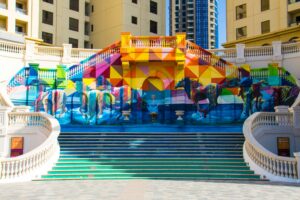
3. Al Quoz — Dubai’s Thriving Underground Art District
Hidden behind the industrial warehouses that line Sheikh Zayed Road, Al Quoz is Dubai’s creative heartbeat — a loosely connected cluster of independent art galleries, design studios, concept stores, vinyl record shops, and underground music venues that feels entirely unlike any other part of the city and makes you question everything you thought Dubai was about.
Alserkal Avenue is the anchor — a converted warehouse complex housing over 30 contemporary art galleries, an independent cinema, bookshops, pottery studios, and some of the most genuinely interesting café interiors I’ve encountered anywhere in Asia. Entry to the avenue is free, and most galleries welcome walk-in visitors without advance booking.
I spent three unhurried hours here on a quiet Tuesday morning moving between a photography exhibition documenting old Dubai fishing communities, a ceramics studio with a resident artist working at the wheel, and a gallery showing large-format paintings by Emirati and South Asian artists. I barely encountered another tourist the entire time. A Careem from Downtown costs AED 20–25. The nearest metro station is Noor Bank, then a 10-minute taxi.
Best visiting window: Tuesday to Saturday, 10 AM to 7 PM. Friday afternoons frequently feature free opening events and artist talks that aren’t advertised anywhere outside local community boards.
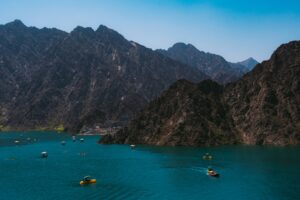
4. Hatta — The Mountain Village an Hour from the Skyscrapers
Most visitors genuinely don’t know that Dubai has mountains. An hour’s drive southeast of the city — AED 80–100 in a Careem, or an inexpensive RTA bus for AED 25 return — the Hajar Mountains rise abruptly from the flat desert floor, and nestled between them sits Hatta: a heritage village that feels so completely removed from Dubai’s usual visual language that you stop and check you haven’t accidentally crossed into a different country.
The Hatta Heritage Village is a carefully restored mud-brick settlement with traditional Emirati houses, a watchtower, and a small but surprisingly affecting history museum that explains life in this region before oil changed everything. Above the village, the Hatta Dam has created a turquoise reservoir surrounded by jagged rocky mountains where you can rent kayaks and pedal boats for AED 60–80 per hour. The water is a particular shade of green-blue that photographs beautifully in any light.
The contrast is the experience: Dubai’s impossible skyline an hour behind you, this ancient mountain landscape and improbably coloured lake in front of you, and almost nobody else around.
Practical tip: Pack your own food and sufficient water. Hatta has very limited dining options and what exists is significantly overpriced relative to quality. A morning picnic on the dam wall is genuinely the best meal you’ll have here.

5. La Mer Beach — The Relaxed Beachfront Dubai Forgot to Market
While Jumeirah Public Beach handles the budget crowd and JBR Beach services the Marina visitors, La Mer sits between them in a pleasant, slightly forgotten middle ground — a free stretch of clean white sand backed by a boardwalk of street art murals, independent food trucks, boutique shops, and outdoor seating that feels genuinely designed for enjoyment rather than luxury performance.
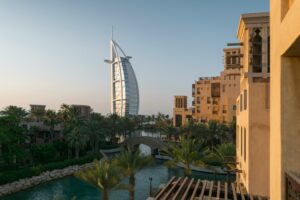
Entry is completely free, the beach is well-maintained, and the Burj Al Arab sits on the horizon close enough to frame every photograph you take facing the water. What makes La Mer feel meaningfully different from Dubai’s other beaches is the crowd it attracts — younger, more local, more relaxed, less concerned with being seen at the right address.
I arrived at 8 AM on a weekday morning and had a long section of beach almost entirely to myself for nearly two hours. The food truck strip that lines the back of the beach serves acai bowls, fresh juice, fish tacos, and excellent coffee from a converted van. Take a Careem from Downtown for AED 30–35.

6. Deira Gold Souk at Dawn — A Completely Different Experience
Everyone visits the Gold Souk. Almost nobody visits it at dawn — and that single timing difference produces what feels like an entirely separate place. At 9 AM, before the tour groups file in and before the full heat settles over the covered lanes, the souk operates at a completely different frequency. Shopkeepers are carefully arranging their displays, glass cases being polished to showcase necklaces and bangles worth tens of thousands of dirhams, tea being passed between neighbouring stalls in small glasses on a tray, quiet conversations in Arabic and Urdu filling the lanes.
The light at this hour falls through the wooden lattice roof in warm golden bars across the jewellery. The smell of oud drifts from a nearby perfume shop. The entire atmosphere is contemplative rather than commercial. Walking through it slowly, with your phone in your pocket and no particular agenda, produces one of the most quietly beautiful experiences Dubai offers — and it costs nothing to enter.
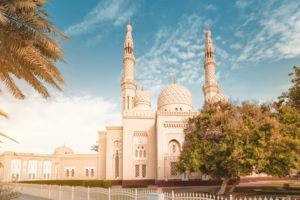
7. Jumeirah Mosque — The One Mosque Open to Non-Muslims
Dubai has hundreds of mosques. Exactly one officially and warmly welcomes non-Muslim visitors: the Jumeirah Mosque, an elegantly proportioned white stone building constructed in the Fatimid architectural style, with twin minarets and a central dome that glows particularly beautifully in early morning light against a clear blue sky.
The Sheikh Mohammed Centre for Cultural Understanding runs guided tours every morning except Friday at 10 AM (AED 35 per person) that include an honest, accessible explanation of Islamic prayer, the architecture of the mosque, and the broader traditions of Emirati culture. You remove your shoes at the entrance, dress modestly, and spend approximately 75 minutes inside one of the most serene and architecturally beautiful buildings in the entire city — with a guide who genuinely welcomes questions that many people feel too self-conscious to ask elsewhere.
Book online at least one day ahead. Tours fill up quickly between October and April.

8. Al Fahidi Fort & Dubai Museum — History for AED 3
Tucked directly beside the Al Fahidi Historical Neighbourhood behind a plain exterior wall that gives almost nothing away, Dubai Museum sits inside Al Fahidi Fort — the oldest building in Dubai, constructed in 1787 when the city was a small pearl-diving settlement on the Creek. Entry costs AED 3. Three dirhams. For what is almost certainly the most underrated AED 3 you will spend in any international city you visit this decade.
Inside, detailed dioramas, archival photographs, and historical reconstructions trace Dubai’s transformation from that small coastal settlement to the global metropolis it became within a single human generation. The speed of that transformation — documented in objects, maps, and images spanning barely fifty years — is genuinely staggering when you’re standing inside a building that predates all of it by two full centuries.
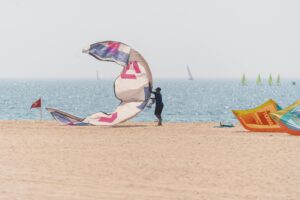
9. Kite Beach — Where Dubai Residents Actually Go
South of Jumeirah, past the tourist maps’ comfortable coverage boundary, Kite Beach is where the people who actually live in Dubai spend their weekends — and that alone makes it worth finding. Named for the kite surfers who use the consistent coastal winds that funnel along this stretch of shoreline, the beach is clean, free, well-maintained, and lined with excellent food trucks serving acai bowls, fresh juice, gourmet sandwiches, and fish tacos from operators who clearly care about their product.
The Burj Al Arab sits directly across the water, close enough at sunset that you can watch its facade change colour as the light shifts. A 14-kilometre cycling and running path extends the full length of the beach. On weekend evenings, the food truck strip becomes a genuinely social outdoor scene — families, joggers, couples, expat friend groups — that feels completely removed from the luxury tourism performance happening elsewhere in the city.
Take a Careem from Downtown for AED 35–40. There is no direct metro access, which is partly why the tourist crowds haven’t found it yet.

10. Naif — The Unpolished Commercial Heart of Old Deira
Naif is the neighbourhood that Dubai’s rapid modernisation somehow skipped — and that makes it, paradoxically, the most interesting urban area in the entire emirate for a traveler who wants to understand what this city is actually made of beneath the architectural spectacle.
The streets are narrow and slightly worn, lined with fabric shops displaying bolts of textile from India, Pakistan, and Iran, tailors working at ancient sewing machines in shopfronts barely two metres wide, budget electronics dealers, and ground-floor restaurants serving Yemeni lamb mandi, Bangladeshi fish curry, and Pakistani biryani to the working population that keeps this city functioning. A glass of karak chai from a street stall costs AED 2. A full plate of lamb mandi rice costs AED 15–20.
Walking through Naif is walking through a city that existed before the skyscrapers — because it literally did. Walk northeast from the Gold Souk for ten minutes and you’ll slide into it naturally. There are no signs directing you there. That’s the point.
Honest note: Naif is not tourist-infrastructure friendly in any conventional sense — limited English menus, occasional crowding, a pace and visual character that requires genuine curiosity rather than passive consumption. Go with openness and no fixed agenda, and it will be one of the most human places you find in any city you visit this year.
💡 Practical Travel Tips for Exploring Hidden Dubai
Cash is essential in Old Dubai, the souks, Naif, and any street food context. Keep AED 150–200 in cash at all times when exploring these areas. Everywhere else in the city runs smoothly on card.
Timing determines everything in Dubai’s hidden spots. Arrive early — before 10 AM — or late — after 5 PM — for every outdoor souk and neighbourhood visit. The window between 11 AM and 4 PM from April through October will drain your enthusiasm for exploration faster than any travel obstacle you’ve encountered.
Google Maps works with excellent accuracy across all of Dubai including the oldest souk lanes in Deira. Download the offline Dubai map before leaving your hotel each morning as a backup.
Dress code for hidden Dubai: Cover shoulders and knees in Al Fahidi, the mosque, the souks, and Naif. Light cotton layers that breathe and can be added or removed depending on whether you’re inside or outside are ideal year-round.
Language: English works universally across the city. Hindi is widely understood throughout Deira and Bur Dubai. In practice, you will encounter almost zero language barriers anywhere in Dubai.
SIM Card: Etisalat or du tourist SIM available at the airport arrivals hall — AED 55–75 for 10 days of reliable 4G coverage citywide and in Hatta.
📅 Best Time To Visit Hidden Dubai
October to April is the ideal travel window across the board — temperatures between 18–28°C make walking the souks, Creek waterfront, Al Seef, and Hatta mountains genuinely pleasant rather than endurance events. November, March, and early April hit the perfect balance of good weather without peak-season accommodation pricing.
December to February brings the most energetic city atmosphere — Dubai Shopping Festival, New Year fireworks, and a general festive buzz. The hidden spots are considerably less affected by peak crowds than the main attractions, but hotel prices across all neighbourhoods spike regardless. Book accommodation at least 6–8 weeks ahead for this window.
May to September: Outdoor exploration becomes genuinely challenging in the sustained heat. Structure hidden-Dubai visits firmly in the early morning before 9 AM or the evening after 6 PM. Al Quoz galleries, Dubai Museum, Alserkal Avenue, and the Jumeirah Mosque tour are all perfectly comfortable in air conditioning year-round and make excellent midday activities during summer visits.

⏳ 4-Day Hidden Dubai Itinerary
Day 1 — Old Dubai Complete Immersion Al Fahidi Historical Neighbourhood first thing in the morning before the heat builds. Dubai Museum (AED 3 — do not skip this). Abra crossing to Deira (AED 1). Spice Souk exploration. Gold Souk at a slow pace. Lunch at a Deira thali restaurant for AED 20–25. Al Seef waterfront at sunset with karak chai from a street stall. Estimated daily spend: AED 60–100
Day 2 — Art, Mosque & Local Beach Jumeirah Mosque guided tour at 10 AM (AED 35). Careem to Al Quoz and Alserkal Avenue for the afternoon — browse galleries, have coffee, absorb three hours of creative energy. Kite Beach food trucks for dinner as the sun drops over the water. Estimated daily spend: AED 80–130
Day 3 — Hatta Mountain Day Trip Early RTA bus to Hatta (AED 25 return — book at the Gold Souk bus station). Heritage Village in the morning. Hatta Dam kayaking for AED 60–80. Back in Dubai by early evening for a Marina Walk stroll that costs nothing. Estimated daily spend: AED 110–160
Day 4 — Naif, La Mer & Departure Naif neighbourhood wander in the cool of the morning. La Mer Beach for the afternoon (free entry, excellent food trucks). Final sunset from the Al Seef waterfront with the Creek going amber around you. Departure. Estimated daily spend: AED 60–100
💰 Budget Breakdown
| Traveler Type | Daily Budget (AED) | Daily Budget (INR approx.) |
| Budget Explorer | 150–250 | ₹3,300–₹5,500 |
| Mid-Range Traveler | 350–600 | ₹7,700–₹13,200 |
| Comfort Traveler | 700–1,200 | ₹15,400–₹26,400 |
The genuinely remarkable thing about hidden Dubai is how dramatically cheaper it runs compared to tourist Dubai. The majority of the best experiences on this list cost between AED 0 and AED 50. The real investment here is time and curiosity — not money. A four-day hidden Dubai itinerary can be done comfortably for ₹35,000–₹50,000 per person including accommodation, which makes it one of the most affordable international travel experiences available to Indian travelers right now.
If you want the full cost breakdown — flights, visa, accommodation, food, and activities all calculated together — our Dubai Budget Trip from India 2026: Real Costs & Honest Tips breaks down every expense category with real numbers. And for travelers who prefer a fully arranged package that covers the mainstream highlights alongside space for hidden exploration, the Tripyverse Dubai 4N/5D Package is designed exactly for this kind of comprehensive first-timer experience.
🤔 Final Verdict — Is Hidden Dubai Worth the Extra Effort?
Completely and without hesitation — and I’d argue it’s the single thing that transforms Dubai from a good trip into a genuinely memorable one that you’ll still be describing to people five years from now.
The famous attractions are worth experiencing: the Burj Khalifa genuinely does steal your breath, the Fountain show genuinely is spectacular at 9 PM, the desert safari genuinely will produce your best travel photographs of the year. But if those are the only things you do, you’ll come home having experienced a performance of Dubai rather than Dubai itself. A very impressive, very expensive, very polished performance — but a performance nonetheless.
The hidden city — Al Seef at dusk with the Creek going golden, the Spice Souk at dawn before the crowds arrive, Alserkal Avenue on a quiet Tuesday with an Emirati painter working in the corner of a warehouse gallery, Naif in all its unpolished, completely human complexity — gives you something the main attractions rarely manage: the feeling that you actually know a place rather than simply having passed through it with a camera.
One honest drawback worth naming: Several of these spots require genuine research, logistical flexibility, and a comfort with occasionally being the only obvious outsider in the room. If you prefer structured, guided, itinerary-locked travel where everything is pre-arranged and signposted, parts of this guide will push you meaningfully outside your comfort zone. That discomfort is usually exactly where the best travel memories are made — but it’s worth knowing clearly before you go.
Hidden Dubai is perfect for: Curious travelers on any budget, repeat visitors who’ve done the standard tourist circuit and want the next layer, photographers, culture seekers, solo travelers, couples looking for atmosphere over spectacle, and anyone who left a previous Dubai trip with the quiet feeling that they’d seen the surface but not the substance.
Consider staying on the mainstream circuit if: You’re visiting for fewer than three days, traveling with young children who need predictable structured itineraries, or coming specifically for luxury shopping and beach club experiences — all of which Dubai handles brilliantly without this guide.
The traveler who finds the hidden side of Dubai tends to find the hidden side everywhere they go. If that sounds like you, our Manali Travel Guide — 7 Best Places + Hidden Gems (2026) and our deep-dive into the Secret Places in Manali — 7 Hidden Gems You Must Visit in 2026 are essential reading before your next India trip. The contrast between Manali’s raw Himalayan silence and Dubai’s layered hidden humanity makes for one of the most unexpectedly rich back-to-back travel combinations you can build from India right now.