


📋 TABLE OF CONTENTS
- The Morning I Understood Why Ladakh Changes People
- Where is Leh Located?
- How to Get to Leh Ladakh
- Getting Around Leh on Day 1
- Where to Stay in Leh
- Day 1 Things to Do — Gentle Acclimatization Sightseeing
- What to Eat on Day 1 in Leh
- Practical Travel Tips for Leh Ladakh
- Best Time to Visit Ladakh
- 7-Day Ladakh Itinerary with Daily Costs
- Complete Ladakh Budget Breakdown
- Final Honest Verdict
1. The Morning I Understood Why Ladakh Changes People {#intro}

I stepped off the plane at Kushok Bakula Rimpochee Airport in Leh and the first thing I felt wasn’t wonder — it was a faint, specific pressure behind my eyes. The air was thin and bright and the sky was a shade of blue I had no reference for, darker than any blue I’d seen at sea level, closer to the blue you’d imagine in the stratosphere. The mountains around the airport were bare granite and ochre, with snow cresting the highest ridges. There were no trees. There were no sounds I recognised from other Indian cities.
My driver picked me up and said, without any preamble: “Today you rest. Don’t climb stairs quickly. Don’t run. Drink water. No alcohol. Tomorrow we go.”
I had been warned about altitude. I had read about it. I had not truly understood what 3,500 metres above sea level means for a body accustomed to sea level until I arrived and felt the specific effort of carrying my bag across the tarmac. Ladakh teaches you, immediately and physically, that you are somewhere completely different.
This is what Day 1 in Leh looks like — the most important day of your Ladakh trip, the one most tourists get wrong, and the one that determines whether the rest of your journey is extraordinary or exhausting.
2. Where is Leh Located? {#location}

Leh sits at 3,524 metres above sea level in the Ladakh Union Territory of India, nestled in the upper Indus Valley between the Karakoram Range to the north and the Himalayas to the south. It is roughly 434 km from Srinagar and 473 km from Manali — both connected by mountain highways that are among the most dramatic roads in the world. The Leh district is one of the highest inhabited regions on Earth, bordered by Pakistan-administered territory to the west and Tibet to the east.
Despite being a major tourist destination since the 1970s, Ladakh retains an otherworldly character that no level of development has managed to dilute — partly because the landscape itself is simply too vast, too bare, and too indifferent to human presence to be tamed by tourism.
3. How to Get to Leh Ladakh {#get-there}
By Air — The Only Sensible Option for Most Indians
Flying into Kushok Bakula Rimpochee Airport, Leh (IXL) is the fastest and for most travellers the best option. Direct flights operate from Delhi (1 hour 20 minutes), Mumbai (2.5 hours with one stop), and Jammu/Srinagar. Delhi–Leh return fares run ₹6,000–₹12,000 depending on season and booking window — book 6–8 weeks ahead for the best prices. IndiGo, Air India, and SpiceJet all operate this route.
Important altitude note: Flying directly to Leh from sea level gives your body no gradual acclimatization. This is the main reason Day 1 is entirely about rest. Your body needs 24–48 hours to begin adjusting. This is not optional.
By Road — Manali–Leh Highway (June–October)
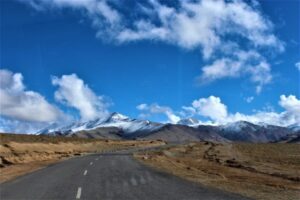
The 473-km Manali–Leh Highway is one of the most legendary road journeys in India, crossing five passes including the Baralacha La (4,890m) and Tanglang La (5,328m). By shared taxi from Manali: 2 days (with overnight at Sarchu or Jispa). By motorbike: 2–3 days. Cost by shared taxi: ₹2,000–₹2,500/seat. This road route is genuinely spectacular AND provides gradual altitude gain — if you have the time, it’s the superior approach for acclimatization.
By Road — Srinagar–Leh Highway (May–November)
The 434-km Srinagar–Leh Highway via Zoji La and the Indus Valley is shorter in distance and lower in peak altitude than the Manali route. Shared taxi from Srinagar: ₹1,500–₹2,000/seat, 1 day. This road passes through some of Ladakh’s most dramatic valley scenery and provides better acclimatization than flying.
If you’re already in Kashmir before Ladakh, combining both trips makes excellent sense — our Kashmir travel guide 2026 covers the Kashmir leg in detail.
4. Getting Around Leh on Day 1 {#getting-around}
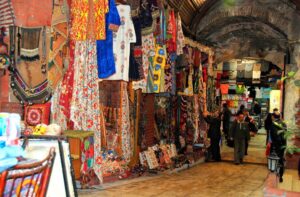
On Day 1 specifically, you should not be covering large distances. Leh town is compact and walkable — the main market (Main Bazaar), Leh Palace, Namgyal Tsemo Gompa, and most guesthouses in the Changspa/Fort Road area are within 15–20 minutes’ walking distance of each other. Walk slowly. Stop often.
Walking: The primary mode on Day 1. Go slow — even a 10-minute uphill walk will feel like more than it should at 3,524m. This is normal.
Auto-Rickshaw: Available in Leh, ₹50–₹100 for short city trips. Useful if you’re feeling the altitude and want to limit exertion.
Shared Jeep Taxis: The standard for getting around Ladakh on subsequent days. From Leh market, shared jeeps depart to Nubra Valley, Pangong Lake, and other destinations. Book through the Leh Taxi Union counter near the main market.
Royal Enfield/Scooter Rental: ₹1,000–₹1,500/day for a Royal Enfield. Do NOT rent a bike on Day 1. Your coordination and judgment are subtly impaired at altitude, even if you don’t feel it. Day 3 onwards is the earliest you should consider riding.
Ola/Uber: Neither operates in Leh. Local taxi apps like Leh Taxi (available locally) work for pre-booked rides.
5. Where to Stay in Leh {#stay}
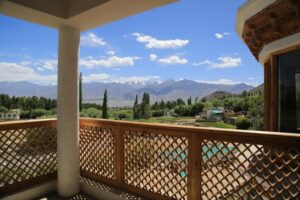
Best areas to base yourself: Changspa area (quiet, slightly above town, good views), Fort Road (central, short walk to palace and market), and Old Town (most atmospheric but slightly higher elevation — fine for Day 2 onwards, slightly demanding on Day 1).
Budget (₹600–₹1,500/night)
The Grand Dragon Guesthouse, Changspa: Basic but clean rooms, friendly family-run operation, mountain views from the terrace. Around ₹800/night. The family will bring butter tea to your room if you ask — do ask.
Padma Guesthouse, Fort Road: Well-reviewed budget option close to the market. ₹700–₹1,000/night. Simple rooms, hot water available in the morning.
Mid-Range (₹2,000–₹4,500/night)
Hotel Ladakh Palace, Fort Road: Centrally located, clean rooms with palace views, reliable hot water and heating. Around ₹2,500–₹3,000/night. The rooftop seating area is excellent for acclimatization day rest — views of Leh Palace and the bare mountains behind.
The Indus, Changspa: Consistently well-reviewed mid-ranger with a good in-house kitchen serving both Ladakhi and Indian food. ₹3,000–₹4,000/night.
Luxury (₹8,000+/night)
The Grand Dragon Ladakh: Leh’s most established luxury hotel — heated rooms, excellent restaurant, spa, and mountain views. ₹12,000–₹18,000/night. Worth it for altitude comfort, particularly if you’re sensitive to the cold.
Chamba Camp, Thiksey (15 km from Leh): Luxury tented camp set below Thiksey Monastery. ₹15,000–₹25,000/night. An extraordinary experience for Day 3 onwards when you’re properly acclimatized.
For those who want logistics handled end-to-end, the Leh escape packages on Tripyverse include curated accommodation across budget tiers with altitude-sensitive scheduling built in.
6. Day 1 Things to Do — Gentle Acclimatization Sightseeing {#things-to-do}
The cardinal rule of Day 1 in Leh: do less than you think you should. The most common mistake tourists make is arriving and immediately trying to cram in Pangong Lake, Nubra Valley, and three monasteries. The result is acute mountain sickness (AMS) — headaches, nausea, vomiting, and in serious cases, potentially dangerous pulmonary or cerebral edema. Day 1 is about acclimatization and gentle local exploration only. Here is exactly what Day 1 should look like.
6.1 The First Two Hours — Rest, Water, and Nothing Else
When you land at Leh airport and reach your hotel, the single most important thing you can do is lie down for two hours. Not sleep necessarily — just horizontal rest with no exertion. Drink at least 3–4 litres of water throughout the day. Avoid alcohol completely for the first 48 hours — alcohol at altitude dramatically worsens AMS risk.
Honest warning: You may feel completely fine when you land. This is common and deceiving. Symptoms of AMS often appear 4–6 hours after arrival, not immediately. The travellers who feel great and go on a long walk at noon are often the ones who are sick by evening. Rest first, explore second.
6.2 Leh Main Market — Slow Walk, Street Food, Orientation

After your rest period, the Leh Main Bazaar is the ideal first gentle excursion. The market is roughly 800 metres long, mostly flat, lined with shops selling pashmina, dried apricots, silver jewellery, prayer flags, and Ladakhi handicrafts. Walk slowly. Stop at shops. Sit on the low walls along the bazaar and watch the town go about its business.
The market sits below Leh Palace on the hillside — the white-and-ochre nine-storey fortress looming above the town is visible from nearly everywhere in the bazaar and provides constant orientation. In the evening, prayer flags flutter against the bare mountains in the late light and the whole scene turns golden in a way that makes you grateful you came.
Estimated time: 1–1.5 hours at a very gentle pace. ₹0 unless you shop.
Insider tip: The small Ladakhi women selling sun-dried apricots, walnuts, and dried berries from wicker baskets along the bazaar are selling the best quality and freshest produce at the lowest prices. Buy here rather than in the shops.
6.3 Leh Palace — Views Without the Climb (Day 1 Modified Version)
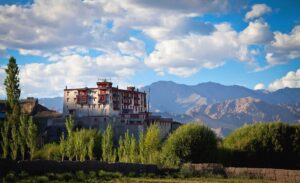
The Leh Palace (modelled after the Potala Palace in Lhasa) stands 9 storeys tall on a rocky outcrop above the old town. On a normal day, walking up to it takes 20–30 minutes of uphill walking — entirely inadvisable on Day 1 if you flew in.
Day 1 compromise: Walk to the base of the palace hill and look up. The view of the palace from below is extraordinary — ochre stone, prayer flags at every corner, the bare granite Stok Kangri range (6,153m) rising behind it. Photograph from here. Entry to the palace itself (₹50 for Indians) can wait for Day 2.
If you drove in via Manali or Srinagar: Your body has had 1–2 days of gradual gain and you can consider a slow walk up to the palace entrance. Still go slowly.
6.4 Shanti Stupa — Sunset from the White Dome

Shanti Stupa is a white-domed Buddhist memorial built by a Japanese monk, sitting atop a rocky hill on the western edge of Leh at around 3,700 metres. The stairs to the top are steep — approximately 300+ steps. On Day 1 for fliers, take the road alternative: hire an auto (₹100–₹150) or walk the gentler road route that winds up rather than climbing directly.
At sunset, the Shanti Stupa is one of the most beautiful places I’ve been anywhere in the world. The stupa glows white against a darkening sky, the Indus Valley spreads below in evening shadow, the Stok Kangri range catches the last orange light, and somewhere in the distance you can hear butter lamps being lit inside a monastery. Standing there, slightly breathless from altitude and beauty in equal measure, I understood why people return to Ladakh year after year.
Getting there: Auto from main market: ₹100–₹150 one-way. Walk via road route: 30–40 minutes gentle uphill. Entry: Free.
Time required: 1.5–2 hours including getting there and watching the sunset.
Honest warning: The direct staircase approach to Shanti Stupa is genuinely taxing at altitude, especially on Day 1. Take the road route without feeling any pressure to prove your fitness.
6.5 Namgyal Tsemo Gompa — View, Not Climb, on Day 1
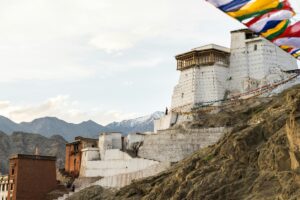
Perched even higher than the palace on the rocky ridge above Leh, Namgyal Tsemo Gompa is a 15th-century monastery with extraordinary valley views. The uphill walk from town takes 30–45 minutes. On Day 1, this is too demanding for anyone who flew in.
Day 1 approach: View it from below — from the palace base or from the main market, the ochre-red monastery against the bare ridge is one of the signature images of Leh. Visiting the interior can wait for Day 2 or 3 when you’re genuinely acclimatized.
6.6 Hall of Fame — Sober, Important, and Mostly Flat
The Hall of Fame near the main market is an Indian Army museum honouring soldiers who fell in the Kargil and Siachen conflicts. It is a sober, moving, and informative experience that requires minimal physical exertion — almost entirely flat, largely indoors. For anyone who wants to do something more than lie in their room on acclimatization afternoon, this is the right choice.
Entry: ₹50 for civilians. 1–1.5 hours.
7. What to Eat on Day 1 in Leh {#food}
Day 1 eating should be light, hydrating, and easy to digest. Rich, heavy food at altitude slows acclimatization. Here’s exactly what to eat and where.

Thukpa: Ladakhi noodle soup — thin wheat or rice noodles in a clear, vegetable-forward broth with root vegetables and sometimes meat. Light, warming, hydrating. Perfect for altitude. Every small dhaba in Leh serves it for ₹80–₹150.
Butter Tea (Po Cha): Traditional Tibetan butter tea — brick tea churned with yak butter and salt. Sounds alarming, tastes surprisingly comforting. The fat provides sustained warmth and the salt aids hydration at altitude. Try it at a local Ladakhi tea stall in the old town; cost ₹20–₹30.
Skyu: Thick Ladakhi stew with hand-rolled pasta pieces, root vegetables, and occasionally lamb. Hearty but not heavy — the Ladakhi version of comfort food. Available at Bon Appetite and Tsomoriri Kitchen on Fort Road.
Momos: Tibetan dumplings — steamed or fried, filled with cabbage, cheese, or minced meat. Light enough for Day 1 and available everywhere.
Avoid on Day 1: Heavy curries, oily food, alcohol, and excessive caffeine (though one cup of tea is fine and often helpful).
Best budget eating: The small Ladakhi dhabas in the old city lanes — no names, wooden benches, butter tea in aluminium cups, Thukpa for ₹100. Better than most restaurants and completely authentic.
Best mid-range: Bon Appetite Restaurant, Fort Road — reliably good Ladakhi and Indian food, reasonable prices (₹150–₹350 per dish), indoor seating useful when it’s cold.
8. Practical Travel Tips for Leh Ladakh {#tips}
Altitude sickness — the most important tip: If you develop a severe headache, vomiting, confusion, or difficulty breathing on Day 1, descend or seek medical help immediately. Leh has a reasonably equipped hospital (SNM Hospital). Diamox (acetazolamide) can help with mild AMS — consult your doctor before travel about whether to take it prophylactically. Do not push through severe symptoms.
Cash in Leh: ATMs exist in Leh but frequently run out of cash during peak season (July–August). Withdraw cash in Delhi or Chandigarh before arriving. Carry ₹10,000–₹15,000 in cash for the first few days. Most guesthouses, restaurants, and small shops are cash-only.
SIM and internet: BSNL is the only network with reliable coverage in Leh and Ladakh broadly. Jio and Airtel work in Leh town but become unreliable outside it. Buy a BSNL SIM at the Leh airport or main market if you have an unlocked phone. Government ID required.
Inner Line Permit (ILP): For certain areas including Nubra Valley, Pangong, and Tso Moriri, Indians need an ILP — easily obtained at the DC Office in Leh (₹20–₹40 per area, available same day). Your hotel or tour operator will usually help organise this.
Warm clothing even in summer: Leh temperatures can drop to 5–10°C even in July at night. Pack a fleece, a windproof jacket, and thermal underlayers regardless of your travel month. Sunscreen SPF 50+ is non-negotiable — UV radiation at altitude causes serious burns very quickly.
Electricity: Load-shedding is common in Leh. Carry a power bank. Phone charging may only be possible for 4–6 hours per day in budget guesthouses.
9. Best Time to Visit Ladakh {#best-time}
| Month | Conditions | Verdict for Day 1 |
| Jan–Feb | -20 to -5°C, Chadar trek only, most roads closed | ❄️ Expert winter travellers only |
| Mar–Apr | Still cold, Zanskar thawing, few tourists | 🌸 Offbeat, beautiful, manageable cold |
| May | Roads opening, temperatures rising, less crowded | ✅ Good — fewer tourists, fair weather |
| Jun–Jul | Warm days (25°C), all roads and passes open, busiest | ☀️ Best weather, most crowded, book early |
| Aug | Warm, occasional rain, still busy | ✅ Good overall, some road disruption |
| Sep–Oct | Ideal weather, clear skies, thinning crowds | ⭐ Best overall — best for Day 1 experience |
| Nov–Dec | Getting cold, Manali highway closes, flights only | 🧣 Quiet, cold, not for beginners |
The best time for first-timers: June–September. September is the sweet spot — skies are clear, temperatures are comfortable (15–25°C days, 5–10°C nights), crowds have reduced from peak July–August, and the landscape is at its most dramatic with the late-season clarity of light.
The honest caveat about peak season (July–August): Leh in peak season is genuinely very crowded. The Main Bazaar, Shanti Stupa, and Pangong Lake are all overrun. Hotel prices spike 40–60%. Book accommodation at least 6–8 weeks ahead for July–August visits. If you have flexibility, September is objectively the better month.
10. 7-Day Ladakh Itinerary with Daily Costs {#itinerary}

Day 1 — Leh: Acclimatization Day (THIS ARTICLE)
Rest on arrival (2 hours minimum). Slow walk through Main Bazaar in the afternoon. View Leh Palace from below. Sunset at Shanti Stupa (auto up, walk down or auto back). Light dinner of Thukpa and butter tea. Early to bed.
Estimated daily spend: ₹1,800–₹2,500 (accommodation ₹1,000 + food ₹400 + auto ₹200 + misc ₹300)
Day 2 — Leh Local Sightseeing: Palace, Tsemo Gompa, Old Town
Now properly oriented, climb to Leh Palace (entry ₹50). Walk through old Leh’s narrow lanes — carved wooden balconies, prayer wheel walls, apricot trees. Visit Namgyal Tsemo Gompa. Afternoon: Hall of Fame Museum. Evening: Sunset from the palace terrace.
Estimated daily spend: ₹1,500–₹2,000
Day 3 — Nubra Valley via Khardung La (World’s Highest Motorable Road)
Early start. Drive over Khardung La pass (5,359m) — brief photo stop at the top (don’t linger, the cold is intense). Descend to Nubra Valley — warm, almost desert-like contrast to Leh. Visit Diskit Monastery and the giant Maitreya Buddha. Camel safari on Hunder sand dunes (₹300–₹400/person for 20 minutes). Stay overnight in Nubra camp or guesthouse.
Estimated daily spend: ₹3,500–₹4,500 (shared taxi + accommodation + meals)
Day 4 — Return from Nubra + Pangong Lake Drive
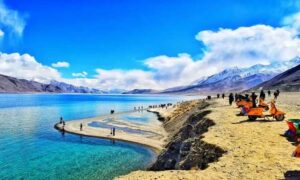
Drive back from Nubra via Shyok Valley road. If time allows, continue to Pangong Lake (4,350m) for late afternoon and evening. The first sight of Pangong’s shifting blue-turquoise-green water against bare brown mountains is genuinely one of the most arresting landscapes in India. Stay overnight in Pangong camp.
Estimated daily spend: ₹4,000–₹5,500 (shared taxi + camp accommodation + meals)
Day 5 — Pangong Lake Morning + Return to Leh
Early morning at Pangong — the lake at dawn, when the mountains reflect and the light changes every ten minutes, is worth getting up at 5 AM for. Drive back to Leh via Chang La pass (5,360m). Afternoon rest in Leh.
Estimated daily spend: ₹2,000–₹3,000
Day 6 — Hemis, Thiksey, Shey — The Monastery Route
Day trip south of Leh through the Indus Valley monastery circuit. Thiksey Monastery (modelled on Potala Palace, stunning multi-level complex, ₹50 entry). Hemis Monastery (largest and wealthiest in Ladakh, ₹50 entry). Shey Palace (former royal capital, good views). All within 45 km of Leh.
Estimated daily spend: ₹2,000–₹2,500
Day 7 — Magnetic Hill, Sangam, Pathar Sahib + Departure
Morning: Drive to Sangam — the confluence of the Indus and Zanskar rivers, visible from a viewpoint as two distinct colours of water meeting. Magnetic Hill optical illusion. Pathar Sahib Gurudwara. Return to Leh, catch evening flight.
Estimated daily spend: ₹1,500–₹2,000
11. Complete Ladakh Budget Breakdown {#budget}
Budget Traveller — ₹35,000–₹40,000 for 7 Days from Delhi
| Expense | Cost (₹) |
| Flights Delhi–Leh–Delhi (booked 6 weeks ahead) | 10,000 |
| Accommodation — 7 nights mixed (guesthouse/camp) | 8,000 |
| Food — 7 days at ₹500/day average | 3,500 |
| Shared taxis — Nubra, Pangong, day trips | 7,000 |
| Inner Line Permits (Nubra + Pangong + Tso Moriri) | 300 |
| Entry fees (Palace, monasteries, Hall of Fame) | 500 |
| Camel safari, Pangong activities | 600 |
| Warm clothing purchase if needed in Leh | 1,500 |
| Miscellaneous (tips, souvenirs, snacks, BSNL SIM) | 2,000 |
| TOTAL | ₹33,400 |
Mid-Range Traveller: ₹55,000–₹70,000 (private taxis, better camps, Chamba Camp for one night)
Luxury Traveller: ₹1,20,000+ (The Grand Dragon, private vehicle throughout, helicopter options to Zanskar)
Where to save: Shared taxis over private for all routes — the difference is ₹1,200/seat vs ₹8,000/vehicle for the same journey. Guesthouses over camps at Pangong (₹1,000 vs ₹3,000 per night, same lake). Buy apricots and walnuts from bazaar women, not packaged shops.
Where to splurge: One night in a proper luxury camp at Pangong or Nubra — waking up in a heated tent with that view at dawn is worth the extra ₹3,000–₹5,000. And if you want the trip comprehensively organised, the Leh escape packages on Tripyverse bundle accommodation, permits, and transport in a way that saves significant planning time and often total cost.
If you’re building a longer Himalayan circuit, combining Ladakh with Kashmir is the natural extension — the Kashmir budget guide and hidden gems in Kashmir are the logical next reads. Comparing Ladakh against other dramatic landscape destinations in the region, our Manali travel guide 2026 lays out the differences clearly.

12. Final Honest Verdict {#verdict}
Day 1 in Leh is genuinely unique among all first days in Indian travel destinations. It requires patience, self-discipline, and the willingness to do less than you want to — all in service of doing far more on every subsequent day. Get Day 1 right and Ladakh opens up in ways that justify every rupee and every hour of travel. Get it wrong by overexerting and you’ll spend Day 2 in bed with a splitting headache.
What genuinely impressed me most on Day 1 was the quality of light. Leh at 3,500 metres has a photographic quality of light that I’ve experienced nowhere else in India — sharp, shadowless in the late afternoon, turning everything it touches a deep warm gold before sunset. Even the blank granite mountains look extraordinary in it.
The honest drawback: The acclimatization day can feel frustrating for active travellers who’ve taken expensive time off work and want to see everything immediately. Ladakh rewards the patient. If you have only 4–5 days total, the altitude constraint genuinely limits what’s safe to pack in — you cannot rush this destination. A minimum of 7 days is honestly required to do it properly.
Perfect for: Anyone with a serious landscape photography interest. Motorcycle travellers (though not on Day 1). Buddhist culture and monastery enthusiasts. Adventure trekkers (Markha Valley, Zanskar circuit). Anyone who’s felt something was missing from the usual Indian hill station experience. Couples who want something genuinely different from the standard honeymoon circuit — though the Kashmir honeymoon experience remains the more romantic of the two for those who want comfort alongside scenery.
Might want to reconsider if: You have a heart condition or serious respiratory issues — altitude is a genuine medical consideration. If you have fewer than 5 days. If you need reliable internet throughout — Ladakh connectivity is patchy outside Leh town.
Day 1 is just the beginning. And the beginning — slow, deliberate, breathless, and astonishing — is perfect.