


📋 Table of Contents
- The Mistake That Taught Me Everything About Kerala Travel
- Understanding Kerala — The State That Rewards Preparation
- How To Get To Kerala — Smart Booking Tips
- Getting Around Kerala Without Losing Money or Time
- Where To Stay — Location Decisions That Matter
- 25 Essential Kerala Travel Tips
- Practical Travel Tips — Cash, SIM & Safety
- Best Time To Visit Kerala — Month by Month
- 7-Day Kerala Itinerary
- Budget Breakdown
- Final Verdict — Honest Assessment
The Mistake That Taught Me Everything About Kerala Travel {#mistake}

I arrived in Kerala without a houseboat booking, in December, on a Friday afternoon.
The next available private houseboat in Alleppey — the experience I had built my entire itinerary around — was available in four days. The boats had been booked solid for weeks by travelers who understood something I hadn’t: Kerala in peak season rewards preparation with extraordinary experiences and punishes improvisation with a sequence of mild disappointments that compound across the trip.
I spent those four days genuinely enjoying Alleppey’s canals by government ferry for ₹15, eating fish curry from a backwater homestay kitchen, and watching the morning mist come off the water from a canal-side veranda. These were wonderful experiences. But they were not what I had planned, and the private houseboat experience — the one I’d flown to Kerala specifically for — almost didn’t happen at all.
Kerala is one of India’s most rewarding travel destinations. It is also one that has specific rhythms, specific seasonal patterns, specific transport quirks, and specific booking windows that, if you understand them before you arrive, make the difference between a good trip and an extraordinary one.
This guide is everything I’ve learned across multiple Kerala trips — the planning strategies, the transport decisions, the money-saving hacks, and the honest mistakes that will cost you time, money, and experience if you make them. Read it before you book anything.
Understanding Kerala — The State That Rewards Preparation {#understanding}
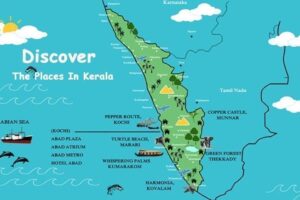
Kerala stretches 580 kilometres along India’s southwestern tip — a long, narrow state between the Western Ghats mountain range to the east and the Arabian Sea to the west. It shares borders with Karnataka and Tamil Nadu, and sits approximately 1,200 kilometres south of Mumbai and 2,000 kilometres from Delhi.
What makes Kerala require more planning than most Indian destinations is its geographic diversity packed into a compact space. The state has distinct destination types — hill stations (Munnar, Wayanad), backwater networks (Alleppey, Kumarakom), wildlife reserves (Periyar, Silent Valley), beaches (Varkala, Kovalam, Cherai), and cultural cities (Fort Kochi, Thrissur, Kozhikode) — each with its own best seasons, its own transport requirements, and its own booking windows.
Understanding the state’s geography before you plan is the most useful single preparation step you can take. Kerala is not one destination — it is five or six distinct travel experiences that happen to share a political boundary. Planning it like a single monolithic trip produces generic itineraries. Planning it as a sequence of distinct destination types produces extraordinary ones.
How To Get To Kerala — Smart Booking Tips {#how-to-get}
The three airports and which to use:
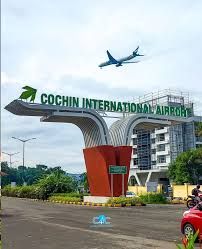

Cochin International Airport (COK) — The most connected and versatile entry point. Best for itineraries that include Fort Kochi, Alleppey backwaters, Munnar, and Thekkady. Direct flights from Mumbai (1.5 hours), Delhi (3 hours), Bangalore (1 hour), and all major Indian cities.
Thiruvananthapuram International Airport (TRV) — Best for southern Kerala itineraries covering Varkala, Kovalam, Kollam, and Munroe Island. Also the best entry point for the Tripyverse Kerala Kanyakumari Explorer 6N/7D which covers the full southern arc of Kerala and Tamil Nadu.
Calicut International Airport (CCJ) — Best for north Kerala itineraries: Kozhikode, Wayanad, Bekal, and Thalassery. Direct flights from Mumbai, Delhi, Bangalore, and extensive Gulf connections.
Smart flight booking strategy:
Book 6–8 weeks ahead for the best combination of price and seat availability. Set Google Flights fare alerts immediately when your dates are confirmed — I’ve saved ₹2,000–₹4,000 on single bookings this way. Budget carriers to watch: IndiGo, SpiceJet, Air India Express. Return fares from Mumbai start at ₹3,500–₹7,000 in the budget window.
Open-jaw booking tip: Flying into Cochin and out of Thiruvananthapuram (or vice versa) for an itinerary that moves south through the state eliminates all backtracking and the fare difference is often minimal. This single booking decision saves 6–8 hours of return travel across a 7-day trip.
By train: The Kerala Express from Delhi and Rajdhani from Mumbai both connect to Ernakulam Junction (Kochi’s main rail station) affordably and comfortably. Overnight trains eliminate one night’s accommodation cost — a meaningful budget advantage.
For travelers who want the entire logistics chain managed — flights, accommodation, transfers, and guided experiences — the Tripyverse Kerala Escape 4N/5D Package and the Tripyverse Kerala 5N/6D Package both handle every element in a single transparent booking.
Getting Around Kerala Without Losing Money or Time {#getting-around}
Kerala’s transport system is genuinely excellent by Indian state standards — but it has specific characteristics that first-time visitors consistently misunderstand, to their significant inconvenience.
KSRTC Buses — your budget backbone: Kerala’s state bus network is comfortable, punctual, and remarkably affordable. Key routes: Kochi to Munnar (₹150, 4 hours), Munnar to Thekkady (₹100, 3 hours), Alleppey to Varkala (₹90, 2.5 hours). Air-conditioned options available on major intercity routes. Download the KSRTC Kerala app for real-time schedules.
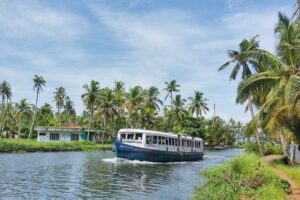
Government Ferries — the scenic budget masterpiece: The government ferry from Alleppey to Kottayam costs ₹15 for 2.5 hours of the most beautiful backwater scenery in Kerala. The Ernakulam to Fort Kochi ferry costs ₹5. These are the most dramatically underpriced transit experiences in India and most tourists completely overlook them in favour of taxis.
Local taxis with drivers: For mountain routes and hidden destinations, local taxi drivers with terrain knowledge are significantly better value than app-based taxis. A full day hire costs ₹2,500–₹3,500. Always negotiate the full-day rate before departure rather than paying per kilometre for longer distances.
Rental bikes: Available in Munnar, Wayanad, and Varkala from ₹400–₹800 per day. The best way to explore Kerala’s hill roads and discover the hidden places covered in our Hidden Places in Kerala 2026: Secret Gems guide — many of these spots are only truly accessible on two wheels at your own pace.
Auto-rickshaws: Metered in Kochi. Fixed-rate negotiation required everywhere else. Short trips cost ₹30–₹100. Agree on the price before getting in outside of Kochi.
Ola and Uber: Available in Kochi and Thiruvananthapuram. Reliable for city transport. Not available in Munnar, Wayanad, or rural areas — pre-arrange local taxis for these destinations.
Where To Stay — Location Decisions That Matter {#where-to-stay}
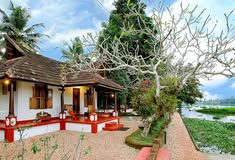
The single most important accommodation advice for Kerala: Match your hotel location to your activity zone. A beautiful hotel 45 minutes from the attractions you want to visit will cost you more in taxis over five days than upgrading to a better hotel in the right location would have.
Budget Tier — ₹800–₹2,500 per night:
Zostel Kochi, Fort Kochi — The best budget base for Fort Kochi exploration. Social, well-located, rooftop harbour views, dorm beds from ₹600, private rooms from ₹1,400.
Local homestays across all regions — Kerala’s homestay culture is the state’s most underused accommodation advantage. Family-run homes from ₹1,200–₹2,000 including breakfast that is frequently the best meal of the entire trip. Book through Booking.com, Airbnb, or directly through Kerala Tourism’s registration database.
Government Tourist Bungalows — Kerala Tourism operates clean, well-maintained properties across the state at ₹800–₹1,500 per night. Consistently underused and underrated.
Mid-Range Tier — ₹3,000–₹8,000 per night:
Fragrant Nature, Alleppey — Backwater-view rooms, excellent breakfast, genuinely helpful staff who arrange houseboat bookings at fair rates and without the markup that hotel concierges elsewhere apply.
Spice Tree, Munnar — Hillside property with panoramic tea estate views and exceptional food. The most atmospherically complete mid-range stay in Munnar.
Brunton Boatyard, Kochi — Heritage hotel in Fort Kochi with harbour views, period architecture, and the best Kerala seafood I’ve eaten indoors anywhere.
Luxury Tier — ₹12,000+ per night:
Kumarakom Lake Resort — The benchmark for luxury backwater accommodation. Private plunge pools, traditional Kerala architecture.
Taj Bekal Resort, Kasaragod — The most beautiful resort location in India. The beach in front is empty. The backwaters behind are undisturbed.
For couples specifically, the Tripyverse Kerala Honeymoon Package curates the most romantic accommodation combinations across the state — private houseboat nights, clifftop stays at Varkala, and heritage properties in Fort Kochi — arranged as a seamless itinerary.
25 Essential Kerala Travel Tips {#travel-tips}
Planning & Booking Tips {#planning-tips}
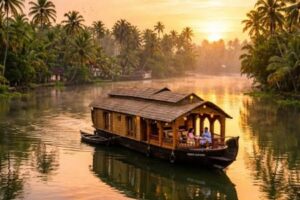
Tip 1 — Book houseboats at least 3 weeks ahead in peak season. December and January Alleppey houseboats book out completely. October and November give you more flexibility but still benefit from 2-week advance booking. I learned this the hard way and it is the single most important booking advice for any Kerala trip including Alleppey.
Tip 2 — Plan your itinerary geographically, not alphabetically. Kerala’s destinations cluster naturally: Fort Kochi → Alleppey → Thekkady → Munnar forms a logical loop. Adding Varkala means going south from Alleppey first. Adding Wayanad means going north from Munnar. Map your destinations before booking any transport to eliminate backtracking that adds hours to every day.

Tip 3 — Book Eravikulam National Park online in advance. The park near Munnar has daily visitor limits and sells out during peak season. Entry (₹115) must be booked at eravikulamnationalpark.org. Attempting to walk in on a December weekend without a booking will result in turning back.
Tip 4 — Research the Onam dates if visiting August–September. Onam is Kerala’s most significant festival — the Sadya feast on Thiruonam day is the most elaborate food experience in the state’s calendar. Hotels charge premium rates and book out weeks ahead. If your visit coincides with Onam, book accommodation 6–8 weeks in advance and plan around the festival rather than treating it as background noise.
Tip 5 — Build buffer days into your itinerary. Kerala’s mountain roads, monsoon-season travel, and ferry schedules occasionally produce delays that cascade across a tight itinerary. One buffer day per 5 days of travel absorbs these without destroying your plans. The buffer day almost always produces the best unexpected experience of the trip.
Transport Hacks {#transport-tips}
Tip 6 — Take the government ferry from Alleppey to Kottayam. ₹15. 2.5 hours. Through the most beautiful backwater scenery in Kerala. This is the single most dramatically underpriced travel experience in India and approximately 80% of Kerala tourists miss it entirely because they booked a taxi instead.
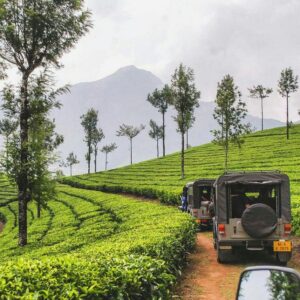
Tip 7 — Use shared jeeps from Kochi to Munnar. Shared jeeps from Kochi’s KSRTC stand to Munnar cost ₹150–₹200 per person and run the mountain route directly. The private taxi for the same route costs ₹3,000–₹4,000. The shared jeep is how Kerala locals travel this route. The view from the window is identical.
Tip 8 — Take the ₹5 ferry to Fort Kochi, not a taxi. The ferry from Ernakulam Boat Jetty to Fort Kochi costs ₹5 and takes 10 minutes. A taxi costs ₹400–₹600 and takes 30–40 minutes in traffic. Every time I see a tourist in a taxi crossing from Ernakulam to Fort Kochi I calculate the difference and feel genuinely sad on their behalf.
Tip 9 — Pre-arrange mountain area taxis before arrival. In Munnar, Wayanad, and Thekkady, app-based taxis don’t operate and local taxis are pre-arranged through your accommodation. Ask your homestay or hotel to arrange a trusted driver for ₹2,500–₹3,000 per day before you arrive. Don’t assume you’ll find transport on the morning you need it.
Tip 10 — Download KSRTC Kerala and Kerala Maps offline before leaving your city. The KSRTC app gives real-time bus schedules and route information. Offline maps are essential in the Western Ghats where mobile data becomes unreliable on mountain roads. Download both before boarding your flight to Kerala.
Accommodation Tips {#accommodation-tips}

Tip 11 — Stay in Fort Kochi itself, not Ernakulam. The atmospheric quality of Fort Kochi — the colonial lanes, the harbour light, the Chinese fishing nets at sunrise — exists only in Fort Kochi. It disappears completely 10 minutes away on the mainland. If you’re visiting Fort Kochi, stay there. The accommodation cost difference is minimal and the experience difference is fundamental.
Tip 12 — Choose a houseboat route that goes into small canals. The main Vembanad Lake houseboat route is congested in peak season — thirty boats visible simultaneously, engine noise, no village life. Ask your operator specifically for a route that ventures into the smaller canals where you see genuine backwater village life rather than other tourists. This is available at the same price and requires only the specific request.
Tip 13 — Ask homestay owners to recommend local restaurants. The best food in every Kerala town is where the homestay owner eats. Not where they send tourists. Ask the specific question: “Where do you eat lunch on a normal day?” The answer will consistently produce the best meal of your trip in that location.
Tip 14 — Book canal-side homestays in Alleppey as the budget alternative to houseboats. A canal-side homestay in Alleppey costs ₹1,500–₹2,500 per night and includes a morning canoe through the nearby waterways. The experience of waking up beside the backwater and paddling through village canals before 8 AM competes with the houseboat experience on every emotional measure except the floating-bedroom novelty. For budget travelers, this is not a compromise — it is a different and often more intimate version of the same experience.
Tip 15 — Verify accommodation location on Google Maps before booking. Kerala’s accommodation listing photographs are sometimes significantly more flattering than the actual view reveals. A “backwater view” room can mean a view of a narrow urban canal rather than the open Vembanad Lake. Verify the exact address on Google Maps satellite view before committing to any booking above ₹3,000 per night.
Food & Eating Tips {#food-tips}
Tip 16 — Eat your first Sadya on a Sunday. Traditional Kerala Sadya is most authentically and elaborately served on Sundays when local families eat it. Many restaurants only serve the full version on Sundays. Plan your Fort Kochi or Thrissur day to fall on a Sunday specifically for this reason.
Tip 17 — The best fish curry is in earthen pots — look for the manchatti. Kerala fish curry cooked in a traditional clay earthen pot (manchatti) has a depth of flavour that steel-pot versions don’t replicate. When scanning restaurant menus or counters, look for the earthen pots. If you see them, the kitchen is doing something right. For the complete Kerala food education — all fifteen traditional dishes explained — our Kerala Food Guide 2026: Traditional Dishes You Must Try covers everything from Sadya to Malabar Biryani with specific restaurant recommendations.
Tip 18 — Eat where locals eat using this simple rule. Walk past a restaurant. If you see local families eating with complete attention and no conversation, the food is genuinely good. If the menu has photographs and translations in four languages, the food is probably adequate. This rule works without exception across Kerala.
Tip 19 — Buy spices from the Thekkady or Mattancherry market, not tourist shops. Kerala’s spice markets — particularly in Thekkady’s spice-growing heartland and Mattancherry’s wholesale spice district — sell cardamom, pepper, and cinnamon at 30–50% of the prices charged in tourist-facing spice shops. The quality is identical or better. The packaging is simpler. The savings are real.

Tip 20 — Never skip filter coffee from a traditional tea shop. Kerala filter coffee from a traditional steel tumbler-and-davara setup at a roadside tea shop costs ₹12–₹20. It is one of the finest coffee experiences in India. Hotel room coffee makers and branded café chains in Kerala are a genuine downgrade by comparison. Seek the traditional tea shop version every morning.
On-Ground Survival Tips {#ground-tips}
Tip 21 — Carry ₹3,000–₹5,000 cash at all times. ATMs become genuinely sparse in Kerala’s mountain and backwater areas. Homestays, government ferries, forest entry fees, local restaurants, auto-rickshaws, and market vendors all run on cash. Running out of cash in Wayanad or rural Alleppey produces a problem that takes hours to solve. Replenish at every major town ATM before heading further out.
Tip 22 — Get a BSNL SIM if your itinerary includes hills or forests. Jio and Airtel lose signal in Wayanad, Silent Valley, parts of Munnar, and many forest areas. BSNL maintains coverage in locations where other networks drop completely. Pick up a BSNL tourist SIM at Kochi airport before heading into the hills. This is the most frequently ignored practical tip in Kerala travel and the most consistently validated by experience.

Tip 23 — Pack mosquito repellent from home. Tourist-area pharmacies in Kerala sell mosquito repellent at significant markups. DEET-based repellent from your home city costs a fraction of the price and performs better. Backwater areas and forest zones have active mosquito populations particularly between June and November. This is not optional packing for those destinations.
Tip 24 — Dress code for temples — carry a scarf or sarong. Many of Kerala’s most architecturally and culturally significant temples do not allow non-Hindus inside the inner sanctum. For those that do admit all visitors, covering shoulders and legs is required. A light cotton scarf or sarong in your day bag solves every dress code situation in Kerala without requiring you to carry additional clothing for specific temple visits.
Tip 25 — Learn three Malayalam words. “Nanni” (thank you), “Sughamano?” (are you well?), and “Enthu vila?” (what is the price?). Using even one of these words in the appropriate moment will produce a response from a Kerala local that makes you feel like you’ve been given access to a version of the state most tourists never reach. Kerala people respond to the acknowledgment of their language with genuine warmth that costs you nothing and gives you everything.
Practical Travel Tips — Cash, SIM & Safety {#practical}
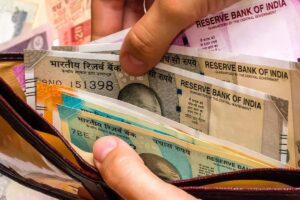
Cash vs Card: Kerala runs on cash more than most Indian states. Cards are accepted at major hotels, restaurants, and tourist facilities in Kochi, Thiruvananthapuram, and large towns. Beyond these urban centres, assume cash only for every transaction. Keep ₹500 and ₹100 denomination notes — large denomination notes create change problems in markets and village shops.
SIM Cards: Etisalat or du SIM from Kochi airport for travelers arriving internationally. For domestic travelers, check your existing Jio or Airtel coverage before departure — both work in major Kerala cities but drop in hill and forest areas. BSNL is the only network with reliable coverage across all Kerala zones.
Internet: WiFi is available at most mid-range and above accommodation. Download Google Maps offline for your specific regions — Western Ghats, Wayanad, and remote backwater areas — before leaving mobile network coverage. This is the single most useful digital preparation step for Kerala travel.
Safety: Kerala consistently ranks among India’s safest states for all traveler types. Solo female travel is considered very safe across the state. Standard urban awareness applies in tourist areas — Varkala clifftop and Kovalam beach have the most active hawker and tout presence of any Kerala destination; confident disinterest is the most effective response.
Medical: Kerala has good medical infrastructure in major cities. Carry basic medication — antidiarrheal, antihistamine, sunscreen, and blister plasters — from home. Hospital-grade treatment is available in Kochi, Thiruvananthapuram, and Kozhikode within reasonable distance of all major tourist destinations.
Photography: Ask before photographing people — particularly in traditional settings, temple contexts, and fishing communities. Permission is almost always granted when asked directly and respectfully, and the photograph that results from a genuine exchange is invariably better than a candid taken without permission.
Best Time To Visit Kerala — Month by Month {#best-time}
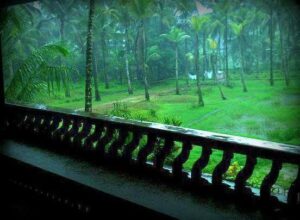
October — Outstanding: Post-monsoon Kerala at its most lush. Green so vivid it looks processed. Waterfalls at maximum flow. Backwaters full. October is the state’s best-kept seasonal secret — peak conditions without peak December pricing. Strongly recommended for any first-time visitor with flexible dates.
November — Exceptional: My personal favourite month for Kerala across all destination types simultaneously. Cool temperatures, full water, manageable crowds, pre-peak pricing. The single month I recommend unreservedly to every traveler.
December — Festive and Beautiful: Kerala at its busiest and most energetic. Christmas celebrations in the Christian communities of Kochi and Kottayam add a distinctive cultural dimension. Hotels fill 4–6 weeks ahead. Prices are 40–60% above shoulder season rates. Book everything well in advance.
January — Peak Season: Perfect weather, maximum crowds, highest prices across every accommodation category. Worth visiting for the conditions — just budget and book accordingly. January is genuinely Kerala’s finest weather month.
February — Peak Softening: Conditions remain excellent. Prices begin easing from January highs. Crowds slightly reduced. A very good month to visit, particularly if January pricing was prohibitive.
March — Shoulder Sweet Spot: Good weather, post-peak pricing, manageable crowds. One of the best budget months for Kerala travel. Temperatures begin rising in coastal areas but remain comfortable in the hills.
April — Late Shoulder: Early April is comfortable across most Kerala destinations. Late April sees heat building in the plains and coastal areas. Thrissur Pooram typically falls in this window — if cultural travel motivates you, plan your entire trip around this festival.
May — Transitional: Heat builds significantly in coastal and plains areas. Comfortable only in Munnar and Wayanad at altitude. Accommodation prices drop ahead of monsoon. Paragliding at Vagamon operates optimally in this window.
June to September — Monsoon: Kerala’s monsoon is genuine — heavy sustained rain that makes some mountain roads challenging and reduces certain activities. However, the landscape during monsoon is extraordinary — the particular electric green that Kerala’s vegetation reaches in monsoon light exists at no other time of year. Ayurvedic treatment centres specifically recommend this season. Prices drop 40–50% across all accommodation categories. Viable for travelers who research specific destination conditions and embrace the rain as part of the experience rather than treating it as an obstacle.
7-Day Kerala Itinerary {#itinerary}
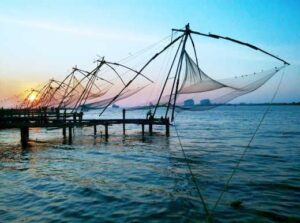
Day 1 — Fort Kochi Arrival Fly into Cochin airport. Ferry to Fort Kochi (₹5 from Ernakulam Jetty). Heritage walk — Dutch Palace (₹5), Mattancherry lanes (free), Chinese fishing nets at sunset (free). Filter coffee from a traditional tea shop. Kerala Kathakali performance (₹300–₹500). Overnight Fort Kochi. Daily transport + activity spend: ₹500–₹800
Day 2 — Fort Kochi Deep Dive + Cherai Beach Early morning: Chinese fishing nets at 6 AM before the tour buses arrive — the light at this hour is extraordinary and the scene is yours alone. Mid-morning: Cherai Beach day trip via Vypeen ferry (₹4) + auto (₹250). Afternoon at the beach. Evening: return to Fort Kochi for the Canal Road restaurant strip. Overnight Fort Kochi. Daily spend: ₹400–₹700
Day 3 — Alleppey Backwaters Shared jeep or KSRTC to Alleppey (₹80–₹120, 2 hours). Houseboat boarding at noon (pre-booked 3 weeks ahead). Afternoon on the backwaters — narrow canal route requested at booking. Sunset from the deck. Kerala fish curry dinner on board. Overnight on the houseboat. Daily spend: ₹4,000–₹8,000 including houseboat
Day 4 — Alleppey to Thekkady Dawn on the backwaters. Disembark 9 AM. Government ferry to Kottayam (₹15, 2.5 hours of backwater scenery). Connect by bus or taxi to Thekkady (2.5 hours). Check in. Evening spice plantation walk (₹300). Overnight Thekkady. Daily spend: ₹800–₹1,500
Day 5 — Periyar + Munnar Drive 7 AM Periyar Lake boat safari (₹200). Morning in the wildlife reserve. Post-lunch drive to Munnar (3.5 hours of spectacular mountain road). Check in. Sunset at Mattupetty Dam. Overnight Munnar. Daily spend: ₹500–₹1,000

Day 6 — Munnar Tea Estates Pre-dawn alarm: 5:30 AM for tea estate guided walk (₹400, arrange through your homestay). Eravikulam National Park (₹115, pre-booked online). Afternoon: Top Station viewpoint (₹30). Overnight Munnar. Daily spend: ₹600–₹1,200
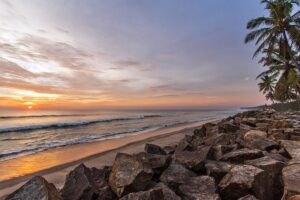
Day 7 — Varkala + Departure Early bus or taxi to Varkala (4.5 hours). Clifftop lunch. Sunset from the cliff edge over the Arabian Sea. Train or taxi to Thiruvananthapuram for departure flight. Or extend by one night for a proper Varkala morning. Daily spend: ₹500–₹1,000
Want this entire itinerary handled without any of the logistics? The Tripyverse Kerala Escape 4N/5D Package covers the essential circuit with accommodation and transfers arranged. The Tripyverse Kerala 5N/6D Package extends this to a more comprehensive experience. For the full southern sweep including Kanyakumari, the Tripyverse Kerala Kanyakumari Explorer 6N/7D is the most ambitious and rewarding option. For couples, the Tripyverse Kerala Honeymoon Package builds the most romantic version of this journey with private houseboat nights and clifftop stays carefully selected.
Budget Breakdown {#budget}

| Expense Category | Budget Option | Mid-Range | Luxury |
| Flights (return per person) | ₹3,500–₹7,000 | ₹8,000–₹12,000 | ₹15,000+ |
| Accommodation — 7 nights | ₹6,000–₹14,000 | ₹21,000–₹42,000 | ₹70,000+ |
| Transport within Kerala | ₹1,200–₹2,000 | ₹5,000–₹9,000 | ₹15,000+ |
| Food — 7 days | ₹2,800–₹4,500 | ₹7,000–₹14,000 | ₹20,000+ |
| Activities & Attractions | ₹2,000–₹4,000 | ₹8,000–₹15,000 | ₹25,000+ |
| Houseboat (1 night) | ₹3,500–₹5,000 | ₹8,000–₹12,000 | ₹20,000+ |
| Total Per Person | ₹19,000–₹36,500 | ₹57,000–₹1,04,000 | ₹1,65,000+ |
Where to save: KSRTC buses over private taxis, government ferries over private boats, canal homestays over houseboats, local restaurants over tourist-facing cafés, weekday visits over weekend peak pricing.
Where to splurge: The houseboat experience (this is the Kerala moment that justifies the entire trip), Eravikulam National Park at dawn, one clifftop dinner at Varkala, and the Karimeen Pollichathu at a backwater restaurant with a direct water view.

Final Verdict — Honest Assessment of Kerala Travel {#verdict}
Kerala is the most rewarding travel destination in India for travelers who prepare well and the most consistently disappointing for those who don’t. That gap — between prepared and unprepared — is wider here than in almost any other Indian state, and the tips in this guide exist entirely to put you on the right side of it.
The state’s rewards are genuine and extraordinary. The backwaters at dawn are unlike anything else in India. The tea estate mist in Munnar at 6 AM produces moments that stay with you permanently. The fish curry in a backwater homestay kitchen, eaten at a plastic table with your feet slightly damp from the canal path outside, is one of the finest meals India produces at any price point. The Chinese fishing nets at Fort Kochi in the last light of a January evening are among the most beautiful things I have witnessed in this country.
One honest drawback that requires naming clearly: Kerala in peak season (December–January) is increasingly crowded at its headline destinations. The Alleppey canal that is magical in October can feel like a floating traffic jam in December. The Munnar viewpoints that produce extraordinary photographs in November are selfie-crowd battlegrounds on January weekends. Traveling in October, November, or March resolves most of this — but requires the flexibility to plan outside the standard holiday windows.
Kerala travel tips work best for: First-time visitors who want to avoid the mistakes that veterans made so you don’t have to, repeat visitors who know the headline attractions and want to maximize the hidden layer, budget travelers who want to extract maximum experience per rupee, and couples and honeymooners who want the most romantic version of the state’s offerings.
You may find Kerala challenging if: You’re unwilling to engage with cash-based economies, prefer air-conditioned comfort at all times, or are traveling with children under 8 on an itinerary that includes mountain roads and boat-heavy transport. Adjusting the itinerary toward more urban Kerala (Fort Kochi, Thrissur, Kozhikode) makes the destination entirely family-friendly.
For the food dimension of everything this guide covers — the fifteen traditional dishes, the specific restaurant recommendations, and the food geographic knowledge that makes Kerala eating genuinely extraordinary — our Kerala Food Guide 2026: Traditional Dishes You Must Try is the essential companion read. And for the off-beaten-path experiences beyond the standard circuit — Munroe Island, Palaruvi, Vagamon, Silent Valley — our Hidden Places in Kerala 2026: Secret Gems covers every destination with the same level of honest, practical detail.
Planning to extend your India trip internationally? Cochin to Dubai is 3 hours by air — and Dubai’s extraordinary food scene, covered in our Dubai Food Guide 2026: Best Street Food & Restaurants, makes a compelling case for a culinary extension that contrasts Kerala’s coconut-forward tradition with the Arabic, Levantine, and Indian diaspora food culture of the Gulf. The traveler who eats their way through Kerala’s backwater kitchens will find Dubai’s Deira food streets an extraordinarily natural next chapter.
And for the mountain counterpart to Kerala’s tropical south — our Manali Travel Guide — 7 Best Places + Hidden Gems (2026) and our curated Secret Places in Manali — 7 Hidden Gems You Must Visit in 2026 complete the picture of India at its most diverse — from the Arabian Sea at Varkala to the snow-covered passes above Manali in one extraordinary country.