

📋 TABLE OF CONTENTS
- I Spent 4 Days in Delhi. Here’s What Actually Happened.
- Where Is Delhi?
- How To Get To Delhi
- Getting Around — Metro, Autos & Everything In Between
- Where To Stay: Budget Hostels to Heritage Luxury
- What I Did Every Day — Experiences Worth Your Time
- Practical Travel Tips I Wish I’d Known
- Best Time To Visit Delhi
- My Exact 4-Day Itinerary with Daily Costs
- Complete Honest Budget Breakdown
- Final Verdict — Worth It, With Caveats
- 🏛️ I Spent 4 Days in Delhi. Here’s What Actually Happened.
Day one, I made every mistake a first-timer makes in Delhi.
I arrived at Indira Gandhi International at 11 AM on a Tuesday, took the Airport Metro Express into the city (₹60, 20 minutes — I got that part right), got disoriented in Paharganj for 45 minutes despite having Google Maps open, and then immediately went to the Red Fort at peak afternoon heat because I thought I was being efficient. By 3 PM I was sitting on a stone step inside Humayun’s Tomb, drenched, slightly dazed, eating a glucose biscuit from my bag and reconsidering my decisions.
By Day 4, I had figured out the rhythm. Early mornings for monuments. Late afternoons for markets. Evenings for food. Nights for the calmer side of the city that most visitors never find. And somewhere between the paratha at Paranthe Wali Gali on Day 2 and the Thursday evening qawwali at Nizamuddin Dargah on Day 3, Delhi stopped being a city I was trying to navigate and became one I was genuinely enjoying.
This guide is what I wish someone had handed me at the airport. Honest, practical, and specifically written for both budget travellers and anyone willing to spend more for a different experience of the same extraordinary city.
- 📍 Where Is Delhi?
Delhi sits at the northwestern edge of the Indo-Gangetic Plain, straddling the Yamuna River, and functions as India’s national capital and largest metropolitan region — population somewhere north of 32 million. It’s roughly 1,400 km north of Mumbai, 1,500 km from Kolkata, and about 250 km from the nearest Himalayan foothills. It’s the hub from which the rest of northern India radiates: Agra is 200 km south, Jaipur 270 km west, Rishikesh 250 km north. What makes Delhi genuinely unusual as a travel destination is that beneath its modern sprawl lie at least seven distinct historical cities built by successive empires — Sultanate, Mughal, British — and most of their ruins are still standing, still accessible, and still strikingly undervisited once you leave the standard tourist circuit.
- ✈️ How To Get To Delhi
By Air: Indira Gandhi International Airport (DEL) is one of Asia’s major aviation hubs. Direct flights arrive from every Indian metro and most international cities. From Mumbai: ~2 hours, ₹2,500–6,000. From Bangalore: ~2.5 hours, ₹3,000–7,000. From Chennai: ~2.5 hours, ₹3,000–7,500. From Varanasi: ~1.5 hours, ₹2,500–6,000.
Best airport transfer: The Airport Metro Express from Terminal 3 to New Delhi Railway Station takes exactly 20 minutes and costs ₹60. It’s air-conditioned, reliable, and infinitely better than negotiating with taxis in arrival traffic. This is the one piece of Delhi advice I give to everyone.
By Train: New Delhi, Hazrat Nizamuddin, and Delhi Junction stations connect to every major Indian city. From Varanasi: 11–13 hours overnight (₹400–1,400). From Jaipur: 2.5–3 hours (₹200–700). From Mumbai: 15–16 hours (Rajdhani, ₹1,500–4,500). Overnight trains from further cities save accommodation costs.
By Road: From Jaipur by Volvo bus: 5–6 hours, ₹700–1,200. From Chandigarh: 3.5–4 hours. From Agra: 3–4 hours.
| Mode | From Mumbai | From Varanasi | From Jaipur |
| Flight | ₹2,500–6,000 / 2 hrs | ₹2,500–6,000 / 1.5 hrs | ₹2,000–5,000 / 1 hr |
| Train | ₹1,500–4,500 / 15 hrs | ₹400–1,400 / 12 hrs | ₹200–700 / 3 hrs |
| Bus | Not practical | Not practical | ₹700–1,200 / 5.5 hrs |
- 🚗 Getting Around Delhi — Metro, Autos & Everything In Between
I used four different transport modes over four days, and they each had a clear purpose.
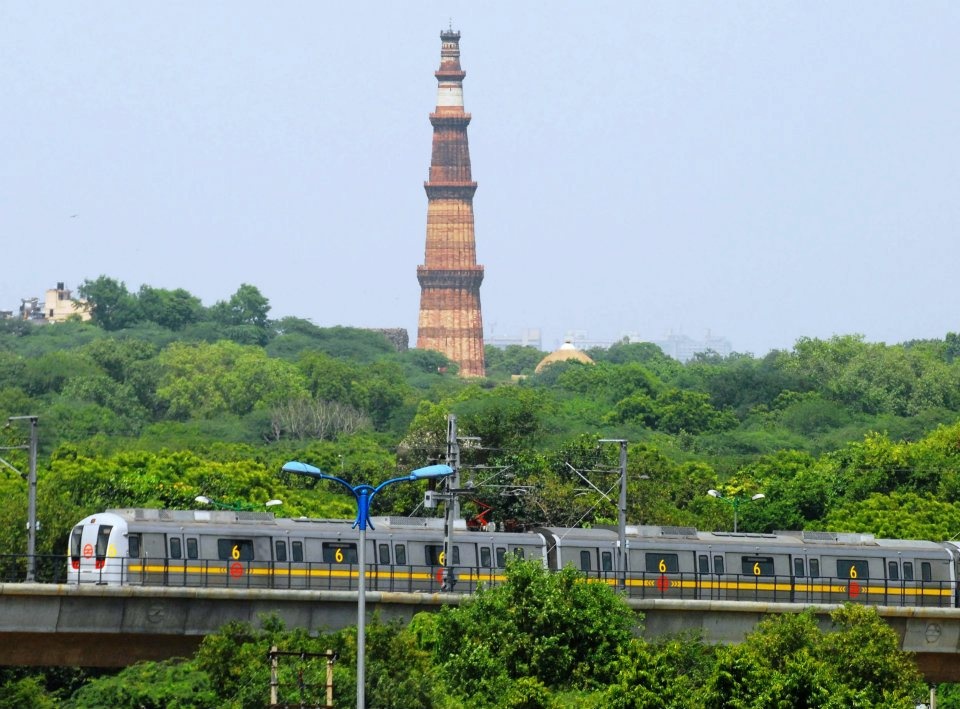
Delhi Metro: My primary vehicle for everything. Covers all the areas you’ll actually want to visit — Old Delhi (Chandni Chowk station), Connaught Place (Rajiv Chowk), Lodi Colony (JLN Stadium), Hauz Khas (Hauz Khas station), South Extension, Airport. Fares: ₹10–60 per journey. A Tourist Day Pass costs ₹150–200 and pays off on any day where you’re moving between more than three areas. Download the Delhi Metro Rail app before you arrive — it has real-time train schedules and accurate route planning.
Ola Auto / Uber Auto: Essential for last-mile from Metro stations and for any route the Metro doesn’t reach directly. Always book through the app — the in-app meter means no negotiation needed and no fare surprises. ₹80–200 for most short trips.
Cycle rickshaws: The only practical option inside Old Delhi’s gallis — the lanes near Chandni Chowk, Kinari Bazaar, and around Jama Masjid are too narrow for anything else. ₹50–80 for short distances.
Ola/Uber (car): Best for late-night returns, airport runs, and the occasional route where comfort matters more than cost. ₹150–400 for most intra-Delhi trips.
First-timer difficulty: Low to moderate. The Metro makes the city genuinely navigable. Old Delhi is the only area that requires patience and an offline map.
- 🏨 Where To Stay in Delhi — Budget Hostel to Heritage Palace
I stayed in two different accommodations over four days — a hostel for the first two nights when I wanted company and metro proximity, and a mid-range South Delhi guesthouse for the last two nights when I wanted quiet and character. Both were the right call for different reasons.
Best area for budget: Paharganj (walking distance from New Delhi station, dense with hostels, noisy but functional) or Karol Bagh (slightly calmer, well-Metro-connected).
Best area for mid-range and luxury: South Delhi — Hauz Khas, Lodi Colony, Defence Colony. Better restaurants, calmer streets, excellent Metro access.
Budget (₹700–2,000/night)
Zostel Delhi (Paharganj): The most consistent hostel in Delhi — dorm beds from ₹700, private rooms from ₹1,500. Common area is social and well-maintained. Walking distance from New Delhi station. Staff are knowledgeable about the city and regularly organise group outings. I spent my first night here and it was exactly what I needed to calibrate.
Jugaad Hostel (Hauz Khas): Better location than Paharganj if you’re focused on South Delhi experiences. Dorms from ₹900, more intimate common space, closer to the Hauz Khas café and restaurant strip.
Mid-Range (₹3,000–8,000/night)
The Mango Tree (Malviya Nagar): A boutique guesthouse with 8 individually designed rooms and a rooftop breakfast that’s genuinely good — fresh fruit, eggs, strong coffee. From ₹3,500. The staff organised a cycle rickshaw tour of Old Delhi for me at no extra cost. This is where I stayed for my last two nights and I’d go back.
Bloom Rooms @ Link Road (Malviya Nagar): Clean, modern, Metro-accessible. From ₹4,000. Good for those who want a straightforward base without personality quirks.
Luxury (₹15,000+/night)
The Imperial (Janpath, New Delhi): Built in 1931, still operating as Delhi’s most iconic heritage hotel. Art Deco corridors, original colonial furniture, a collection of historical prints and maps in the hallways, restaurants that take Indian food seriously, and a pool. From ₹18,000/night. Walking distance from Connaught Place. If you can justify the price once, this is the place to justify it.
The Lodhi (Lodi Road): Contemporary luxury in a stunning property surrounded by the Lodi heritage zone. Every room has a private pool option. The spa is excellent. Breakfast on the terrace overlooking the gardens is an experience. From ₹22,000/night. Wake up and walk 10 minutes to Lodi Garden at sunrise — this is as good as Delhi gets.
- 🏛️ What I Did Every Day — Experiences Worth Your Time
Humayun’s Tomb at 7 AM — Before Anyone Else Arrives
I went on Day 2 and I went early. This 1570 Mughal tomb — the direct architectural template for the Taj Mahal, built with red sandstone and white marble inlay — is one of the finest buildings in India by any measure. At 7 AM, the Charbagh (the symmetrical Persian garden) was empty and damp with dew, the light was coming in at an angle that made the marble insets glow, and a pair of parakeets were doing circuits of the main dome. Entry ₹35 for Indians.
What most people miss: Walk past the main tomb to the back of the complex — Isa Khan’s octagonal tomb and enclosure is a separate 16th-century monument that is frequently completely empty and architecturally extraordinary. Allow 2 hours for the whole complex.
Chandni Chowk and the Old Delhi Bazaars — Go on a Weekday
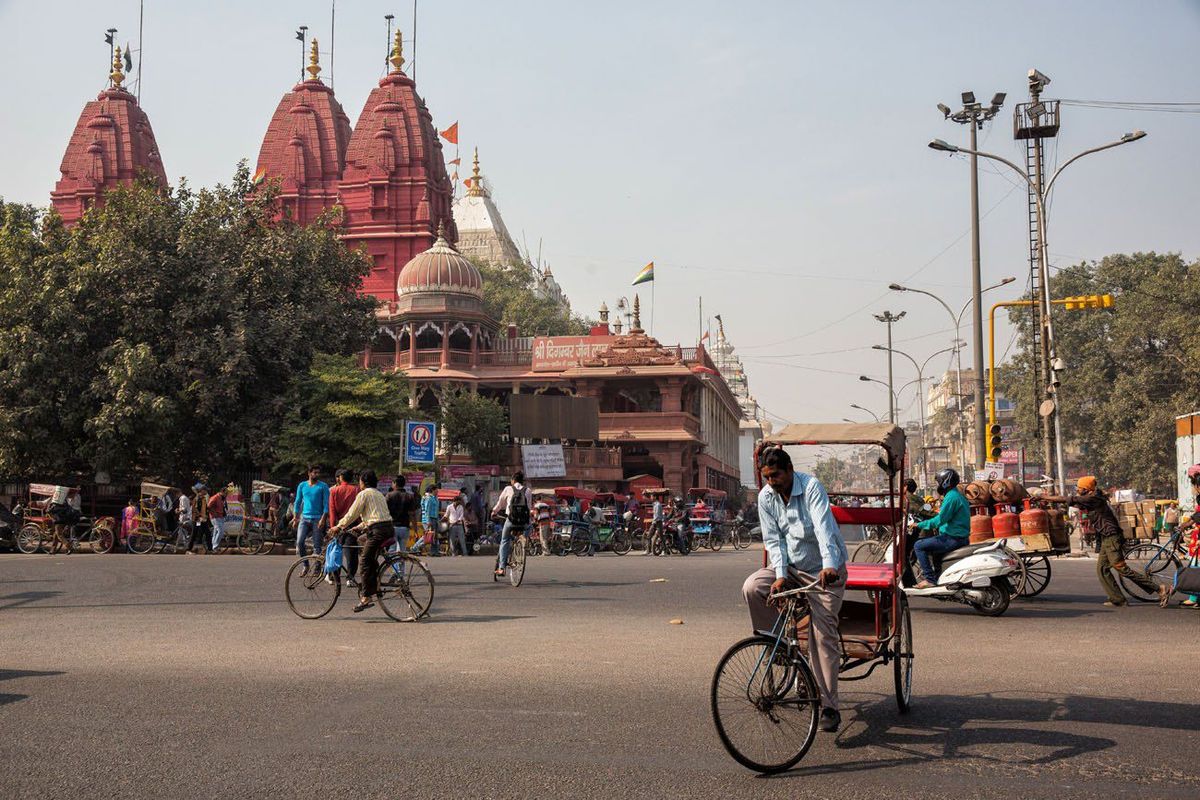
I went on Day 1 (a Wednesday morning) and returned on Day 3 for the food. The 17th-century boulevard commissioned by Shah Jahan is chaotic and brilliant and overwhelming in the best way. The street itself is less interesting than what’s off it. Turn into Kinari Bazaar (wedding accessories, silver borders, incense) and Dariba Kalan (Delhi’s silver jewellery street), walk to the end of the market toward Khari Baoli — Asia’s largest spice wholesale market — where the smell of cardamom, cumin, and dried chillies hits you from a street away.
Honest warning: Chandni Chowk on a Sunday afternoon in peak season is genuinely difficult to enjoy. The crowd density becomes oppressive. Weekday mornings are the correct time.
Paranthe Wali Gali — The Only Breakfast That Matters
An alley in Chandni Chowk where, for over 200 years, families have made stuffed paranthas in generous quantities of ghee. The options run from classic aloo and paneer to dried fruit, rabri (sweetened condensed milk), and combinations that sound wrong and taste right. I had the paneer-aloo combination on Day 1 and then returned on Day 3 for the rabri parantha because I couldn’t stop thinking about it. ₹80–150 per parantha. Eat standing at the stall — that’s the right way.
Lodi Garden — Delhi’s Most Consistently Ignored Treasure
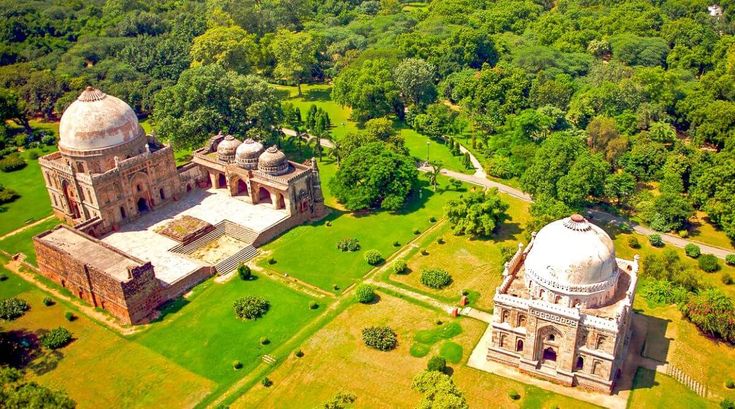
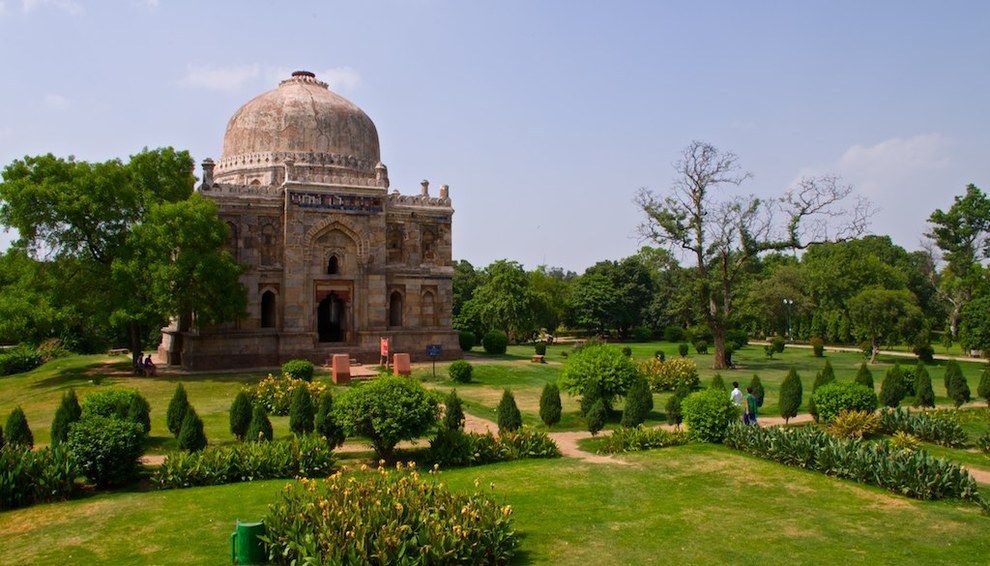
Ninety acres of public park containing multiple 15th and 16th-century Lodi dynasty garden tombs — the Mohammed Shah Tomb, the Bada Gumbad, the Shish Gumbad — surrounded by mature trees, morning joggers, and yoga groups who are fully indifferent to the historical significance of the structure they’re stretching next to. Free entry. I went at 6:30 AM on Day 2 before Humayun’s Tomb, and the combination of cool air, empty paths, and a medieval dome glowing in morning light remains the most beautiful single hour I spent in Delhi.
Karim’s — Mughal Food Unchanged Since 1913
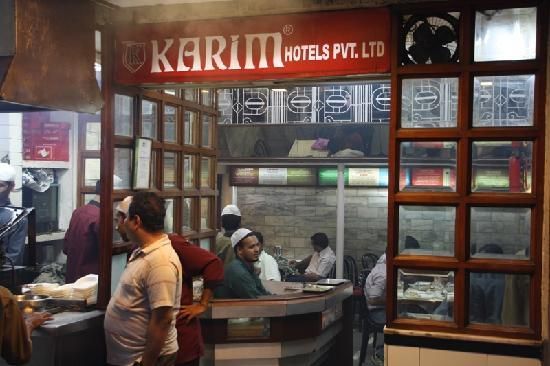
This is not a discovery; it’s an institution. But I’m including it because the number of Delhi visitors who skip it in favour of a more Instagram-friendly restaurant is genuinely unfortunate. Karim’s was started in 1913 by a family of royal Mughal cooks who found themselves without employment when the court disbanded. The nihari (slow-cooked mutton stew with bone marrow, eaten with kulcha bread), the mutton korma, and the seekh kebabs are extraordinary — a direct lineage to Mughal royal cooking that has not been modernised or softened. Tucked in a galli near Jama Masjid. Cash only. Communal seating. Budget ₹400–700 for a full meal.
Nizamuddin Dargah on a Thursday Evening
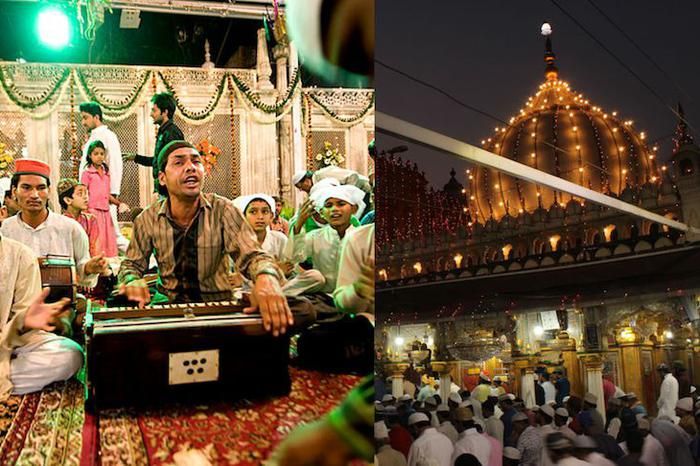
I’d planned to go for thirty minutes. I stayed for two hours.
The shrine of the Sufi saint Hazrat Nizamuddin Auliya draws visitors and devotees every day, but Thursday evenings — when qawwali (devotional Sufi music) is performed in the courtyard — are extraordinary. The music is call-and-response, melodic and physically arresting, performed by musicians who have grown up doing this. The sound bounces off the marble walls of the courtyard, which is lit by strings of lights and filled with people sitting, swaying, in various states of absorption. Entry is free and open to everyone regardless of religion.
If you do nothing else on your Delhi trip, try to schedule your visit to include a Thursday. Getting there: walk from Nizamuddin East or take an auto from Jangpura Metro. Enter through the bazaar lane. Cover your head (scarves available at the entrance).
Agrasen ki Baoli — 14th Century Stepwell in Central Delhi

Less than 500 metres from the glass and steel of Connaught Place, down an easily missed alley, a 60-metre-deep 14th-century stepwell descends through 11 storeys of stone galleries. It’s completely free, frequently uncrowded (especially on weekday mornings), and visually one of the most dramatic places in Delhi. The arched galleries recede symmetrically as you descend — it photographs extraordinarily well and feels architecturally unlike anything else in the city.
Mehrauli Archaeological Park — 100 Monuments, Almost No Tourists
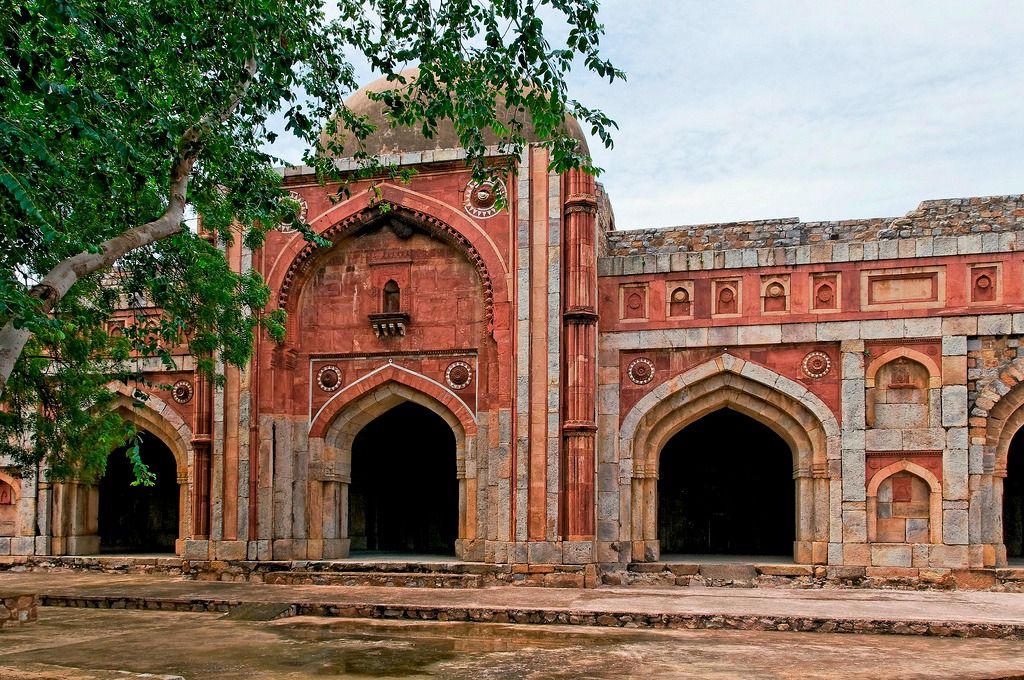
Adjacent to the Qutb Minar complex, this 200-acre park contains over 100 medieval structures — tombs, mosques, water tanks, pavilions — from the Sultanate and early Mughal periods. Almost all of them are unlabelled. Almost no one visits. I spent 90 minutes walking paths I had entirely to myself, encountering extraordinary ruins every ten minutes, including the Jamali Kamali mosque (16th century, with surviving decorative tilework and painted interior) and a half-dozen tombs I never identified that were architecturally significant and completely unvisited. Free entry from the Mehrauli village side.
The Lodhi Colony Street Art District
The residential colony’s building facades have been covered by the St+art India Foundation with large-scale murals from Indian and international artists — building-sized works, technically accomplished, genuinely varied in style. It’s free, walkable, and best photographed in morning or golden hour light. Metro: JLN Stadium. One hour is enough; ninety minutes is better.
- 💡 Practical Travel Tips I Wish I’d Known
Cash and UPI: Delhi is comfortable with both. Most mid-range restaurants, hotels, and the Metro accept cards and UPI without issue. Old Delhi markets, street food stalls, cycle rickshaws, and the Karim’s cashier prefer cash. Carry ₹2,000–3,000 at all times. ATMs are widely available near all Metro stations.
Delhi’s air quality: This is not a minor footnote — it’s a genuine planning consideration. From November through February, Delhi’s AQI regularly exceeds 300 (hazardous range). If you have asthma, respiratory conditions, or sensitivity to pollution, plan your visit for March–April or October. Winter Delhi is cold, photogenic, and atmospheric — but the air quality is a real health issue, not a travel-blog disclaimer to ignore.
Safety: Delhi is broadly safe for tourists during the day and in known areas. After dark, use Ola/Uber rather than street autos, especially for solo female travellers. Paharganj’s deeper lanes at night are best avoided. The Metro is safe at all hours.
SIM and internet: Pick up an Airtel or Jio tourist SIM at the airport arrivals hall. ₹200–350 for 28 days with 1.5–2 GB/day data. Coverage throughout Delhi is excellent. Signal can be weak on the deepest Metro platforms.
Scam awareness: The most common Delhi tourist scam is being told your hotel has “closed” or “flooded” or “burned down” by a helpful stranger at the train station, who then offers to take you to a better one (from which they get a commission). Know your accommodation address before you land and use Google Maps to navigate there yourself.
- 📅 Best Time To Visit Delhi
| Month | Temperature | Air Quality | Visit Verdict |
| January | 7–19°C | Very Poor | Skip if respiratory concerns |
| February | 10–23°C | Poor | Improving — acceptable |
| March–April | 22–36°C | Good | ✅ Best months |
| May–June | 36–47°C | Moderate | Too hot for comfort |
| July–September | 28–38°C, monsoon | Good | Humid but monuments are lush |
| October | 22–34°C | Moderate | ✅ Good — second-best window |
| November | 14–28°C | Deteriorating | Diwali festive but smog building |
| December | 8–19°C | Very Poor | Cold and foggy; pollution peaks |
Go in: March, April, or October. These months give you clear skies, manageable heat, and the city at its most functional and photogenic.
- ⏳ My Exact 4-Day Delhi Itinerary with Daily Costs
Day 1: Old Delhi Immersion
- 7:00 AM: Chandni Chowk walk before the heat builds. Cross the road to Fatehpuri Masjid at the far end.
- 8:30 AM: Paranthe Wali Gali breakfast. ₹150.
- 10:00 AM: Jama Masjid — courtyard, minaret climb (₹100 camera fee), rooftop view.
- 1:00 PM: Karim’s for lunch. ₹500.
- 3:00 PM: Rest. (Seriously. Delhi afternoon heat needs respecting.)
- 5:30 PM: Agrasen ki Baoli — free, 15 minutes from Connaught Place by Metro.
- 7:30 PM: Connaught Place evening — Saravana Bhavan for budget dinner (₹200) or a CP restaurant for mid-range (₹600–1,000).
- Daily spend: ₹2,000–3,500 (hostel ₹700)
Day 2: Mughal Monuments + Lodi Garden
- 6:30 AM: Lodi Garden at sunrise. Free. Take 60–90 minutes.
- 9:00 AM: Humayun’s Tomb (₹35) including Isa Khan’s Tomb and Sunder Nursery (free, adjacent).
- 1:00 PM: Lunch in Nizamuddin area — local biryani stall, ₹150–200.
- 3:00 PM: Qutb Minar complex (₹35). Early afternoon light on the minaret is excellent.
- 5:00 PM: Walk into Mehrauli Archaeological Park from the Qutb side gate. Free.
- 7:30 PM: Hauz Khas Village for dinner on a rooftop. ₹600–1,200.
- Daily spend: ₹2,000–4,000
Day 3: South Delhi + Street Art + Thursday Qawwali
- 9:00 AM: Lodhi Colony street art walk. Free. 90 minutes.
- 11:00 AM: Khan Market — Bahrisons bookshop, browsing, filter coffee.
- 1:00 PM: INA Market food exploration + Kerala House thali (₹200).
- 3:00 PM: Dilli Haat (₹30 entry). Regional crafts from every Indian state.
- 6:30 PM: Nizamuddin Dargah for the Thursday qawwali. Free.
- 9:00 PM: Dinner near Jangpura or back in your area of stay.
- Daily spend: ₹1,500–3,000
Day 4: Agra Day Trip OR Final Delhi Exploration
Option A — Agra: The Gatimaan Express from Hazrat Nizamuddin to Agra Cantt takes 100 minutes (₹755 in CC class). If you’re planning the full Delhi–Agra–Jaipur route, the Tripyverse Golden Triangle package handles logistics across all three cities and removes the complexity of booking trains and accommodation between them.
Option B — More Delhi: Akshardham Temple (free entry to main temple) + Majnu Ka Tilla for momos (₹80–120) + Khari Baoli spice market if you missed it + Sunday Book Market at Daryaganj if it’s Sunday.
Daily spend: ₹1,500–3,500
If Delhi has ignited your appetite for North India’s depth, the Varanasi travel guide 2026 pairs naturally as an onward destination — ancient in a completely different register, and reachable overnight by train from Delhi. And if you want something opposite in every way — mountains, rapids, café culture — the Rishikesh guide is just 250 km north.
- 💰 Complete Honest Budget Breakdown
| Category | Budget Traveller | Mid-Range | Luxury |
| Accommodation (4 nights) | ₹2,800–5,600 | ₹12,000–24,000 | ₹60,000–1,00,000 |
| Food (4 days) | ₹1,200–2,400 | ₹3,000–6,000 | ₹8,000–20,000 |
| Airport Metro + Metro (4 days) | ₹460–700 | ₹700–1,200 | ₹1,000–2,000 |
| Autos/Uber (4 days) | ₹600–1,200 | ₹1,200–2,500 | ₹3,000–6,000 |
| Monument entries (all 4 days) | ₹200–400 | ₹400–600 | ₹600–1,000 |
| Shopping/markets/books | ₹500–1,500 | ₹2,000–6,000 | ₹10,000–50,000 |
| Activities (qawwali, boat etc.) | ₹100–300 | ₹300–600 | ₹1,000–3,000 |
| Miscellaneous (chai, tips etc.) | ₹300–600 | ₹600–1,200 | ₹1,500–3,000 |
| Total 4-Day Trip | ₹6,160–12,700 | ₹20,200–42,100 | ₹85,100–1,85,000 |
Where to save in Delhi: Free monuments are extraordinary — Lodi Garden, Mehrauli Archaeological Park, Sunder Nursery, Agrasen ki Baoli, and Lodhi Colony street art together constitute a full day of exceptional experiences at zero cost. Eat at Saravana Bhavan, INA Market Kerala House, or Old Delhi dhabas. Use the Metro for everything.
Where to splurge: One night at The Imperial for the architecture and history — walk the corridors, have breakfast, swim in the pool, and you’ll understand why it has been the address of choice for visiting heads of state since 1931. And if Thursday evening lines up with your itinerary, the Nizamuddin qawwali is free — but arriving by Uber from a nice South Delhi restaurant, spending two hours in that courtyard, and returning to a good hotel makes it feel like the best evening you’ve spent anywhere.
- 🤔 Final Verdict — Worth It, With Caveats
Four days in Delhi is enough to get your bearings and form a genuine opinion. It is not enough to know the city. I knew this going in, and the four days confirmed it: Delhi is the kind of place that rewards return visits specifically because it’s so layered that no single trip covers more than a fraction of what’s there.
What genuinely impressed me: The density of free, extraordinary, and undervisited heritage experiences. Mehrauli Archaeological Park. Lodi Garden. Sunder Nursery. Agrasen ki Baoli. The Thursday qawwali at Nizamuddin. These are experiences that would be headlining tourist attractions in any other country — in Delhi, they’re largely walked past by the visiting public and left for the curious to discover.
The honest drawback: Delhi’s air quality in winter (November–February) is a genuinely serious issue. I’m not mentioning it to be responsible — I’m mentioning it because I spent half of one of my four days with a headache I attributed to the pollution rather than exertion, and the AQI that day was around 280. That’s not a comfortable travel experience. Time your visit accordingly.
Perfect for: History and heritage enthusiasts, serious food travellers (Delhi is arguably India’s finest city for food variety and quality), first-time North India visitors, Golden Triangle circuit travellers starting their journey, solo travellers building a longer itinerary, and anyone who wants to understand what “layers of civilisation” actually means as a physical, walkable reality rather than a textbook phrase.
Might not suit: Travellers visiting only in summer (May–June — the heat is extreme), those with respiratory conditions planning a winter visit, anyone expecting order and quiet (Delhi is magnificent but never either of those things), and travellers who prefer beach or mountain settings. For hill station alternatives, the Shimla guide and the Andaman guide offer completely different versions of what India does well.
Delhi doesn’t meet you halfway. Go to meet it.