


Table of Contents
- Introduction — The Morning That Settled the Question
- Where Is Rishikesh Located?
- How To Get To Rishikesh
- Getting Around Rishikesh
- Where To Stay in Rishikesh
- Top Things To Do — Adventure, Spirituality & Food
- Practical Travel Tips
- Best Time To Visit Rishikesh
- Suggested Itinerary — 4 Days
- Budget Breakdown
- Final Verdict
- SEO Tags
- Pinterest & Image Strategy
- 🌴 Introduction — The Morning That Settled the Question {#intro}
I was sitting on the steps of Triveni Ghat at 5:30 AM, watching the Ganges catch the first light. The river was green and fast and cold-looking, the colour of deep glacier water, which is exactly what it is — snowmelt from 250 km north, still carrying the chill of the Himalayas. Bells were ringing somewhere upstream. A group of sadhus in saffron walked past without acknowledging anyone. A dog sat next to me with complete conviction that this was his spot and I was a temporary inconvenience.
I had come to Rishikesh expecting the postcard version — yoga retreats, bungee jumps, Instagram ashrams, and chai by the river. I got all of that. But I also got the 5:30 AM version that nobody posts: the town before it wakes, the Ganges before the tourists arrive, the specific quality of silence that exists in a place where people have been coming to find something important for several thousand years.
Rishikesh in 2026 holds both versions simultaneously — the adventure capital and the spiritual heart — and navigating between them is the real art of the trip. This guide covers both.
- 📍 Where Is Rishikesh Located? {#location}
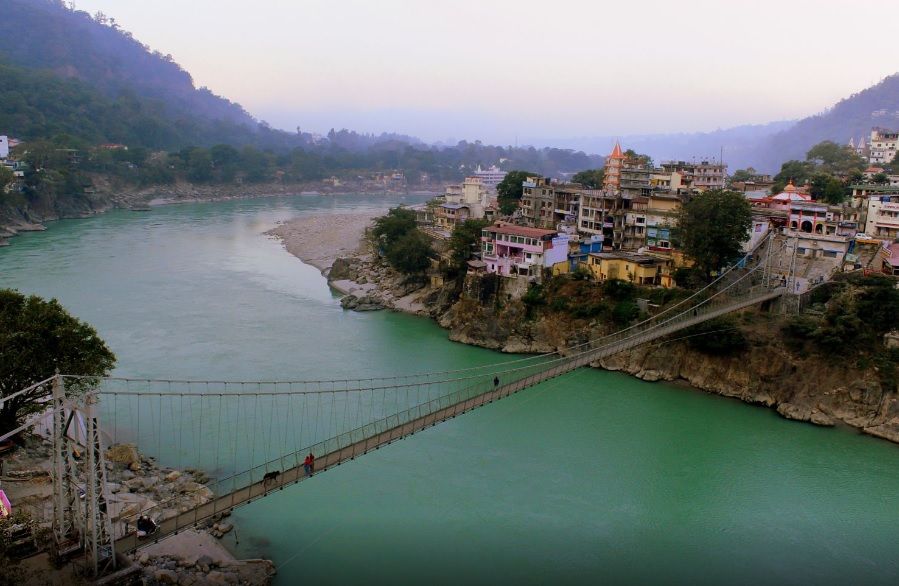
Rishikesh sits at 356 metres above sea level in the Uttarakhand foothills, at the point where the Ganges descends from the Himalayas onto the plains. It’s 43 km north of Haridwar, 250 km north of Delhi, and serves as the gateway to the Char Dham pilgrimage circuit — Badrinath, Kedarnath, Gangotri, and Yamunotri — making it simultaneously a pilgrimage hub, an adventure sports capital, and one of India’s most visited yoga destinations. The Himalayas are visible from the higher parts of town on clear mornings, which gives even an ordinary breakfast the quality of something deliberate.
- ✈️ How To Get To Rishikesh {#howtoget}
By Air: The nearest airport is Jolly Grant Airport in Dehradun (DED), approximately 35 km from Rishikesh. IndiGo, Air India, and SpiceJet operate daily flights from Delhi (45 min), Mumbai (2h), Bengaluru (2.5h), and other metros. From Jolly Grant, a prepaid taxi to Rishikesh costs ₹800–₹1,200 and takes about 45–60 minutes. Shared cabs are available for ₹200–₹300 per head.
By Train: Rishikesh Railway Station is the closest station, connected to Haridwar Junction (the major railhead, 43 km away). From Delhi, trains to Haridwar (Shatabdi Express: 4.5 hours, ₹600–₹1,100; overnight trains: 6–7 hours, ₹300–₹800) are the standard route. From Haridwar, autos and shared cabs reach Rishikesh in 45–60 minutes (₹50–₹150). Booking Haridwar-bound trains from Delhi is usually easier and cheaper than booking Rishikesh-bound.
By Road: Direct UPSRTC and UTTC buses run from Delhi ISBT to Rishikesh (₹350–₹600, 6–7 hours depending on service). Private AC Volvo buses (₹600–₹900) are more comfortable. The road journey passes through Haridwar and the Shivalik foothills — genuinely scenic in the final 80 km as the road follows the Ganges upstream. Private cabs from Delhi run ₹3,500–₹5,000 for the full journey.
Budget vs. Fast: Train to Haridwar + shared cab is the best budget combination (₹400–₹600 total from Delhi). Jolly Grant flight + taxi is fastest. Overnight bus from Delhi is cheapest and skips an accommodation night.
- 🚗 Getting Around Rishikesh {#gettingaround}
Rishikesh divides geographically into three zones that travellers need to understand before they arrive:
Rishikesh Town (lower): The commercial centre near the bus stand and railway station. Auto-rickshaws everywhere at ₹50–₹150 for in-town trips.
Laxman Jhula / Ram Jhula area (upper): The traveller hub — suspension bridges over the Ganges, ashrams, cafes, gear shops, yoga centres. About 5–6 km from the main bus stand. Auto to Laxman Jhula: ₹100–₹150. Most travellers base themselves here.
Beyond Laxman Jhula — adventure zones: Camping sites, bungee jump point, and white water rafting starting points are 12–24 km north on the Badrinath Highway. Shared jeeps run to the adventure zones (₹40–₹80/head). Private autos: ₹300–₹500 return.
Local transport options:
- Autos: Most common. ₹80–₹200 for within-town trips.
- Shared jeeps: ₹30–₹80 to adventure zones and outlying areas.
- Ola/Uber: Available but limited, particularly in the Laxman Jhula area.
- Bicycles: Rentable near Laxman Jhula for ₹150–₹200/day — excellent for the riverside roads.
- Walking: The riverside walk between Ram Jhula and Laxman Jhula (about 2 km) is one of the best walks in Rishikesh and completely free.
First-timer tip: Stay in the Laxman Jhula / Ram Jhula area. The main bus stand area is convenient for arrival and departure but has little to recommend it for daily living. Everything worth doing is upriver.
- 🏨 Where To Stay in Rishikesh {#wheretostay}
Budget (₹500–₹1,500/night):
Zostel Rishikesh is the hostel benchmark — dorm beds from ₹500, private rooms from ₹1,200, riverside location near Ram Jhula with a rooftop that has Ganga views. Bunkyard Hostel and Backpacker Panda Rishikesh are strong alternatives in the same range with slightly different atmospheres. For solo travellers and young backpackers, these properties offer the best combination of social atmosphere and Ganges proximity.
Budget guesthouses in the Laxman Jhula lanes run ₹700–₹1,400 for private doubles — some with river glimpses from upper floors. Quality varies; inspect before committing.
Mid-Range (₹2,000–₹6,000/night):
Aloha on the Ganges is the mid-range standout — well-maintained rooms, Ganges-facing balconies on upper floors, a yoga centre, and a rooftop restaurant that serves some of the better food in Rishikesh (the restaurant matters when you’re spending multiple nights). Atali Ganga Camp at Byasi, 25 km north, offers riverside tent accommodation with meals included (₹3,500–₹5,000/night) — the right choice for travellers whose primary goal is the adventure circuit.
Luxury (₹7,000–₹25,000+/night):
Ananda in the Himalayas at Narendra Nagar (24 km from Rishikesh) is one of the finest wellness resorts in Asia — genuinely so, not just by Indian standards. Tera Retreat and Rishikesh VEDA are in-town luxury properties with riverside positioning and serious yoga programmes. For couples planning a Himalayan trip that extends from Rishikesh toward Kedarnath or Badrinath, the Tripyverse Do Dham Yatra 2026 group tour combines the spiritual circuit with organised logistics in a way that independent planning rarely matches.
- 🌊 Top Things To Do in Rishikesh — Adventure, Spirituality & Food {#todo}
🌊 1. White Water Rafting — The Activity That Defines Rishikesh

The Ganges between Shivpuri (16 km north) and Rishikesh town offers one of the most accessible white water rafting experiences in India. Grade 3–4 rapids — names like “The Wall,” “Three Blind Mice,” and “Golf Course” — give enough technical challenge to feel genuinely adventurous without being dangerous for competent swimmers with proper equipment.
Full-day rafting from Shivpuri to Rishikesh (16 km): ₹700–₹1,200 per head including helmet, life jacket, and guide. Half-day from Marine Drive (9 km): ₹600–₹900. The river in September–November, post-monsoon, is at its most dramatic — high, powerful, and a deep jade-green.
Insider tip: Book directly with operators at the Shivpuri road or through your guesthouse. Avoid the extremely cheap ₹300 packages advertised in Laxman Jhula lanes — they use older equipment and have worse safety records. The ₹100–₹200 premium over the cheapest option buys measurably better equipment and guides.
🤸 2. Bungee Jumping & Swing — India’s Highest Fixed Platform Jump

Jumpin Heights at Mohan Chatti, 16 km from Rishikesh, operates India’s highest fixed-platform bungee jump at 83 metres. The platform is a cantilever over a forested ravine with a river below — the drop takes approximately 3 seconds of freefall, the emotional processing takes considerably longer.
Bungee: ₹3,550 per jump. Giant Swing: ₹3,550. Flying Fox (a longer, lower zip-line variant): ₹1,550. The operation is run professionally and the equipment is imported and regularly certified — this matters; don’t jump with operators that can’t show you certification paperwork.
Honest warning: The adrenaline is real, the drop is real, and the booking queue on weekends is also real. Arrive by 8:30–9 AM to avoid the afternoon wait. Book online in advance during peak season.
🧘 3. Yoga & Meditation — The Reason Rishikesh Has This Reputation

Rishikesh’s yoga reputation predates the Beatles’ 1968 visit (though the Beatles helped considerably) and in 2026 it remains the most concentrated yoga education environment in India. The Parmarth Niketan Ashram runs a respected yoga teacher training programme. Yoga Niketan has offered traditional Hatha yoga in a disciplined environment since 1960. The Sivananda Ashram maintains its traditional structure and is genuinely different from the commercial yoga studios that have proliferated in the Laxman Jhula tourist zone.
For travellers who want a single meaningful session rather than a full course: drop-in classes at reputable studios run ₹300–₹600 per session. Morning sessions (6–8 AM) at riverside locations, with the Ganges visible through the studio window, are the version that people remember.
Honest note: The Laxman Jhula area has many “yoga centres” that are tourism products rather than genuine practice environments. Ask where the instructor trained and how long they’ve been teaching before booking. The difference between a genuine session and a commercial one is apparent within ten minutes.
🕯️ 4. Ganga Aarti at Triveni Ghat — The Ceremony That Earns Every Word Written About It

Every evening at sunset (timing varies seasonally — approximately 6 PM in winter, 7 PM in summer), priests perform the Ganga Aarti at Triveni Ghat in Rishikesh. Large brass lamps tracing circles in the air. Marigold garlands floating on the current. Bells and conches and Sanskrit chants layering over the river sounds. The crowd ranges from devout Hindu pilgrims who’ve journeyed specifically for this to backpackers who wandered down from Laxman Jhula and aren’t sure what they’re watching but know it’s significant.
I sat at the ghat steps for the full ceremony on my second evening and the honesty of it — the complete lack of performative tourism, the genuine devotion of the priests and the pilgrims — was something I wasn’t entirely prepared for. There’s no entry fee. There’s no official photography restriction (though reading the room is advisable). Just arrive fifteen minutes early for a good position on the steps.
🏔️ 5. Kunjapuri Temple Trek — The Himalayan Sunrise Above Rishikesh

Kunjapuri Devi Temple sits at 1,676 metres, about 25 km northeast of Rishikesh, accessible by a 1.5-km trail from the road end. The trek itself is not technically demanding — 1.5 km uphill on maintained steps, about 45 minutes at a moderate pace. What you get at the top on a clear morning is a 360-degree view: the Garhwal Himalayan range to the north (Chaukhamba, Bandarpunch, Kedarnath peak visible on clear days), the Shivalik foothills descending to the plains to the south, and the Ganges threading through the valley below.
The sunrise from Kunjapuri is regularly cited as one of the best in Uttarakhand and it genuinely delivers. Depart Rishikesh by 4:30–5 AM (cab: ₹600–₹800 return) to reach the trailhead before first light.
Connection: For travellers whose Rishikesh visit forms part of a larger Char Dham or Dham Yatra circuit, the Ek Dham Yatra package on Tripyverse handles the full Kedarnath pilgrimage circuit from Rishikesh in a structured group format — including transport, accommodation, and the high-altitude trek logistics that solo planning makes genuinely complex.
🏄 6. Cliff Jumping & Kayaking at Shivpuri
Beyond the organised commercial activities, Shivpuri — the rafting launch point 16 km north — has a quieter side. A series of natural rock formations above the Ganges create platforms at 5, 8, and 12 metres for cliff jumping. Local guides charge ₹100–₹200 to show you the jumping points, which are accessible after any rafting trip by simply walking upstream along the bank.
Single-person kayak rental at Shivpuri: ₹500–₹800 per hour with basic instruction from operators who are far less commercial than the Rishikesh town outfitters. The Ganges at Shivpuri, away from the rafting crowds and the Laxman Jhula tourist circuit, feels like a river that belongs to itself rather than to the adventure industry.
🍽️ 7. Rishikesh Food — Surprisingly Good for a Vegetarian Town

Rishikesh is strictly vegetarian and alcohol-free (officially — the spiritual geography of the upper Ganges prohibits both). This constraint, rather than limiting the food options, has produced some genuinely excellent vegetarian cooking.
The German Bakery on the Laxman Jhula side has been a Rishikesh institution since before most current travellers were born — apple strudel, wholewheat bread, banana pancakes, and the specific kind of traveller café atmosphere that only comes from thirty years of consistent operations. Little Buddha Café has a riverside terrace view that makes the ₹180 thali taste better than it has any right to. Chotiwala on both sides of Ram Jhula is the tourist institution everyone photographs but fewer people actually eat at — the food is fine but the spectacle of the costumed mascot outside is the real draw.
For local Uttarakhand food: the dhabas near the bus stand serve aloo ke gutke (spiced potatoes), mandua ki roti (finger millet flatbread), and kachmauli dal that you won’t find in the cafes upriver. Worth a morning detour.
- 💡 Practical Travel Tips {#tips}
Cash vs. Card: Rishikesh is increasingly card-friendly in the Laxman Jhula tourist zone but local dhabas, auto-rickshaws, adventure operators at Shivpuri, and temple donation boxes are all cash-only. Carry ₹2,000–₹3,000 in cash at all times. ATMs are on the main road and near the bus stand — avoid the ones in Laxman Jhula lanes that often have queues or low cash levels.
Dress code: Rishikesh is a pilgrimage town. Modest clothing (covered shoulders and knees) is the correct call when visiting ghats, ashrams, and temples. The tourist strip near Laxman Jhula is more relaxed but dressing respectfully is still the right call and will get you meaningfully better interactions.
Alcohol and non-veg: Officially prohibited in Rishikesh (the alcohol ban extends to the entire Char Dham pilgrimage region). Don’t try to carry alcohol in openly. Non-vegetarian food is unavailable within the town’s official limits — plan accordingly if this matters to your diet.
Internet: Jio and Airtel both work well in Rishikesh town and the Laxman Jhula area. Coverage becomes patchy beyond Shivpuri on the Badrinath Highway.
Safety: Rishikesh is very safe. Solo women travellers consistently report positive experiences — the spiritual atmosphere creates a culture of respect that’s noticeable. Main risks: the Ganges current is powerful and faster than it looks, particularly post-monsoon; never swim in non-designated areas regardless of how calm the surface appears.
- 📅 Best Time To Visit Rishikesh {#besttime}
| Month | Weather | River | Crowds | Notes |
| January–February | Cold (5–15°C) | Low, calm | Low | Quiet, atmospheric, cold evenings |
| March | Warming (12–22°C) | Good | Low–Medium | Excellent — spring beginning |
| April | Pleasant (18–28°C) | Good | Medium | Pre-summer ideal window |
| May | Hot (25–35°C) | Excellent | High | Peak season; Char Dham begins |
| June | Hot, pre-monsoon | Rafting suspended | Very High | Avoid — extreme heat and crowds |
| July–August | Monsoon, heavy rain | Dangerous | Low | Rafting stopped; landslide risk |
| September | Post-monsoon | Excellent — high, dramatic | Medium | Best rafting season |
| October | Clear, 18–28°C | Excellent | High | Peak season; book ahead |
| November | Cool, 12–22°C | Good | Medium | Excellent — post-peak value |
| December | Cold, 5–12°C | Low, calm | Low | Quiet, clear, Himalayan views |
Sweet spots: September–November for the best rafting conditions and clear weather. March–April for yoga retreats and spiritual visits with manageable crowds. January–February for Himalayan views and solitude.
Avoid: June (extreme heat), July–August (monsoon danger to rafting and trekking). The Char Dham pilgrimage season (May–June) brings enormous crowds that can make Rishikesh feel like a relay station rather than a destination.
- ⏳ Suggested Itinerary — 4 Days in Rishikesh {#itinerary}

Day 1 — Arrive + Laxman Jhula + Ganga Aarti
- Arrive Rishikesh, check in to Laxman Jhula area accommodation
- Afternoon: Walk Ram Jhula to Laxman Jhula riverside path (free, 2 km)
- 5:30 PM: Head to Triveni Ghat for sunset Ganga Aarti
- Dinner: German Bakery or Little Buddha Café
- Estimated spend: ₹1,500–₹2,500
Day 2 — White Water Rafting + Cliff Jumping + Shivpuri
- 7 AM: Shared jeep to Shivpuri (₹40–₹60/head)
- 8 AM: Full-day rafting from Shivpuri to Rishikesh (₹700–₹1,200)
- Post-rafting: Cliff jumping at Shivpuri river rocks (₹100–₹200)
- Evening: Rest, light dinner
- Estimated spend: ₹1,500–₹2,500
Day 3 — Kunjapuri Sunrise Trek + Yoga + Ashram
- 4:30 AM: Cab to Kunjapuri trailhead (₹600–₹800 return)
- 6 AM: Sunrise from Kunjapuri temple at 1,676 metres
- Return Rishikesh by 9 AM
- 10 AM: Drop-in yoga session (₹300–₹600)
- Afternoon: Parmarth Niketan or Sivananda Ashram visit — just walk in
- Sunset: Triveni Ghat again — different light, same power
- Estimated spend: ₹1,800–₹3,000
Day 4 — Bungee + Local Exploration + Departure
- 8 AM: Jumpin Heights bungee or giant swing (₹3,550, book ahead)
- Afternoon: Laxman Jhula market browsing — Rudraksha beads, local honey, mountain herbs
- Evening: Dhabas near bus stand for authentic Uttarakhand food before departure
- Estimated spend: ₹5,000–₹7,000 (bungee-heavy day)
- 💰 Budget Breakdown {#budget}
| Category | Budget | Mid-Range | Luxury |
| Accommodation/night | ₹500–₹1,500 | ₹2,000–₹6,000 | ₹7,000–₹25,000 |
| Food/day | ₹200–₹400 | ₹500–₹1,000 | ₹1,500–₹3,000 |
| Transport/day | ₹150–₹400 | ₹500–₹1,000 | ₹1,500+ |
| Activities/day | ₹700–₹1,500 | ₹1,500–₹4,000 | ₹4,000+ |
| Daily total | ₹1,550–₹3,800 | ₹4,500–₹12,000 | ₹14,000+ |
| 4-day trip total | ₹7,000–₹15,000 | ₹18,000–₹48,000 | ₹56,000+ |
Where to save: Shared jeeps to Shivpuri instead of private autos. Budget hostels in Laxman Jhula. Dhaba meals over café meals (same quality of vegetarian cooking at 40–60% of the price). Walking the riverside between ghats instead of taking autos.
Where to splurge: The bungee jump — ₹3,550 is non-negotiable if you’re going; don’t use cheaper operators with uncertified equipment. One session at a genuinely good yoga centre (the difference between a ₹300 authentic class and a ₹300 tourist product is enormous). One evening at Ananda’s restaurant even if you’re not staying — the food is extraordinary and the setting above the Ganges valley at dusk is worth the premium.

- 🤔 Final Verdict {#verdict}
What impressed me most about Rishikesh in 2026 wasn’t any single experience — not the rafting, not the bungee, not even the Ganga Aarti, which is as powerful as everything written about it suggests. It was the town’s ability to hold two completely contradictory energies without either one cancelling the other. The 5:30 AM ghat sits 2 km from the bungee booking office. The ashram where people spend six months in silent retreat is 500 metres from the café where backpackers are planning tomorrow’s cliff jump. These things coexist in Rishikesh with a naturalness that feels specific to this place and this river.
The honest drawback: The Laxman Jhula tourist strip has become genuinely commercial in 2026. The cafes are good but many of them are identical. The yoga centres need careful selection to find authentic practice over tourism product. The weekends in October — peak season — bring crowds that make the riverside suspension bridges feel like a theme park queue. Plan for weekday mornings and the commercial layer largely disappears.
Perfect for: Solo travellers seeking the combination of adventure and introspection that few destinations manage simultaneously. Couples who want both the Ganga Aarti at sunset and the white water in the morning. Spiritually curious travellers who aren’t ready for a full ashram immersion but want to feel what Rishikesh is actually about beyond the Instagram posts. Pilgrims beginning the Char Dham circuit — Rishikesh as the gateway to Kedarnath and Badrinath is a journey worth taking properly, and the Do Dham Yatra group tour on Tripyverse handles the high-altitude logistics and shared group energy that this specific journey benefits from.
Might want to reconsider: Travellers who need beach weather or seafood-forward food culture. Anyone visiting purely for the commercial adventure activities without interest in the spiritual geography — you’ll have a good time but you’ll miss the best of what Rishikesh actually is. And anyone visiting in July–August expecting the river to be safe for water activities — it isn’t, and the tourist operators who tell you otherwise are wrong.
I sat at Triveni Ghat at 5:30 AM. I jumped off an 83-metre platform at noon. I ate a banana pancake at the German Bakery at 4 PM and watched the sun go down over the Ganges from a rooftop terrace. All of this happened in one day, in one town, on one river. That is Rishikesh. Go find out for yourself.